What to stockpile, the survival garden crops and medicinal herbs to grow this winter, and how to dry and store them. The natural way to be ready.
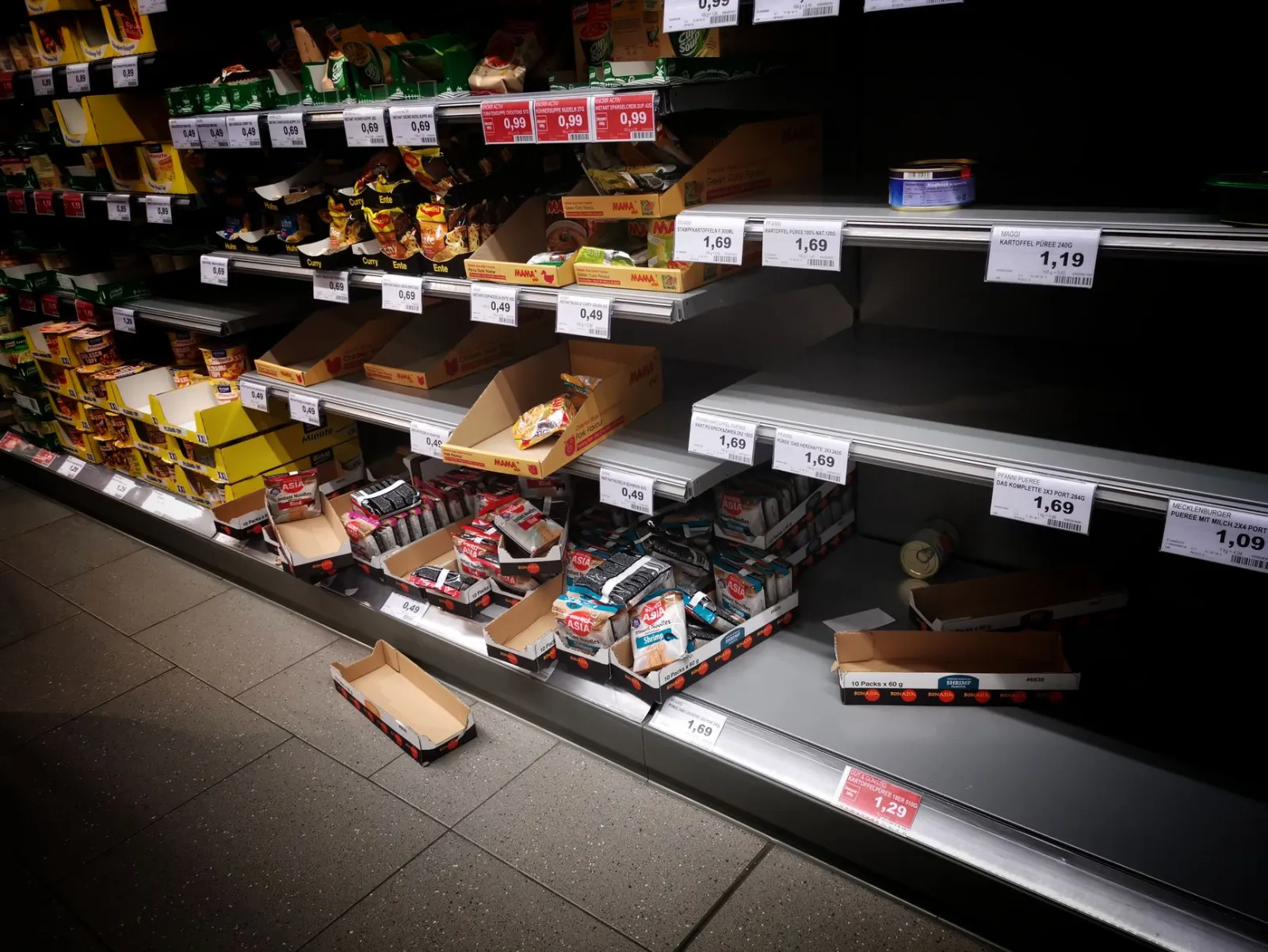
A week after a three day preparedness campaign went live on 22 October, the UK did what the UK does. It went panic buying.
Shoppers queued out of an Asda car park in Colchester, with reports of bare shelves inside, as SWNS reported. Major retailers told BBC News that sales of tinned food, bottled water, wind up radios and batteries had jumped. Even toilet roll was flying again.
Toilet roll. In 2026.
I am all for being prepared. I grow food on a farm now, and being ready is a way of life for us, not a campaign. But what I saw this week was not preparation. It was fear with a trolley. So here is how we stock up instead, built from what you have asked me in my comments and what real people are saying under the videos about it.
Why are people panic buying right now?
Because fear is faster than a plan
People in the UK are panic buying because the Be Ready campaign asked every home to keep three days of supplies, and many people heard “something bad is coming” instead of “make a plan”. When everyone buys a week of tins on the same afternoon, a shop stocked for normal days empties, and the empty shelf itself becomes the next reason to panic.
Panic buying is not new. We had the toilet paper runs of 2020 and the petrol queues of September 2021. Same pattern every time. A warning, a photo of an empty shelf, then a stampede that causes the shortage it feared.
The most liked comment I found under one of this week’s prep videos was the calmest one.
Decorate your homes for Christmas, enjoy life, and stock up on food supplies, but don’t become obsessed with it all.
@Boss44644, 90 likes, on UK Government Says Prepare for 3 Days, I Already Have (YouTube)
Ninety people agreed. Be ready. Do not be obsessed.
Is panic buying bad?
Yes, for your neighbours and for your body
Panic buying is bad because it empties shelves for people who cannot afford to stock up, and it fills your own home with the most processed, least nourishing food in the shop.
Look at what sells out first. White bread, pasta, tins of meat, crisps, biscuits and bottled water in plastic. Shelf stable means the life has been taken out of it on purpose. Three days of that is survivable. Three weeks is a health problem.
And the people who lose most are the ones who were already struggling, the ones who could never afford to buy a week of anything in one go.
If the cost of living crisis already has you choosing between food and heating, a panic shop is not an option anyway. The good news is that the healthy way to prepare costs less.
What is the best food to stockpile in the UK?
Whole staples that feed you, not the junk that fills a trolley
The best food to stockpile in the UK is whole, dry, long keeping staples, dried beans, lentils, split peas, oats and rice, plus a few tins of cooked beans and tomatoes, backed by fresh roots and squash that keep for weeks without a fridge.
That is a prepper pantry that keeps you well, not just alive. Here is the whole food version, the list I would give anyone starting from nothing.
Pulses. Red lentils (they cook in about 15 to 20 minutes, so they save fuel), green or brown lentils, split peas, chickpeas, black beans and kidney beans.
Grains. Oats, brown or white rice, buckwheat and millet.
Tins and jars. Cooked chickpeas and beans for a power cut, chopped tomatoes and coconut milk.
Fats and seeds. Olive oil, a nut butter, sunflower and pumpkin seeds and a bag of nuts.
Flavour that is also medicine. Garlic, ginger, onions, salt, pimento (allspice), thyme and the herbs you dry yourself.
Sprouting seeds. Mung beans, lentils and alfalfa, for fresh greens when there is nothing fresh to buy.
Fresh that keeps. Potatoes, squash, onions, carrots, beetroot, cabbage and apples.
Fresh first, and choose the fresh that keeps
Fresh does not mean fragile. Winter gives you vegetables that were made to last. Squash keeps for months in a cool room. Onions, garlic, potatoes, carrots, beetroot, cabbage and apples keep for weeks somewhere cool and dark. Buy them loose, from a farm shop if you can, and you have a fresh food store that does not need a fridge, a tin opener or the electricity to stay on.
Fresh also means local. One of you saw where a lot of Europe’s winter veg comes from, and it got 588 likes.
The authorities fully know what’s happening in Almeria, in my opinion it’s maybe Europe’s largest modern day slavery ring!
The government know the migrants can’t go back home and they keep them there, they die in the working conditions and are just replaced!
Organic produce isn’t excluded from this type of slavery.
I saw the greenhouses while driving through Almeria years ago.
There’s a documentary about it by Simon reeves
A reader, 588 likes
So when I say fresh first, I mean the leek from up the road, not the tomato flown in from a sea of plastic.
How to start a prepper pantry on a budget
You start a prepper pantry on a budget by adding one extra bag of a dry staple to every normal shop, because the cheapest food to stockpile, dried pulses, oats and rice, costs very little and keeps for a long time in jars. Within a month you have weeks of food and nobody saw you queue. One thing people forget came up in the comments.
What you need to consider is that a LOT of these products require WATER. Better to buy tins or pouches that are already cooked and keep your water supply for drinking.
@rosieradcliffe5578, on the same video
That is right. Dried food needs water and fuel to cook, so keep a few tins of cooked beans and chickpeas for a real outage, and keep your water for drinking. Then rotate. A commenter from outside the UK described how their home does it.
Victory gardens, long-term pantries, and frugal meal planning used to be an important part of being ready.
@GeckoHiker, on the same video
They mark everything with a black pen so the oldest gets eaten first. Simple, and nothing goes to waste.
Our full calm checklist, water, light, warmth, cash and the rest, lives in Be Ready emergency preparedness, and the long view of how people survived disasters through history is in emergency preparedness through history.
Where do you buy fresh food when the supermarket shelves are empty?
Straight from the farm
When supermarket shelves empty, the fastest place to find fresh food is a farm shop, a veg box scheme, a farmers market or a pick your own farm, because their stock comes from the field down the road, not a distribution centre three counties away.
We built a map for exactly this week, and it is called Be Ready too. The Be Ready map of UK farm shops and local food puts farm shops, veg boxes, markets and pick your own farms in one place. Then go county by county, from Greater London to Greater Manchester, Merseyside, the West Midlands, Bristol, Kent, Devon, Glasgow and East Lothian.
Sign up to a veg box now, before you need it. A weekly box from a local grower is a fresh food supply chain with your name on it, and it does not empty when the supermarket does.
Know your pick your own farms for the spring and summer gluts, when you can fill the freezer and the drying racks for very little. Start with pick your own fruit in the UK, or in the USA.
Take a list to the market. Our free farmers market checklist helps you buy what keeps, and the kids’ farmers market activity sheet brings the children along for the lesson.
The Caribbean has a Be Ready campaign every year, and it is called hurricane season
The Atlantic hurricane season runs from 1 June to 30 November, so Caribbean families prepare for days without power or shops every single year, and they do it with gardens and herbs as much as tins.
This is the part of preparation the UK has forgotten. In the islands the medicine cabinet grows by the door. Fever grass (what the UK calls lemongrass) for a bush tea. Thyme and scallion for every pot. Cerasee, mint and soursop leaf, cut, tied and hung to dry. That knowledge has its roots in West Africa, carried across the Atlantic by people who were allowed to bring nothing else.
In Antigua, Lorilyn grew up on her grandmother’s backyard garden and now grows her own at Lamblion, where her daughter cooks from it too, four generations connected by one garden. Walk a yard like it in our backyard garden tour in Antigua.

At Gods of Gorilla, the Emperor told me plainly why they plant.
After the war it’s going to be difficult, especially we in the West, we depending on a lot of things from overseas.
Even the government have to really focus on doing a lot of farming, plant a lot of food.
The Emperor, Gods of Gorilla
By “the West” he means the West Indies, islands that import much of what they eat. Swap in Britain and every word still fits.
A dried herb is preparation that does not need a fridge, a factory or a supply chain. It just needs sun, air and someone who knows the plant.
What are the best survival garden crops?
The ones that store, feed you and give you more seed
The best survival garden crops for a UK garden are the ones that store without a fridge or return every year, potatoes, winter squash, kale, broad beans, climbing beans for drying, garlic, onions, leeks and perennial herbs. In the Caribbean the same list reads callaloo, sweet potato, cassava, pigeon peas and a breadfruit tree.
Seeds are the best thing to buy in a panic, because one packet costs about the same as a tin of beans and, once grown, gives you food and more seed for next year. A survival garden is not a bunker fantasy. It is what every grandmother with a yard already had.
On the farm behind Charela Inn’s restaurant in Negril, Jamaica, the farmer told me how country people keep their own seed, and why it is getting harder.
We here in the country, people believe in securing their own seeds and not to buy. But it’s getting more and more difficult.
The farmer at Charela Inn, Negril, from a farm walk behind Charela Inn’s restaurant
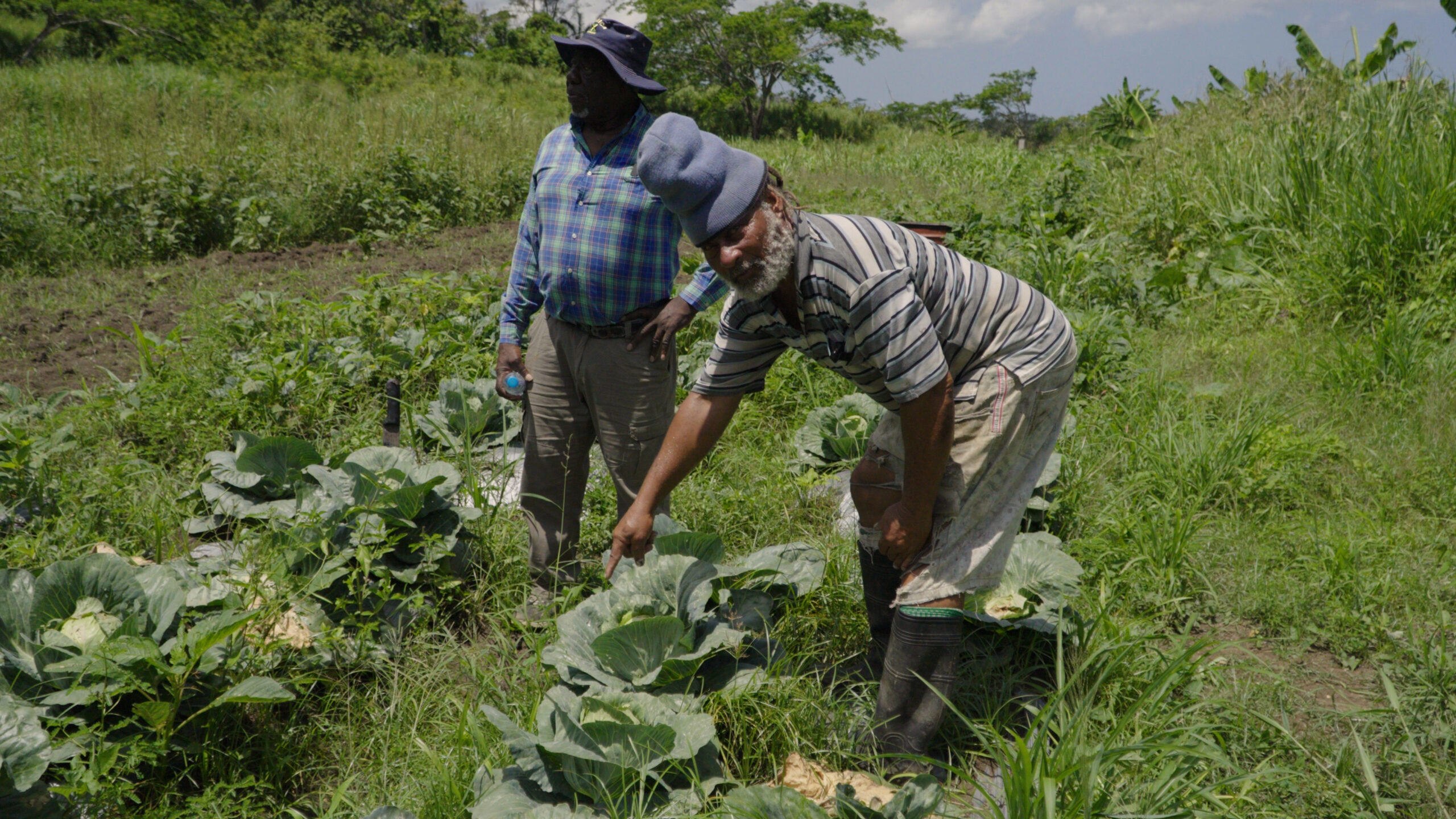
Securing your own seed is the most ready thing a household can do. For a survival garden, buy heirloom or open pollinated seed (not F1 hybrids), so the seed you save grows true. Beans, peas, tomatoes, squash, lettuce and most herbs are the easiest to save. Dry the seed well, store it in paper envelopes in a cool, dark tin, and write the plant and the year on every one. Then swap with your neighbours. You can watch the Charela Inn farm to see how a whole kitchen is fed this way.

What are the best medicinal herbs to grow in the UK?
Start with the hardy kitchen herbs
The best medicinal herbs to grow in the UK for beginners are the hardy kitchen ones, thyme, rosemary, sage, mint, lemon balm and chives, with garlic in the ground and ginger and lemongrass in pots indoors, because they survive a British winter and each carries a long tradition as a home remedy.
This is your natural medicine cabinet, grown rather than bought. The uses below are the traditions these plants carry, Caribbean first, not prescriptions. Keep your doctor for what needs a doctor.
Fever grass (lemongrass). The Caribbean bush tea for a fever or a cold, as the name tells you. Grow it in a big pot indoors in a UK winter.
Ginger. Grated into hot water with lime, the Caribbean tea for a cold and an upset stomach. A piece from the market will sprout in a pot on a warm sill.
Thyme. In every Caribbean pot, and a traditional tea for a cough and a tight chest in both the islands and Europe.
Mint. A digestive tea across the Caribbean, North Africa and Europe.
Garlic. The kitchen remedy everywhere, eaten raw or cooked through the winter.
Sage. A traditional gargle for a sore throat.
Lemon balm. A calming European tea, and a mint family plant that is almost impossible to kill.
Rosemary. For the pot, the tea and the memory, in the old herbal sayings.
Our medicinal plants, herbs and trees guide has pictures, how to prepare each one and where to source them.
Which medicinal herbs can you grow indoors in winter?
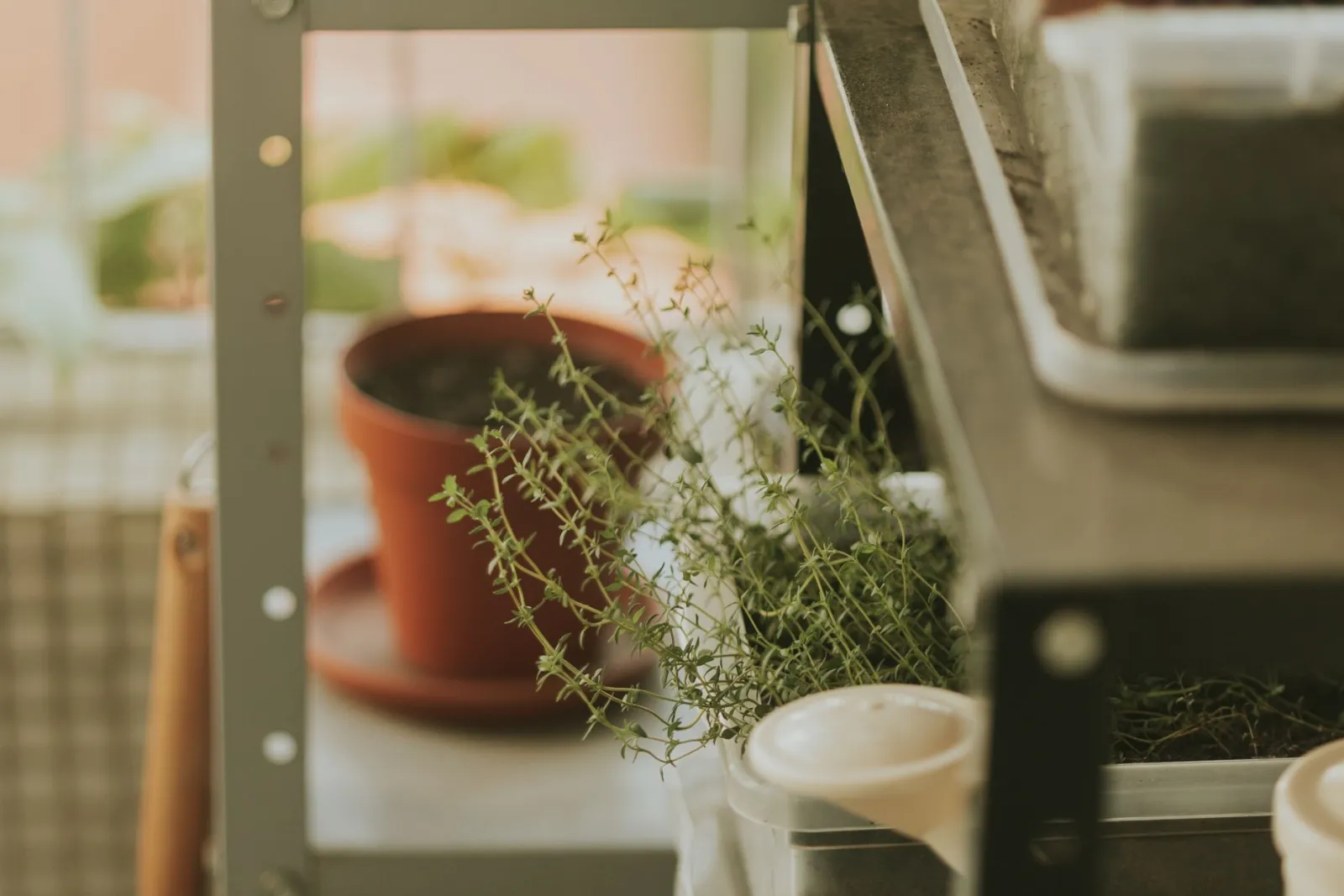
You can grow thyme, rosemary, sage, parsley, chives, mint, ginger and lemongrass indoors in a UK winter, in pots on a bright windowsill or in an unheated greenhouse, as long as you water little and keep them in the light.
Soft summer herbs like basil sulk in the cold, so let them go. The woody Mediterranean herbs are tougher. The RHS notes that rosemary and thyme both want sun and good drainage, which in winter mostly means not drowning them. Water little, keep them bright, and pick lightly until spring.
Mint dies down outside in winter, but a pot brought in to a cool windowsill keeps giving a few leaves for tea. Parsley and chives sit happily on a kitchen sill. For fresh greens right now, nothing beats a jar of sprouts, which needs no soil and no light to start. Mariam builds her raw café in Tbilisi around them, watch her raw vegan café, and her soak and rinse method is in how to survive the cost of living crisis. Our free leafy greens checklist shows which winter greens give you the most.
One of you said it better than any campaign could.
not panic and read articles and ingredients for yourself to put your mind at ease.
And if you can begin to grow your own food for preparation of food shortages and water famine in future.
A reader in my comments
What is the best way to dry herbs at home?
Air dry them in small bunches, no dehydrator needed
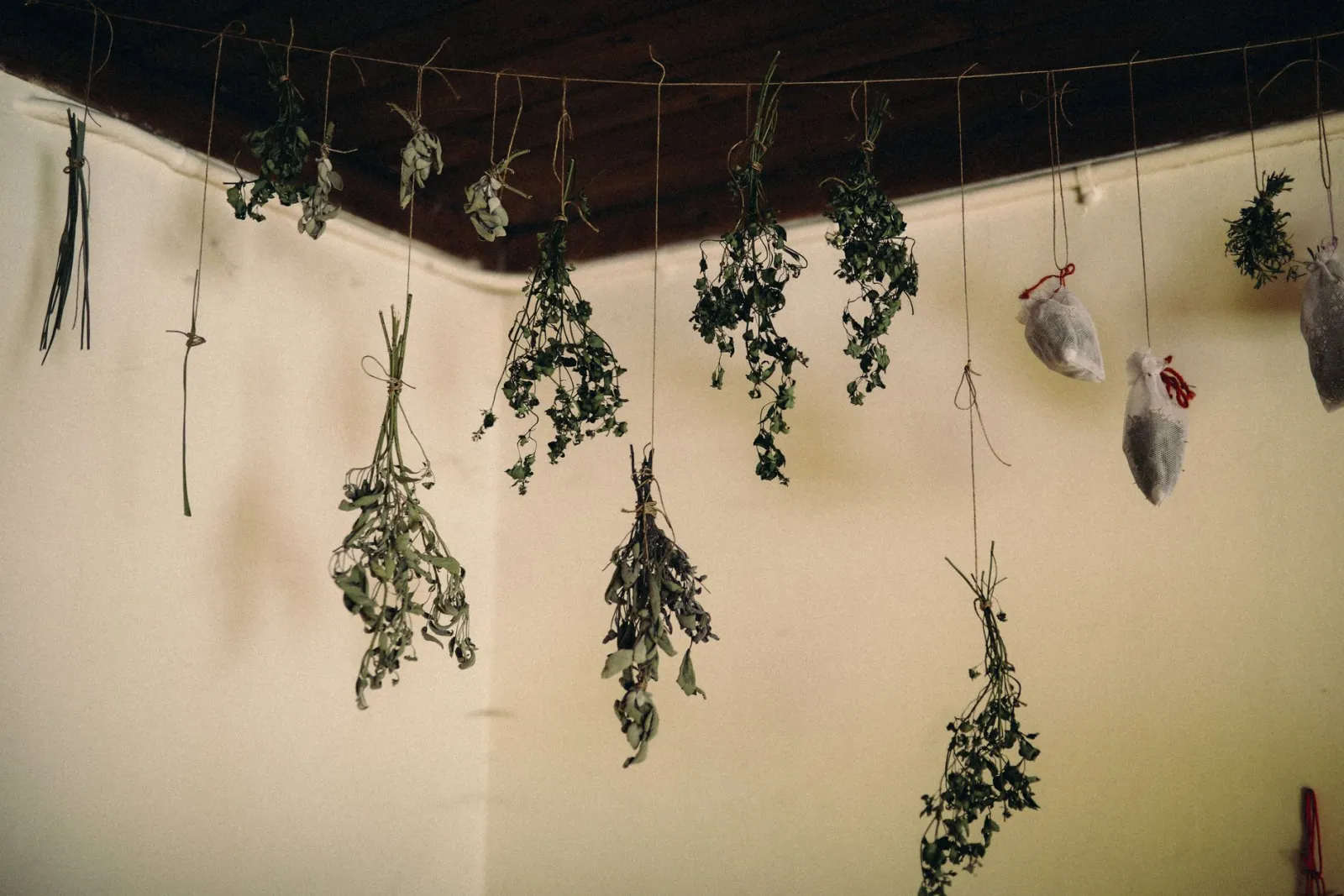
The best way to dry herbs at home, without a dehydrator, is to cut healthy stems on a dry morning, tying them in small loose bunches, and hanging them upside down somewhere warm, dry, airy and out of direct sun until the leaves crumble, which usually takes one to two weeks.
It is the way the islands have always done it. The herb lady at the market in Antigua, who brings her bush down from the hillside chemical free, told me why her dried herbs last so long.
They taste different, because when it’s chemical, it cannot preserve for long. But you can leave this outside on the counter and it stays for over a year, plus.
The herb lady at the market, Antigua
Pick on a dry day. Wet leaves go mouldy instead of drying. Pick after the dew has gone and before the midday heat.
Keep bunches small. Five to ten stems tied with string. A fat bunch rots in the middle.
Hang them upside down in the dark. Light fades the colour and the oils. An airing cupboard, a dry shed or a paper bag with holes punched in it all work.
Test by crumbling. When a leaf snaps and crumbles between your fingers, it is ready. If it bends, wait.
Woody herbs like rosemary, thyme, sage and bay dry beautifully in the air. Soft leaves with a lot of water, like mint and basil, dry faster on a tray in the oven at its lowest setting with the door a little open, but watch them closely. Mint and lemongrass dried this way make the simplest winter tea there is.
How do you store dried herbs long term?
Whole leaves, glass jars, a dark cupboard
You store dried herbs long term by stripping the leaves whole, sealing them in airtight glass jars, labelling each jar with the plant and the date, and keeping them in a cool, dark cupboard away from the cooker.
Can you store dried herbs in glass jars?
Yes, airtight glass jars are the best way to store dried herbs, because glass keeps out air and moisture and does not hold smells. Plastic bags trap any moisture left in the leaves and can turn a good harvest musty. A paper bag is fine for a few weeks while the herbs finish drying, not for the year.
Do dried herbs go bad?
Dried herbs kept dry rarely spoil, they fade. The colour dulls and the scent weakens, and so does what they do in a tea. Most are at their best within about a year, which is why the date on the jar matters. If a jar smells musty or shows any mould, it goes to the compost, not the pot. Keep the leaves whole and crush them only as you use them, and they hold their oils far longer.
Is it too late to start a survival garden in November?
No, you plant for spring and grow greens indoors
It is not too late to start a survival garden, a greenhouse or a cold frame in November in the UK, but what you plant now is mostly for an early spring harvest, while your windowsill and sprouting jar feed you through the winter.
Here is what still goes in this late in the year, and why it matters for being prepared.
Garlic. The RHS says garlic cloves are best planted in autumn, ready the following year. One bulb from a farm shop becomes a dozen.
Broad beans. Hardy varieties can be sown from autumn, and the RHS notes they give valuable early harvests before most other vegetables are ready. That is the hungry gap, covered.
Hardy herbs in pots. Move rosemary, thyme, sage and parsley under glass to keep them picking through frost.
Pea shoots and microgreens. Sown in trays on a sill or in a greenhouse, they give fresh greens in a few weeks, all winter long.
If you are in Australia or anywhere south of the equator, flip all of this. It is spring for you, so sow everything.
No greenhouse? A cold frame, a sunny porch or a clear storage box on a south facing wall does the same job on a small scale. If you have the space for a greenhouse, put it up this winter so it is ready to work from February.
A greenhouse does not have to be new or shop bought. In Cabarete in the Dominican Republic, Morena Cappelen and her team turned a martial arts dojo into one when the pandemic closed it.
During the pandemic, due to the restrictions and the curfew, we had to shut down the dojo here and move it elsewhere. And we converted the structure into the greenhouse.
Morena Cappelen, co founder of Cabarete Sostenible
It now grows greens and herbs for their community kitchen and food bank. Read how a jiu jitsu dojo became a community garden and Cabarete’s community kitchen and garden. That is preparation for a whole town, not one house.
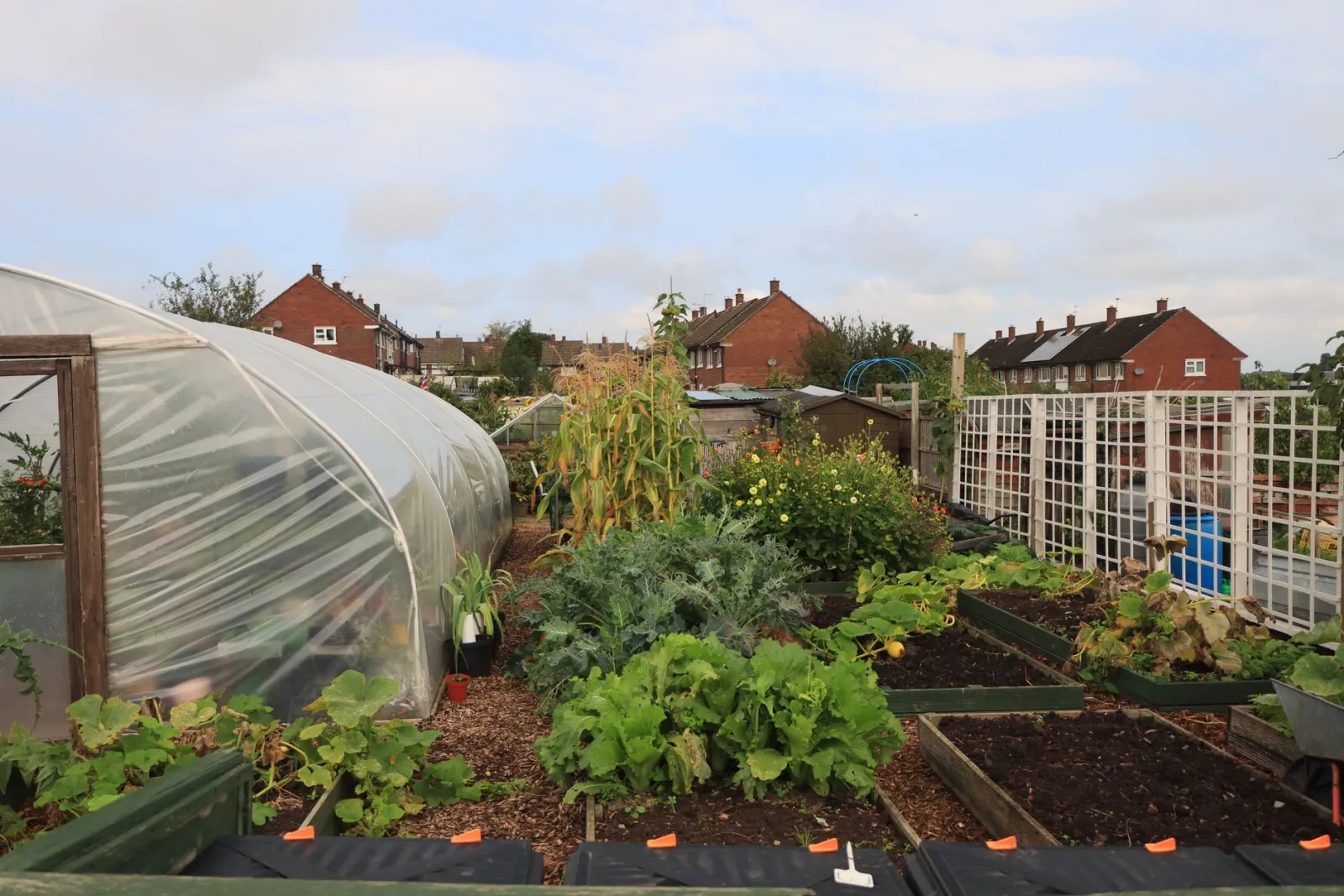
Your natural prepper checklist for this winter
A natural prepper checklist for this winter, the healthy version of panic buying, means a week of fresh seasonal food, a rotating jar store of beans and grains, enough water for three days, a few packets of seeds, and the herbs you will grow and dry yourself.
This week, find your nearest farm shop on the Be Ready map, buy loose winter vegetables and fruit that keep, and sign up to a veg box.
This week too, buy three packets of open pollinated seed and one bulb of garlic to plant.
This month, fill jars with dried beans, lentils, oats and rice, and add a few tins of cooked beans for a power cut.
This winter, pot up rosemary, thyme, parsley and chives, start a sprouting jar, plant garlic, dry what you pick and label every jar.
This spring, save your first seeds, find a pick your own farm for the summer glut, and put your name down for a community garden or allotment.
None of it needs a queue. None of it empties a shelf for the woman behind you.
The answer to a frightening headline is not a fuller trolley. It is a fuller windowsill. People who grow have been ready for centuries. We just have to remember how.
Tell me in the comments what you are growing on your windowsill this winter, and which herbs you dry.
The bill is the cost of living piece. The shops are the UK farm shop map. The farm shops shelf in the My Ideal World app is the list you can keep.