

Polyester to natural fibres
The seven-year rebuild
The most interesting thing about Freedom Ecowear is not that it uses hemp and organic cotton. It is that its founder, Vivi, reached a point where she could no longer accept the way her business was working, even though the business itself was doing well.
When we met in the Dominican Republic, in the open-air workshop she built with her partner David, she took me back to the earlier version of Freedom.
The brand had started with swimwear made from virgin polyester.
By 2017, just three years after launching, it was bringing in five figures a month. Orders were growing, international customers were finding the brand online, and the business appeared to be heading in the direction most founders work towards.
But success had begun to feel uncomfortable.
Production was outsourced.
Vivi was questioning how factories handled waste and treated the people making the clothes.
The material itself was polyester, a synthetic fibre derived largely from fossil fuels. The more she understood about the system supporting the business, the harder it became to separate the products she was selling from the conditions under which they were made.
Her response was unusually drastic.
She decided she would not produce another piece until the business had been restructured. Instead of making a small sustainability collection alongside the existing range, she wanted to change the way the entire brand operated.
That decision became a seven-year rebuild. It meant finding production partners who shared her values, discovering that the factories she needed were not available to her, building her own production space, reconsidering the materials, and learning to make and sell clothes in a completely different way.
It also meant years of financial uncertainty and asking customers to accept a brand that no longer looked like the one they had first fallen in love with.
Vivi’s experience is not proof that every fashion brand can follow the same route, or that using natural fibres automatically makes a garment sustainable.
It is a closer look at what changing a business can involve when the founder decides that growth alone is no longer a good enough measure of success.
Before buying anything new, you can also use My Ideal World to explore brands, materials and the evidence behind their claims, then save the information you want to revisit.
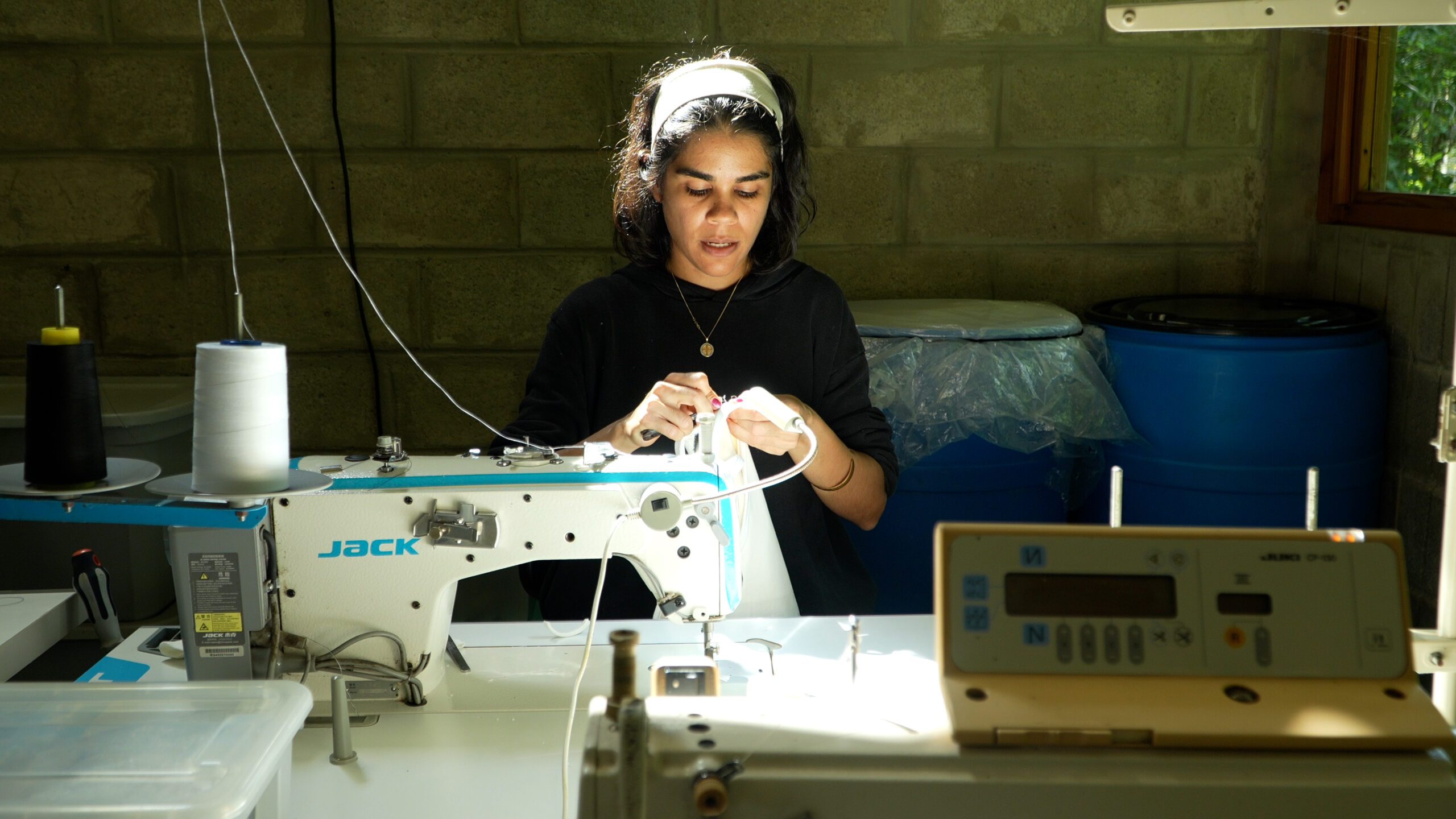
The factory days that made her cry
When I asked Vivi why she decided to change the business, she did not begin with a marketing strategy or a new fabric collection. She described what she had been seeing behind the scenes.
“We were outsourcing production back then. We were doing the practices of these factories, how they handle waste, how they handle the people. The wage was very unfair, and the material itself was just polyester. There were days I came home from the factory crying because I couldn’t handle anymore. I was like, this is not what I want to create with my life, with my energy, with my time.”
Vivi, in our interview
There is a particular kind of contradiction in building a business around something you love and gradually realising that the system required to produce it conflicts with your values.
The customer sees the finished garment. The founder may see the factory, the leftover material, the wages, the supplier decisions and the waste that never appear in the product photographs.
Vivi said she could not ignore what she was seeing.
She described a system in which factories made large quantities of the same product to increase profitability, while the people doing much of the work were not necessarily receiving a fair share of the value created.
Her concerns sit within a much larger debate about the fashion supply chain.
The International Labour Organization’s work on textiles, clothing, leather and footwear examines the working conditions, employment relationships and labour challenges affecting the sector. Meanwhile, the Fashion Revolution campaign has spent years pushing brands to disclose more about the people and facilities behind their products.
Neither a sustainability label nor a beautiful natural setting can answer every question about labour.
What matters is what happens to the people making the garment: what they are paid, whether they work safely, whether they have a voice, and whether the business can explain how it knows its standards are being met.
That distinction matters when considering Freedom.
Vivi’s account explains why she chose to stop outsourcing and build a different production system. Her testimony is valuable, but it should not be confused with independent verification of every working condition or every stage of the supply chain. Those questions require evidence of their own.
She stopped producing, even when the business was growing
Vivi told me that, once she understood she could not continue as before, she made a promise to herself.
“I’m not producing a single piece more until we restructure everything.”
Vivi, in our interview
That was not a simple decision to make. The business had customers, inventory, a growing online audience and a production model that had already proved commercially successful.
She and David did not immediately have a replacement system ready to go. They had to work out what that replacement would look like, where the materials would come from, how production could happen, and whether they could afford to make the change.
Vivi explained that they looked for factories aligned with their values but could not find what they needed. That was why they eventually decided to build their own production space. The transition took around seven years, during which they relied on existing inventory and sales while working towards a different operating model.
It is easy for a brand to announce a new sustainable collection. It is considerably harder to rebuild the structure that makes the collection possible. That includes sourcing, production equipment, staff, quality control, inventory, packaging, delivery times and the financial arrangements that allow the business to keep operating.
Vivi also described the shift as a change in the way she thought about growth. At first, she had wanted to build a solid financial foundation before making bigger changes.
David was not immediately convinced either.
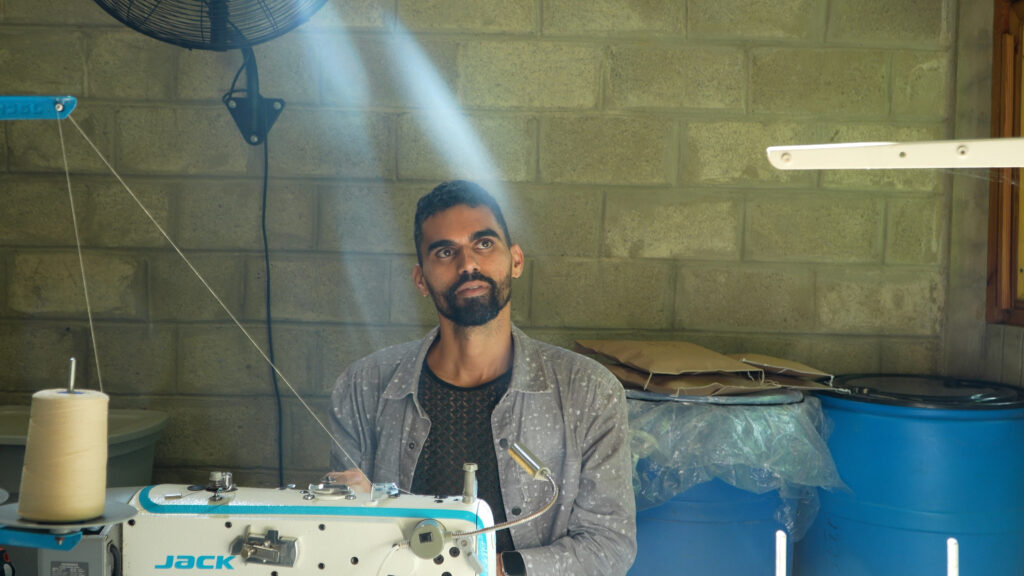
They had struggled financially before, and there was a real question about whether a more demanding production model could support the business.
She told me that in 2021, when they were struggling financially and not producing new pieces, they won an entrepreneurship competition that provided one million Dominican pesos in seed capital through Banco Popular. In 2024, they won another competition, this time through FedEx, which provided another million pesos in seed capital. Vivi said the funding helped them finish the workshop and purchase the equipment they needed.
Those awards were important milestones in her story. They helped make the rebuild possible, but they do not by themselves establish the environmental performance of the finished garments. The significance is more practical: the transition required time, equipment, money and a willingness to keep going before the new system was fully functioning.
Customers have a part to play here. When we ask brands to abandon cheaper materials, pay more attention to their supply chains and produce in smaller quantities, we are asking them to change how they do business, not simply to change a label on a product page. That does not mean every company deserves endless patience or that consumers should accept vague promises. It means we should look for evidence of actual changes rather than expecting a complex transition to be completed by a single collection launch.
The polyester problem is bigger than one swimsuit
Polyester became popular for understandable reasons. It can be relatively inexpensive, durable, easy to colour and useful in garments that need to stretch, dry quickly or hold their shape. For swimwear in particular, replacing synthetic fibres is not as straightforward as choosing a plant-based alternative and sewing it into the same pattern.
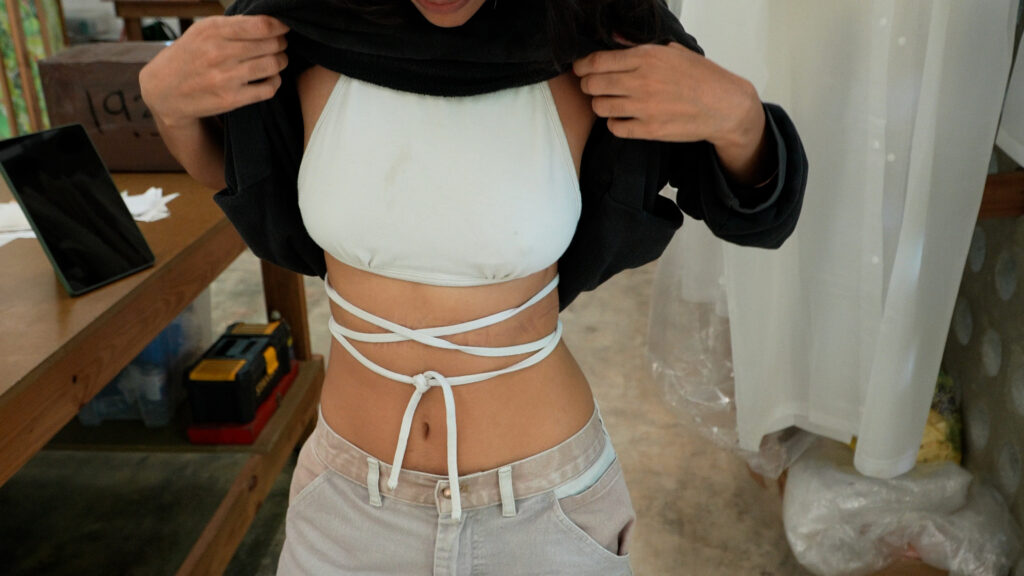
But polyester is a synthetic fibre generally made from fossil-based raw materials. It also creates a problem at the end of a garment’s life, particularly when it is blended with other fibres, elastane, dyes, finishes and trims. A material can be technically recyclable without there being a practical, accessible system capable of recycling the particular garment at scale.
The scale of synthetic fibre production helps explain why the issue matters. Textile Exchange’s Materials Market Report 2024 estimated that global fibre production reached approximately 124 million tonnes in 2023, with polyester accounting for around 57% of the total. Most polyester fibre is fossil-based.
These figures describe global fibre production, not the quantity of clothing discarded in a single year. They also do not tell us the footprint of an individual garment. They do show how heavily the industry relies on synthetic fibres, and why moving away from them is a significant challenge rather than a niche design preference.
Vivi said the earlier version of Freedom used virgin polyester. The first attempt to change that was to use recycled polyester. But she found that the material still left them working with plastic, and that closing the loop remained difficult.
“We actually started with recycled polyester, but then we ended up realizing it’s still plastic. So closing the loop is still very difficult when you’re working with synthetic materials. That’s why we transitioned to use natural materials instead, such as hemp and organic cotton.”
Vivi, in our interview
There is an important distinction here.
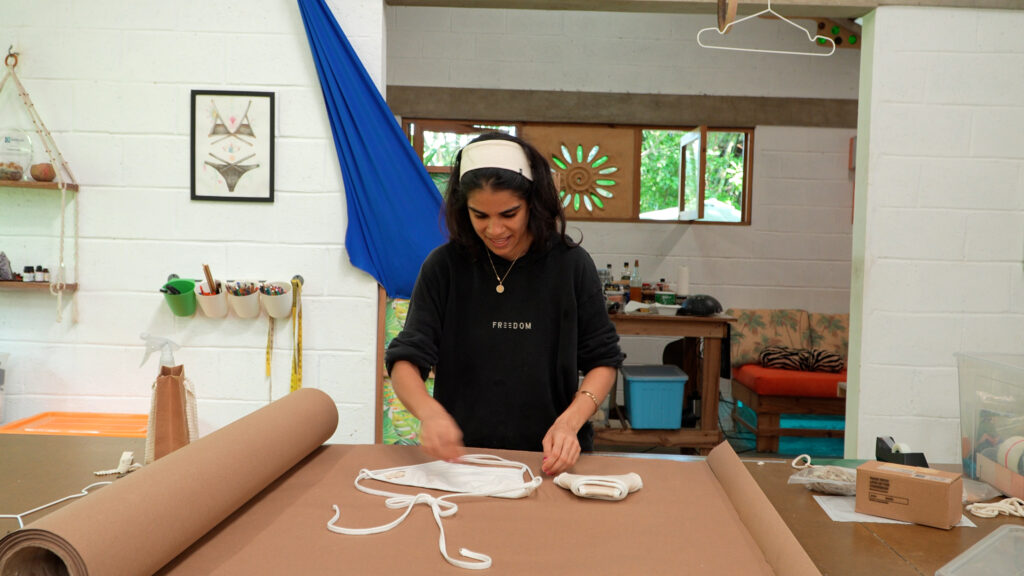
Recycled polyester can reduce demand for virgin polyester in some applications, depending on the source of the recycled material and how it is produced. But recycling does not turn a synthetic fibre into a natural one, and it does not automatically make a garment recyclable again after use. Recycled polyester can also release microfibres during washing and wear.
The European Environment Agency’s work on textiles explores the environmental pressures associated with textile production and consumption, including resource use, pollution and waste. The United Nations Environment Programme’s work on textiles also examines the sector’s pollution challenges across the product life cycle.
The takeaway is not that recycled synthetics are always pointless or that every natural fibre is automatically better. It is that the material has to be considered alongside the garment’s purpose, how long it will be used, how it is cared for, what it is blended with and what can realistically happen when it is no longer wanted.
Why hemp and organic cotton, and why not simply call everything natural?

Freedom’s new direction centred on natural fibres, particularly hemp and organic cotton.
Vivi described hemp as a durable material and explained that the brand was among the few locally using it in the way they were. She also talked about the difficulty of sourcing materials that met their requirements without making the final product prohibitively expensive.
Hemp and cotton are not interchangeable, and neither should be treated as a magic solution.
The environmental impact of a fibre depends on how it is grown, the land and water involved, the processing methods, the dyes and finishes, transport, the garment’s useful life and what happens afterwards. Organic certification can provide important information about how a material was produced, but it does not answer every question about the complete garment.
For a wider view of fibre production and the evidence behind material claims, see Textile Exchange, which publishes research on fibres and raw materials, and the European Environment Agency’s textile resources. Their work is a useful reminder that comparing materials requires more than putting the words “natural” and “synthetic” on opposite sides of a page.
There is also a difference between a fibre being natural and a finished garment being compostable. A cotton or hemp garment may still contain synthetic sewing thread, elastic, plastic labels, synthetic dyes, chemical finishes or blended components. Those additions can affect whether the finished item can safely break down under suitable composting conditions.
Vivi had been working towards that more complete picture.
During our conversation, she showed me the materials and explained that some garments combined hemp and organic cotton with a small amount of elastane. The exact composition varied by style. One fabric she showed me contained 53% hemp, 44% organic cotton and 3% elastane; another contained 60% organic cotton, 32% hemp and 8% elastane.
Those blends are worth noting because they reveal the practical compromises involved in making clothes people can actually wear. A fabric can be mostly plant-based and still contain a synthetic component.
That does not automatically make it a bad choice, but it does mean that a broad claim such as “natural” should not be mistaken for “entirely plastic-free” or “fully compostable”. The composition of the specific garment matters.
Swimwear is a particularly difficult test
Swimwear is one of the clearest examples of why a simple switch in materials is not always possible. The fabric has to cope with water, movement, stretching and repeated changes in shape. It must fit securely when wet, not just look good when dry.
When I asked Vivi about spandex, she did not argue that it should be eliminated from every garment.
She explained that natural fibres can absorb water and become heavier, and that swimwear needs enough stretch and recovery to function properly. In her view, the question is how much synthetic stretch fibre is actually needed for the job.
“I don’t demonize it because for swimwear is necessary.”
Vivi, speaking about spandex in our interview
She said she wanted to keep the synthetic portion below 20% for swimwear, while explaining that Freedom’s own blends were often lower. In the interview, she said the brand kept the amount below 8% where it was used. These are her design choices and targets, not universal thresholds that guarantee a garment is sustainable or compostable.
Vivi also described testing newer bio-based alternatives to conventional elastane. She was careful not to treat them as a finished solution. She wanted to understand how the materials were made and whether they were genuinely better than the alternatives already available.
That uncertainty deserves more attention in fashion.
The words “bio-based” and “plant-based” can sound reassuring, but they do not necessarily mean a material is biodegradable, compostable, non-toxic or recyclable in existing systems. A bio-based polymer may still behave like plastic at the end of its life. Its feedstock, processing, performance and disposal route all matter.
The same applies to crochet swimwear, which is often presented online as a natural alternative. Vivi told me that Freedom had tried a crochet bikini collection in 2016, but found that the garments still needed lining and additional stretch to work properly. A crochet exterior made from natural yarn does not necessarily mean the entire swimsuit is free of synthetic materials.
There is no single answer that works for every garment. The more useful question is whether a brand understands the purpose of each material, uses only what is needed, discloses the composition clearly and avoids making environmental promises that the evidence cannot support.
The hidden problem with colour
One of the most revealing parts of our conversation was Vivi’s explanation of why Freedom began working with undyed fabrics. Colour had been part of the brand’s identity, but she found that achieving the finishes customers expected could create further problems.
She described giving up colour for a period because of concerns about synthetic dyes and the water used in textile processing. Natural dyes were an option, but they behaved differently, required different techniques and did not always produce the consistent results customers expected. One collection using natural dyes did not perform as well as she had hoped. The brand returned to a more restrained palette while it continued working on the problem.
It is easy to overlook dyeing when a garment is advertised as eco-friendly because the conversation tends to focus on the fibre itself. Yet wet processing, dyeing and finishing can involve substantial water, energy and chemical inputs. The actual impact depends on the dye chemistry, the process, the treatment of wastewater and the controls in place at the facility.
Vivi later told me about a local facility they had found that could print patterns directly onto cotton, treat the water it used and work with inks she described as certified for safety. She said the process used 75% less water than conventional dyeing techniques. That is a claim about the particular process and comparison she described, not a figure that should be applied to all digital printing or all textile dyeing. To assess it independently, a reader would need the facility’s documentation and details of the process used as the baseline.
Her experience also challenged a familiar idea of what sustainable clothing should look like. Vivi said people sometimes looked at naturally dyed or undyed garments and thought they appeared old or unfinished. We have become accustomed to bright, consistent colours and highly polished finishes. A garment that shows more of the character of its fibre can seem unfamiliar, even when that appearance is intentional.
Fashion has trained us to expect novelty. New colours, new prints and new seasonal palettes give brands reasons to release more collections and give customers reasons to keep looking for the next thing. But every finish comes with decisions about materials and processing. Choosing fewer colours will not solve the industry’s environmental problems by itself, yet it can be one part of a broader effort to simplify production and reduce unnecessary complexity.
Waste was no longer someone else’s problem
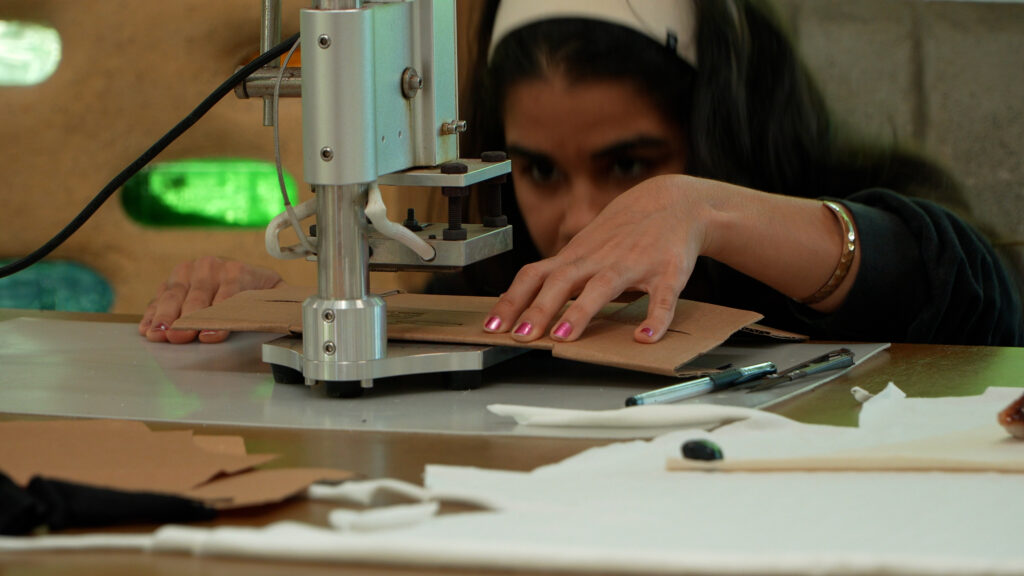
One of Vivi’s strongest criticisms of outsourced production concerned what happened to leftover fabric. She said factories were sometimes reluctant to tell her what they did with production waste. For her, that was a problem. If the material came from her brand’s orders, she wanted to understand where it went.
That question sounds basic, but it gets to the heart of a common weakness in fashion supply chains. A brand may know the name of its supplier without knowing what happens to every offcut, rejected garment or surplus piece of fabric. The waste can disappear from the brand’s immediate view without disappearing from the world.
Vivi showed me a jacket made from post-production waste.
The team had collected scraps and stored them in bags until an idea emerged. Inspired by a familiar Dominican visual pattern, they used the leftover material to create a garment with a distinctive surface. She told me they hoped to develop a wider collection using the technique.
The jacket was a tangible example of turning a production problem into a design resource. It was not just an abstract commitment to circularity. The material was there, the waste had been kept, and someone had worked out how to use it.
But upcycling has limits. It can make valuable use of scraps, deadstock or discarded garments, yet it does not automatically solve the volume of material generated by an industry producing enormous quantities of new clothing. Offcuts can also vary in fibre composition, colour and size, making it difficult to use every scrap in the same way. A successful upcycling project is useful, but it should not be used to excuse unlimited production.
The Ellen MacArthur Foundation’s work on a new textiles economy explores the need to move away from a system in which clothing is made, used briefly and discarded. The broader challenge is to design products and systems that reduce waste from the beginning, keep materials in use for longer and make it easier to recover value at the end of a garment’s life.
For Freedom, the first step was making waste visible. Rather than assuming that a factory would handle it responsibly, Vivi wanted to know what was happening and find ways to put the material back to use. That is a more meaningful starting point than simply calling a collection circular.
Can a garment really be compostable?
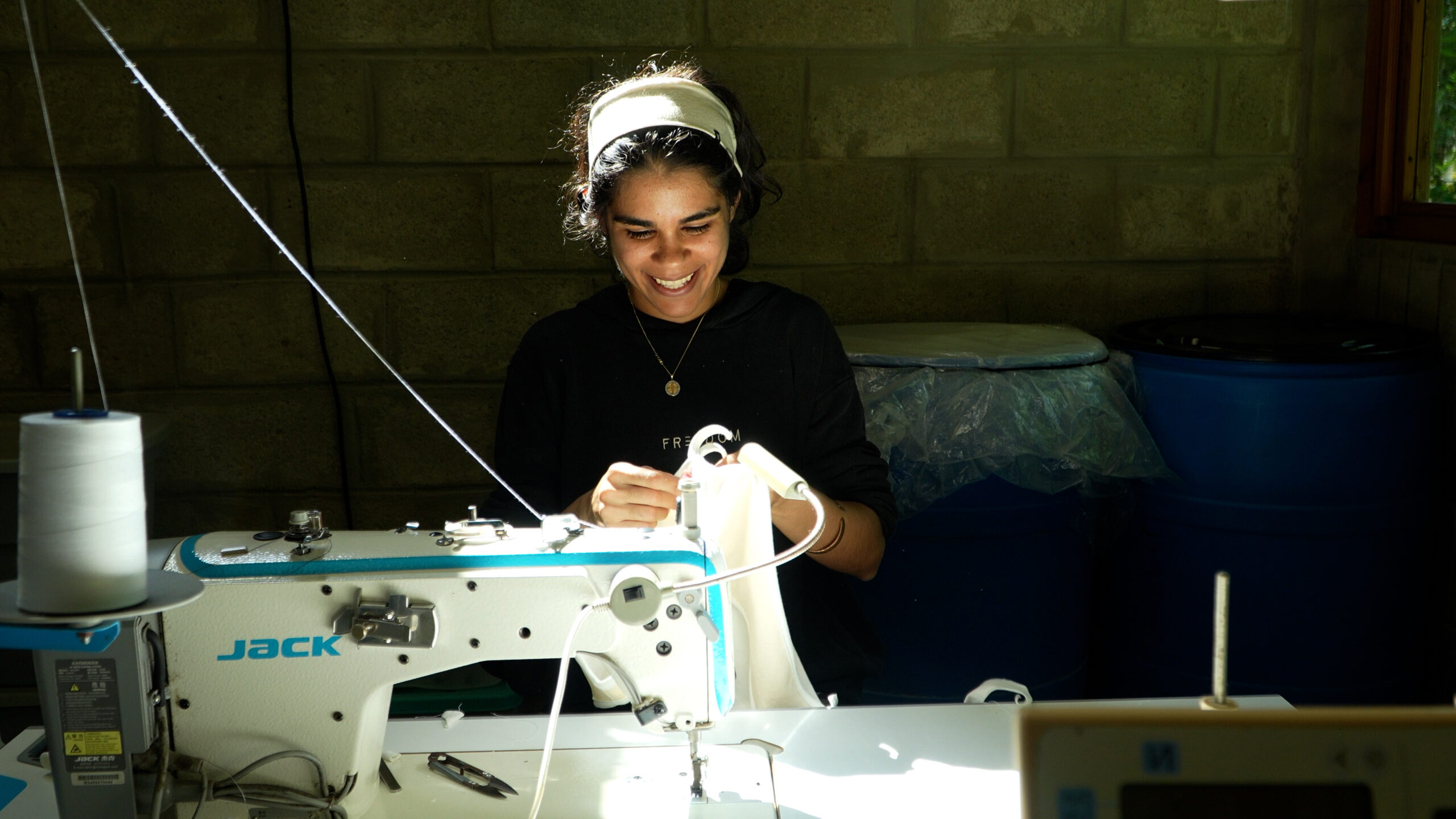
Vivi was especially excited when she described making what she considered Freedom’s first fully compostable garment. She explained that the team had been trying to find the missing pieces needed to make a garment without hidden synthetic components. They had the fabric, labels and other materials, but needed a suitable thread.
She told me they eventually found a supplier in the United States producing thread from regenerative cotton. In her account, being able to identify the people and facilities involved in producing that thread was an important part of the process. Once the components were brought together, they were able to make a garment that, she said, could return to the earth under appropriate conditions.
That was a milestone for her because it addressed a problem that can be missed when a garment is described as natural. A piece made from cotton or hemp may still contain polyester thread, elastane, a synthetic label or a finish that prevents it from breaking down as expected. The small components matter, especially when the ambition is for the entire garment to be compostable.
There is, however, a difference between being made from natural materials and being proven compostable. Compostability depends on the full composition of the product, the conditions required for decomposition and whether those conditions are available in the real world. A garment that can break down in a controlled industrial composting facility may not do the same in a home compost bin, a landfill or the natural environment.
Claims like these are worth examining carefully. A credible compostability claim should identify what has been tested, under which standard, and under what conditions the product is expected to break down. It should also explain what consumers are meant to do with the garment when they no longer want it. Without a realistic end-of-life route, a theoretical ability to compost is not the same as a functioning circular system.
For this reason, I would treat Freedom’s compostable garment as an important development described by its founder, rather than as an independently verified claim about every product in the collection. The next questions are practical ones: which exact garment has been tested, what certification or test results support the claim, and how should a customer dispose of it?
Vivi also spoke about the difficulty of developing underwear without conventional stretch fibres. Comfort and recovery are difficult requirements to replace, and she was watching newer materials made from bio-based sources, including seaweed-derived innovations. These were areas of exploration, not a finished solution she claimed to have perfected.
Her approach was to keep testing rather than assume that a new material was automatically better because it sounded innovative. That caution is important. Emerging fibres can offer promising possibilities, but they still need evidence about their production, durability, processing, blends and end-of-life options.
A workshop in the Dominican hills, not a factory hidden from view
When we visited the workshop, production was happening in the place where the brand was being rebuilt. The setting was calm, surrounded by the natural landscape of La Vega. It felt far removed from the image many people have of industrial garment production, although a beautiful setting is not, on its own, proof of good environmental or labour performance.
What mattered more was that the production process was becoming visible to the people running the brand. Vivi and David could work directly with materials, observe the making process, keep track of leftover fabric and experiment with ways of reducing waste. The team could also develop products in response to what they were learning, rather than relying entirely on decisions made elsewhere in the supply chain.
Vivi described the workshop as a place that they wanted to preserve alongside the surrounding ecosystem. She also explained that they had been able to sell internationally from the Dominican Republic, shipping to more than 30 countries, rather than moving the business to a major city as others had advised.
That is an interesting counterpoint to the idea that a small brand has to move production far away to become commercially viable. Local production can give a brand greater visibility and control, but it is not automatically lower-impact. Materials may still travel long distances, equipment requires resources, and finished garments still need to be delivered to customers. The real assessment depends on the whole system, not simply the address of the workshop.
There is also a difference between owning a production space and knowing everything about the materials that enter it. Vivi was still working with suppliers, testing alternatives and trying to improve the system. The value of bringing production closer to the brand is that it can make these questions easier to ask and investigate.
Made to order, small batches and the problem of producing too much
Freedom’s next change was about quantities. During our visit, Vivi explained that much of the production was made to order. A customer places an order, then the team begins cutting and sewing the garment, finishes it in the workshop and packages it for delivery. The idea is to avoid producing large batches of stock before the brand knows what customers will actually buy.
That model can reduce the risk of unsold inventory, but it also changes the customer experience. Vivi said people who are accustomed to fast fashion sometimes struggled to understand why their order had not shipped a few days after purchase. They might overlook the information explaining that the garment was made to order and contact the brand asking where it was.
She said that when customers understood that real people were making their clothes, many appreciated the process and returned to order again. But the adjustment required communication and patience. A slower model cannot work well if the brand promises instant delivery, hides its lead times or leaves customers guessing.
Vivi did not present made-to-order production as the only possible form of slow fashion. In fact, she told me that small batches were her preferred next step once the business had enough sales data to plan production more confidently. She described a batch of around 24 pieces in one style and colour as a useful scale for Freedom, allowing the team to respond to demand without making large quantities in every size.
That detail matters. Small batches are not a universal number. A batch that makes sense for a small Caribbean brand may be tiny for a global company. The useful principle is to match production more closely to actual demand, instead of making enormous quantities and hoping they will sell.
Made-to-order production also has limitations. Individual orders can require more separate handling and packaging, and producing one item at a time is not necessarily the most efficient option in every circumstance. The environmental result depends on the materials, production process, transport, returns and whether the model genuinely prevents excess stock.
Still, Freedom’s approach points to a question the wider industry needs to answer: why should making clothing be organised around the expectation that more stock is always better? When a brand can use sales data to decide what to make, it has an opportunity to reduce the gap between what it produces and what people actually want.
That is not just a matter for small labels. The European Environment Agency’s research on textiles sets out the wider consequences of high textile consumption, including resource use and waste. The problem is not solved by changing the fibre if the business continues to encourage constant replacement and unnecessary volume.
The uncomfortable question for the biggest brands
During our conversation, Vivi was direct about the difference between changing a material and changing the system around it. She questioned whether large brands could credibly describe themselves as sustainable while continuing to operate through mass production and constant growth.
“You can’t call yourself sustainable when you’re still running the same system that is destroying everything, and that is compromising so many lives and resources.”
Vivi, in our interview
Her frustration was not limited to the fibre composition of a garment. She was asking whether a business could keep producing huge volumes, relying on the same supply-chain structures and encouraging customers to keep buying, then describe itself as sustainable because it had introduced a recycled or lower-impact product.
That is a legitimate question, but it needs to be asked with evidence rather than assumptions about any one company’s intentions. Large brands are not all identical, and an improvement in one part of a supply chain can still matter. The problem is when a narrow improvement is presented as if it resolves the whole business’s environmental and social impact.
For consumers, this is where marketing language becomes difficult to navigate. A campaign can highlight recycled materials, a capsule collection, a repair programme or a climate pledge without giving a clear picture of total production volumes, the share of the business covered by the initiative or the conditions in the supply chain.
The Fashion Revolution movement and its transparency research encourage people to look beyond the finished product and ask brands to disclose more about their suppliers and policies. Transparency is not the same as proof of good performance, but it gives journalists, workers and consumers something concrete to examine.
The Ellen MacArthur Foundation’s work on circular textiles also helps frame the larger question: a circular economy requires more than a small number of better products. It requires systems that keep clothes in use, reduce waste and recover materials instead of depending on a continual flow of new resources.
That does not mean every brand must stop producing new clothes, or that made-to-order production is the only acceptable business model. It means sustainability claims should be proportionate to what has actually changed. A brand that has improved one material should explain that improvement. A brand claiming to have transformed its business should be prepared to show what that transformation involves.
The pressure to buy more is not going away
One reason this matters is that fashion’s environmental problems are tied to more than what a garment is made from. They are also tied to how much is produced, how quickly trends change, how often people wear what they own and what happens when clothes are no longer wanted.
Fashion marketing makes buying feel effortless. A new collection appears, a trend spreads through social media, an influencer wears something different, and a product can be ordered with a few taps. The speed of that experience can make the time and resources required to produce the garment almost invisible.
Meanwhile, textile waste remains a major challenge. The European Environment Agency’s textile reporting documents the environmental pressures created by textile consumption and disposal in Europe. The UN Environment Programme also examines pollution across the textile life cycle.
These reports cover a complicated system rather than a single material or country. They are a useful corrective to the idea that a new fibre, a recycling claim or a green capsule collection can resolve the industry’s problems in isolation.
Vivi’s transition took place over years because she was not just choosing a different fabric. She was trying to change what the brand made, how it made it, how much it made and how it handled the material left over. That is a much more demanding project than putting a sustainability message on an existing business model.
What should we actually ask a fashion brand?
Vivi’s story left me thinking less about whether a brand deserves to be called sustainable and more about whether it can explain its decisions. The word itself is often used so broadly that it can tell us very little. The useful information is in the details.
When a brand says it uses natural fibres, ask what percentage of the garment is made from those fibres and what the remaining components are. If it says a product is recycled, ask what material was recycled and whether the finished garment can realistically be recycled again. If it claims a product is compostable, ask what testing supports that claim and what disposal conditions are required.
When a brand talks about ethical production, look for information about its suppliers, labour standards and how those standards are checked. When it says it makes clothes to order or in small batches, ask how that model affects overproduction and what happens to returned or unsold items. And when it advertises a recycled or natural collection, ask whether the change covers the wider business or only a small part of it.
These questions are not about expecting every small designer to have the same resources as a multinational company. They are about expecting claims to be clear, specific and honest. A small brand can explain what it is trying to improve and what it has not yet solved. A large brand should be able to provide meaningful information about the scale of its impact and the progress it is making.
Vivi was open about the fact that Freedom’s transition took time, that some attempts did not work as expected and that some materials were still being tested. That willingness to discuss difficulty made the conversation more useful than a simple list of environmental promises.
There is a difference between a business that claims to have solved everything and one that can explain the problems it has identified, the decisions it has made and the work that remains. The second is not automatically beyond criticism, but it gives us a more meaningful basis for judging progress.
What the seven years cost, and what they made possible
By the end of our conversation, I understood that Freedom’s transformation had cost more than a change in fabric. Vivi and David had spent years building a different production system, learning to work with new materials, changing the way the brand presented itself and adjusting to a customer base that had first known a very different product.
Vivi told me that the brand’s undyed natural-fibre pieces initially surprised customers who were used to its earlier swimwear. It took time for people to understand the new direction. She also spoke about the financial pressure of the transition and the importance of the awards that helped them complete the workshop and buy equipment.
But she did not describe the process as a single moment of arrival. The brand was still experimenting with materials, improving its use of colour and developing ways to reduce waste. It was also learning how to balance made-to-order production with small batches as its sales data became more useful.
That is what makes the story worth telling. Freedom’s transition was not a claim that natural fibres solve every problem in fashion. It was a decision to stop accepting parts of a business that no longer felt right, then spend years trying to build something different.
There are still questions to ask about the environmental performance of individual materials, the evidence behind compostability claims, labour conditions and the full footprint of production and shipping. Those questions should remain part of the conversation. They do not erase the significance of the choices Vivi described, but they help keep the story grounded in what is known rather than what a brand hopes to achieve.
For me, the most important point is that a fashion business cannot become responsible simply by changing one ingredient. It has to look at the people making the clothes, the resources used to make them, the amount produced, the waste created and the life a garment is likely to have after it leaves the workshop.
We do not need every brand to follow exactly the same path. We do need them to be honest about the path they have chosen, show evidence for the claims they make and keep working on the parts that are not yet good enough.
Thank you for reading to the end and getting to know more about what it took to rebuild Freedom Ecowear. If you would like to explore the brand, Vivi is offering 12% off with the code Vitality at Freedom Ecowear.
And before your next purchase, take a moment to look beyond the label. Ask what the garment is made from, who made it, how long you are likely to wear it and what will happen when you are finished with it. Sometimes the most responsible choice is to buy less. When you do need something new, look for brands that can explain their decisions clearly and back up their claims.