

At 70, Irene Alphonse is still gathering clay from the land, shaping it by hand and making the pots that have supported her family for generations. Her story reveals what we stand to lose when an everyday craft is allowed to disappear.
Miss Irene’s Pots: The Saint Lucian Potter Keeping a Caribbean Tradition Alive
There is a particular kind of knowledge that never makes it into a book. It lives in the hands. It is passed from one generation to the next, learned by watching, by trying, by making mistakes and trying again. And sometimes, if nobody is there to pass it on, it disappears.
In Martin, Saint Lucia, Irene Alphonse has spent most of her life working with clay.
At 70, she still makes pottery, flowerpots and cooking pots, using a process that begins with the earth beneath her feet. The work is physical, painstaking and, to an outsider, almost astonishing in its simplicity. A piece of clay becomes something useful because she knows exactly what to do with it.
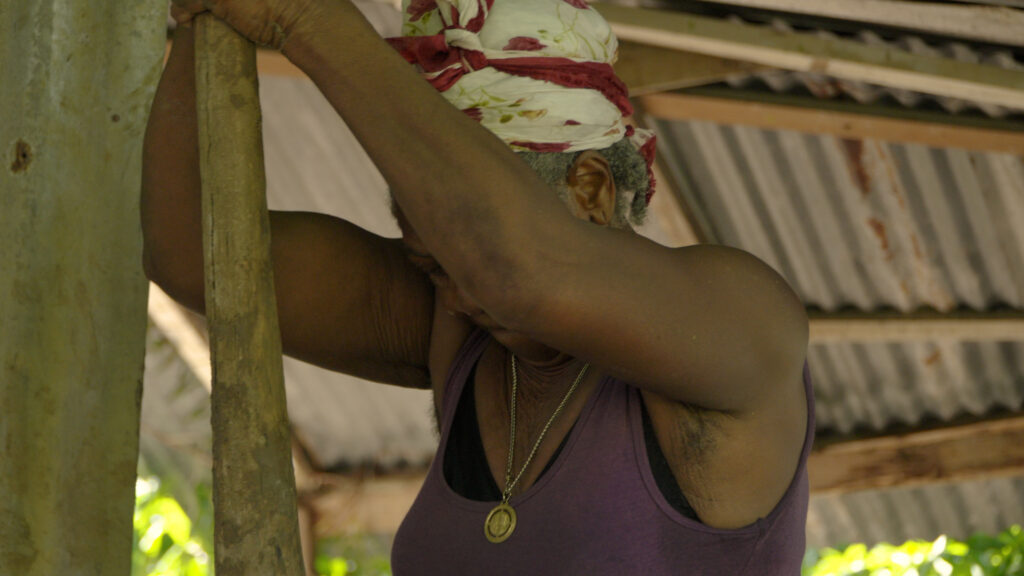
She has known for a very long time.
“I started with my mother at the age of nine,” she says.
That is where the story of Miss Irene’s pottery begins. Not in a design studio or a ceramics workshop, but with a child beside her mother, learning a skill that would eventually become her livelihood, support her children through school and shape the course of her life.
Today, her work offers a glimpse into a tradition that deserves far more attention than it receives. Traditional pottery in Saint Lucia is not simply a story about beautiful handmade objects. It is a story about food, family, resourcefulness and the knowledge carried by the people who make things with their hands.
Learning to work with clay
By the age of 15, Irene had gone to train at a craft centre. What began as something she learned from her mother was becoming a vocation of her own.

Over the years, her work also took her beyond Saint Lucia. She travelled to Anguilla, Martinique, Dominica and Guadeloupe for pottery-related training and work. The islands may be separated by water, but they share histories in which practical skills, local materials and knowledge passed between generations have played important roles.
For Irene, pottery was never a passing interest. It was how she made a living.
“I didn’t have any other work. Everything with it.”
There is something revealing about the way she says it. Pottery was not an occasional creative pursuit fitted around another career. It was the career. The work that paid the bills. The work that helped raise and educate her children. The work she returned to, year after year, until it became inseparable from her identity.
When asked how long she has been doing it, she speaks about beginning with her mother at nine, training at 15 and continuing ever since. At 70, she is proud of the years behind her. She is also clear that she is not finished.
“I am 70 years now. Proud to be 70.”
It is a simple statement, but it carries the weight of a lifetime spent working.
From the earth to the pot
To understand the value of Miss Irene’s work, it helps to understand what goes into making a single pot.

The clay is gathered locally. Before it can be shaped, it must be prepared. Irene pounds it, works through it and removes stones and other unwanted material. This is not a step she can rush. Anything left in the clay can cause problems later, particularly when the pot is fired.
Then comes the shaping. Using the coiling technique, she builds the vessel gradually, adding and working the clay until it takes the form she wants. The surface must be smoothed, the shape refined and the pot left to dry before it is ready for firing.
Each stage calls for experience. The material has to be understood, not simply handled. Too much of the wrong thing in the clay, or a mistake in the process, can cost hours of work.
The finished object may look straightforward. Getting there is anything but.
This is one of the things that can be missed when handmade pottery is presented only as a decorative trend. We see the finished bowl on a shelf, the rustic pot beside a kitchen stove or the flowerpot placed in a garden. We do not always see the labour, the judgement and the accumulated knowledge that made it possible.
With Miss Irene, the process is the story. The land provides the material, but it takes years of practice to turn that material into something that can be used.
And she does much of it alone.
Her son helps with some of the heavier work, but Irene says she likes working on her own. It is the way she has worked for years, and she knows her process.
The pots that belonged in every kitchen
Before plastic containers and inexpensive factory-made cookware became commonplace, clay vessels served practical purposes in households across many parts of the Caribbean. Their forms and uses differed from island to island and community to community, but the principle was familiar: local materials could be transformed into objects for everyday life.

For Irene, the connection between pottery and cooking is not a memory of some distant past. It is still part of her present.
She continues to cook in clay pots, especially beans, and speaks warmly about the food they produce. The pots are not simply objects to look at. They are meant to be used.
That distinction matters.
A cooking pot is part of a household’s daily rhythm. It sits over the heat, holds a meal and is brought out again and again. It becomes familiar through use. It is connected to the food people prepare, the people they feed and the occasions when families and communities gather.
In Saint Lucia, food is also closely connected to cultural identity. During Jounen Kwéyòl, the annual celebration of Saint Lucian Creole language and culture, traditional foods and familiar ways of preparing and sharing them take on particular significance. The Folk Research Centre, which works to preserve and promote Saint Lucian folk culture, is one place to explore this wider cultural context.
Miss Irene’s pots belong in that conversation. They are part of the material culture around food: the everyday objects that help traditions continue beyond festivals, performances and official celebrations.
She points out that people still cook in clay pots. She does not speak as if the practice has vanished. It is still there, even if it is no longer as central to everyday life as it once was.
That is an important distinction. A tradition can remain alive while becoming more fragile. People may still want the object, but fewer people may know how to make it. The food may survive, while the craft behind the vessel becomes harder to sustain.
When plastic changes more than the shopping list
In the documentary, the conversation turns to the changes Irene has witnessed over her lifetime. New products arrive, habits change and the things people once used are gradually replaced.
Plastic is part of that story.
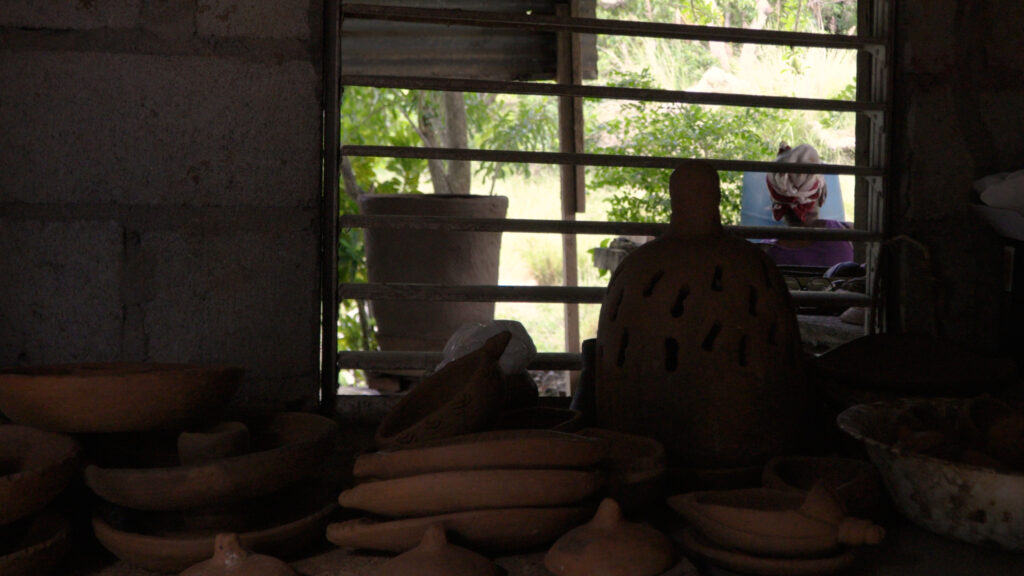
It is inexpensive, convenient and widely available. A manufactured container can be bought quickly, without waiting for someone to gather clay, prepare it, shape a vessel and fire it. The convenience is obvious. The cost to a living craft is less immediately visible.
When a community stops using an object, demand for the people who make it can decline. When fewer people make a living from the work, fewer young people have a reason to learn it. Eventually, the knowledge may survive in only a handful of people.
This is how a practical tradition can become something we talk about preserving only after it is in danger.
There is no need to romanticise the past to recognise what is lost. Plastic and mass-produced goods have changed daily life in ways that can be useful. Nor is every handmade object automatically more sustainable than every manufactured alternative. The materials, energy, durability, transport and length of use all matter.
But Miss Irene’s work asks a more fundamental question: what happens when we stop valuing the skills that allow people to make useful things from the materials around them?
A locally made clay pot represents more than a purchase. It represents knowledge of a material, an understanding of a process and a livelihood built through years of practice. It keeps a relationship between maker, land and household alive.
That knowledge cannot be replaced simply by buying a pot made somewhere else.
The craft centre that closed
One of the most telling parts of Irene’s story concerns the craft centre where she trained and worked.

The centre had equipment that helped prepare clay. When it closed, the machinery was left behind and eventually discarded. What had once helped make the process more manageable was no longer available to her.
Now, she does much of the preparation by hand.
The loss is practical as well as symbolic. Equipment can make a difficult job easier, support production and help an artisan take on more work. A functioning craft centre can also provide a place for people to learn, practise and exchange knowledge.
When that infrastructure disappears, the burden falls back on the individual maker.
It would be easy to frame this as a story about an older artisan preserving the past through sheer determination. But that would overlook the larger issue. Irene is still working. She is still producing objects that people want to buy. What is missing is the support that could make it easier for the craft to continue beyond her own labour.
Traditions do not survive on admiration alone.
They need places to work, access to materials, tools that function, customers who value the finished product and opportunities for younger people to learn. They need to be treated as living skills, not merely as remnants of an earlier way of life.
Irene once taught children at the craft centre. That detail is easy to pass over, but it may be one of the most important parts of her story. She was not only making pots. She was also helping to pass on the knowledge that made them possible.
The question is what happens next.
A living tradition, not a museum piece
There is a tendency to celebrate traditional crafts as heritage while leaving the people who practise them to manage on their own. We praise the skill, photograph the finished objects and speak warmly about preserving culture. Yet the work itself can be physically demanding and financially uncertain.
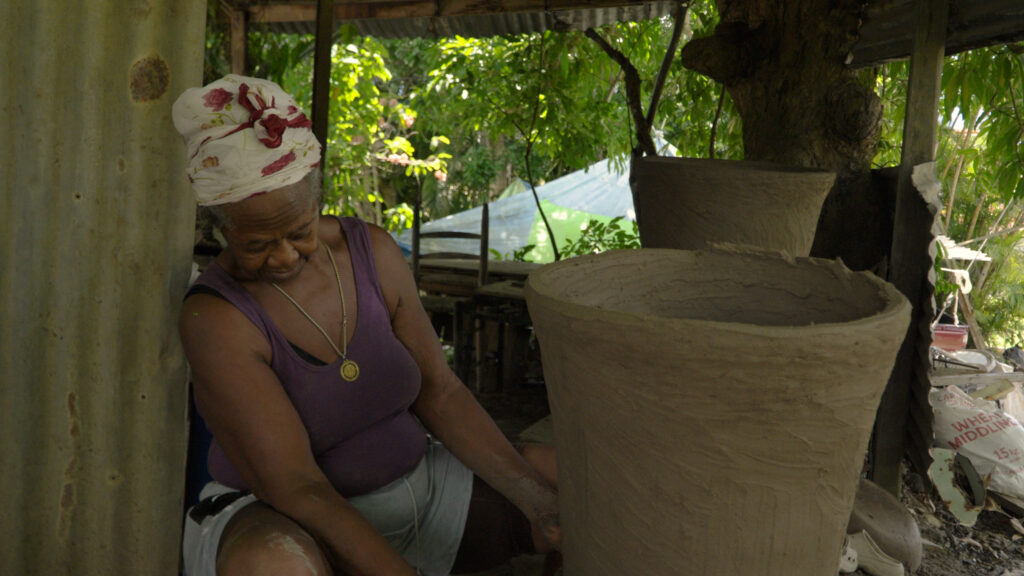
Miss Irene’s story brings that contradiction into focus.
At 70, she is still making pots. People know her work, refer others to her and place orders. Some come to buy what she has made; others ask her to produce particular items. She has built a reputation through the work itself.
“I do pottery, flower pots. Name it, I do everything,” she says.
Her words are direct, without the language of branding or the need to make her work sound fashionable. She knows what she can do. She has spent decades doing it.
That is part of what makes her story so compelling now, at a time when handmade ceramics have found a new audience among people interested in interiors, slow living and objects with a visible connection to their makers. Pottery may appear in design magazines as a rediscovered aesthetic, but for Irene, it has never gone out of fashion. It has always been work.
The renewed interest in ceramics could create opportunities for traditional makers, but only if attention turns into meaningful support. That means buying from artisans, commissioning their work, documenting their techniques and making it possible for new generations to train. It also means listening to the makers themselves, rather than treating their knowledge as something outsiders can extract and repackage.
In the Caribbean, where histories and traditions vary across islands and communities, that work should begin with the people who hold the knowledge. Indigenous ceramic traditions, African diasporic histories and later cultural exchanges have all shaped the region in different ways. Miss Irene’s experience offers a particular Saint Lucian perspective, not a single story that can stand in for every island.
Her story deserves to be understood on its own terms.
What we stand to lose
At the end of the day, a pot is an ordinary thing. It holds food. It sits in a garden. It may be used every morning without much thought.

Perhaps that is precisely why it matters.
The objects that shape a culture are not always the ones displayed behind glass. Often, they are the things people reach for without thinking: the pot on the stove, the vessel used to serve a meal, the familiar object that has been part of a household for years.
Miss Irene’s work reminds us that ordinary things can carry extraordinary amounts of knowledge.
She learned from her mother when she was nine. She trained, travelled, worked, raised her children and continued making pots. She has watched the world change around her, yet the clay is still there and so are her hands.
In the documentary, she speaks about her work with the ease of someone who has never needed to separate it from life. For her, pottery is not a heritage project. It is what she does.
The responsibility now belongs to more than one person. It belongs to the institutions that support cultural practice, the people who commission and buy handmade work, and the communities deciding which skills they want to pass on. It belongs to anyone who believes that local knowledge should have a future, not simply a place in the past.
Miss Irene does not need her work to be turned into a romantic symbol. She needs the work to remain possible.
At 70, she is still making pots. The question is whether there will be people, places and practical support to help ensure that the knowledge she carries does not end with her.
That is the real story of traditional pottery in Saint Lucia. Not just the survival of an old craft, but the future of a skill that still has something to give.