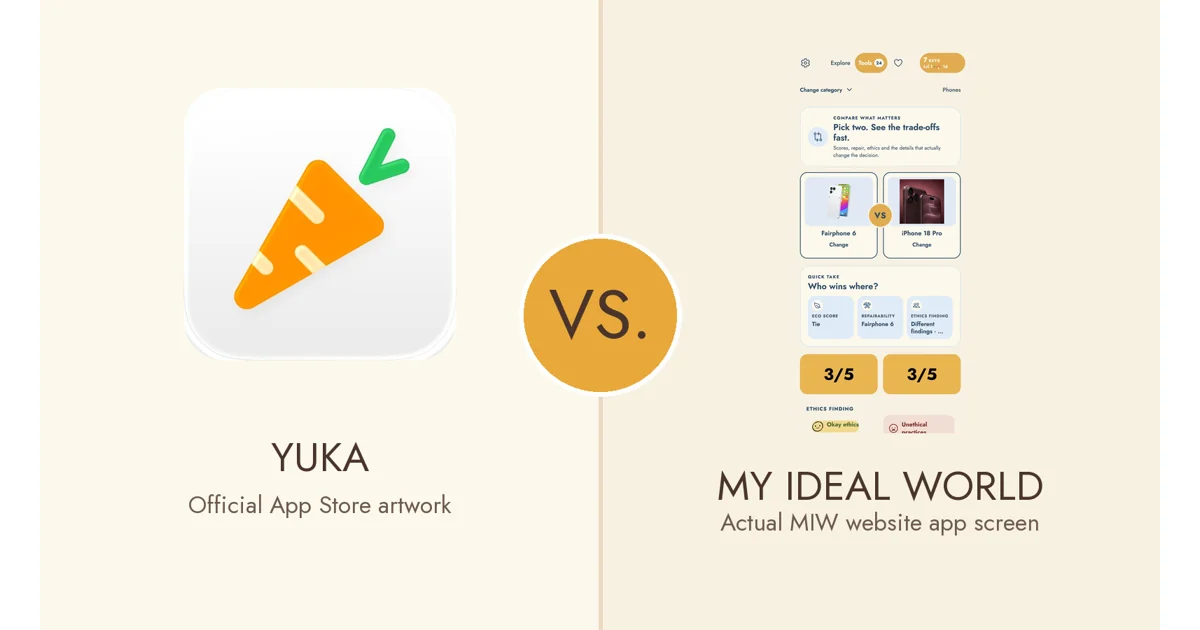
Yuka vs My Ideal World starts with what each app is trying to tell you. A food score and a record of product evidence can lead to different shopping decisions.
A reassuring colour does not explain every ingredient, supplier or condition of use. I want the method behind the answer before I let it choose what goes in my basket.
Yuka's published food method assigns 60% to nutritional quality, 30% to additives and 10% to organic status, with an additional cap for additives it considers high risk. Those are declared scoring choices that a reader can examine.
My Ideal World's composition preferences and category reports ask different questions. Their coverage and evidence gaps still need to be visible, and neither approach is a personal medical assessment.
The test is whether you can identify the exact product, follow the source and understand why the result was reached. That is the comparison I make here.
Julie Chapon's cereal box is the whole story
Yuka cofounder Julie Chapon told The Washington Post she had eaten Nestlé Fitness cereal for ten years.
“When I checked the label, one quarter of this product was made with sugar.”
The revelation helped inspire the app. A cereal that looked sensible from the front had a very different story in its composition.
This is exactly the part of…
Continue reading
Create a free account to collect Keys for full reports and longer reads. Or choose membership for unlimited access.
On this story
Comments, questions and answers from signed-in readers. Community contributions are not verified editorial findings.
More long reads