
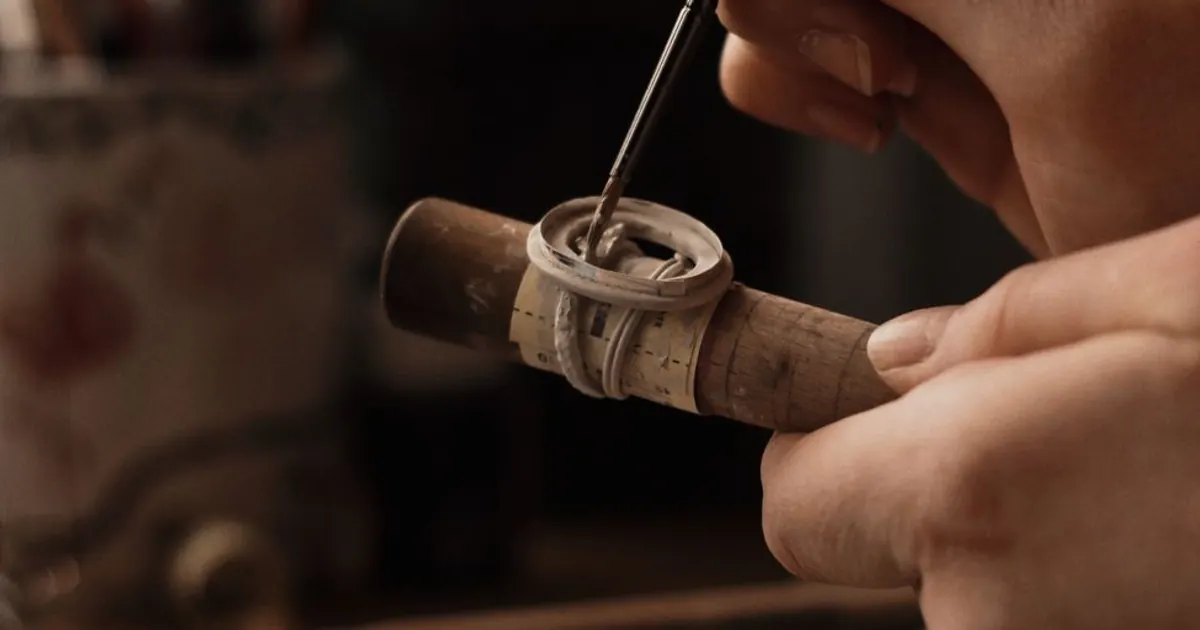
Jewellery makers and ethical sourcing belong in the same conversation because a beautiful object has a material history. The gold, the stone and the person shaping them can each lead somewhere different.
I want the maker’s story to name those relationships. A broad ethical description becomes more useful when it leads to a particular workshop, material declaration or sourcing document.
Pippa Small and Ute Decker provide two published starting points. Small speaks about artisan relationships and alternative gold sourcing. Decker discusses provenance and identifies Fairtrade gold in particular works.
These are their published interviews, project pages and product descriptions. They provide material to examine, rather than an independent inspection of every item either maker sells.
Follow one piece through its own evidence. The story can remain interesting when the unanswered questions stay visible beside it.
Pippa Small begins with people and craft relationships
In Paolo Ferrarini’s 2023 Cool Hunting interview, republished on her website, Pippa Small explains the route from human rights work into jewellery design. Her description begins with people making objects and the relationship needed to bring those objects to another market.
I’m coming to design from human rights
The account also discusses working with Turquoise Mountain and looking for alternative gold sourcing in Colombia. Keep the interview date attached to those descriptions. It records her explanation at that time, rather than a current transaction record for every piece in the shop.
I would take two questions from it. Who is credited for the making, and how can the material source be followed? A designer can explain a relationship clearly while the purchase still needs a matching declaration for the item you are considering.
The Colombian project names makers as well as materials
Pippa Small’s Colombia page describes gold panning, emerald sourcing and a collection made with goldsmiths in the country. Its maker profiles name people including David, Eber, Wilmar, Leonel and Henry, and describe particular craft contributions.
That is more specific than presenting an anonymous pair of hands as the entire supply chain. The page associates David with filigree work and Eber with a cacao pod design. Those are the brand’s published accounts of the project, with the maker kept visible.
The sourcing language still needs careful boundaries. A project page can identify a place and process without supplying every record needed to verify an absolute environmental claim. I would ask which material lot and finished pieces the description covers, then keep any missing documentation open.
An artisan relationship and a gemstone’s provenance are related parts of the story, but they are not the same document. Ask who mined or supplied the stone, where cutting or other processing happened and how that information is matched to the particular piece.
Ute Decker connects provenance with the individual material
In the interview published by Anna Loucah, Ute Decker relates material provenance to the idea of stewardship she knew through her family’s winemaking. The conversation also asks about gemstones and the importance she places on knowing their origin.
I love uncut, rough stones, but I would need to know exactly where they came from.
That is a maker’s stated requirement, rather than a certificate for an unnamed stone. It is useful because it shows where her interest begins. The next step for a buyer is the declaration attached to an actual work.
Her website lists Ocean, a 2022 neck sculpture, as 18 kt Fairtrade Gold. That is a specific product description and a defined material claim. It should not silently become a statement that every material in every work has the same source or certification.
I would use the item reference when making an enquiry. Keep the maker’s title, material declaration and current availability together, then ask for the relevant sourcing documentation before relying on a broader description of the practice.
Fairtrade, Fairmined and recycled describe different things
A Fairtrade gold claim and a Fairmined gold claim refer to separate named schemes. Fairmined describes an assurance model for gold from certified artisanal and small scale mining organisations. Its supply chain information distinguishes certified mining organisations, authorised suppliers and licensees.
Fairtrade’s mark guidance explains that the gold indication can apply to the gold in jewellery that contains other elements, including precious stones. That scope matters. A gold certification should not be extended into a certification of a gemstone without matching evidence.
A recycled content statement raises a different material history question. Ask what was recovered, the component and percentage covered, and which records support the claim. Do not assume the word recycled identifies the original mine or answers every question about processing and labour.
Our jewellery sourcing claim guide separates these descriptions in more detail. Read the scheme and product scope together rather than treating several familiar badges as interchangeable endorsements.
What should you ask about the metal in a particular piece?
Begin with the metal declaration and the components it covers. A gold surface, a solid gold component and a different metal beneath a coating have different constructions. Ask for the product description that matches the exact item rather than borrowing a material claim from another collection.
The Metal Ethics Check can help frame the source question before purchase. Keep the maker’s supporting documents beside it. The tool does not physically assay the jewellery or independently inspect the mine.
For a certification claim, ask how the seller connects the metal to the relevant documented supply. Check the current scheme information and the record supplied for the piece. A historic partnership announcement is useful context, but it is weaker evidence for a present transaction than a matching current declaration.
If a seller cannot answer every question, record which part remains unresolved. A limit on the available evidence does not erase the craft in the object, and admiration for the craft should not fill the missing field.
Keep the stone and the workshop in the same investigation
A named workshop does not automatically establish the history of every gemstone it receives. Ask for the stone’s identity, declared origin and any disclosed treatment or processing information. Keep the answer attached to the actual piece and the evidence available for it.
Likewise, a material source does not describe the entire working relationship. A maker account can explain how a design developed or how a collaboration operates. Questions about continuing work, payment and decision making still need evidence appropriate to those claims.
The Claim Checker can keep each statement separate. Use one entry for the metal’s provenance and another for the artisan relationship if they rely on different documents. A reassuring answer in one field should not make the other question disappear.
Choose the object with its history still attached
A published interview is valuable when it gives you a more precise question to ask. Small’s accounts bring named craft relationships into view. Decker’s material descriptions show how a provenance claim can be attached to an individual work.
Before buying, confirm the piece, material, current terms and any supporting declaration you need. If you already own jewellery, care, repair or remodelling may be the relevant next conversation. A sourcing interest does not require a new purchase every time a compelling maker story appears.
Keep the records with your My Ideal World research so the explanation remains available after the sales page changes. I want the people and the material history to stay beside the object, rather than disappear once it has been wrapped.
Sources and further reading
Paolo Ferrarini’s 2023 Pippa Small interview, republished by the maker
Pippa Small Colombian project and named maker accounts
Published interview with Ute Decker on Anna Loucah’s site
Ute Decker Ocean neck sculpture and material declaration
Fairmined supply chain roles and assurance information
Fairtrade mark use guidance and gold scope
Sources and resource pages reviewed on 17 November 2026. Check current access, offers and operating arrangements before making a purchase or journey.
On this story
Comments, questions and answers from signed-in paid members. The conversation is shared with the app. Community contributions are not verified editorial findings.
Contribute evidence
Reviews share first-hand experience. Observations can include opinions and objections. Evidence is checked against its sources before publication. Community contributions do not change MIW scores.
Article discussions and evidence contributions are for paid members and are shared with the app.
Sign in to contribute or join the discussion Read this next
Best Sustainable Fashion Apps for Buying Less
Best sustainable fashion apps in 2026 for ethical brands, resale, repairs and natural fibres. Compare what each app can really verify. Compare the trade-offs.Read the story Keep exploring
Build a Sustainable Wardrobe With Natural Fibres
Build a sustainable wardrobe with natural fibres by starting with your own clothes. Check labels, fit, care and real gaps before choosing what to buy next.Read the story Keep exploring