


Where your money stays in Guyana is a village question before it is a hotel question. The country has a community led and owned tourism model in which villages own and operate lodges. Surama started hosting guests in the 1990s and became the prototype for Rewa. That is the fact I will not let a city brand talk over.
Most holiday money can still leave. A state owned building run by an international hotel company is not the same thing as a Makushi village lodge. I split the stays the sources can carry. Indigenous owned, where the village is the owner. Locally owned, where a Guyanese family or business is named and race is not the sentence. If the source calls the owner an Englishman, or names Marriott as the operator, it is not in the village table.
The My Ideal World app is the short check. Scores stay free. This page is the village, the owner, and the limit.
Where does the ownership story in Guyana actually start?
The ownership story starts with people, not with a hotel logo. Land titling remains a key current issue for Indigenous communities. The country record is the Guyana eco index. A lodge on untitled confusion is not a neutral booking.
Guyana’s community led and owned model is the practical answer some villages built anyway. The Rough Guide account says Surama became one of the first community led projects, that tourism income helped the Makushi community fund the first lodge, and that Surama became a prototype for Rewa. The same piece says about 60 percent of Surama’s income was generated by tourism related activities. I am printing their figure, not a national leakage rate I do not have.
In 2026 Toka Village, and Inni Lodge with it, won the Caribbean Tourism Organization’s Community Based Tourism Award. That is the Kaieteur News report. An award is not an eco score. Inni’s eco score is 1.5 out of 5. Hold both.
Why book a village owned lodge in Guyana?
Book a village owned lodge in Guyana because the village fund is the point of the model. A portion of a tour can go to a fund the council controls. A chain in Georgetown answers somewhere else. Those are different nights, even if both have a bed.
Village ownership is not a green medal. Surama’s people score is 3.4 out of 5 and the eco score is 2.2 out of 5. Rewa’s people score is 3.2 out of 5 and the eco score is 3.4 out of 5. You do not get gold medals for saying please and thank you. The people score can see a community owner. The eco score still has to be earned in food, water, energy and land.
Makushi and Macushi are spellings you will meet for the same people in different sources. I am keeping the spelling that belongs to each source instead of pretending the paperwork uses one.
Where should you stay in Guyana?
Match the region to the days you have.
Stay in the region that matches the journey you can actually make. Georgetown is the city. The Pomeroon is a river. The North Rupununi is a long road and a ferry, or a flight you arrange. The South Rupununi is further. Do not book a savannah lodge as if it were a hotel on the sea wall.
| Area | Choose it for | Practical difference |
|---|---|---|
| Georgetown | A city base, a market, and a short list of named local hotels | Opus is the sourced Guyanese business hotel. The Marriott is not a local family hotel. Cara Lodge still needs an owner. |
| North Rupununi, Region 9 | Makushi and Macushi village lodges and a ranch | Surama, Rewa, Inni at Toka, and Karanambu are the sourced stays. The road from Georgetown is a night journey. Write before you travel. |
| South Rupununi | A working cattle ranch | Dadanawa is the Defreitas family ranch. The TripAdvisor page looked stale. Ask if they are receiving guests. |
| Pomeroon, Region 2 | A river resort in a family story | Adel’s is Zena Stoll’s place at Akawini Creek. It is not a Rupununi lodge. Do not mix the rivers up. |
| Near Georgetown, the highway resorts | A fun park and resorts whose exact spot the source did not pin | Splashmins is Lennox John’s. Rock View at Annai is not Guyanese born ownership. |
Start with the Guyana destination page. I do not have a separate where to stay guide for Guyana in this batch, so this page has to carry the owner and the map together. Sister owner lists, including Belize, Dominica and Jamaica, use the same columns if you are comparing how a village lodge differs from a beach resort.
How do these Guyanese lodges compare?
Read ownership, scores and ratings separately.
These lodges compare on who owns them, the eco score, and guest ratings. The three do not stand in for each other. Google figures are the earlier draft snapshots. I did not refresh them. TripAdvisor figures come from listing pages opened on 5 November 2026.
Rewa’s TripAdvisor page files the lodge under Georgetown. The reviews describe the river lodge. I am linking that page and telling you the filing is wrong, so you do not think Rewa is a city hotel.
Ask first means the late October 2026 check could not confirm they were taking guests. Open, on Rewa and on Inni, means the source showed the project operating. It is still not a bed on your dates. Dadanawa’s newest TripAdvisor review seen was March 2019. Adel’s newest seen was May 2021. Opus’s newest seen was March 2020. Stale pages stay marked.
Which Indigenous owned lodges in Guyana are actually village owned?
Surama, Rewa and Inni Lodge at Toka are the village owned lodges with a source. The owner is the village, not a private surname. That is the strongest people story in this guide, and it still comes with modest or mixed eco scores.
| Hotel | Where | Owner, with source | Throne Standard | TripAdvisor | Open now | |
|---|---|---|---|---|---|---|
| Surama Eco Lodge Community eco lodge | Surama Village, North Rupununi, Region 9 | Surama Village, Makushi community | 2.2/5 | 4.2 (96) | 4.8 (16) | Ask first |
| Rewa Eco Lodge Community eco lodge | Rewa Village, Rewa and Rupununi confluence, Region 9 | Rewa Village. Macushi, Patamona, Wapishana and Wai Wai villagers | 3.4/5 | 4.7 (54) | 4.8 (19) | Open |
| Inni Lodge, Toka Village Community lodge | Toka Village, North Rupununi Wetlands, Region 9 | Toka Village, Macushi, led by the tourism committee and the village council | 1.5/5 | No listing found | Not listed | Open |
Who owns Surama Eco Lodge? The Makushi village of Surama does.
Surama Village owns Surama Eco Lodge, a community eco lodge in the North Rupununi, Region 9, Guyana. The lodge site says it is owned and operated by the people of Surama, and calls it Guyana’s first Indigenously operated lodge. Tours are managed by Makushi people. The Rough Guide account is the second source, including the line that about 60 percent of income came from tourism related work, and that hiking, river trips and wildlife watching are curated by community members.
Their community page says villages govern themselves through elected village councils, that communities own their own lands, and that a portion of each tour goes to a village fund for community projects. Meals are described as prepared from local produce. Bradt called it a village of about 300 Makushi people on about 13 square kilometres of savannah. The lodge site says five square miles. Those figures sit in the same range. I am not pretending a newer census was opened for this draft.
The eco score is 2.2 out of 5. Purity is 1.2 out of 5. People is 3.4 out of 5. That split is the lesson. A village owner can lift the people score to the top of this list and still leave purity thin. I could not confirm a water system or an energy system beyond what the score already withholds. TripAdvisor was 4.2 from 96 reviews. Google stood at 4.8 from 16, a thin count. Ask first.
The getting there page describes minibuses leaving Georgetown in the evening, a ferry at Kurupukari around sunrise, and another stretch to the Surama junction. It also tells you not to arrive without notice. Parts of that page mention 2011 and 2012, including an airstrip note and a one way flight figure around 150 US dollars. I am not offering that fare as today’s price. Write to the village before you move.
Who owns Rewa Eco Lodge? Rewa Village does, and the eco score is 3.4 out of 5.
Rewa Village owns Rewa Eco Lodge, a community eco lodge where the Rewa meets the Rupununi in Region 9, Guyana. The lodge site calls it community run. It says the village is home to 361 Macushi, Patamona, Wapishana and Wai Wai villagers, and that it was founded in 2005 with support from Conservation International. Catch and release of arapaima is part of what they offer. Traditional farming, fishing and conservation are their own words for how livelihoods and the river stay in the same sentence.
The older draft showed a Throne score of 4 out of 5. The index now reads 3.4 out of 5 eco. Purity is 1.5 out of 5. People is 3.2 out of 5. Use 3.4. A people score near the top and a purity score of 1.5 means the ownership story is stronger than the purity file. Do not clap for the wrong number.
Bradt says the village is reached by river, about two to five hours by boat from Kwatamang Landing or Apoteri, and gave an older population around 300. The lodge site now says 361. I am printing both and not hiding the gap. TripAdvisor was 4.7 from 54 reviews on a page filed under Georgetown. Google stood at 4.8 from 19. The open status is Open, from a 2026 Chronicle note on tourism businesses. Confirm the boat and the dates. The booking address on the site is ecolodgerewa@gmail.com.
Who owns Inni Lodge? Toka Village does, through its tourism committee and council.
Toka Village owns Inni Lodge, a community lodge in the North Rupununi wetlands, Region 9, Guyana. The Kaieteur News report on the 2026 community based tourism award is the source for the village, the Macushi community, the tourism committee and the village council. A Visit Rupununi member page lists nature walks, community led tours, birdwatching, local food and craft workshops, with a phone and an email. I am not turning a member listing into a full environmental audit.
The eco score is 1.5 out of 5. Purity is 1 out of 5. People is 3 out of 5. An award and a people score of 3 can both be true while the eco file is still thin. There was no TripAdvisor listing. Google was not listed. The status is Open on the strength of the award report. Ask what is actually bookable this month. A standalone lodge website was not in the index.
Which other Guyanese owners are named in the sources?
Karanambu, Dadanawa, Adel’s, Opus and Splashmins are the other locally owned lines, where a Guyanese family or business is named and the source does not state race. A ranch is not a village lodge. A franchise is not a pure independent. I am keeping those limits visible.
| Hotel | Where | Owner, with source | Throne Standard | TripAdvisor | Open now | |
|---|---|---|---|---|---|---|
| Karanambu Lodge Ranch eco lodge | Karanambu, North Rupununi, Region 9 | McTurk family and the Karanambu Trust. Hosts named as Andrea and Salvador de Caires | 2.4/5 | 4.4 (87) | 4.8 (6) | Ask first |
| Dadanawa Ranch Working cattle ranch | South Rupununi, south of Lethem | Defreitas family | Not on the index yet | 4.6 (20) | Not listed | Ask first |
| Adel’s Rainforest Resort Rainforest river resort | Akawini Creek, Pomeroon River, Region 2 | Zena Stoll, born on the Pomeroon, granddaughter of Adel Stoll | Not on the index yet | 4.2 (12) | Not listed | Ask first |
| Opus Hotel Boutique hotel, Ascend franchise | Georgetown | Wilfred Brandford, Guyanese businessman | Not on the index yet | 4.5 (20) | Not listed | Ask first |
| Splashmins Fun Park and Resort Resort and water park | Near Georgetown. Exact area not pinned by the source | Lennox John | Not on the index yet | 3.3 (27) | 4.1 (345) | Ask first |
Who owns Karanambu Lodge? The McTurk family does, with the trust, and the hosts are named.
The McTurk family owns Karanambu Lodge, a ranch eco lodge at Karanambu in the North Rupununi, with the Karanambu Trust. The source names current hosts as Andrea and Salvador de Caires. Bradt associates the place with the late Diane McTurk and with work rehabilitating orphaned giant river otters. I am not turning that history into a promise that you will see an otter, and I am not confusing the late owner with the current hosts.
The eco score is 2.4 out of 5. Purity is 1.2 out of 5. People is 1.9 out of 5. TripAdvisor was 4.4 from 87 reviews. Google stood at 4.8 from 6, which is a very small count. Ask first. A ranch lodge is a family business. It is not the same legal object as Surama’s village fund.
Who owns Dadanawa Ranch? The Defreitas family does, and the reviews look old.
The Defreitas family owns Dadanawa Ranch, a working cattle ranch in the South Rupununi, south of Lethem. A separate ranch website was not in the draft, so the name points at the source that names the family. It is not on the stay index yet. TripAdvisor was 4.6 from 20 reviews, and the newest review seen was March 2019. That is stale. Google was not listed. Ask first, and ask whether they are receiving guests at all.
Who owns Adel’s Rainforest Resort? Zena Stoll does, on the Pomeroon.
Zena Stoll owns Adel’s Rainforest Resort, also called Adel’s Resort and Coconut Estate, at the mouth of Akawini Creek on the Pomeroon River in Region 2. The Stabroek News profile says she was born on the Pomeroon and is the granddaughter of Adel Stoll. It is not on the index. TripAdvisor was 4.2 from 12 reviews, newest seen in May 2021. Google was not listed. Ask first. A 2024 profile is not a 2026 vacancy.
Who owns Opus Hotel? Wilfred Brandford does, inside a franchise.

Wilfred Brandford, described as a Guyanese businessman, is the owner named for Opus Hotel, a boutique hotel in Georgetown. The earlier draft also calls it an Ascend Hotel Collection franchise. A Guyanese owner and a franchise brand can both be true. It is not on the stay index yet. TripAdvisor was 4.5 from 20 reviews, and the about text on that listing says Guyanese owned and managed. The newest review seen was March 2020. Google was not listed. Ask first. I would not treat a stale page as proof the hotel is busy.
Who owns Splashmins? Lennox John does, and the guest scores disagree.
Lennox John owns Splashmins Fun Park and Resort, a resort and water park near Georgetown. The source did not pin the exact area, so I will not invent a neighbourhood. The draft spelling was Splashmin’s. The TripAdvisor listing uses Splashmins. I am treating them as the same place the draft already linked, not as two resorts.
It is not on the index. TripAdvisor was 3.3 from 27 reviews. Google stood at 4.1 from 345. Those guest numbers do not match each other, which is a reason to read both and trust neither as an eco score. There is no eco score. Ask first.
Which well known Guyana hotels are not Guyanese owned?
Rock View Lodge and the Georgetown Marriott are the well known names that do not belong in the Guyanese owned tables. A long stay in the country is not the same as being from the country. A state building with an international operator is not a village lodge.
Rock View Lodge at Annai is owned by Colin Edwards, described as a gregarious Englishman who bought it in 1992. He has run it for more than 30 years and won a tourism hall of fame award in 2023. The draft’s point stands. He is not Guyanese born. TripAdvisor was 4.3, and the page also showed a review count of 77 beside a headline near 80. I am not sanding that into one tidy total. It stays out of the local table.
The Georgetown Marriott is an international brand. The building is owned by the state company Atlantic Hotel Inc and run by Marriott. That is not locally owned hospitality in the sense of this list. TripAdvisor was 4.4 from 717 reviews. A full hotel can still be the wrong owner for this page.

Which Guyana lodges still need an owner on the record?
These lodges still need an owner on the record, or the sources disagree. They are not in the tables.
Caiman House at Yupukari is the messy one. Bradt says Americans Peter Taylor and Alice Layton built it in 2005 as a base for researchers. TripAdvisor’s about text calls it a nonprofit community owned social enterprise. I will not pick a side I cannot finish. It stays off the village table until one story is the deed. TripAdvisor was 4.4 from 42 reviews.
Atta Rainforest Lodge at the Iwokrama canopy walkway is operated jointly by Community and Tourism Services, whose partners include Surama Village, Rock View Lodge, Wilderness Explorers and the Iwokrama centre. No percentages were given. Because Rock View’s owner is not Guyanese born, I am not filing Atta as a simple village lodge. TripAdvisor was 4.5 from 82 reviews.
Maipaima Eco Lodge at Nappi had a TripAdvisor attraction page with no reviews yet. Warapoka eco lodge in Region 1 had no listing found. Arrowpoint Nature Resort is described by Bradt as an expression of Amerindian culture, with cassava bread, canoeing and spear fishing, and the owner was not named. TripAdvisor was 4.3 from 55 reviews. Baganara Island Resort on the Essequibo was 4.5 from 59. Cara Lodge in Georgetown was 4.0 from 265, and the owner was not named. Ask them. Do not let a cassava demonstration stand in for a deed.

How can you check a hotel in Guyana before you book it with the My Ideal World app?
You can check a hotel in Guyana before you book it. The My Ideal World app holds deep transparency data on 2 million brands. Scores, verdicts and findings stay free.
Points for zero waste, sustainable and local actions unlock Keys to deeper reports. A refill, a farm shop visit or rescued food is the kind of action that opens the next layer. Create your free account on the web now. The app lands in the App Store and Google Play before December.
I am not going to invent a feature that is not there. The point of the screen is the evidence beside the name. A green leaf on a booking site is not a score.
Where can you eat from a Guyanese village kitchen?
Eat from a village kitchen when the lodge says the meal is local produce and you can ask who farmed it. Surama says that. Rewa talks about traditional farming and fishing. Arrowpoint’s cassava bread is described by Bradt, and the owner there is still unnamed, so a cooking demonstration is not an ownership claim.
A plant based plate was not confirmed at any lodge in these tables. Fish and meat are the likely default on a river. Ask in writing if you need a plate without them. I will not invent a vegan menu for the Rupununi.
I did not confirm a healer’s protocol, a specific bush medicine menu, or a price for a market meal in Georgetown. Stabroek Market is a real market in the capital. The photo is the market, not a stall I am recommending by name. Ask what is in season. Pepperpot and cassava bread are foods you should meet from a cook, not from a paragraph that pretends to be a recipe.
How do you get around Guyana, and what will it cost?
Read the St. Lucia owner list if you want the same columns on another island. Get around Guyana by accepting that the Rupununi is not a taxi from a city hotel. Surama’s own page describes an overnight minibus, a ferry at sunrise, and a warning not to arrive unannounced. Rewa is a boat of two to five hours in the Bradt account. Inni is in the wetlands. I do not have a fresh 2026 fare, so the old 150 US dollar flight note stays in the past tense.
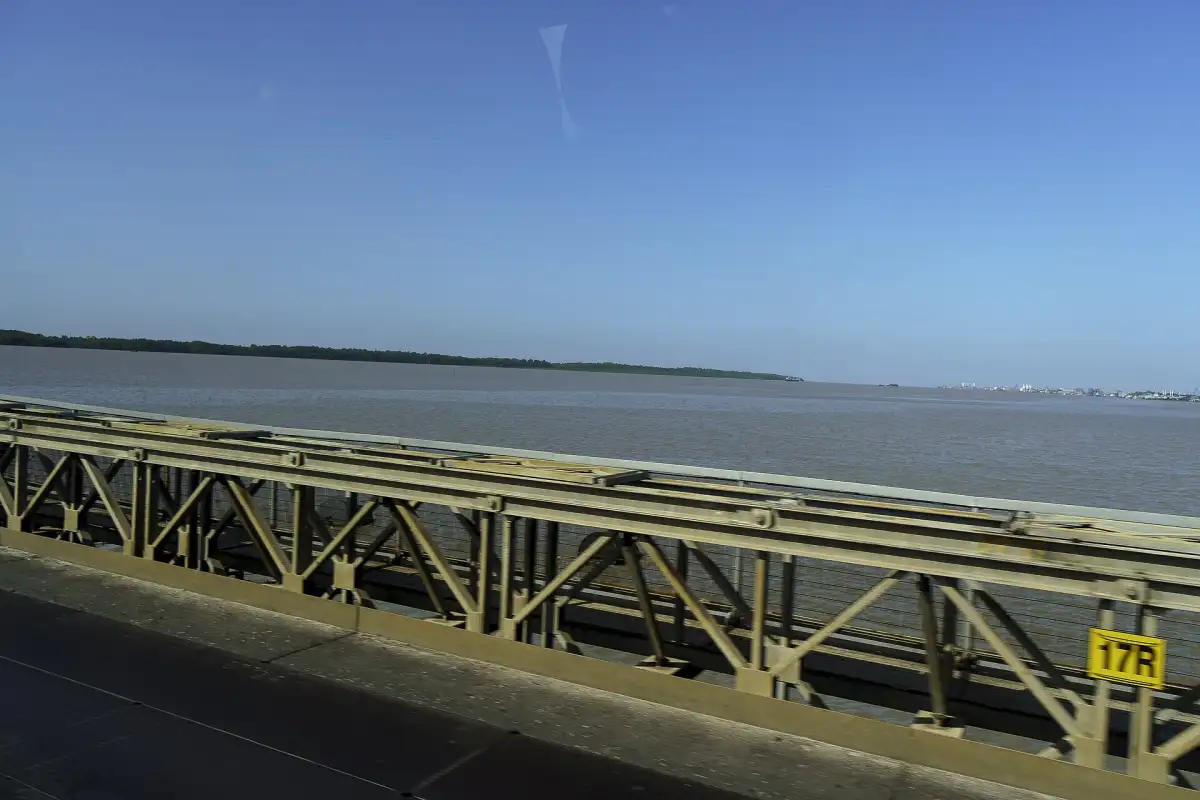
Georgetown to the interior is the whole trip. The Demerara bridge is a city crossing, not a ride to Surama. Nightly rates were not rechecked. Google is not a price. Ask first is still the status on Surama, Karanambu, Dadanawa, Adel’s, Opus and Splashmins. Open on Rewa and Inni still means you write before you go.
Is Guyana safe to travel around if the lodge is a village?
Guyana is a huge country of rivers, savannah and a city, and I am not opening with a foreign government advisory. The conditions I will name are distance, boats, and the question of whose land the pin sits on. Land titling is still a live issue for Indigenous communities. That is a reason to book a village that can say it owns the lodge, not a reason to skip the village.
Do not arrive in Surama without notice. Do not treat a Georgetown filing on TripAdvisor as proof that Rewa is in the city. A Marriott ballroom is not the Rupununi. Ask who meets the boat.
How can you check who owns a Guyana lodge yourself?
You can check a Guyana lodge by reading the village page and one page that is not the lodge. Write whether the owner is a village council, a named Guyanese family, or a foreign buyer. Community owned and founded by two Americans can both appear in print. When they do, leave the row unfinished, the way Caiman House is unfinished here.
Then read eco, purity and people. Surama at 2.2, 1.2 and 3.4 is the pattern to learn. People is not eco. If the lodge is not on the index, say so. Bring me the village name or the owner’s name in the comments and I will check it before it enters a table.
What should you ask before you book a lodge in Guyana?
Ask who owns the lodge, and ask where the village fund goes. Ask what the boat or the night bus actually is this month, not in a 2012 paragraph. Ask what the eco score is measuring if one exists, and ask why purity is low when people is high.
Ask if they are receiving guests. Ask what the meal is if you do not eat fish or meat. Ask whether a Georgetown address on a booking page is the lodge or only the office. Arrowpoint’s TripAdvisor address was a Bel Air Park office. The forest is not the office.
Which Guyana lodge would I book first?
I would book Rewa first if the journey is possible, because the village is the owner, the eco score is 3.4 out of 5, and the people score is 3.2 out of 5. Purity at 1.5 keeps me from calling it pure. The status used here is Open. Confirm the boat.
If I wanted the prototype, I would write to Surama and accept an eco score of 2.2 beside a people score of 3.4. If I wanted the award winning wetland lodge, I would write to Toka and remember the eco score is 1.5. The award did not change the score. Use the app to hold the numbers. Then tell me which village I missed, with the council’s name.

Where are the other Black owned and Indigenous owned hotel lists?
The same question belongs on every island. Who keeps the money after you fly home.
- Black owned and locally owned hotels in Anguilla
- Black owned and locally owned hotels in Antigua and Barbuda
- Black owned and locally owned hotels in Barbados
- Black owned and locally owned hotels in Belize
- Black owned and locally owned hotels in Cuba
- Black owned and locally owned hotels in Curaçao
- Black owned and locally owned hotels in Dominica
- Black owned and locally owned hotels in the Dominican Republic
- Black owned and locally owned hotels in Grenada
- Black owned and locally owned hotels in Guadeloupe
- Black owned and locally owned hotels in Guyana
- Black owned and locally owned hotels in Haiti
- Black owned and locally owned hotels in Jamaica
- Black owned and locally owned hotels in Puerto Rico
- Black owned and locally owned hotels in St. Lucia
- Black owned and locally owned hotels in St Vincent and the Grenadines
- Black owned and locally owned hotels in The Bahamas
- Black owned and locally owned hotels in Trinidad and Tobago
- Black owned and locally owned hotels in the smaller Caribbean islands
Which questions about Indigenous owned lodges in Guyana can I answer here?
I can answer these from the sources in this guide. A missing fare, a missing menu and a disputed deed stay unconfirmed.
Which Guyana lodges are village owned?
Surama Eco Lodge is owned by Surama Village. Rewa Eco Lodge is owned by Rewa Village. Inni Lodge is owned by Toka Village, through the tourism committee and the village council.
Who owns Surama Eco Lodge?
The Makushi people of Surama own and operate it. The site calls it Guyana’s first Indigenously operated lodge. The eco score is 2.2 out of 5 and the people score is 3.4 out of 5.
Who owns Rewa Eco Lodge?
Rewa Village owns it. The site names Macushi, Patamona, Wapishana and Wai Wai villagers and a 2005 start. The eco score is 3.4 out of 5, not the older 4 out of 5 figure.
Why does Rewa show up under Georgetown on TripAdvisor?
The opened listing is filed under Georgetown even though the lodge is on the river. Use the listing for the 4.7 from 54 reviews, and do not use the city label as the location.
What did Toka Village win?
In 2026 Toka Village won the Caribbean Tourism Organization’s Community Based Tourism Award for Inni Lodge. The eco score is still 1.5 out of 5. An award is not a score.
Who owns Karanambu?
The McTurk family, with the Karanambu Trust. Hosts are named as Andrea and Salvador de Caires. It is a ranch lodge, not a village fund. The eco score is 2.4 out of 5.
Is Dadanawa open?
The Defreitas family owns the South Rupununi ranch. TripAdvisor’s newest review seen was March 2019. The status is Ask first. I am not calling it closed and I am not calling it current.
Who is Zena Stoll?
She is the owner named for Adel’s Rainforest Resort on the Pomeroon, born there, and the granddaughter of Adel Stoll. The resort is not on the stay index yet.
Is Opus Hotel Guyanese owned?
Wilfred Brandford is the Guyanese businessman named for it, and the draft also calls it an Ascend franchise. Both limits stay. The TripAdvisor page looked stale, with a review seen in March 2020.
Is Rock View Lodge Guyanese owned?
No. Colin Edwards is described as an Englishman who bought it in 1992. Long service and an award do not change that. It stays out of the local table.
Is the Marriott locally owned?
The building is owned by state company Atlantic Hotel Inc and operated by Marriott. That is not a local family hotel in the sense of this list.
Is Caiman House community owned?
The sources disagree. Bradt names American founders in 2005. TripAdvisor’s about text says nonprofit and community owned. It stays off the table until the deed is one story.
Is Atta a village lodge?
Not simply. CATS operates it jointly, and the partners include Surama Village and Rock View Lodge. No ownership percentages were published. I am not calling it a pure community lodge.
What does Ask first mean?
The late October 2026 check could not confirm the lodge was taking guests. Rewa and Inni were the Open lines in the sources used. Still write before you travel.
Can I arrive in Surama without warning?
No. The lodge page says not to arrive without notifying them. The journey description includes an evening minibus and a ferry, and some of the page is dated. Confirm this year’s route.
Can I eat plant based at these lodges?
A plant based menu was not confirmed. Surama talks about local produce. Rewa talks about farming and fishing. Ask in writing if you need a plate without fish or meat.
How do I check an owner myself?
Read the village page and a second source. Write village council, Guyanese family, or foreign buyer. Then read eco, purity and people as three numbers. Do not let a people score of 3.4 hide a purity score of 1.2.
Which lodge would you book?
Rewa, if you can make the boat, because the village owns it and the eco score is 3.4 out of 5. Confirm the dates. Surama is the prototype if you want the older community model and can hold an eco score of 2.2.
Know a locally owned lodge in Guyana I missed. Tell me in the comments, with the owner’s name or the village council, and I will check it before I add it.