
Check accessibility before you book a restaurant, hotel, ticket or day out. A photo of a ramp, or a page that says accessible, does not tell you whether you can get through the door, reach your seat, use the toilet or get back out.
Check the place before you pay, not when you arrive. If you use a wheelchair, have limited mobility, are blind or have low vision, are Deaf or hard of hearing, have a hidden disability, or are travelling with someone who needs a particular adjustment, the details can decide whether the day works. The same is true if you are recovering from an injury, travelling with a buggy or carrying luggage.
The Equality Act 2010 requires many service providers in Great Britain to make reasonable adjustments for disabled people. What is reasonable depends on the circumstances. The law does not mean every venue will have a step free entrance, a working lift, an accessible toilet or the specific support you need. You still need to check the place itself.
What journey do you actually need to make?
Ask whether you can get in, reach the seat or the room, use the toilet, and get back out.
Do not ask a hotel whether it is accessible and leave it there. Ask whether you can get from the pavement or drop off point to reception, into the room you have booked, around the bathroom and back out. For a restaurant, check the entrance, the route to your table and the toilet. For a concert or attraction, check the entrance, viewing area, seating, toilets and the route home.
I would want five details confirmed before I paid.
- Getting inside. Is the entrance step free? If there is a ramp, is it permanent or portable, and is it suitable for your chair? Ask about door width, heavy doors and automatic doors.
- Moving around. Can you reach the table, room, seat or activity you are booking? Are there steps, narrow turns, raised platforms or lifts? If a lift is essential, ask whether it is working and what the alternative is if it breaks.
- Using the toilet or bathroom. Is it on the same floor? Ask for the door width, turning space, grab rails, transfer space and shower layout that matter to you. “Accessible toilet” does not tell you whether you can use it.
- Getting the support you need. Ask about assistance dogs, hearing loops, quiet spaces, step free seating, large-print information, audio description, staff assistance or extra time. Be specific about what would make the visit possible.
- Getting there and leaving. Check the nearest step free station or bus stop, accessible parking, drop off point and the route between them and the venue. A good room is no use if you cannot get from the taxi to the entrance.
If a detail matters to you, ask for the measurement or a current photograph. Explain what you need rather than relying on a broad label. A 90-centimetre doorway may work for one person and not another; a ramp may be technically present but too steep to use safely.
Why is the venue’s answer not enough?
In Euan’s Guide’s 2024 survey, 77 percent of respondents said venue websites had given misleading access information.
Respondents also called that information confusing or inaccurate. The survey also found that 73% had encountered an accessible toilet they could not use. These are the experiences of people who responded to the survey, not a measure of every venue, but they make a good case for checking the details yourself. Read Euan’s Guide’s survey findings.
One wheelchair user described asking whether a venue was accessible, being told yes, then arriving to find several floors, no lift and furniture packed too tightly to sit comfortably. The suggestion was that a stranger could carry them upstairs. Read the discussion in r/wheelchairs. That is not access. It is being asked to depend on someone physically carrying you because the venue did not give an honest answer.
There is a difference between a venue having an access feature and that feature working for the person who needs it. A ramp can be too steep. A lift can be out of order. A toilet can be used for storage. A table can be technically on the ground floor but impossible to reach when the restaurant is busy. The useful information is in those details.
Should you trust a review or a measurement?
Use both. A review says what happened on the day. A measurement says whether the space is likely to fit.
I would start with reviews from people who have visited, then use measured access guides to check the dimensions. They answer different questions. Neither replaces a current answer from the venue.
Read what disabled visitors actually experienced
Euan’s Guide is a useful place to start because disabled visitors share what they found at hotels, restaurants, attractions and other venues. Read the full review, not just the rating. Check when the person visited and whether their access needs are similar to yours.
Three restaurant reviews show why the measurements matter.
At Browns Brasserie in Cambridge, a November 2025 review describes a good ramp, a suitable ground floor table and helpful staff, but also a very heavy door on the toilet corridor, a tight turn and an obstruction that reduced transfer space in the accessible toilet. The restaurant could work for the meal and still fail at the point the visitor needed the toilet.
A review of Aster in London mentions heavy double doors, raised tables reached by a step and difficulty moving through the restaurant when it was busy. The reviewer suggests asking for a ground level table when booking. At Carluccio’s in Oxford, a reviewer liked the accessible toilet but warned that the portable entrance ramp was dangerously steep for a powerchair.
The Browns, Aster and Carluccio’s visits are single visits, not a guarantee that the same conditions remain today. They are still more useful than a generic access badge because they tell you what to ask. If a review mentions a tight turn, ask for the width. If staff had to hold a door, ask whether someone will be available whenever you need to pass through. If the ramp was too steep, ask for a photograph and its gradient before travelling.
Check the measurements before you commit
AccessAble provides detailed access guides for venues. Use the guide to follow the route into a building and check details such as door widths, ramp gradients, lift dimensions, steps and toilet layouts. If you are booking a restaurant, follow the route from the entrance to the table and toilet. If you are booking a hotel, check reception, the bedroom and the bathroom.
AccessAble is a factual access guide service, not a customer review site. A discounted bag is rescued food only if somebody eats it. A measured doorway will not tell you that a delivery trolley is usually left in the corridor or that staff have started using the accessible toilet for storage. VisitBritain explains why access guides and visitor reviews are useful alongside one another in its guidance on providing accessibility information.
Check when the guide was updated. If the measurement is close to what you need, contact the venue and ask it to confirm. Do not assume that a guide written before a refurbishment still describes the room or route you will use.
Find nearby places and compare the information
Sociability and Wheelmap can help when you are choosing somewhere to go. Sociability shares accessibility information about places, while Wheelmap gives a quick view of wheelchair-access categories on a map. Use them to find possible options, then open the listing and check the details. A map marker is not confirmation that the toilet, route or seating will work for you.
AccessNow also shares access information contributed by people with lived experience. Look at what has been checked, when it was added and which part of the venue it describes. An accessible entrance does not automatically mean the rest of the building is accessible.
What should you confirm before you pay for a room?
Confirm the exact room, ask for photographs of that bathroom, and do not pay a non refundable rate on the word accessible.
Accommodation needs a more careful check than a general search filter. If you need a roll in shower, space beside the bed or a particular transfer arrangement, ask about the exact room you will be given. Hotels sometimes have several rooms described as accessible, but the layout and facilities can differ.
Wheel the World lists accommodation and activities with access information and measurements. Use those details to narrow your options, then contact the property. Ask for current photographs of the actual room, bathroom, shower entrance and route from reception. Get confirmation that this room is available for your dates and will be allocated to you. Do not pay a non refundable deposit based only on a photograph or the words “accessible room”.
accessibleGO is focused on accessible travel in the United States. It can be a useful starting point for comparing US hotels and travel services, but do not assume its listings or services cover a trip in the UK, Europe or the Caribbean. Wherever you book, confirm the exact room and facilities with the provider.
How do you find a step free route in a station or a large building?
Book assistance ahead, and treat a map pin as a reason to ask, not as the answer.
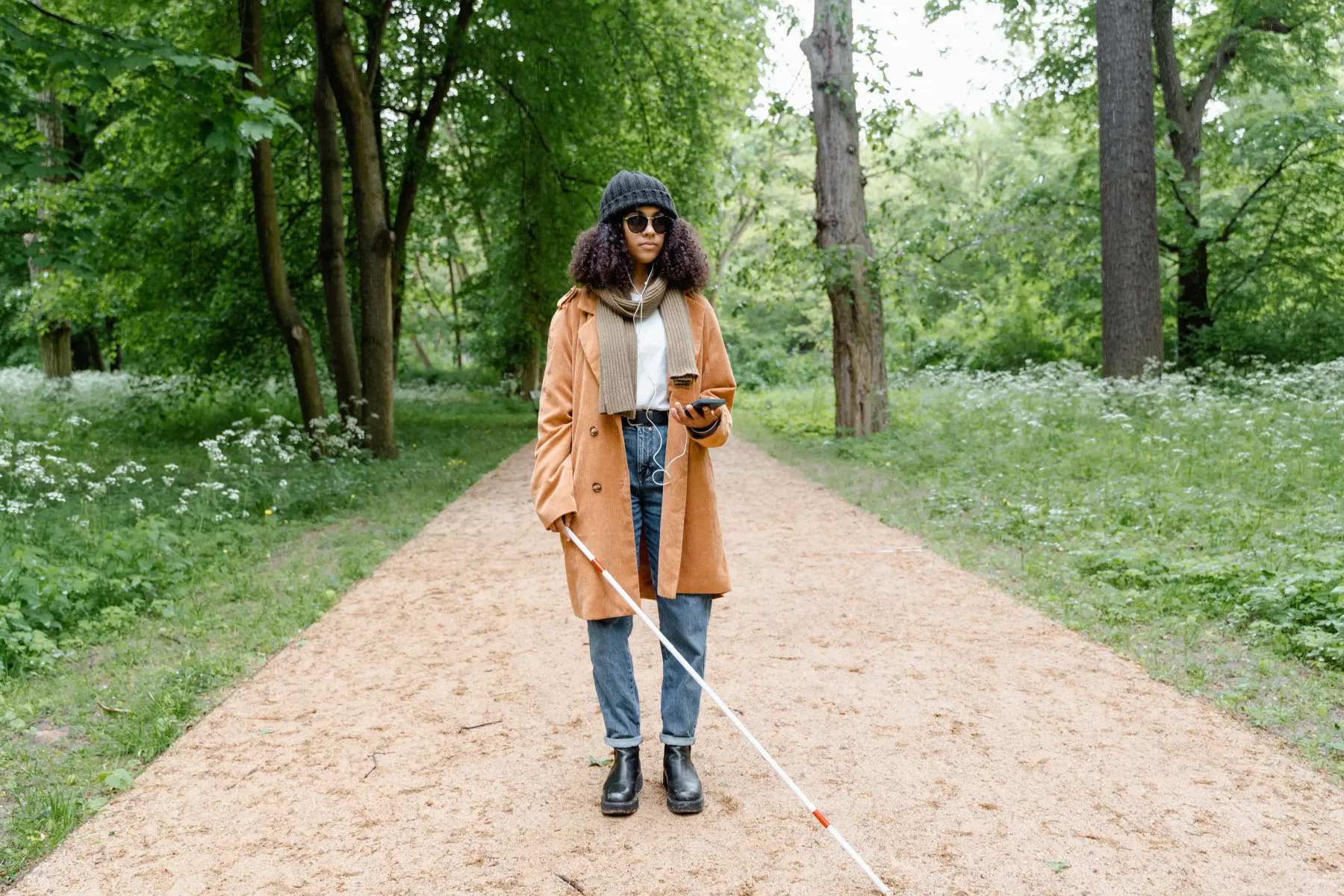
Once you arrive, the problem may be finding the right platform, hospital department or entrance. These tools can help, but check coverage before you rely on them.
Waymap provides indoor and outdoor navigation in places where ordinary map directions may not be enough. Check whether the station or building you need is covered before travelling. Keep a backup route too; an app cannot make a broken lift work or get you through a locked gate.
GoodMaps offers indoor navigation in mapped buildings and transport locations. If you have an appointment at a large hospital, check whether that particular hospital and department are mapped. Building work, closed corridors and temporary diversions can change the route, so ask staff if the directions do not match what you find.
NaviLens uses special codes installed at participating locations to help people who are blind or have low vision access nearby information. It is useful where those codes are in place. Check whether your station or venue uses them; the app cannot read a code that has not been installed.
When do you need a person, not a listing?
When the detail that makes the visit possible is not on the page, ask for it before you pay.
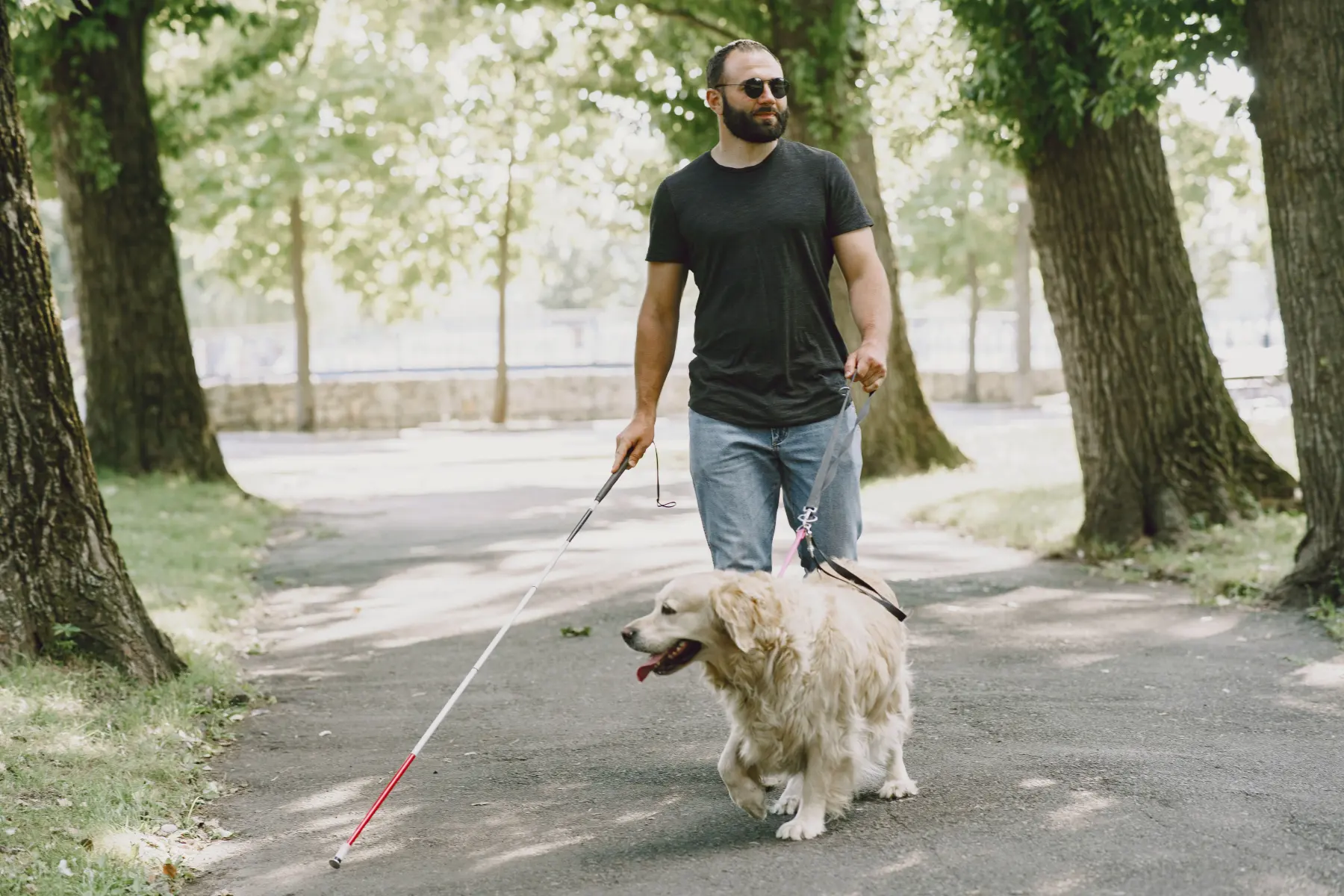
Aira connects users with trained visual interpreters. It may help with a task such as identifying the right option on a ticket machine or finding information on a sign. Check the cost, hours and country coverage before relying on it. It is not an emergency service, and you should make your own decisions about payments and personal information.
Be My Eyes connects blind and low-vision users with volunteers and offers an AI description feature. It can help describe a label, sign or object. If the information affects an allergy, medication or safety decision, confirm it from the packaging or with a qualified member of staff. Do not show passwords, payment details or private documents on camera.
The Hidden Disabilities Sunflower is a discreet way to signal that you may need extra time or support. Some airports, transport providers and venues recognise it. It is not a fast-track pass and does not tell staff exactly what you need, so check whether the organisation participates and explain the adjustment that would help.
what3words can help you share a precise meeting point. This is useful if a venue has several entrances and you need to meet a taxi at the step free one. Open the location together and check it carefully; a small difference in the three words can point to a different place.
What should you write to the venue before you book?
Say what you need to do, and ask them to confirm that this place can do it.
You do not need to explain your whole life to a venue. For example:
Hello, I am interested in booking for [date]. Before I pay, could you confirm the route from the entrance to [the table / room / seating area], whether there are any steps or heavy doors, and whether the accessible toilet is on the same floor? I also need [your specific requirement]. Could you send current photographs or measurements of these areas and confirm that the facilities will be available on the day? Thank you.
Keep the venue’s reply with the booking. If the answer is vague, ask again or choose somewhere that can give you a clear one. You are not being difficult by checking whether you can use something you are paying for.
Use visitor reviews to understand what has happened to other people, access guides to check measurements, and the venue itself to confirm what is in place now. That is a much better basis for a booking than a badge on a website. For the journey to the venue, compare the train, the bus and the walk. If the stay is in the Caribbean, start with the places already written up there.
Where do the figures in this guide come from?
The Equality Act, Euan’s Guide’s 2024 survey, and the access guides named in the sections above.
- Equality Act 2010
- Euan’s Guide 2024 Access Survey
- Euan’s Guide
- AccessAble
- VisitBritain guidance on accessibility information
- Sociability
- Wheelmap
- AccessNow
- Wheel the World
- accessibleGO
- Waymap
- GoodMaps
- NaviLens
- Aira
- Be My Eyes
- Hidden Disabilities Sunflower
- what3words
Before you book, the questions in this piece are the ones that matter. If you are also choosing a place to stay, eco stays are a shelf you can put on your home screen in the My Ideal World app. It will not measure a doorway. The account starts on that page, and the store downloads are listed there when they open.
Save the farms and places you want to visit in My Ideal World. Create your account.
On this story
Comments, questions and answers from signed-in paid members. The conversation is shared with the app. Community contributions are not verified editorial findings.
Contribute evidence
Reviews share first-hand experience. Observations can include opinions and objections. Evidence is checked against its sources before publication. Community contributions do not change MIW scores.
Article discussions and evidence contributions are for paid members and are shared with the app.
Sign in to contribute or join the discussion Read this next
Train vs bus vs walking, which to take
The fastest time on the poster is not always the shortest day. For train vs bus vs walking, which to take, compare the whole trip, the cost and…Read the story Keep exploring
Flight delay, lost bag or bad room
A delay, a missing bag and the wrong room have different owners. For a flight delay, lost bag or bad room, ask who must help. Money back is…Read the story Keep exploring