Destinations › Europe · The Destination Index · universal template · every figure sourced
Spain.
Southwestern Europe, bordering the Mediterranean Sea, North Atlantic Ocean, Bay of Biscay, and Pyrenees Mountains; southwest of France. 505,370 sq km and 49,355,143 people, 4,964 km of coastline, temperate; clear, hot summers in interior, more moderate and cloudy along coast; cloudy, cold winters in interior, partly cloudy and cool along coast.
Region · EuropePopulation · ~49,355,143Languages · Spanish (Castilian), Catalan, Galician, Basque, Valencian, AraneseEco Index · 73/100 · Passable
The Eco Index across 12 pillars · scored 0 to 5 · World Bank, OWID, WHO/UNICEF JMP, FiBL, Protected Planet, IUCN, UNESCO (2023-24)
Water
Food & farming
Plant-based
Organic
Conservation
Wildlife
Materials
Pollution
Recycling
Energy
Culture
Heritage
The History of Spain.
Spain's living heritage is anchored by flamenco, the song, dance and guitar art whose heartland is Andalusia, recognised by UNESCO in 2010. Regional traditions remain strong, from the Catalan human towers, the castells, raised by amateur groups at annual town festivities, to the many other Spanish practices on UNESCO's list.
Where the name comes from
The country is España in Spanish, and its state title is Reino de España, according to the UK Permanent Committee on Geographical Names.
The land itself: a large plateau, flat to dissected, ringed by rugged hills, with the Pyrenees along the northern border. Its high point is Pico del Teide on Tenerife, 3,715 m; on the mainland, Mulhacén, 3,479 m. Source: Instituto Geográfico Nacional, the national mapping agency, with the UK Permanent Committee on Geographical Names.
Where it starts
Europe's oldest face
Human remains from the Sierra de Atapuerca are among the earliest known in Europe. A jawbone from the Sima del Elefante is dated to about 1.2 million years ago, and a face fragment found below it, nicknamed Pink, is the oldest human face found in western Europe. A shaft at the same site, the Sima de los Huesos, holds the remains of at least 29 individuals with features shared with the Neanderthals. Later, the painted caves of the north marked the high point of the Palaeolithic cave art that spread across Europe.
How it got here
Rome, Al-Andalus and 1978
The Romans founded Cordoba in the 2nd century BC, and it became capital of the province of Baetica. After the Moorish conquest of the 8th century, Cordoba became capital of an emirate and, from 929, of an independent caliphate built to rival Constantinople, Damascus and Baghdad. Centuries later a democratic constitution, approved by the Cortes and ratified by the Spanish people, came into force on 29 December 1978.
The timeline
c. 1.2 million years ago
Atapuerca.
Human remains from the Sierra de Atapuerca are among the earliest in Europe. A jawbone from the Sima del Elefante is dated to about 1.2 million years ago, and a face fragment from the same cave, nicknamed Pink, is the oldest human face found in western Europe. ↗
Middle Pleistocene
Sima de los Huesos.
A shaft at Atapuerca holds the remains of at least 29 individuals, counted from their teeth, with features shared with the Neanderthals. ↗
c. 35,000 to 11,000 BC
Painted caves.
Altamira and seventeen other caves of northern Spain represent the high point of the Palaeolithic cave art that spread across Europe. ↗
2nd century BC onward
Hispania.
The Romans found Cordoba near an older settlement, and it becomes capital of the province of Baetica, growing in importance under Augustus. ↗
8th to 15th century
Al-Andalus.
After the Moorish conquest, Cordoba becomes capital of an emirate and, from 929, of an independent caliphate, with some 300 mosques built to rival Constantinople, Damascus and Baghdad. ↗
1492
Conquest, expulsion, and the crossing.
Ferdinand and Isabella conquer Granada, the last Muslim kingdom, and expel all Jews who refuse to convert to Christianity. In the same year Columbus makes his first voyage. ↗
1936 to 1939
Civil war.
The Spanish Civil War is fought from 1936 to 1939. ↗
1978
Constitution.
A democratic constitution, approved by the Cortes and ratified by the Spanish people, comes into force on 29 December 1978. ↗
About 28% of Spain's land and roughly 19% of its territorial waters are protected (World Bank, 2025), largely through the EU Natura 2000 network, the largest coordinated protected-area system in the world. Enforcement rests on binding EU law, though some sites are under-resourced and face tourism and farming pressure.
Is wild Spain protected? 28.1% of the land is, against a 30% target for 2030
How protected is nature in Spain?
Forest cover38.2%
Terrestrial protected area28.1%
Marine protected area19%
427 (mammals, birds, fish & plants) listed as threatened.
Found only here. Iberian lynx, Spanish imperial eagle and Canary Islands endemics such as the Tenerife giant lizard and Canary Island pine.
The watchlist
ThreatenedBalearic Shearwater (Puffinus mauretanicus)Critically Endangered on the IUCN Red List, and recorded in Spain in GBIF occurrence data (bird).
ThreatenedCommon thread turtle (Mauremys sinensis)Critically Endangered on the IUCN Red List, and recorded in Spain in GBIF occurrence data (turtle).
ThreatenedAngel (Squatina squatina)Critically Endangered on the IUCN Red List, and recorded in Spain in GBIF occurrence data (shark or ray).
ThreatenedGran Canaria Giant Lizard (Gallotia stehlini)Critically Endangered on the IUCN Red List, and recorded in Spain in GBIF occurrence data (reptile).
ThreatenedAnguilla anguillaCritically Endangered on the IUCN Red List, and recorded in Spain in GBIF occurrence data (species).
ThreatenedPinna nobilisCritically Endangered on the IUCN Red List, and recorded in Spain in GBIF occurrence data (species).
ThreatenedCommon eagle ray (Myliobatis aquila)Critically Endangered on the IUCN Red List, and recorded in Spain in GBIF occurrence data (shark or ray).
Critically Endangered, the last IUCN category before Extinct in the Wild, and still recorded in Spain. GBIF holds 15 verified occurrence records.
Common thread turtle (Mauremys sinensis)
Critically Endangered, the last IUCN category before Extinct in the Wild, and still recorded in Spain. GBIF holds 10 verified occurrence records.
Angel (Squatina squatina)
Critically Endangered, the last IUCN category before Extinct in the Wild, and still recorded in Spain. GBIF holds 27 verified occurrence records.
Gran Canaria Giant Lizard (Gallotia stehlini)
Critically Endangered, the last IUCN category before Extinct in the Wild, and still recorded in Spain. GBIF holds 219 verified occurrence records.
Species named here are drawn from GBIF occurrence records for Spain filtered to the IUCN Red List threatened categories. Species are listed where GBIF holds occurrence records for them in this country. Record counts are not published here because the figure cannot be reproduced from a public GBIF query.
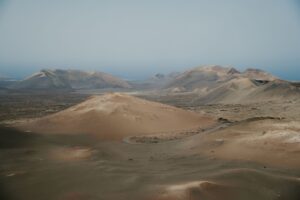
National park in Canary Islands, mapped and named in the open record for Spain. OpenStreetMap.
Water and Ocean in Spain.
Spain draws on major rivers such as the Ebro, Tagus, Guadalquivir and Douro, plus reservoirs and aquifers, and safely managed drinking water reaches 99.5% of people (World Bank, 2024). Yet it is one of Europe's most water-stressed countries, with recurrent severe droughts, heavy groundwater over-abstraction and growing reliance on desalination along the arid southeast coast and the islands. Supply is reliable in the wetter north but genuinely strained in the south.
Does Spain have enough fresh water? Under pressure
99.5% of people here have safely managed drinking water at home (2024, WHO/UNICEF JMP). Tap water is safe for a visitor nearly everywhere.
Cleanest water: Pyrenean rivers and the Sierra Nevada headwaters.
How much fresh water does Spain have, per person?
2,327 m³
Spain
1,000 m³
the UN “water scarce” line
Spain withdraws about 29,020 million cubic metres of fresh water a year (2022). That is 43.3% of the fresh water actually available to it, which FAO counts as high water stress. Of what is taken, farming takes 65%, homes and towns 16%, industry 19%. Source: FAO AQUASTAT.
What are the rules on Spain beaches?
·Tap water: Varies.
✓Plastic rules: Yes: EU single-use-plastic rules, charges on lightweight bags and a 2023 plastic packaging tax..
✓Solo travel: rated easy on the record for this destination.
✕Marine protection: 19% of the sea is protected. The 30x30 pledge for 2030 is not met yet.
Named on the open map: A Praia Pequena, La Luna-Royale Beach, Matas Bay - El Rancho Beach, Playa Atalaya, Playa El Cabezo, Playa Isdabe. They are a handful of the many named beaches in the public record for Spain, each one a place you can look up before you go. OpenStreetMap.
Where does the sewage go?
88.3%
of people have safely managed sanitation
88.3% of people here use a safely managed sanitation service, meaning waste is contained, emptied and treated rather than reaching the ground or the sea untreated (2024, World Bank / WHO-UNICEF JMP, SDG 6.2.1). The rest is what the rivers and the coast receive.
How is the sea around Spain doing?
One cross-section, every answer measured.
Surface
What the coast carries
Scorching summer interiors; coastal breezes; the north is green and mild.
Nearshore
Protected water
19% of territorial waters are protected, against the 30% pledged for 2030 under the Global Biodiversity Framework.
Cleanest
Where the water is cleanest
Pyrenean rivers and the Sierra Nevada headwaters..
The record
Measured
Spain draws on major rivers such as the Ebro, Tagus, Guadalquivir and Douro, plus reservoirs and aquifers, and safely managed drinking water reaches 99.5% of people (World Bank, 2024). Yet it is one of Europe's most water-stressed countries, with recurrent severe droughts, heavy groundwater over-abstraction and growing reliance on desalination along the arid southeast coast and the islands.
Spain scored 76 out of 100 on the Ocean Health Index in its 2025 assessment, above the global average of 72, and ranked 44th of 220 coastal regions. The index team says annual assessments are paused, so the 2025 figures may be the last.
Sea protected
19%
Against the 30% pledged for 2030 under the Global Biodiversity Framework.
Threatened species
427 (mammals, birds, fish & plants)
Mammals, birds, fish and higher plants on the IUCN list.
Is the tap water safe in Spain?
99.5% of people have safely managed drinking water at home (2024, WHO/UNICEF JMP). Renewable fresh water works out at about 2,327 cubic metres per person a year (World Bank).
How hard is the water supply being pushed?
Of every 10 buckets nature refills, 4 are already taken. Withdrawals run at 43.2% of what Spain renews internally each year (2022, World Bank / FAO AQUASTAT). That is past the 25% mark generally treated as water stress, so the supply is being pushed towards its limit.
When is the best time to visit Spain? Tap your month.
Tap your month.
JanFebMarAprMayJunJulAugSepOctNovDec
.
How much fresh water does Spain actually have?
Nature renews about 2,327 cubic metres of fresh water per person per year here. That ranks Spain 91 of 208 countries measured, putting it in the drier half of the world. The UN treats anything under 1,000 cubic metres as water scarce, and this is above that line. World Bank / FAO AQUASTAT.
Food made up about 12.5% of Spain's merchandise imports in 2024, and farming employs about 3.4% of workers (World Bank, 2025). Farming and fishing remain culturally and economically central.
Where does the food in Spain come from?
12.5% imported
about US$63,960m a year
On the plate: Olive oil, bread, chickpeas and lentils, tomatoes, peppers, rice.
1 of 10
bites are imported
Spain buys in more food energy than it eats. About US$63,960m a year leaves the country to pay for it. The green slice is roughly what still grows here.
About 12.5% of everything Spain buys in from abroad is food, roughly 1 in every 10 imported items on the dock (2024, World Bank). Farming itself is 2.7% of the economy and 49.6% of the land is agricultural, of which 23% is arable. The green slice is roughly what still grows here.
What is killing people in Spain? The imported diet.
Cause of death, and the diet behind it.
Non-communicable diseases, all combined83.6%
Diabetes9.7%
In 2023 Spain recorded 6.7 major lower limb amputations (above the ankle) among people with diabetes for every 100,000 adults, a rate that has barely moved since 2019, plus 16.4 minor amputations, such as toes or part of the foot, per 100,000. These are age and sex standardised rates reported to the OECD. In 2022 Spain ranked 15th lowest of 26 countries reporting for major amputations. Source: OECD Health Care Quality Indicators.
Adults living with overweight or obesity. 49.9%.
Can Spain feed itself?
23.0%
Arable land
49.6%
Agricultural land
835,473
Farmers
28,409,056
Arable acres
2.7%
Agriculture, share of GDP
Harvest: Olives October to January, grape harvest (vendimia) in September, citrus in winter.
Feeding itself
Spain is an agricultural heavyweight and Europe's leading producer of olive oil, and a top grower of fruit, vegetables, wine and pork, running a large agri-food trade surplus. No verified single food-import figure was found, but the country is a major net food exporter rather than an importer.
Certification
Around 11.9% of Spain's agricultural land is certified organic (Eurostat, 2024), one of the larger organic areas in the European Union by hectares. Andalucia and the interior grow substantial organic olives, cereals and vines.
Water for crops
Spain draws on major rivers such as the Ebro, Tagus, Guadalquivir and Douro, plus reservoirs and aquifers, and safely managed drinking water reaches 99.5% of people (World Bank, 2024). Yet it is one of Europe's most water-stressed countries, with recurrent severe droughts, heavy groundwater over-abstraction and growing reliance on desalination along the arid southeast coast and the islands.
Why the organic number looks like that. Certification covers only part of what is grown cleanly, so a small certified share is a gap in the paperwork rather than proof that nothing is. What the official land record does show: 49.6% of the country is agricultural land and 23% is arable (2023, World Bank). Certification is paid for per farm per year by a foreign body, which prices out smallholders, so the organic number reads worse than the practice.
The plant-based kitchen here is not an import. By tonnage, the largest crops grown in Spain are olives, barley, wheat, grapes and tomatoes (FAO, FAOSTAT crop production, 2024). That is what the land itself puts on a plate.
Buy direct where residents buy: Asia Markt, Flea Market - Domingo Sunday, Hippy Market Punta Arabí at Es Caná, Mercado Adurza, Mercado Alicante, Mercado Altabas. Each is a mapped, named marketplace, so the money stays with the seller rather than the importer. OpenStreetMap.
Not yet checked by us. Plant based kitchens listed publicly: Vega, vegan restaurant in Madrid (Calle de la Luna): vegan tapas and dishes made with locally sourced organic produce; La Encomienda, vegan bar in Madrid (Lavapiés): tapas, platters and organic vegan dishes; La Huerta Funky Castizo, vegan tavern in Madrid (by Plaza de Callao): traditional Madrid tapas made without animal products; Choose Restaurante Vegano, vegan restaurant in Madrid (Literary Quarter): fully vegan Sicilian cooking; Freedom Pizza, vegan restaurant in central Madrid: vegan pizzas and brunch from a fully vegan menu. Tell us how they are.
Spain now generates around half of its electricity from renewables, roughly 50 per cent in 2023, led by wind and a rapidly expanding solar fleet, with the share rising further since. It has effectively phased out coal power and enshrined its targets in a 2021 Climate Change and Energy Transition Law aiming for climate neutrality by 2050. Per-person emissions are moderate for a large European economy at about 4.6 tonnes of CO2 in 2024. Continued reliance on gas for balancing and in transport keeps it short of the cleanest grids.
What powers Spain?
Renewable 55.9%Fossil 25.4%
Spain's transmission grid of more than 46,000 circuit km is run by Red Eléctrica, part of the listed Redeia group. At 31 December 2025 the state holding company SEPI owned 20 per cent of Redeia, Pontegadea Inversiones 5 per cent and BlackRock 4.67 per cent, with the rest freely traded. On 28 April 2025 at 12:33 continental Spain and Portugal lost all power. The European grid operators' expert panel called it the most severe blackout in over 20 years and, in its final report of 20 March 2026, blamed a combination of interacting factors including gaps in voltage control and cascading generator disconnections, and called for regulation to adapt to the changing power system.
Climate pollution per person
The safe amount, what the planet can absorb
2 tonnes
One person here
4.51 tonnes
The world average, for comparison
4.7 tonnes
The worst it ever got
8.43 tonnes
The grid
Spain now generates around half of its electricity from renewables, roughly 50 per cent in 2023, led by wind and a rapidly expanding solar fleet, with the share rising further since. It has effectively phased out coal power and enshrined its targets in a 2021 Climate Change and Energy Transition Law aiming for climate neutrality by 2050.
Pollution
National average fine-particle pollution is low at 7.5 micrograms per cubic metre (AQLI, 2022), below the level of concern. Spain applies EU single-use-plastic rules, charges for lightweight bags and introduced a plastic packaging tax in 2023, though Mediterranean marine plastic and beach litter from mass tourism persist.
Water stress
Spain draws on major rivers such as the Ebro, Tagus, Guadalquivir and Douro, plus reservoirs and aquifers, and safely managed drinking water reaches 99.5% of people (World Bank, 2024). Yet it is one of Europe's most water-stressed countries, with recurrent severe droughts, heavy groundwater over-abstraction and growing reliance on desalination along the arid southeast coast and the islands.
What pollutes most here
1The gridThe share of electricity still generated from fossil fuel.53%
2IndustryAlmeria's plastic-greenhouse belt and intensive pig farming, which strain water and soils..named
3AirModelled annual mean against a WHO guideline of 5 µg/m³.7.5
4On the recordNational average fine-particle pollution is low at 7.5 micrograms per cubic metre (AQLI, 2022), below the level of concern.
What has Spain promised on climate?
Net zero, whole economy2050
Electricity renewable today47% (2021)
Land protected, against a 30% target28.1% by 2025
Sea protected, against a 30% target19% by 2025
The net-zero target year on file with Climate Watch is 2050, status: in law; in policy document. Measured against it, 47% of electricity is already renewable (2021, World Bank), so 53% of the grid is still to be converted. The pledge on file is measured here against what has actually been delivered, not taken on its own (UNFCCC NDC Registry, CBD Kunming-Montreal Target 3).
The biggest line item
One return flight against a whole year of living.
A resident's entire year4.51 t CO2e
Safe-climate budget, per year2 t CO2e
Sydney return, economy3.19 t CO2e
Singapore return, economy2.05 t CO2e
Los Angeles return, economy1.69 t CO2e
Johannesburg return, economy1.46 t CO2e
New York return, economy1.04 t CO2e
How much CO2 does flying to Spain emit?
Tap where you would fly from. One return flight, economy.
SydneySingaporeLos AngelesJohannesburgNew York
.
Firsts on climate finance. Spain issued its first sovereign green bond on 7 September 2021: EUR 5 billion over 20 years, maturing on 30 July 2042, with a 1 per cent coupon. Orders topped EUR 60 billion, about 12 times the amount on offer, from 464 investor accounts, with international investors taking 91.7 per cent of final demand. The government said the issue earned the highest environmental rating that the verifier Vigeo Eiris has given a European sovereign issuer. Proceeds go to spending on climate change mitigation and adaptation, water and marine resources, the circular economy, pollution control and biodiversity.
Every prompt runs on a machine in a building on somebody’s grid. What that costs the planet depends less on the prompt than on what is burning to power it. Here is what would power one in Spain.
Data centres
71
Registered colocation and interconnection facilities, PeeringDB, 2026
Grid renewable
55.9 %
What a machine here runs on.
What powers a data centre in Spain?
A machine here runs mostly on renewables, but not entirely.
Renewable 55.9%Fossil 44.1%
Cooling water. Every one of those halls runs on the national grid, which is 47% renewable today (World Bank). A data centre is only as clean as the electricity behind it, so the same figure that decides this country's climate score also decides the footprint of the AI running inside it. Cooling water use is not separately published by facility, and no operator here reports it.
The rules. Spain has 71 colocation and interconnection facilities on the public PeeringDB register, concentrated in Madrid (21), Barcelona (7), Alcobendas (3), alongside 18 internet exchanges (CATNIX, ESpanix Madrid Lower LAN, ESpanix Madrid Upper LAN, NIXVAL-IX). Named sites include Espanix Datacenter, Equinix BA1 - Barcelona, Equinix MD2 - Madrid, Digital Realty Madrid MAD1-2.
Where the cables land. 48 landing points · Aguimes, Canary Islands, Almería, Alta Vista, Canary Islands, Arrecife, Canary Islands
28% residents to 72% visitors across a year. 126,170,000 international arrivals in 2019 against 49,355,143 people who live here (2025, World Bank / UN Tourism).
Where a visitor dollar goes in Spain
36,410k
Visitors a year
0.7
Visitors per resident
How deep in debt is Spain?· for every $100 Spain earns in a year, it owes…
Pay to the order of: the creditorsmemo · the 2020 peak
$ 119The worst year on the IMF record. Spain owed $119 for every $100 it earned.
IMF World Economic Outlook, 2020signed, the creditors
Pay to the order of: the creditorsmemo · today
$ 98What is owed now, for every $100 of national income (2026).
IMF World Economic Outlook, 2026signed, the creditors
Pay to the order of: the creditorsmemo · projected 2031
$ 90The IMF's own forecast has this falling to $90 by 2031.
IMF World Economic Outlook projection, 2031signed, the forecast
For every $100 Spain earns in a year, it owes $98 (2026, IMF World Economic Outlook). The interest on that is paid before schools, clinics or coastline get their turn.
Where does a tourist dollar actually go in Spain?
Play one tourist dollar around the board. Every square is a measured fact from this page.
START!
1
GO: a visitor lands
$100 goes on the table. 126,170,000 international arrivals in 2019 against 49,355,143 residents, 2.6 visitors for every resident (World Bank / UN Tourism).
$100 in play
2
The bed
Who owns the largest places to stay in Spain is not published in the records we can check, so this square is left open rather than guessed. Where a listing names its owner, it is shown in the ownership table below.
not published
3
The plate
Food is only 12.5% of everything Spain imports (2024, World Bank), so most of a meal is bought from producers inside the country. Eating what the land here actually grows, olives, grapes, wheat, tomatoes, barley, sugar beets, maize, oranges, keeps that money with the grower.
mostly home-grown
4
The power
47% of the electricity is renewable (2021, World Bank), so the energy on the bill is mostly generated inside the country rather than shipped in.
made at home
5
What actually stays
Of the two parts of a visitor's bill that can be measured here, the plate and the power stay inside Spain. This is not an economy where a visitor's money drains away, and the board is shorter for it.
most of it
6
Pay the bank first
Spain owes $98 for every $100 it earns (IMF World Economic Outlook, 2026 projection). The interest is paid before anything else on this board.
$98 per $100
7
A spread hand
The largest single export, vehicles, is 15.5% of the total (2023, UN Comtrade). No one shock can take the whole board.
top export 15.5%
8
Community chest
Tourism earns 19.8% of everything Spain makes from exports (1998, World Bank / UN Tourism). That is how much of the economy depends on the game continuing.
19.8% of exports
9
The flight
Getting here is usually the biggest single line on the bill. From Sydney a return economy seat is 3.19 t CO2, on the UK Government's published conversion factors. It is the one part of the trip this board cannot reduce.
3.19 t CO2
10
Back to GO
The economy turns over about US$2,091 billion a year (IMF World Economic Outlook, 2026 projection). Every lap of this board is a choice about how much of it stays.
US$2,091bn
GDPUS$1,906.5bn
Agriculture, share of GDP2.7%
Visitors a year36,410,000
Visitors per resident0.7
Residents~49,355,143
Agriculture
Farming is 2.7% of the economy. Spain is an agricultural heavyweight and Europe's leading producer of olive oil, and a top grower of fruit, vegetables, wine and pork, running a large agri-food trade surplus.
Natural materials
Spain retains genuine natural-materials traditions, including Merino wool (the breed originated here), esparto grass weaving and jute espadrilles still made in Valencia and La Rioja. These survive as regional crafts and industry rather than pervasive everyday production.
Energy
Spain now generates around half of its electricity from renewables, roughly 50 per cent in 2023, led by wind and a rapidly expanding solar fleet, with the share rising further since. It has effectively phased out coal power and enshrined its targets in a 2021 Climate Change and Energy Transition Law aiming for climate neutrality by 2050.
Who owns the biggest hotels in Spain?
By rooms · company records and press.
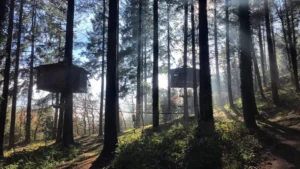
Cabanes als Arbres · ~16 roomsIndependentnot published
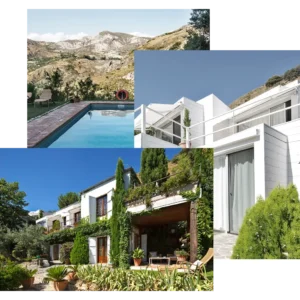
Hotel La Almunia del Valle · ~11 roomsIndependentnot published
Finca La Donaira · ~9 roomsIndependentnot published
Es Racó d’Artà · ~34 roomsIndependentnot published
Visitors, over time
2015109,834k
2016115,561k
2017121,717k
2018124,456k
2019126,170k
202036,410k
INE, the national statistics office, says Spain received a record 96.8 million international tourists in 2025, 3.2 per cent more than in 2024, and that they spent 134,712 million euros, up 6.8 per cent. The largest markets were the United Kingdom with 19.1 million visitors, France with 12.8 million and Germany with 12.0 million, and the most visited regions were Catalonia, the Balearic Islands and the Canary Islands. INE's tourism satellite account puts tourism at 12.6 per cent of GDP and 12.3 per cent of all jobs in 2024. From January to August 2026 Spain received about 70.4 million tourists, 5.4 per cent more than a year earlier.
How much of your money actually stays here?
Tap the holiday you are planning.
All-inclusive resortForeign-owned hotel and tourist restaurantsLocally owned stay and local restaurantsGuesthouse, markets and public transport
Resort guest, villa renter, family, nomad or backpacker. The honest playbook for each, from the same sourced numbers.
Already booked a resort? · the rescue list
Practical swaps that keep more of your money in the local economy
1. Eat where the country eats Choose kitchens cooking what the land here grows, olives, grapes, wheat, tomatoes, barley, sugar beets, maize and oranges, over an imported menu. The checked list →
2. Book with a local operator Never the lobby desk. The margin on a tour is the part that stays.
3. Stay somewhere locally owned Ownership decides where the room rate books. Eco stays →
4. Use the transport residents use High-speed AVE trains and buses link the cities; hire a car for rural regions.
5. Buy the craft, not the souvenir Natural-materials work made here pays the maker directly; imported gifts pay a shipping line.
swipe →
First time here
Spain pairs a formidable farming and protected-area record with real Mediterranean water stress and mass-tourism pressure.
Best time: Spring and autumn, avoiding the summer heat and crowds.
Getting around
High-speed AVE trains and buses link the cities; hire a car for rural regions.
Transport is where the fare either stays or leaves.
Eating here
The everyday plate that actually grows here is olives, grapes, wheat, tomatoes, barley, sugar beets, maize and oranges. Ordering those keeps the money with the grower and cuts the imported share of the meal.
Eating what the country grows is the cheapest way to cut the import bill.
Good to know
Cards everywhere; EUR. Eat late, dinner rarely starts before 9pm.
Rate my hotel. Tap yours for the honest verdict.
Ownership from company records and press.
Cabanes als ArbresHotel La Almunia del ValleFinca La DonairaEs Racó d’Artà
.
Who owns the big hotels
Cabanes als ArbresIndependent · 16 rooms
Hotel La Almunia del ValleIndependent · 11 rooms
Finca La DonairaIndependent · 9 rooms
Es Racó d’ArtàIndependent · 34 rooms
None of the 4 properties listed here publishes who ultimately owns it, so no claim is made either way. Ownership is what decides how much of a room rate stays in the country, which is why we show it when a listing states it.
Society and Governance in Spain.
How well is Spain actually run?
Governance, measured · World Bank WGI
Four measured answers, none of them opinion. Averaged across corruption control, delivery and accountability, Spain scores 71 out of 100 (2024, World Bank Worldwide Governance Indicators). That is a state that generally does what it says it will do, which is what makes a climate pledge worth reading.
How well is Spain run? · each scored out of 100, higher is better
Clean government, scored 61 of 100
Control of corruption scores 61.2 out of 100 (2025, World Bank Worldwide Governance Indicators). That is above the halfway mark of governments measured.
61
Freedom and rights, scored 78 of 100
Voice and accountability, which measures free expression, free media and the ability to choose a government, scores 78.2 out of 100 (2025, World Bank WGI). Citizens here can question their government openly.
78
Government effectiveness, scored 76 of 100
Government effectiveness, which measures the quality of public services and how well policy is actually delivered, scores 75.5 out of 100 (2025, World Bank WGI). Delivery is rated above average.
76
Income equality, scored 33 of 100
The Gini index of income inequality reads 33.4 (2023, World Bank). Zero is perfect equality and 100 is one person holding everything. Below 40 is the level usually treated as manageable, and Spain sits inside it.
33
LGBTQ+ status: HighSolo female travel: Easy99.7% adult literacyIndustry to avoid: Almeria's plastic-greenhouse belt and intensive pig farming, which strain water and soils.
Getting around, breathing, throwing away, learning. The honest checklist.
TransportAirWaterWastePower
✓How you get around High-speed AVE trains and buses link the cities; hire a car for rural regions.
✓Air quality, measured Modelled annual mean 7.5. The WHO guideline is 5 µg/m³.
✓Where the air is cleanest The Pyrenees and Picos de Europa mountains.
✓Tap water Varies
✓What to drink Tap water is safe in most cities but often hard and chalky; rural and coastal areas vary.
✓Plastic rules Yes: EU single-use-plastic rules, charges on lightweight bags and a 2023 plastic packaging tax.
✓Sockets and voltage Type C/F, 230V
99.7%
literacy. Public spending on education runs at 4.6% of GDP and 9.9% of all government spending, and secondary enrolment stands at 118.5% gross (UNESCO Institute for Statistics, 2022 to 2024).
Made in Spain.
Spain retains genuine natural-materials traditions, including Merino wool (the breed originated here), esparto grass weaving and jute espadrilles still made in Valencia and La Rioja. These survive as regional crafts and industry rather than pervasive everyday production. Every step of processing done at home is value that stops leaving the country.
What Spain actually sells the world
The single biggest thing Spain sells the world is vehicles, 15.5% of all exports in 2023 (about US$65.33 billion, UN Comtrade). The next four are machinery and mechanical appliances at 6.8%, mineral fuels and oils at 6.7%, electrical machinery and electronics at 5.3%, pharmaceuticals at 5.2%.
Made now · natural materials
Merino wool (the breed originated here)
Worked in Spain from local material, and still a working craft rather than a museum piece.
Made now · natural materials
Esparto grass weaving
Worked in Spain from local material, and still a working craft rather than a museum piece.
Made now · natural materials
Jute espadrilles still made in Valencia
Worked in Spain from local material, and still a working craft rather than a museum piece.
Made now · natural materials
La Rioja. These survive as regional crafts
Worked in Spain from local material, and still a working craft rather than a museum piece.
Made now · natural materials
Industry rather than pervasive everyday production
Worked in Spain from local material, and still a working craft rather than a museum piece.
Could make · grown here already
Olive oil
Grown in Spain and mostly sold raw. Processing it here would keep the margin here.
Could make · grown here already
Bread
Grown in Spain and mostly sold raw. Processing it here would keep the margin here.
Could make · grown here already
Chickpeas
Grown in Spain and mostly sold raw. Processing it here would keep the margin here.
The maths for an entrepreneur. Spain produces about US$1,906 billion a year, which is roughly US$38,627 per person (2025, World Bank). Farming is 2.7% of that, while food is 12.5% of everything the country imports. The country buys in more food than its own farms contribute to the economy, and every point of that gap is a business someone could build here rather than ship in. With 23% of the land arable, the raw material for that is already in the ground.
An art that fuses song, dance and guitar, with Andalusia as its heartland and roots in Murcia and Extremadura. The Gitano community has played an essential role in it. UNESCO inscribed it in 2010.
Catalan sardana
The sardana is a circle dance in which men and women join hands, facing inwards, and dance to the music of a cobla band. It is now the most widespread dance in Catalonia, and town festivals often include a public session in a central square.
Human-tower castellsHuman towers six to ten levels high, built by amateur groups at annual festivities in Catalan towns, usually in the square in front of the town hall. UNESCO inscribed them in 2010.
Jota
The jota is a genre of traditional music and its dance, which the Spanish Government calls the most widespread, diverse and reinterpreted traditional genre in the country, shared by many regions. Spain has put it forward for UNESCO's list of intangible cultural heritage.
Does Spain protect its heritage by law?
Partly, and the gaps say as much as the protections.
What is kept alive. Spain's living heritage is anchored by flamenco, the Andalusian song, guitar and dance form recognised by UNESCO and still performed everywhere from tablaos to street festivals. Regional traditions remain strong, from the Catalan sardana and human-tower castells to the Aragonese jota and Galician and Basque bagpipe music. Holy Week processions, the fire festivals of the Valencian Fallas and the thunderous tamboradas drum rituals draw whole communities each year.
Who it belongs to. Spain has deeply rooted regional cultures, from Basque and Catalan to Andalusian, with living language, festival and food traditions. However coastal tourism on the Costas, the Balearics and the Canaries is largely mass-market and extractive, and several cities now face open overtourism disputes.
Only here. The Iberian lynx (Lynx pardinus), found only on the Iberian Peninsula, moved from Endangered to Vulnerable on the IUCN Red List in June 2024 after two decades of rewilding in Andalucia..
Three futures for Spain, every one run forward from measured data.
Where the making actually happens
Named craft workshops on the open map: Alfares, Aluminios Noa S.L., Aluminis Mestres SCP, Arte & Hobby, Arte y Marcos Moruno, ArtePlus.
Every measured trend on one line
Run forward at the pace already recorded.
+23%
Forest cover
1995: 31% → 2024: 38.2%
+222%
Renewable electricity
1995: 14.6% → 2021: 47%
-30%
CO2 per person
1995: 6.42 t → 2024: 4.51 t
-31%
Tourist arrivals
1995: 52,460k → 2020: 36,410k
-6%
Protected land
2013: 29.8% → 2025: 28.1%
-62%
Farm workforce
1995: 8.99% → 2025: 3.37%
+1018%
Protected sea
2013: 1.7% → 2025: 19%
-17%
Agricultural land
1995: 59.5% → 2024: 49.3%
+7%
Urban population
1995: 75.6% → 2025: 80.5%
-36%
Air pollution
1995: 15.8 µg/m³ → 2023: 10.1 µg/m³
-17%
Fresh water per person
1995: 2,799 m³ → 2022: 2,327 m³
-5%
Adult overweight
1995: 52.3% → 2022: 49.9%
+0%
Electricity access
1995: 100% → 2024: 100%
+150%
GDP per person
1995: 15,461 → 2025: 38,627
+24%
Population
1995: 39,724k → 2025: 49,355k
+129%
Renewable energy use
1995: 8.3% → 2021: 19%
-9%
Energy per person
1995: 2,537 kg → 2024: 2,306 kg
+99%
Protected area, total
2013: 11.1% → 2025: 22.1%
+8%
Life expectancy
1995: 78 yrs → 2024: 83.9 yrs
+119%
Cereal yield
1995: 1,730 kg/ha → 2024: 3,786 kg/ha
+2%
Fertiliser use
1995: 133 kg/ha → 2024: 136 kg/ha
-20%
Rural population
1995: 24.4% → 2025: 19.5%
+104%
Water productivity
1995: 22.8 $/m3 → 2022: 46.4 $/m3
+36%
Health spending
2000: 6.8% → 2023: 9.22%
+23%
Forest area
1995: 154,993 km2 → 2025: 191,328 km2
+36%
Electric power use
1995: 3,917 kWh → 2025: 5,337 kWh
-3%
Emissions: Agriculture
1990: 39.2 MtCO2e → 2023: 38.1 MtCO2e
+27%
Emissions: Building
1990: 17.2 MtCO2e → 2023: 21.9 MtCO2e
-31%
Emissions: Electricity/Heat
1990: 78.3 MtCO2e → 2023: 53.9 MtCO2e
-2%
Emissions: Energy
1990: 208.1 MtCO2e → 2023: 204.8 MtCO2e
-39%
Emissions: Industrial Processes
1990: 21.7 MtCO2e → 2023: 13.3 MtCO2e
-30%
Emissions: Manufacturing/Construction
1990: 41.3 MtCO2e → 2023: 28.8 MtCO2e
+43%
Emissions: Transportation
1990: 64.6 MtCO2e → 2023: 92.2 MtCO2e
World Bank open data, recorded series
How much forest is left?
Forest cover moved from 31% to 38.2% across 29 recorded years.
World Bank, Forest area (% of land area) (AG.LND.FRST.ZS) https://data.worldbank.org/indicator/AG.LND.FRST.ZS?locations=ES
How clean is the grid?
Renewable electricity moved from 14.6% to 47% across 26 recorded years.
World Bank, Renewable electricity output (% of total electricity output) (EG.ELC.RNEW.ZS) https://data.worldbank.org/indicator/EG.ELC.RNEW.ZS?locations=ES
How much climate pollution per person?
CO2 per person moved from 6.42 t to 4.51 t across 29 recorded years.
World Bank, Carbon dioxide (CO2) emissions excluding LULUCF per capita (t CO2e/capita) (EN.GHG.CO2.PC.CE.AR5) https://data.worldbank.org/indicator/EN.GHG.CO2.PC.CE.AR5?locations=ES
How many people visit?
Tourist arrivals moved from 52,460k to 36,410k across 25 recorded years.
World Bank, International tourism, number of arrivals (ST.INT.ARVL) https://data.worldbank.org/indicator/ST.INT.ARVL?locations=ES
How much land is protected?
Protected land moved from 29.8% to 28.1% across 12 recorded years.
World Bank, Terrestrial protected areas (% of total land area) (ER.LND.PTLD.ZS) https://data.worldbank.org/indicator/ER.LND.PTLD.ZS?locations=ES
How many people still farm?
Farm workforce moved from 8.99% to 3.37% across 30 recorded years.
World Bank, Employment in agriculture (% of total employment) (modeled ILO estimate) (SL.AGR.EMPL.ZS) https://data.worldbank.org/indicator/SL.AGR.EMPL.ZS?locations=ES
How much sea is protected?
Protected sea moved from 1.7% to 19% across 12 recorded years.
World Bank, Marine protected areas (% of territorial waters) (ER.MRN.PTMR.ZS) https://data.worldbank.org/indicator/ER.MRN.PTMR.ZS?locations=ES
How much land is farmed?
Agricultural land moved from 59.5% to 49.3% across 29 recorded years.
World Bank, Agricultural land (% of land area) (AG.LND.AGRI.ZS) https://data.worldbank.org/indicator/AG.LND.AGRI.ZS?locations=ES
How fast is it urbanising?
Urban population moved from 75.6% to 80.5% across 30 recorded years.
World Bank, Urban population (% of total population) (SP.URB.TOTL.IN.ZS) https://data.worldbank.org/indicator/SP.URB.TOTL.IN.ZS?locations=ES
Is the air getting cleaner?
Air pollution moved from 15.8 µg/m³ to 10.1 µg/m³ across 28 recorded years.
World Bank, PM2.5 air pollution, mean annual exposure (micrograms per cubic meter) (EN.ATM.PM25.MC.M3) https://data.worldbank.org/indicator/EN.ATM.PM25.MC.M3?locations=ES
Is water getting scarcer?
Fresh water per person moved from 2,799 m³ to 2,327 m³ across 27 recorded years.
World Bank, Renewable internal freshwater resources per capita (cubic meters) (ER.H2O.INTR.PC) https://data.worldbank.org/indicator/ER.H2O.INTR.PC?locations=ES
Is diet-related disease rising?
Adult overweight moved from 52.3% to 49.9% across 27 recorded years.
World Bank, Prevalence of overweight (% of adults) (SH.STA.OWAD.ZS) https://data.worldbank.org/indicator/SH.STA.OWAD.ZS?locations=ES
Who has power?
Electricity access moved from 100% to 100% across 29 recorded years.
World Bank, Access to electricity (% of population) (EG.ELC.ACCS.ZS) https://data.worldbank.org/indicator/EG.ELC.ACCS.ZS?locations=ES
Is income rising?
GDP per person moved from 15,461 to 38,627 across 30 recorded years.
World Bank, GDP per capita (current US$) (NY.GDP.PCAP.CD) https://data.worldbank.org/indicator/NY.GDP.PCAP.CD?locations=ES
How fast is it growing?
Population moved from 39,724k to 49,355k across 30 recorded years.
World Bank, Population, total (SP.POP.TOTL) https://data.worldbank.org/indicator/SP.POP.TOTL?locations=ES
What share of all energy is renewable?
Renewable energy use moved from 8.3% to 19% across 26 recorded years.
World Bank, Renewable energy consumption (% of total final energy consumption) (EG.FEC.RNEW.ZS) https://data.worldbank.org/indicator/EG.FEC.RNEW.ZS?locations=ES
How much energy does one person use?
Energy per person moved from 2,537 kg to 2,306 kg across 29 recorded years.
World Bank, Energy use (kg of oil equivalent per capita) (EG.USE.PCAP.KG.OE) https://data.worldbank.org/indicator/EG.USE.PCAP.KG.OE?locations=ES
How much land and sea is protected together?
Protected area, total moved from 11.1% to 22.1% across 12 recorded years.
World Bank, Terrestrial and marine protected areas (% of total territorial area) (ER.PTD.TOTL.ZS) https://data.worldbank.org/indicator/ER.PTD.TOTL.ZS?locations=ES
How long do people live?
Life expectancy moved from 78 yrs to 83.9 yrs across 29 recorded years.
World Bank, Life expectancy at birth, total (years) (SP.DYN.LE00.IN) https://data.worldbank.org/indicator/SP.DYN.LE00.IN?locations=ES
How much does a hectare of cereal produce?
Cereal yield moved from 1,730 kg/ha to 3,786 kg/ha across 29 recorded years.
World Bank, Cereal yield (kg per hectare) (AG.YLD.CREL.KG) https://data.worldbank.org/indicator/AG.YLD.CREL.KG?locations=ES
How much fertiliser goes on the land?
Fertiliser use moved from 133 kg/ha to 136 kg/ha across 29 recorded years.
World Bank, Fertilizer consumption (kilograms per hectare of arable land) (AG.CON.FERT.ZS) https://data.worldbank.org/indicator/AG.CON.FERT.ZS?locations=ES
How many people still live rurally?
Rural population moved from 24.4% to 19.5% across 30 recorded years.
World Bank, Rural population (% of total population) (SP.RUR.TOTL.ZS) https://data.worldbank.org/indicator/SP.RUR.TOTL.ZS?locations=ES
How much value per cubic metre of water?
Water productivity moved from 22.8 $/m3 to 46.4 $/m3 across 27 recorded years.
World Bank, Water productivity, total (constant 2015 US$ GDP per cubic meter of total freshwater withdrawal) (ER.GDP.FWTL.M3.KD) https://data.worldbank.org/indicator/ER.GDP.FWTL.M3.KD?locations=ES
How much goes on health?
Health spending moved from 6.8% to 9.22% across 23 recorded years.
World Bank, Current health expenditure (% of GDP) (SH.XPD.CHEX.GD.ZS) https://data.worldbank.org/indicator/SH.XPD.CHEX.GD.ZS?locations=ES
How much forest is there in total?
Forest area moved from 154,993 km2 to 191,328 km2 across 30 recorded years.
World Bank, Forest area (sq. km) (AG.LND.FRST.K2) https://data.worldbank.org/indicator/AG.LND.FRST.K2?locations=ES
How much electricity per person?
Electric power use moved from 3,917 kWh to 5,337 kWh across 30 recorded years.
World Bank, Electric power consumption (kWh per capita) (EG.USE.ELEC.KH.PC) https://data.worldbank.org/indicator/EG.USE.ELEC.KH.PC?locations=ES
How have agriculture emissions moved?
Agriculture emissions moved from 39.21 to 38.13 MtCO2e across 33 recorded years.
Climate Watch (WRI), historical emissions
How have building emissions moved?
Building emissions moved from 17.18 to 21.87 MtCO2e across 33 recorded years.
Climate Watch (WRI), historical emissions
How have electricity/heat emissions moved?
Electricity/Heat emissions moved from 78.31 to 53.85 MtCO2e across 33 recorded years.
Climate Watch (WRI), historical emissions
How have energy emissions moved?
Energy emissions moved from 208.13 to 204.84 MtCO2e across 33 recorded years.
Climate Watch (WRI), historical emissions
How have industrial processes emissions moved?
Industrial Processes emissions moved from 21.74 to 13.26 MtCO2e across 33 recorded years.
Climate Watch (WRI), historical emissions
How have manufacturing/construction emissions moved?
Manufacturing/Construction emissions moved from 41.32 to 28.79 MtCO2e across 33 recorded years.
Climate Watch (WRI), historical emissions
How have transportation emissions moved?
Transportation emissions moved from 64.63 to 92.22 MtCO2e across 33 recorded years.
Climate Watch (WRI), historical emissions
Worst caseCurrent pathBest case
Worst case
Every measured decline continues at the pace already recorded. The weakest pillar, food and farming at 3/5, is the one that gives way first.
Computed from: recorded series extended with no policy change
Current path
Every line above is a recorded World Bank series for this country. The current path is simply those series continuing at the pace already measured.
Computed from: recorded series, no policy change assumed
Best case
The pledges are met on their own stated timetables and the weakest pillars are lifted to match the strongest. Spain already shows it can do this: water scores 4/5.
Computed from: each published target delivered on its own date
What the best case actually asks for
Lift food and farming
It scores 3 out of 5 today, among the weakest parts of Spain's record. Spain is an agricultural heavyweight and Europe's leading producer of olive oil, and a top grower of fruit, vegetables, wine and pork, running a large agri-food trade surplus.
measured each year
Costs: spending and enforcement, not new technology
Lift wildlife
It scores 3 out of 5 today, among the weakest parts of Spain's record. Spain hosts Europe's flagship rewilding success, the Iberian lynx, whose wild population has recovered from around 100 animals to over two thousand, alongside the Spanish imperial eagle, Cantabrian brown bears and the Donana wetlands.
measured each year
Costs: spending and enforcement, not new technology
Lift natural fibres
It scores 3 out of 5 today, among the weakest parts of Spain's record. Spain retains genuine natural-materials traditions, including Merino wool (the breed originated here), esparto grass weaving and jute espadrilles still made in Valencia and La Rioja.
measured each year
Costs: spending and enforcement, not new technology
Government and Goals in Spain.
Who is in charge of Spain now · Office-holders from the UN Protocol and Liaison Service public list of Heads of State and Heads of Government, 20 October 2026. Legislature and election dates from IFES ElectionGuide. Constitution dates from the Constitute Project. Governance scores from the World Bank Worldwide Governance Indicators 2024.
Pedro Sánchez
President of the Government of Spain
Pedro Sánchez is the head of government of Spain, in office since 2 June 2018. Every climate, protection and energy pledge on this page is delivered, or not, under this administration.
Public opinion, measured
Voice and accountability, the freedom to question government scores 78.2 out of 100 in 2025. On this World Bank scale, 100 is the strongest governance measured. Down from 78.5 in 2024. World Bank Worldwide Governance Indicators, 2025 data (updated 25 September 2026) https://www.worldbank.org/en/publication/worldwide-governance-indicators
Control of corruption scores 61.2 out of 100 in 2025. On this World Bank scale, 100 is the strongest governance measured. Down from 62.6 in 2024. World Bank Worldwide Governance Indicators, 2025 data (updated 25 September 2026) https://www.worldbank.org/en/publication/worldwide-governance-indicators
Political stability and absence of violence scores 68.7 out of 100 in 2025. On this World Bank scale, 100 is the strongest governance measured. Up from 68.2 in 2024. World Bank Worldwide Governance Indicators, 2025 data (updated 25 September 2026) https://www.worldbank.org/en/publication/worldwide-governance-indicators
Rule of law scores 73.0 out of 100 in 2025. On this World Bank scale, 100 is the strongest governance measured. Down from 73.6 in 2024. World Bank Worldwide Governance Indicators, 2025 data (updated 25 September 2026) https://www.worldbank.org/en/publication/worldwide-governance-indicators
Regulatory quality scores 62.7 out of 100 in 2025. On this World Bank scale, 100 is the strongest governance measured. Down from 65.2 in 2024. World Bank Worldwide Governance Indicators, 2025 data (updated 25 September 2026) https://www.worldbank.org/en/publication/worldwide-governance-indicators
Pedro SánchezPrime Minister (Presidente del Gobierno)
The Cortes (Las Cortes Generales)Legislature, bicameral
Last election23 July 2023
Constitution1978, as revised to 2011
Government typeparliamentary constitutional monarchy
Spain national goals: climate commitments on record · as recorded by Climate Watch, World Resources Institute
2050
Net zero
In Law<br>In Policy Document
Net-zero target as recorded by Climate Watch. Status: In Law (5/27/2021) In Policy Document (12/11/2020) ↗
The questions people actually type, answered in full sentences from the sourced data above.
swipe →
Is Spain sustainable?
Spain scores 73 out of 100 on the Throne Eco Index, across twelve equally weighted pillars. Spain pairs a formidable farming and protected-area record with real Mediterranean water stress and mass-tourism pressure.
Is the water in Spain safe and plentiful?
Spain draws on major rivers such as the Ebro, Tagus, Guadalquivir and Douro, plus reservoirs and aquifers, and safely managed drinking water reaches 99.5% of people (World Bank, 2024). Yet it is one of Europe's most water-stressed countries, with recurrent severe droughts, heavy groundwater over-abstraction and growing reliance on desalination along the arid southeast coast and the islands. Supply is reliable in the wetter north but genuinely strained in the south.
Can Spain feed itself?
Spain is an agricultural heavyweight and Europe's leading producer of olive oil, and a top grower of fruit, vegetables, wine and pork, running a large agri-food trade surplus. No verified single food-import figure was found, but the country is a major net food exporter rather than an importer. Farming and fishing remain culturally and economically central.
Is it easy to eat plant-based in Spain?
The traditional Mediterranean diet is built on olive oil, bread, pulses such as chickpeas and lentils, tomatoes, peppers and rice, and fresh produce is abundant in daily covered markets. Vegetarian and vegan options are now common in cities, though meat and seafood such as jamon remain central to most cooking. Unprocessed local plant food is easy to find.
How much of Spain is actually protected?
About 28% of Spain's land and roughly 19% of its territorial waters are protected (World Bank, 2025), largely through the EU Natura 2000 network, the largest coordinated protected-area system in the world. Enforcement rests on binding EU law, though some sites are under-resourced and face tourism and farming pressure.
What wildlife is left in Spain?
Spain hosts Europe's flagship rewilding success, the Iberian lynx, whose wild population has recovered from around 100 animals to over two thousand, alongside the Spanish imperial eagle, Cantabrian brown bears and the Donana wetlands. The Canary Islands add exceptional island endemism. Mainland endemism is otherwise modest.
Is Spain on clean energy?
Spain now generates around half of its electricity from renewables, roughly 50 per cent in 2023, led by wind and a rapidly expanding solar fleet, with the share rising further since. It has effectively phased out coal power and enshrined its targets in a 2021 Climate Change and Energy Transition Law aiming for climate neutrality by 2050. Per-person emissions are moderate for a large European economy at about 4.6 tonnes of CO2 in 2024.
How polluted is Spain?
National average fine-particle pollution is low at 7.5 micrograms per cubic metre (AQLI, 2022), below the level of concern. Spain applies EU single-use-plastic rules, charges for lightweight bags and introduced a plastic packaging tax in 2023, though Mediterranean marine plastic and beach litter from mass tourism persist.
Does recycling work in Spain?
Spain recycles roughly a third of its municipal waste, below the European Union average, with separate collection improving but still uneven between regions. Much residual waste is still landfilled.
Is the farming in Spain organic?
Around 11.9% of Spain's agricultural land is certified organic (Eurostat, 2024), one of the larger organic areas in the European Union by hectares. Andalucia and the interior grow substantial organic olives, cereals and vines.
Are there natural materials and craft in Spain?
Spain retains genuine natural-materials traditions, including Merino wool (the breed originated here), esparto grass weaving and jute espadrilles still made in Valencia and La Rioja. These survive as regional crafts and industry rather than pervasive everyday production.
Is there living culture in Spain?
Spain has deeply rooted regional cultures, from Basque and Catalan to Andalusian, with living language, festival and food traditions. However coastal tourism on the Costas, the Balearics and the Canaries is largely mass-market and extractive, and several cities now face open overtourism disputes.
What heritage does Spain keep alive?
Spain's living heritage is anchored by flamenco, the Andalusian song, guitar and dance form recognised by UNESCO and still performed everywhere from tablaos to street festivals. Regional traditions remain strong, from the Catalan sardana and human-tower castells to the Aragonese jota and Galician and Basque bagpipe music. Holy Week processions, the fire festivals of the Valencian Fallas and the thunderous tamboradas drum rituals draw whole communities each year.
So is Spain actually green? The measured answer
What is working: land protected at 28.1%.
What is not: renewable electricity at 47% against a 100% mark.
Spain sits 10 of 77 at 73/100. Every name links to its own destination page, built exactly like this one. The full ranking →
What is Spain particularly good at?
✓Water, scored 4/5. Spain draws on major rivers such as the Ebro, Tagus, Guadalquivir and Douro, plus reservoirs and aquifers, and safely managed drinking water reaches 99.5% of people (World Bank, 2024). Yet it is one of Europe's most water-stressed countries, with recurrent severe droughts, heavy groundwater over-abstraction and growing reliance on desalination along the arid southeast coast and the islands. Supply is reliable in the wetter north but genuinely strained in the south.
✓Plant-based eating, scored 4/5. The traditional Mediterranean diet is built on olive oil, bread, pulses such as chickpeas and lentils, tomatoes, peppers and rice, and fresh produce is abundant in daily covered markets. Vegetarian and vegan options are now common in cities, though meat and seafood such as jamon remain central to most cooking. Unprocessed local plant food is easy to find.
✓Organic farming, scored 4/5. Around 11.9% of Spain's agricultural land is certified organic (Eurostat, 2024), one of the larger organic areas in the European Union by hectares. Andalucia and the interior grow substantial organic olives, cereals and vines.
Where does Spain score worst?
✕Food and farming, scored 3/5. Spain is an agricultural heavyweight and Europe's leading producer of olive oil, and a top grower of fruit, vegetables, wine and pork, running a large agri-food trade surplus. No verified single food-import figure was found, but the country is a major net food exporter rather than an importer. Farming and fishing remain culturally and economically central.
✕Wildlife, scored 3/5. Spain hosts Europe's flagship rewilding success, the Iberian lynx, whose wild population has recovered from around 100 animals to over two thousand, alongside the Spanish imperial eagle, Cantabrian brown bears and the Donana wetlands. The Canary Islands add exceptional island endemism. Mainland endemism is otherwise modest.
✕Natural fibres, scored 3/5. Spain retains genuine natural-materials traditions, including Merino wool (the breed originated here), esparto grass weaving and jute espadrilles still made in Valencia and La Rioja. These survive as regional crafts and industry rather than pervasive everyday production.
Similar countries doing it better and worse
FranceScored on the same twelve pillars as Spain.78
SwitzerlandScored on the same twelve pillars as Spain.78
GermanyScored on the same twelve pillars as Spain.75
United KingdomScored on the same twelve pillars as Spain.70
MontenegroScored on the same twelve pillars as Spain.55
SerbiaScored on the same twelve pillars as Spain.58
A note from the lens of mother natureswipe →
Food and farming, 3/5
Spain is an agricultural heavyweight and Europe's leading producer of olive oil, and a top grower of fruit, vegetables, wine and pork, running a large agri-food trade surplus. No verified single food-import figure was found, but the country is a major net food exporter rather than an importer.
Consequence: It is the lowest-scoring part of Spain's record, so it is where the score moves first.
Wildlife, 3/5
Spain hosts Europe's flagship rewilding success, the Iberian lynx, whose wild population has recovered from around 100 animals to over two thousand, alongside the Spanish imperial eagle, Cantabrian brown bears and the Donana wetlands. The Canary Islands add exceptional island endemism.
Natural fibres, 3/5
Spain retains genuine natural-materials traditions, including Merino wool (the breed originated here), esparto grass weaving and jute espadrilles still made in Valencia and La Rioja. These survive as regional crafts and industry rather than pervasive everyday production.
The Spain Directory.
Everything on My Ideal World that sits in Spain, checked and listed.
How the rest of the world scores Spain
Independent global indices, for calibration.
Forest cover
38.2
World Bank, 2024.
Protected land
28.1
World Bank, 2025.
Protected sea
19.0
World Bank, 2025.
Renewable grid
47.0
World Bank, 2021.
CO2 per person
4.5 tonnes (2024)
World Bank, 2024.
Threatened species
427 (mammals, birds, fish & plants)
Recorded figure, sourced on this page.
Control of corruption
61.2 / 100
World Bank Worldwide Governance Indicators, 2025. Score from 0 to 100, where 100 is the strongest governance.
Government effectiveness
75.5 / 100
World Bank Worldwide Governance Indicators, 2025. Score from 0 to 100, where 100 is the strongest governance.
Rule of law
73.0 / 100
World Bank Worldwide Governance Indicators, 2025. Score from 0 to 100, where 100 is the strongest governance.
Political stability
68.7 / 100
World Bank Worldwide Governance Indicators, 2025. Score from 0 to 100, where 100 is the strongest governance.
Voice and accountability
78.2 / 100
World Bank Worldwide Governance Indicators, 2025. Score from 0 to 100, where 100 is the strongest governance.
Environmental Performance Index
66.3 / 100 · 12 of 177
Yale Environmental Performance Index 2026, ranked 12 of 177 countries assessed.
Ecosystem vitality
56.4 / 100 · 23 of 177
Yale Environmental Performance Index 2026, ranked 23 of 177 countries assessed.
Biodiversity and habitat
59.9 / 100 · 30 of 177
Yale Environmental Performance Index 2026, ranked 30 of 177 countries assessed.
Air quality
76.7 / 100 · 20 of 177
Yale Environmental Performance Index 2026, ranked 20 of 177 countries assessed.
Terrestrial biomes protected
93.6 / 100 · 26 of 177
Yale Environmental Performance Index 2026, ranked 26 of 177 countries assessed.
Marine habitat protected
58.6 / 100 · 11 of 111
Yale Environmental Performance Index 2026, ranked 11 of 111 countries assessed.
Where the numbers come from.
The institutions above are the ones cited on this page, ranked by how many of its figures they carry. This same sectioned page renders for all 77 scored destinations, each with its own researched history, comparison charts and three-way future. Read the full methodology
Every figure on this page, and where it came from: 82 sources across 30 institutions
World Bank18 FIGURES
Forest area (% of land area) AG.LND.FRST.ZS, 2023 check
Terrestrial protected areas (% of land) ER.LND.PTLD.ZS, 2025 check
Marine protected areas (% of territorial waters) ER.MRN.PTMR.ZS, 2025 check
Renewable electricity output (% of total) EG.ELC.RNEW.ZS, 2021 check
People using safely managed drinking water (% of population) SH.H2O.SMDW.ZS, 2024 check
Threatened species (mammals EN.MAM.THRD.NO, birds EN.BIR.THRD.NO, fish EN.FSH.THRD.NO, higher plants EN.HPT.THRD.NO), 2022 check
CO2 emissions per capita EN.GHG.CO2.PC.CE.AR5, 2024 check
The Canary law never names bullfighting: Article 5.1 of Ley 8/1991 bans the use of animals in fights, festivals and spectacles involving cruelty, with cockfighting expressly exempted in traditional localities check
Andalucia Tourist Board (Empresa Publica para la Gestion del Turismo y del Deporte de Andalucia, Junta de Andalucia), Spain's living heritage is anchored by flamenco, the Andalusian song, guitar and dance form recognised by UNES check
Andalucia Tourist Board (Empresa Publica para la Gestion del Turismo y del Deporte de Andalucia, Junta de Andalucia) corroboration check
IUCN Red List of Threatened Species dataset (published by IUCN on GBIF), category record for Puffinus mauretanicus, Critically Endangered on the IUCN Red List, and recorded in Spain in GBIF occurrence data (bird). check
IUCN Red List of Threatened Species dataset (published by IUCN on GBIF), category record for Puffinus mauretanicus corroboration check
IUCN Red List of Threatened Species dataset (published by IUCN on GBIF), category record for Puffinus mauretanicus corroboration check
IUCN Red List of Threatened Species dataset (published by IUCN on GBIF), category record for Eretmochelys imbricata, Critically Endangered on the IUCN Red List, and recorded in Spain in GBIF occurrence data (turtle). check
IUCN Red List of Threatened Species dataset (published by IUCN on GBIF), category record for Eretmochelys imbricata corroboration check
IUCN Red List of Threatened Species dataset (published by IUCN on GBIF), category record for Squatina squatina, Critically Endangered on the IUCN Red List, and recorded in Spain in GBIF occurrence data (shark or ray). check
IUCN Red List of Threatened Species dataset (published by IUCN on GBIF), category record for Squatina squatina corroboration check
IUCN Red List of Threatened Species dataset (published by IUCN on GBIF), category record for Gallotia stehlini, Critically Endangered on the IUCN Red List, and recorded in Spain in GBIF occurrence data (reptile). check
IUCN Red List of Threatened Species dataset (published by IUCN on GBIF), category record for Gallotia stehlini corroboration check
IUCN Red List of Threatened Species dataset (published by IUCN on GBIF), category record for Gallotia stehlini corroboration check
Huguet et al., 'The earliest human face of Western Europe', Nature, 12 March 2025 (record and abstract read via Europe PMC, PMID 40074891), A reconstructed face from those layers, nicknamed Pink, is the oldest human face found in western Europe. check
Huguet et al., 'The earliest human face of Western Europe', Nature, 12 March 2025 (record and abstract read via Europe PMC, PMID 40074891) corroboration check
Huguet et al., 'The earliest human face of Western Europe', Nature, 12 March 2025 (record and abstract read via Europe PMC, PMID 40074891) corroboration check
Eurostat4 FIGURES
UN SDG Global Database, electronic waste recycled (%) EN_EWT_RCYR, Spain, 2018 (86.2%), country-reported check
recycling rate of municipal waste (cei_wm011) check
municipal waste by treatment operation (env_wasmun) check
area under organic farming (sdg_02_40), 2024 check
IUCN (2012)4 FIGURES
IUCN Red List Categories and Criteria: Version 3.1, Second edition, Gland and Cambridge, Critically Endangered, the last IUCN category before Extinct in the Wild, and still recorded in Spain. check
IUCN Red List Categories and Criteria: Version 3.1, Second edition, Gland and Cambridge corroboration check
IUCN Red List Categories and Criteria: Version 3.1, Second edition, Gland and Cambridge corroboration check
IUCN Red List Categories and Criteria: Version 3.1, Second edition, Gland and Cambridge corroboration check
UNESCO Institute for Statistics4 FIGURES
public data API, Spain, Public spending on education runs at 4.6% of GDP and 9.9% of all government spending, and secondary enrolment check
Terrestrial protected areas (% of total land area), Spain, About 28% of Spain's land and roughly 19% of its territorial waters are protected (World Bank, 2025), largely check
Terrestrial protected areas (% of total land area), Spain corroboration check
Terrestrial protected areas (% of total land area), Spain corroboration check
Terrestrial protected areas (% of total land area), Spain corroboration check
BirdLife International, IUCN and UNEP-WCMC3 FIGURES
UN SDG Global Database, terrestrial Key Biodiversity Areas covered by protected areas (%) ER_PTD_TERR, Spain, 2025 (57.8%), country-reported check
UN SDG Global Database, marine Key Biodiversity Areas covered by protected areas (%) ER_MRN_MPA, Spain, 2025 (86.8%), country-reported check
UN SDG Global Database, freshwater Key Biodiversity Areas covered by protected areas (%) ER_PTD_FRHWTR, Spain, 2025 (51.3%), country-reported check
IUCN Red List version 2024-13 FIGURES
Table 7: Species changing IUCN Red List Status (last updated 27 June 2024), The Iberian lynx (Lynx pardinus), found only on the Iberian Peninsula, moved from Endangered to Vulnerable on check
Table 7: Species changing IUCN Red List Status (last updated 27 June 2024) corroboration check
Table 7: Species changing IUCN Red List Status (last updated 27 June 2024) corroboration check
FAO2 FIGURES
FAOSTAT Production: Crops and livestock products (QCL), Europe bulk file, release of 31 December 2025, By tonnage, the largest crops grown in Spain are olives, barley, wheat, grapes and tomatoes (FAO, FAOSTAT crop check
FAOSTAT Production: Crops and livestock products (QCL), Europe bulk file, release of 31 December 2025 corroboration check
UN Comtrade2 FIGURES
Spain (reporter 724) exports 2023 by HS 2-digit chapter, The largest single export, vehicles, is 15.5% of the total (2023, UN Comtrade). check
Iberian lynx rebounding thanks to conservation action, Red List update June 2024 check
MITECO1 FIGURE
Ministerio para la Transicion Ecologica, Spain, national environmental authority check
Not Evaluated: the plant on this page1 FIGURE
Onopordum macracanthum, has no IUCN assessment at all. The Critically Endangered Onopordum species are O. carduelium and O. nogalesii, both Canary endemics check

 FranceScored on the same twelve pillars as Spain.78
 SwitzerlandScored on the same twelve pillars as Spain.78
 GermanyScored on the same twelve pillars as Spain.75
 United KingdomScored on the same twelve pillars as Spain.70
 MontenegroScored on the same twelve pillars as Spain.55
 SerbiaScored on the same twelve pillars as Spain.58