
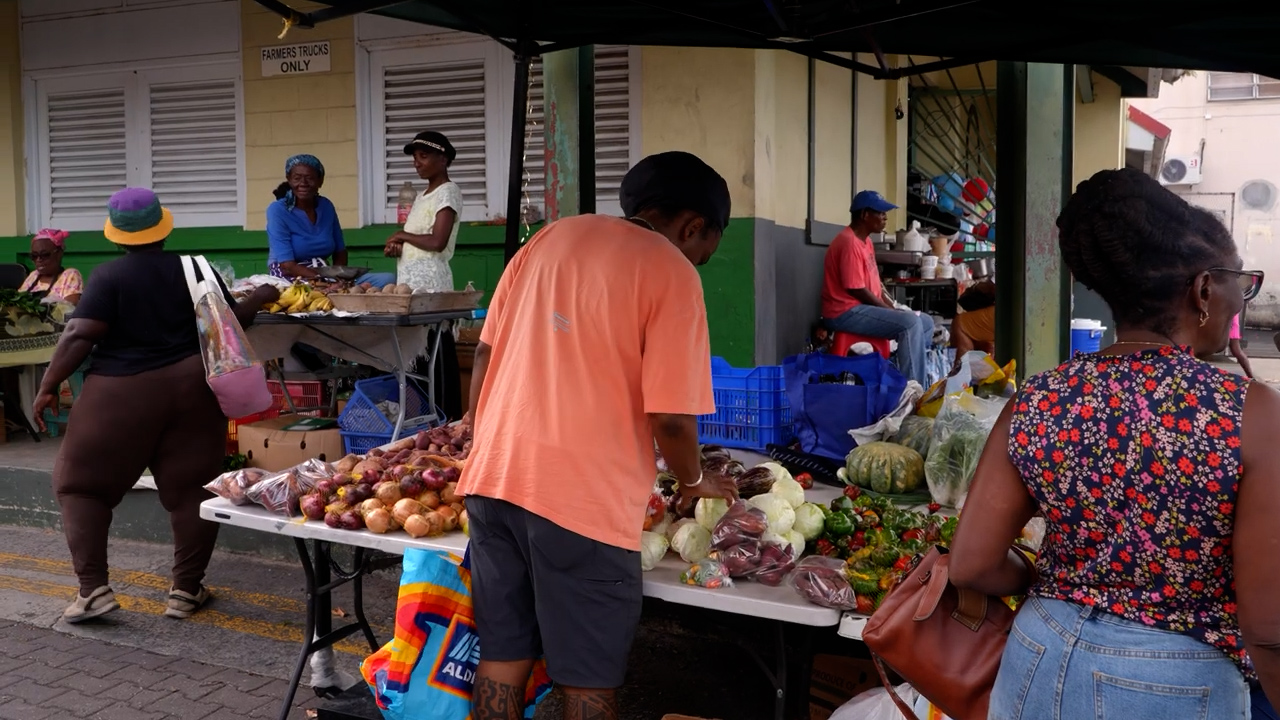
In Freeman’s Village, chef Jermaine “Bush” Jones is building a different kind of food experience, one rooted in ital cooking, Caribbean ingredients and the belief that Antigua should have more confidence in what grows at home.
The first thing to understand about Bush Bungalow is that the food is only part of the story.
Behind the sweet potato crust pizza, the fresh herbs, the coconut dishes and the carefully assembled salads is a bigger question: what happens when a Caribbean chef builds his menu around the ingredients, knowledge and resources already present in his own country?
Inside Bush Bungalow
Ital Food, Plant-Based Dining and the Future of Local Food in Antigua

When I spent time with Jermaine at Bush Bungalow, I wanted to understand how he approaches food, where his ingredients come from, and what it means to create a plant-based dining experience in Antigua that is distinctly Caribbean rather than an imitation of somewhere else.
What emerged was a conversation about food imports, health, culinary identity, sustainability and the value of learning to see familiar ingredients differently. It was also a reminder that some of the most interesting food experiences begin far from the conventional restaurant floor.
What is Bush Bungalow?

Bush Bungalow is a small, plant-based food business in Freeman’s Village, Antigua, created by Jermaine Jones, known as Bush. It brings together ital-inspired cooking, creative use of produce, and a more personal approach to dining. Rather than relying on a large commercial kitchen or a conventional restaurant format, Jermaine works from his family home, a place with roots stretching back through generations.
The setting matters. This is not a restaurant designed to separate the food from the person making it. The scale of the operation means the preparation, the ingredients and the thinking behind the menu remain close to the surface. Depending on the day, guests may encounter bowls, salads, pizzas, tarts, soup, focaccia, juices or baked goods, with the menu shaped by what Jermaine is preparing and what is available.
For anyone searching for ital food in Antigua or creative plant-based food in Antigua, Bush Bungalow offers something more specific than a vegan menu. Its identity is tied to the Caribbean, to the ingredients available here, and to Jermaine’s personal convictions about the relationship between food and wellbeing.
The idea began with a question about Antigua’s food system
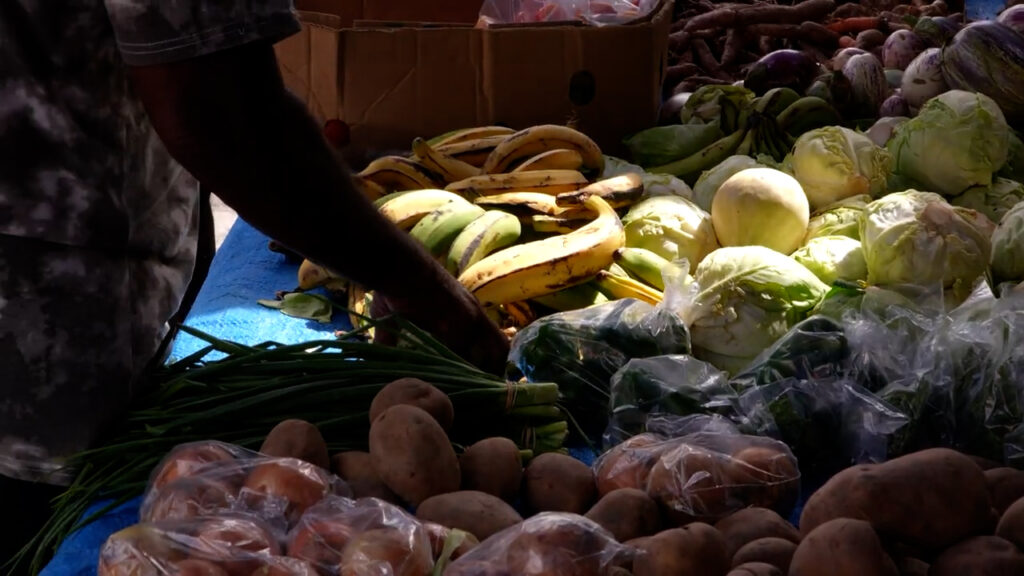
Jermaine traces the idea for Bush Bungalow to around 2014. He had been reading about Antigua’s reliance on imported food and thinking about the consequences, both economic and health-related, of a food system in which so much of what people eat has to arrive from elsewhere.
“These imported foods that we’re eating, they’re actually making us sick and broke.”
Jermaine Jones, Bush Bungalow
It is a blunt statement, but it gets to the heart of his concern. Food imports are not simply a question of what appears on supermarket shelves. They raise questions about how much money leaves the country to feed its population, how vulnerable households are to disruptions in supply, and how much space is left for local farmers, producers and food traditions.
Antigua has a rich agricultural history and a climate capable of supporting a wide range of crops. Yet the presence of local produce does not automatically mean it will be grown at scale, purchased consistently, or used confidently in restaurants and homes. A local food system depends on connections between farmers, markets, cooks, businesses and customers. If those connections weaken, imported products can become the default even when local alternatives exist.
Jermaine’s response has been to build a food business around a different set of priorities. Instead of treating local ingredients as a nostalgic addition to a menu, he sees them as the basis for something contemporary, beautiful and worth seeking out.
What does ital food mean in Antigua?

The word ital is closely associated with Rastafari, a movement with deep roots in Jamaica and a wider influence across the Caribbean. Ital food is often connected with natural, minimally processed ingredients and a commitment to food understood as a source of life and vitality. For many people, it involves a plant-based diet, although practices and interpretations vary. There is no single menu that defines how every Rastafari person eats.
That distinction matters when talking about ital food in Antigua. Ital is not simply another word for vegan, and it is not a cuisine that can be fully described by removing meat, dairy and eggs from a conventional menu. Its cultural and philosophical context matters, as do the choices of the person preparing the food.
Jermaine has been vegetarian since he was 14 and says he moved to a plant-based diet at 21. He also described living with food allergies and avoiding soy for around 15 years. These are personal experiences that have shaped the way he eats and cooks. They are part of his story, not a prescription for what everyone else should eat.
His guiding principle is straightforward:
“I only serve food that I believe in.”
Jermaine Jones
At Bush Bungalow, that belief shows up in the attention paid to ingredients, preparation and presentation. Plant-based cooking is not treated as a compromise or as a substitute for a meat-centred meal. It is the starting point.
The Antigua market: where the food story begins
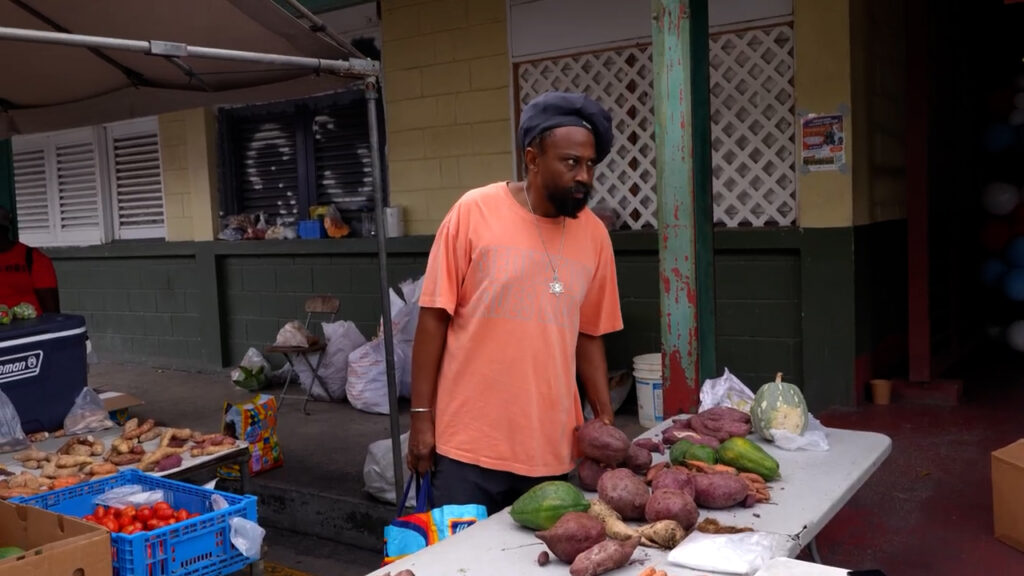
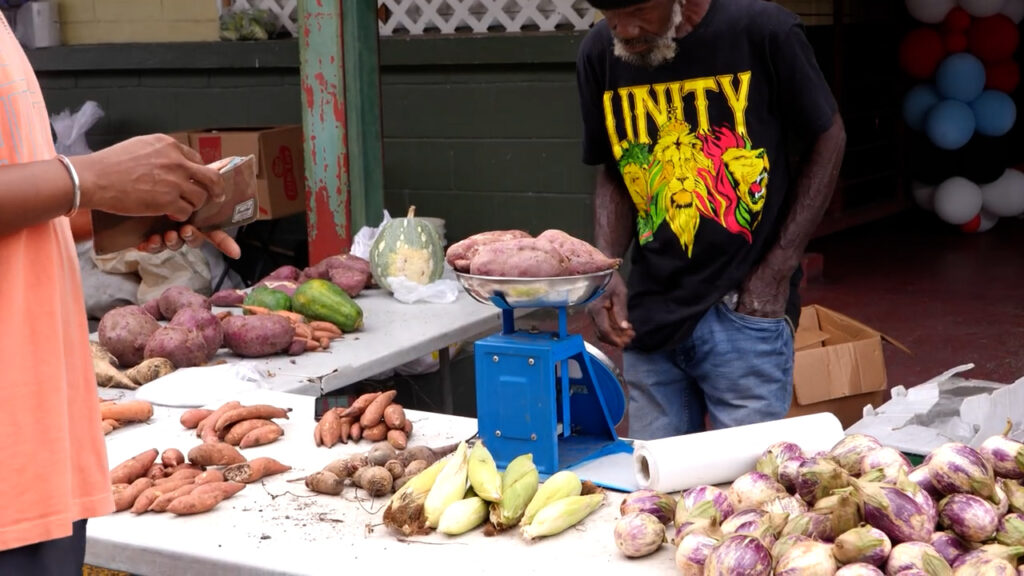
To understand a chef’s relationship with local food, it helps to look beyond the finished plate. Sourcing reveals which ingredients are easy to find, which require patience, what is in season, and how much of the menu depends on relationships with growers and vendors.
In Antigua, the market is an important part of that picture. It is a place where local produce can be encountered directly, where the availability and quality of ingredients change, and where the distance between a crop and the person cooking it can be much shorter than in a conventional supply chain.
Buying local is not automatically simple or sustainable. Availability, price, consistency, transport, storage and the needs of a small kitchen all influence what a chef can realistically source. A business that wants to use more local food must work with those practical constraints rather than pretend they do not exist.
Jermaine’s approach is to pay attention to what is available and think creatively about how it can be used. A carrot does not need to be perfectly uniform to have a place in the kitchen. Produce can be transformed, combined with other ingredients, or used in a different part of the menu rather than rejected because it does not fit a narrow idea of what food should look like.
That way of thinking matters for Antigua’s wider food system. When chefs make room for locally available ingredients, they can help create demand for produce that might otherwise be overlooked. They can also show customers possibilities beyond the familiar ways of preparing a crop.
It is a small-scale example of a larger principle: a stronger local food system is built through repeated choices, from what farmers plant to what vendors sell, what chefs buy and what customers are willing to try.
A menu that asks Caribbean ingredients to do more
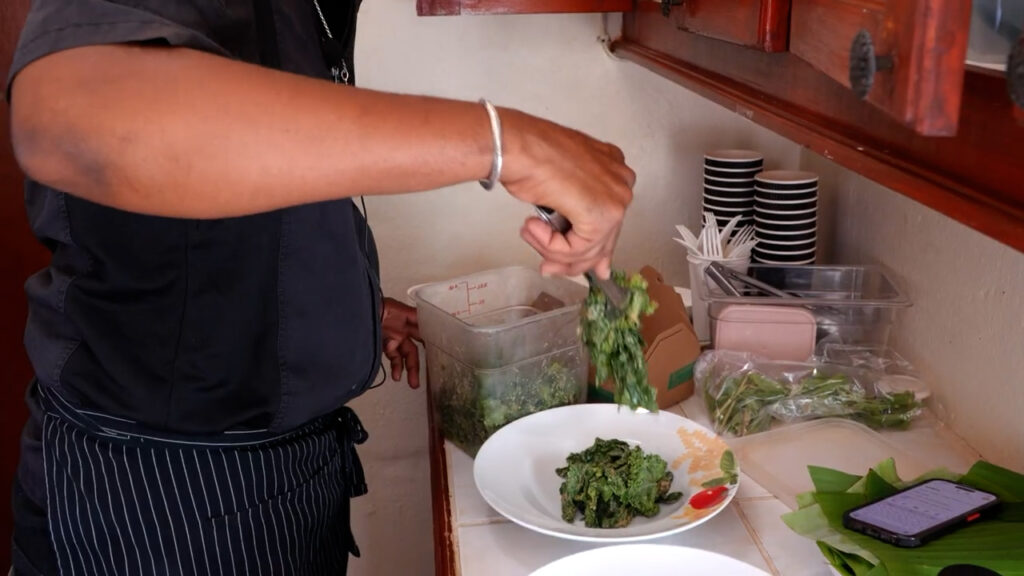
One of the most interesting aspects of Bush Bungalow is how familiar ingredients are used in unfamiliar combinations. The food is plant-based, but it does not rely on a narrow rotation of salads and vegetable sides. There is a willingness to experiment with texture, acidity, herbs, sweetness and different ways of preparing ingredients that are already part of Caribbean life.
Sweet potato crust pizza with Caribbean character
One dish combines a sweet potato crust with ackee, basil pesto and roasted tomatoes. It takes an ingredient deeply familiar in the Caribbean and gives it a role that moves beyond the most expected preparations. Ackee, widely associated with Jamaican cooking, becomes part of a pizza rather than appearing in the context many diners might anticipate.
The point is not that Caribbean ingredients need to be reinvented to be valuable. It is that they have more possibilities than we sometimes give them credit for. Sweet potato can provide structure; ackee brings its own delicate character; basil and roasted tomatoes introduce aromatic and savoury notes. The dish becomes a conversation between ingredients rather than an attempt to reproduce a conventional pizza exactly.
Coconut, treated as an ingredient with range
During our conversation, Jermaine spoke enthusiastically about coconut and the many ways it can be used. He described a beaten coconut salad on the menu, and explained that coconut can move between sweet and savoury preparations. In the Caribbean, coconut is so familiar that it can be easy to overlook its versatility.
Jermaine sees that versatility as an invitation to experiment. Coconut is not only a drink, a dessert ingredient or a source of milk. Depending on the preparation, it can contribute texture, richness and flavour to an entirely different kind of dish.
Salads built around flavour, texture and herbs
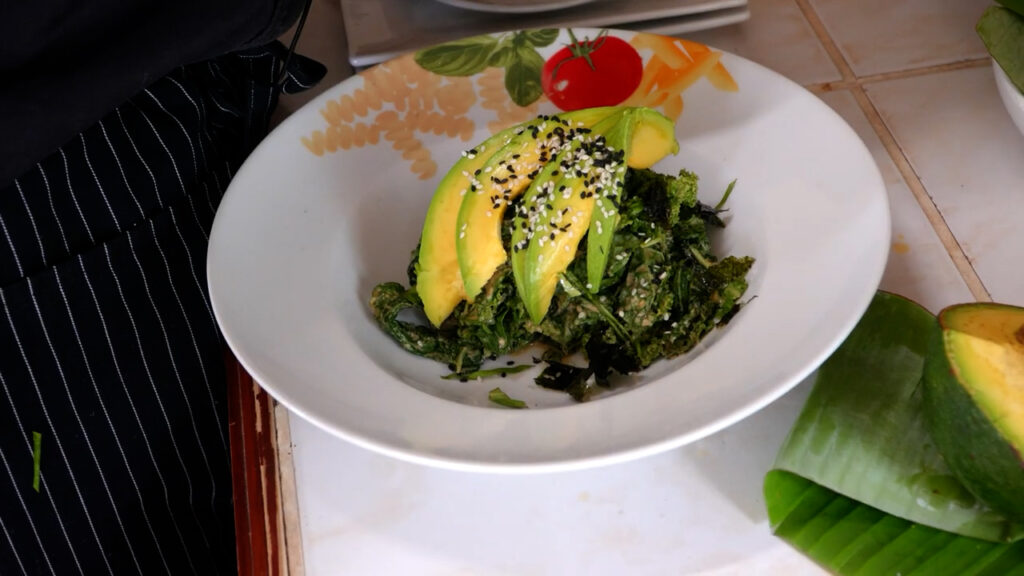
Jermaine’s salads are not an afterthought. He spoke about balancing different textures and flavours, adding fresh herbs, and using fruit to complement the pepperiness of rocket. Ingredients such as avocado, pumpkin seeds, goji berries and black and white sesame can create a mixture of creamy, crunchy, sweet and earthy notes.
“I love lots of textures, lots of different flavours. Also, like adding fresh herbs to my salad. I find it just takes it to another place.”
Jermaine Jones
It is a useful insight into the difference between putting vegetables on a plate and composing a dish. The ingredients have to work together. Herbs such as basil, cilantro and tarragon can shift the character of a salad, while fresh or dried fruit can bring contrast and soften the sharper notes of leafy greens.
Tarts, fritters and the possibilities of a plant-based kitchen
Other dishes discussed and served at Bush Bungalow included a courgette and caramelised onion tart made with spelt flour, rosemary and thyme, as well as fritters and baked goods. A carrot and walnut cake with golden raisins is another example of how produce can move between savoury and sweet uses.
These dishes also challenge the idea that plant-based food has to look austere or restrictive. A menu can be generous and varied without relying on animal products. The skill lies in knowing how to build flavour and texture, and in understanding what each ingredient can contribute.
That is especially relevant in the Caribbean, where ingredients such as sweet potato, coconut, pumpkin, callaloo, plantain, breadfruit and other locally grown foods offer enormous scope. The opportunity is not simply to preserve traditional recipes unchanged, nor to replace them with imported wellness trends. It is to keep Caribbean food alive by cooking it, questioning it, adapting it and sharing it.
Caribbean cuisine deserves to be taken seriously

One of the most forceful parts of my conversation with Jermaine was his frustration with the way Caribbean food is valued. He believes that Caribbean people need to take greater ownership of promoting their own cuisine rather than waiting for outside institutions or international audiences to decide that it is important.
“No one can do a better job of promoting our thing than us.”
Jermaine Jones
He also spoke about the confidence required to build a food business around that belief:
“You have to believe. You have to have that audacity to believe in it.”
Jermaine Jones
There is a wider issue here than marketing. Caribbean cuisine is diverse, shaped by Indigenous knowledge, African heritage, European colonialism, South Asian migration, Chinese migration and exchanges across the region and beyond. Its ingredients and techniques tell stories about land, labour, survival, adaptation and community. Yet the food can be presented to international audiences as a handful of familiar dishes, while the depth and creativity of the region’s cooking receive less attention.
Chefs across the Caribbean are working in different ways to change that. Nina Compton, for example, has built a culinary identity shaped by her Saint Lucian background and her work in New Orleans. Her career is one example of how Caribbean experience can inform ambitious contemporary cooking without being treated as a limitation.
Jermaine’s work is operating on a different scale and in a different setting, but the underlying question is related: what changes when a chef believes the ingredients and food traditions close to home are worthy of serious attention?
At Bush Bungalow, that belief is expressed through a small kitchen, a personal menu and an approach that treats local ingredients as a source of possibility. It is not necessary for every Caribbean chef to cook the same way. What matters is that the region’s food is understood as a living, evolving body of knowledge, rather than a fixed set of dishes reserved for tourists or special occasions.
Michelin standards, fine dining and the value of craft
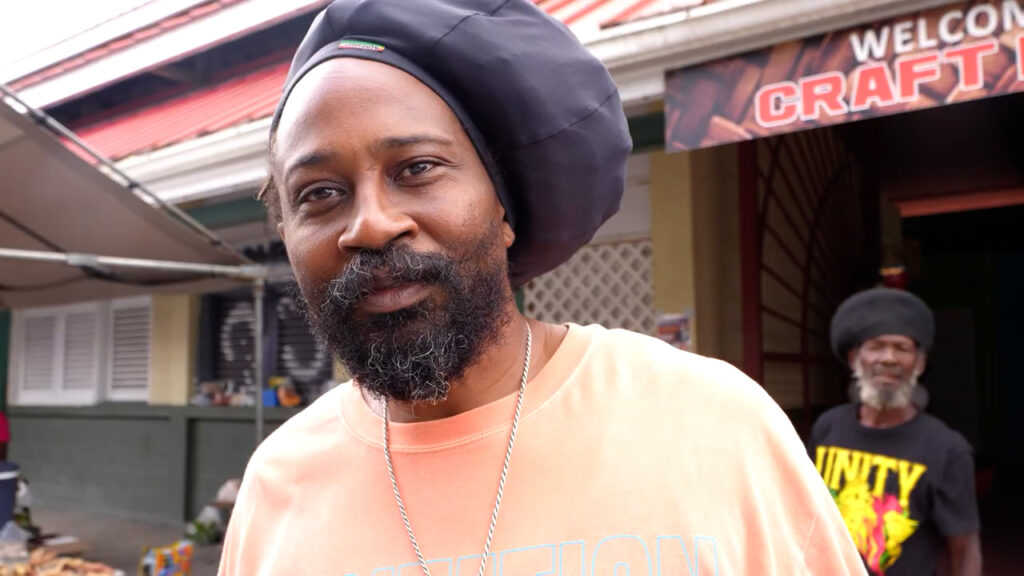
Fine dining is often associated with expensive interiors, formal service and elaborate presentation. But some of the most important standards in a professional kitchen are less visible: how ingredients are received and stored, how surfaces and utensils are cleaned, how food is handled, how flavours are balanced, and whether the experience is consistent.
Jermaine told me that he had worked in high-end restaurants and spoke clearly about hygiene and sanitation. He described the importance of maintaining standards from receiving ingredients through preparation, service and clean-up. At Bush Bungalow, where the kitchen operates within an older family home, he is conscious that the setting should not lead customers to expect less care.
His approach is worth discussing alongside the wider conversation about Michelin and fine dining, but the distinction is important. The Michelin Guide’s inspection process evaluates restaurants against criteria that include ingredient quality, mastery of cooking techniques, harmony of flavours, the expression of a chef’s personality through the cuisine, and consistency. A chef’s personal experience in a high-end kitchen is not the same thing as a restaurant receiving a Michelin star, and I am not claiming that Bush Bungalow has been awarded one.
The more interesting comparison is about seriousness of purpose. Fine-dining technique does not have to be confined to a luxury hotel or a formal tasting-menu restaurant. Careful sourcing, thoughtful preparation, sanitation, flavour development and attention to the person eating the food can matter in any kitchen, whatever its size.
At Bush Bungalow, the setting is informal, the operation is small, and the food is rooted in plants and Caribbean ingredients. Those qualities do not make craft less relevant. They make the decisions behind each dish more visible.
Sustainability in practice, not just on the menu
Food sustainability can become a collection of attractive labels: local, organic, natural, zero-waste. But the practical work is more complicated. It involves sourcing, storage, packaging, energy, water, waste, transport and the realities of running a business with limited space and resources.
Jermaine is candid that Bush Bungalow is not a zero-waste operation. He said he is continually looking for ways to reduce waste, but does not want to describe the business in terms that overstate what it has achieved. That honesty matters. Sustainability is better understood as a process of making improvements than as a claim that every problem has already been solved.
Banana leaves instead of treating every serving as disposable
One of the most memorable parts of the day was going with Jermaine to collect banana leaves from neighbours who had given permission. The leaves are not simply plucked and used without thought. He explained that selecting, cutting, stripping and washing them takes care and preparation.
The practice draws on a familiar Caribbean resource and makes use of something that grows around the community. It also depends on relationships: the neighbours who allow him to collect the leaves, and the local knowledge required to handle them properly.
This is a practical kind of sustainability, grounded in the place where the food is being prepared. It is not a universal solution to packaging waste, but it shows how local materials and established practices can be part of a more considered approach.
Reducing waste without pretending it is easy
Jermaine also spoke about reusing equipment and questioning the assumption that every use of plastic is equally harmful. His focus is on the distinction between durable items used repeatedly and single-use materials that quickly become waste. The environmental impact of a product depends on its manufacture, lifespan, reuse and disposal, as well as the waste-management systems available locally.
That is an important consideration in Caribbean islands, where packaging described as compostable may not break down as intended if the necessary industrial composting facilities are unavailable. A label alone does not guarantee a better outcome. The local infrastructure and the actual end-of-life route matter.
Jermaine’s thinking extends beyond restaurant supplies. He reflected on older household habits such as repairing, reusing and passing things down rather than immediately replacing them. A biscuit tin might become a sewing box; clothes might be handed on to another family member. These practices were once ordinary parts of everyday life, not branding strategies.
“We’re relearning the things that we knew already.”
Jermaine Jones
For him, wider progress will require education in schools, more responsible business practices and a national effort. A small food business cannot repair an entire food system or solve a country’s waste problem on its own. But it can demonstrate choices, encourage discussion and show customers that sustainability is not only an abstract idea.
A food experience that is also an education

Jermaine describes Bush Bungalow as an educational hub. The idea is that a meal can be a starting point for conversations about food, culture, place and history. Customers are not only being offered something to eat. They have an opportunity to understand why the ingredients were chosen and how the chef thinks about them.
That approach is particularly relevant to Caribbean food, where knowledge often passes through families and communities rather than through formal culinary institutions alone. People learn how to prepare ingredients by watching, tasting, asking questions and adapting what they have seen. A chef who makes those decisions visible helps keep that exchange alive.
The small scale of Bush Bungalow makes this possible, although it also brings practical limits. Jermaine works with a compact kitchen and a workload that can be demanding. Some items sell out, and the experience is not the same as arriving at a large restaurant with an extensive menu and unlimited capacity. Customers are wise to contact him in advance for the current menu and ordering arrangements.
That is part of understanding the business as it is, rather than imposing expectations designed for a different kind of restaurant. The appeal is not only the finished plate. It is the connection between the person cooking, the ingredients available and the ideas that shape the food.
Bush Bungalow and Casa de Luz: food as a way of building community
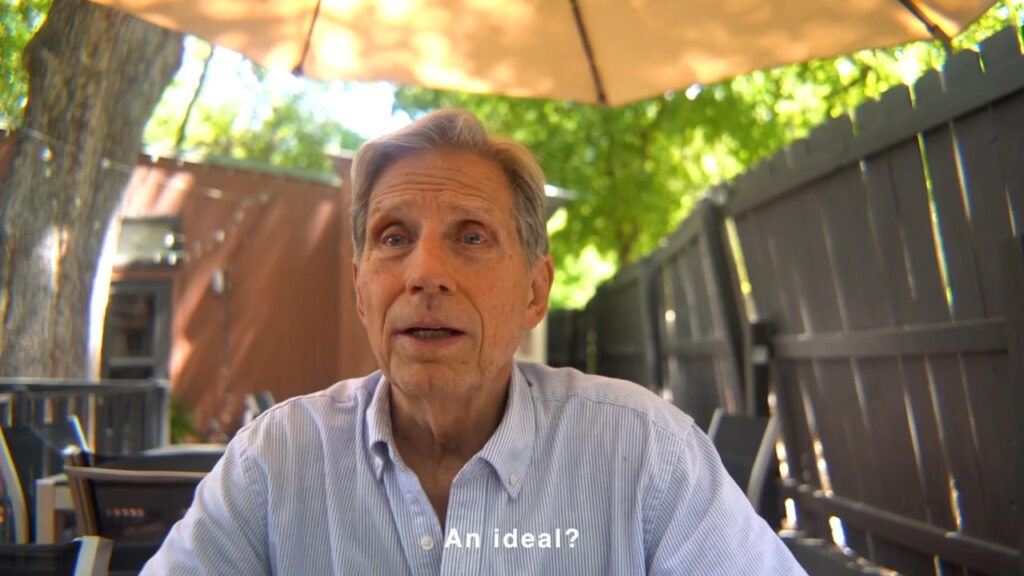
Thinking about Bush Bungalow also brought me back to my recent story, “Casa de Luz: Where Plant-Based Food Becomes Community.” Casa de Luz in Austin, Texas, and Bush Bungalow in Antigua are different in scale, structure and purpose. Casa de Luz is a long-running nonprofit community wellness centre built around shared meals and participation. Bush Bungalow is a small, chef-led operation shaped by Jermaine’s personal approach to ital-inspired, plant-based cooking.
They should not be treated as identical models. But both offer a useful challenge to the idea that food is only a product to be sold. At Casa de Luz, the meal is part of a wider community experience. At Bush Bungalow, food becomes a way to explore local ingredients, Caribbean identity, personal values and the relationship between what we eat and where we live.
Both place importance on plant-based food and on the experience around it, rather than treating a meal as something disconnected from its origins. Their philosophies meet in the belief that food can do more than satisfy hunger: it can bring people together, pass on knowledge and invite people to reconsider their habits.
In their respective settings, each is helping make plant-based dining more visible and meaningful. Casa de Luz has spent decades building a community-centred model in Austin. Bush Bungalow is contributing to Antigua’s food culture through a smaller, locally rooted approach. They are not necessarily the only providers of this kind of food in either place, but they are compelling examples of how plant-based food can be connected to a broader philosophy of living.
Read the related story: Casa de Luz: Where Plant-Based Food Becomes Community.
How to experience Bush Bungalow
Bush Bungalow is in Freeman’s Village, Antigua, in Jermaine’s family home. The operation is small, and the menu and availability can vary. Contacting Jermaine in advance is the best way to find out what is being served and how to order. He has described sharing menus through a WhatsApp broadcast list, with customers responding to place orders.
Come curious about the ingredients as well as the meal. Ask what is local, what is in season, how a dish was developed and what has influenced the menu. Those questions are part of the experience Jermaine wants to create: a chance to eat, but also to think differently about food in Antigua.
What I took away from Bush Bungalow


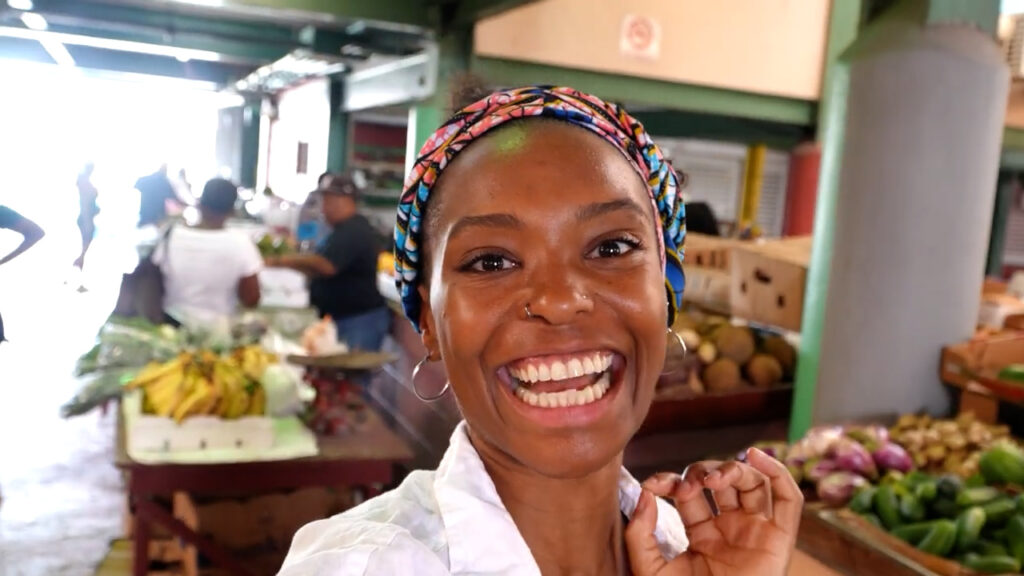
For me, one of the most valuable parts of spending time with Jermaine was getting away from the finished dish and paying attention to the process around it. Going out to source ingredients, talking about the choices behind the menu and seeing how local materials could be used made the idea of a local food system feel much more concrete. It was not an abstract conversation about sustainability. It was about what was available, what could be made from it, and the thought required to turn those ingredients into a meal.
At one point, as we looked at collecting banana leaves, I asked, “Are we stealing?” It was a small question, but it captured something important about sourcing: using what grows around us still depends on permission, relationships and respect for the people who share those resources. Jermaine was clear that the neighbours knew he collected the leaves and had given him permission.
I also found myself thinking about breadfruit. In our conversation about what single plant we might choose if we had to live on it, I said, “I think mine’s breadfruit. Because you can do so much with it.” That is part of what interests me about Caribbean food: ingredients we already know can offer so many possibilities, yet we do not always give them the attention or creative ambition they deserve.
My time at Bush Bungalow reinforced my belief that the future of Caribbean food should not depend on importing someone else’s idea of what good food looks like. It should also involve valuing the farmers, market vendors, cooks and communities who sustain our own food culture. Jermaine is one person working through that challenge in Antigua, using a small kitchen and a plant-based menu to make a larger argument about confidence, creativity and local resources.
Not every challenge can be solved by one chef, and a single meal cannot fix a food system. But the work begins with choices: what we grow, what we buy, what we cook, what we waste and what we teach the next generation to value. At Bush Bungalow, those questions are part of what is being served.
Check out Bushbungalow Instagram to make a reservation.
Further reading and context
- Encyclopaedia Britannica: Rastafari, for background on the movement and its cultural context.
- The Michelin Guide: How inspectors work, for an explanation of the distinction between restaurant evaluation and general fine-dining experience.
- Casa de Luz: Where Plant-Based Food Becomes Community, our related story on plant-based food and community in Austin, Texas.
Planning a visit? Check Bush Bungalow’s current menu and ordering arrangements directly with Jermaine before travelling, as availability and service details can change.