
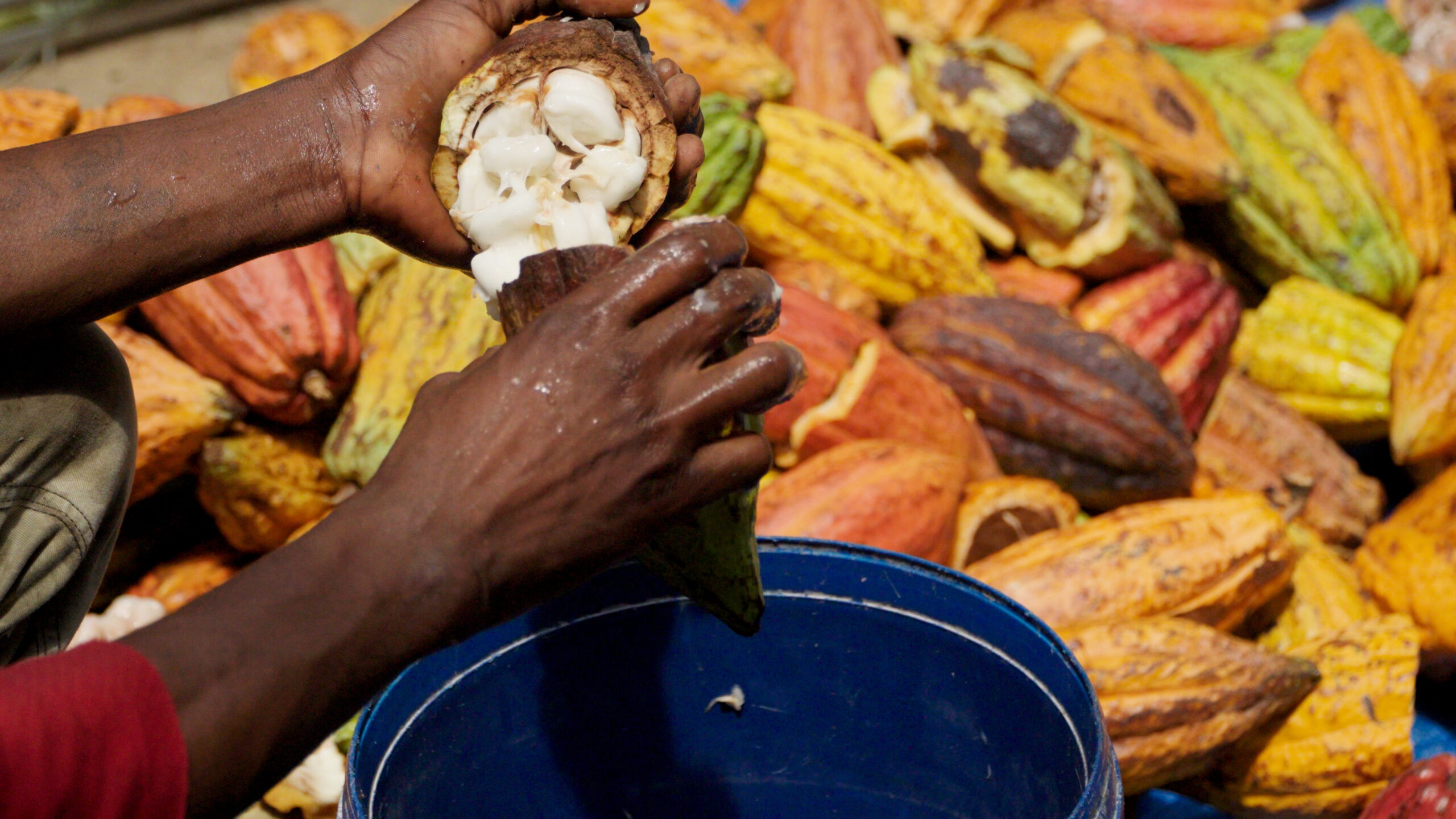
Before chocolate reaches a shop, a gift box or a kitchen, somebody has to grow the cocoa. The trees need tending. The pods must be harvested and opened without damaging the beans. Then comes fermentation, a process that helps develop the flavours we associate with chocolate.
On mainland St Vincent, I filmed that process on Mick Jagger’s cocoa farm, working alongside the farmers responsible for the harvest.
I documented the work from pruning the trees and collecting the pods to breaking them open, preparing the beans for fermentation and following the traditional methods used to process the crop.
The reason for documenting the harvest goes beyond the farm itself.
The goal is to help raise the price paid for cocoa in St Vincent by bringing greater attention to the people who grow it, the knowledge they carry and the labour behind the finished product.
As the farmers explained their work, the conversation kept returning to something more fundamental than chocolate: the value of knowing how to grow your own food, the knowledge passed down through families and the importance of people working together.
Being on Mick Jagger’s Cocoa Farm in St Vincent
The first part of the harvest begins long before a cocoa pod is picked. The trees need to be maintained, and that means understanding how they grow, which branches should remain and which need to be removed.
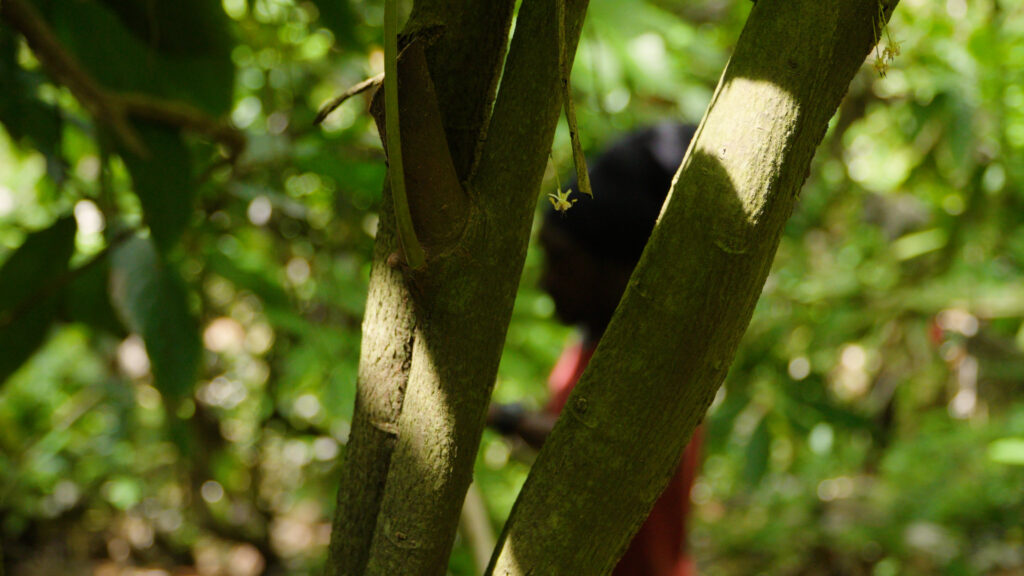
As we moved among the trees, the farmer demonstrated how to prune them.

He pointed out branches competing for the tree’s energy and explained why excess growth and shade needed to be managed. The aim was to open up the tree and make it easier to move around the farm when it came time to harvest.
This is knowledge learned through working with the crop. A cocoa tree cannot be managed by cutting randomly or treating every branch in the same way. The farmer has to recognise how the tree is growing and decide what needs attention.
Pruning Cocoa Trees: Why the Work Starts Before Harvest

Pruning is part of maintaining the structure of a cocoa tree. Removing selected growth can help manage shade, improve access and reduce unnecessary or competing branches. The right approach depends on the condition of the tree and the way it is being grown.
During the demonstration, the farmer showed me which branches he wanted to keep and which needed to be taken away.
His concern was not simply how the tree looked. It was how the tree directed its growth and how easily the farmers could work around it.

There is a difference between describing pruning in the abstract and watching someone decide where to make each cut.
The farmer was applying practical knowledge to a living tree, drawing on experience that cannot be reduced to a single instruction.
Harvesting Cocoa Pods by Hand

Once the cocoa pods are ready, the work moves from maintaining the trees to collecting the fruit. The farmers move through the crop, selecting pods and bringing them together for the next stage.
In our conversation, the farmer recalled how harvesting and opening the pods were once done together in the field.
He described an earlier routine in which containers were taken out to the trees so the pods could be harvested and broken open there.
That detail matters because cocoa processing is not one fixed procedure followed identically everywhere. Farmers adapt their methods to the work, the facilities available and the way the crop is handled. What remains essential is that the beans are removed carefully and prepared for fermentation.
Breaking Open the Pods Without Damaging the Beans
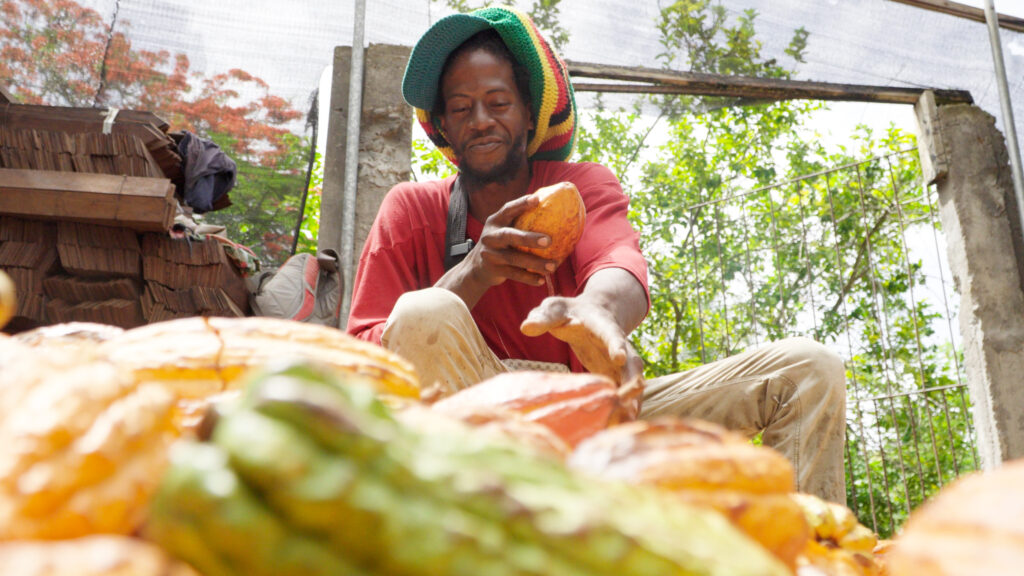
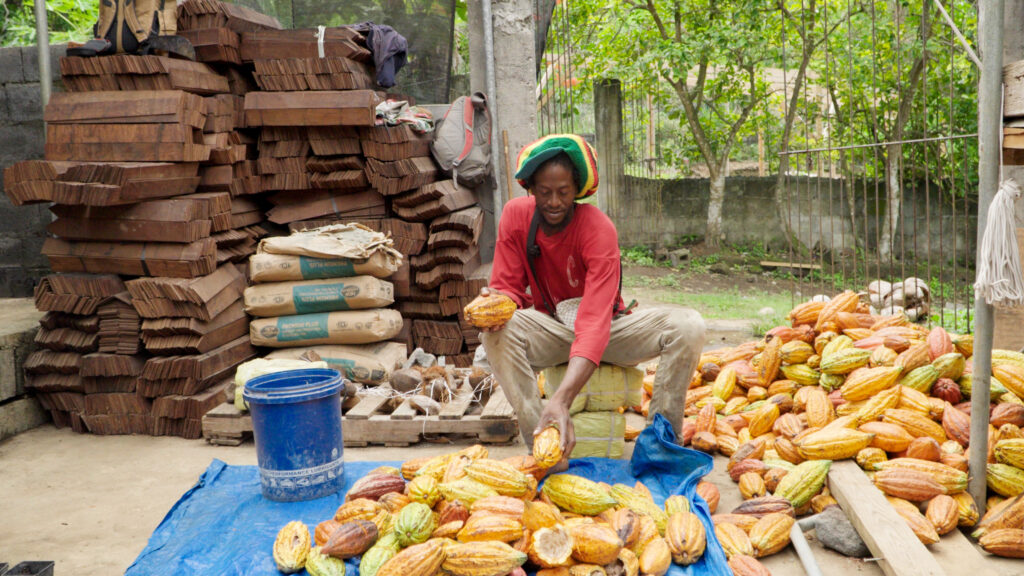
After the pods are collected, they have to be opened to release the beans inside. The farmer demonstrated how to strike the pod carefully rather than cut indiscriminately into it.
He explained the reason for avoiding a careless cut: the tool can damage the beans. The task is to open the hard outer pod while leaving its contents intact for the next stage of processing.
Inside are beans surrounded by moist, pale pulp.
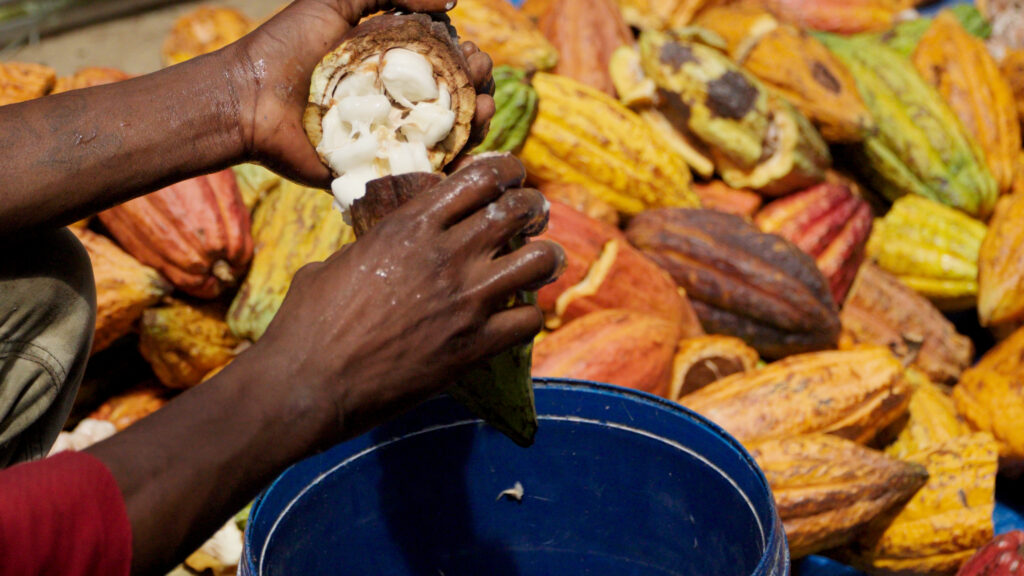
They look very different from the dry cocoa beans sold for further processing, and they are still far from becoming chocolate. The beans must pass through fermentation and drying before they are ready for roasting and other stages of chocolate production.
Opening the pods is repetitive work, but it requires attention. Damage at this stage can affect the quality of the material being prepared. The farmer’s demonstration made clear that experience is not just knowing what to do. It is knowing how to do it without compromising the crop.
From Cocoa Pods to Fermenting Beans

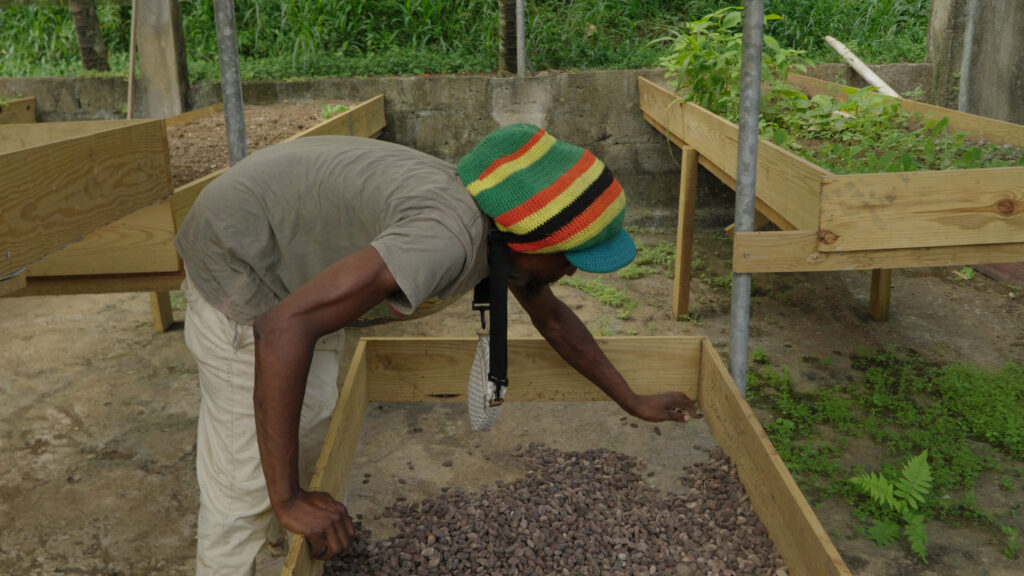
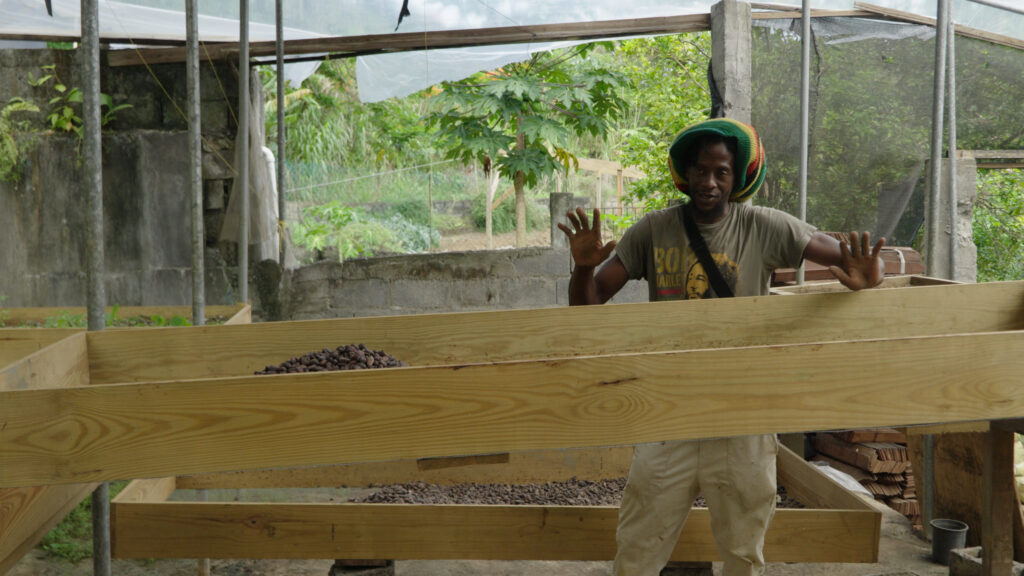
Once the pods have been opened and the beans collected, the process moves to fermentation. On the farm, the beans were placed on a bed lined with banana leaves.
The farmer explained that the beans would be left to ferment for around five days, with turning during the process. He described how their appearance changes and how the smell begins to resemble chocolate as fermentation progresses.
Fermentation is one of the most important stages in cocoa processing.

The fresh beans are surrounded by a sugary pulp. Naturally occurring microorganisms break down that pulp and generate heat, while changes within the beans help develop the precursors of chocolate flavour.
Fresh cocoa does not yet have the flavour of a finished chocolate bar.
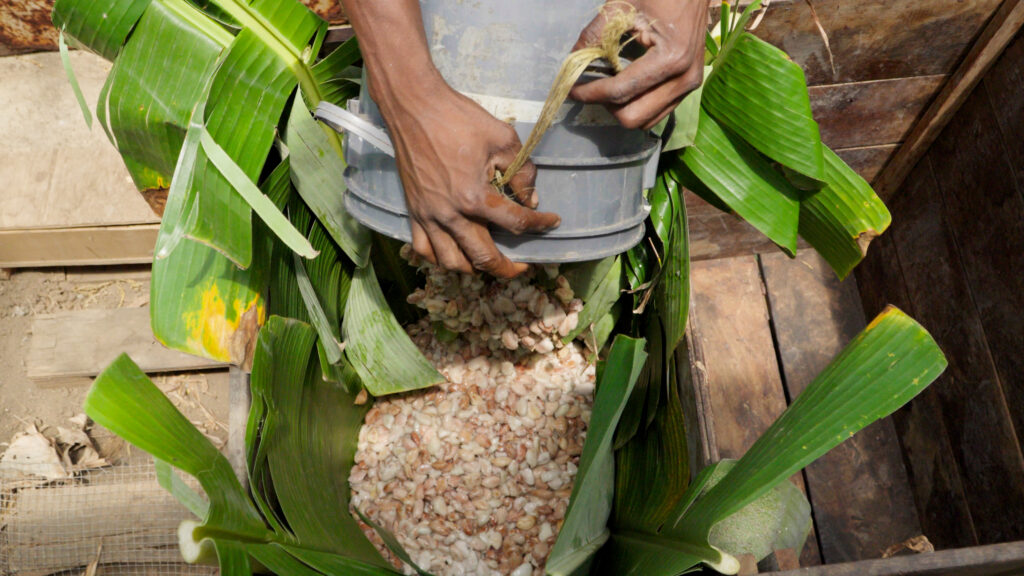
Fermentation helps create the foundation for that flavour, which develops further during drying and roasting. The time required and the way the beans are managed can vary according to the cocoa, the conditions and the method being used.
Why This Farm Uses Banana Leaves

One of the details I filmed was the bed of banana leaves used to hold the cocoa beans during fermentation. The farmer showed me the setup and explained the next steps in the process.
Leaf-lined fermentation is one approach to handling cocoa after the pods have been opened.
In other cocoa-growing settings, farmers may ferment beans in heaps or use wooden boxes and other containers. These approaches differ in how the beans are contained, how heat is retained and how easily the mass can be turned or monitored.
There is no basis in this footage to claim that one method is always better than another. Fermentation quality depends on the beans, the quantity being processed, the time and temperature, the handling of the mass and the conditions in which fermentation takes place. A method that works for one farm may not be the most practical for another.
What the footage does show is a method being carried out by people who know the process. The leaves, the beans and the timing are not decorative details. They are part of a working system that the farmer understands and can explain.
Five Days of Fermentation

When I asked about the duration, the farmer confirmed that the process takes around five days. He described turning the beans and watching the changes as they develop.
Fermentation is not simply leaving cocoa to sit untouched. Turning can help redistribute the beans and the conditions within the fermenting mass, although the exact schedule depends on the method and the farm. Farmers must judge how the process is progressing rather than assume that every batch will behave identically.
The change in aroma is an important part of the story. The farmer explained that, as fermentation advances, the beans begin to smell more like natural chocolate. That does not mean the beans are already finished chocolate. They still need to be dried and processed further, but fermentation is a major step in developing the flavour that comes later.
How Cocoa Becomes Chocolate in St Vincent

The conversation did not stop at the harvest.
The farmer also described how cocoa can be processed locally into a form used to make traditional chocolate.
He spoke about heating the beans so that the shells could be removed, then grinding the cocoa with a mill.

He explained that local chocolate has traditionally been made with spices such as ginger and cinnamon, with the mixture shaped into balls or sticks.
He recalled the way his family used cocoa and described the familiar practice of preparing chocolate to drink with milk. These details place cocoa within a food tradition, not only within an export industry.
From Bean to Cocoa Paste

After fermentation and drying, cocoa beans are generally roasted, cracked and winnowed to remove their shells.
The remaining pieces, known as cocoa nibs, can then be ground. As they are ground, the cocoa’s fat melts and helps form a thick paste commonly called cocoa liquor or cocoa mass. Despite the name, it contains no alcohol.
The farmer described heating the beans to make the shells easier to remove and using a mill to grind the cocoa. He explained that the ground mixture could be combined with other ingredients to make the kind of chocolate preparations familiar to local households.
The exact equipment and sequence can differ between home production, small-scale chocolate making and larger commercial operations. The footage documents the farmer’s account of the local process; it does not establish that every step of commercial chocolate manufacture takes place on this farm.
Ginger, Cinnamon and the Tradition of Cocoa Sticks
When we spoke about local chocolate, the farmer described grinding cocoa together with spices, including ginger and cinnamon, and shaping the mixture into balls or sticks. These can be used to prepare a chocolate drink.
This is different from the familiar image of chocolate as a packaged bar. Cocoa can be processed and used in different ways, and a spiced cocoa stick is part of a tradition of preparing chocolate for drinking rather than necessarily producing a confectionery bar.
The farmer’s account connected this practice with his childhood and the older generation in his family. He was not describing an unfamiliar product discovered through a modern food trend. He was describing something he had grown up knowing.
“That’s How I Grew Up”: The Knowledge Passed Down Through Families
Throughout the conversation, the farmer returned to his family and the role farming had played in his life. He spoke about his mother and grandparents, and about growing up around people who worked the land.
“That’s how I grew up. Chocolates.”
The transcript captures this short statement clearly enough to preserve its meaning, even if the surrounding exchange is less clear. He was speaking about the cocoa and chocolate practices he knew growing up.
Knowledge passed through families can include when to tend a crop, how to handle the harvest, how to recognise changes during fermentation and how to prepare the finished ingredient. Some of that knowledge can be written down, but much of it is learned by watching and doing the work repeatedly.
That does not mean traditional methods should never change. It means that any discussion about improving cocoa production should start by recognising what farmers already know, rather than assuming that useful knowledge only arrives with new equipment or outside expertise.
“It’s Already in My Blood”
“It’s already in my blood.”
When asked whether he would remain a farmer, he answered with these words. In the conversation, farming was not presented as a temporary job or a role he had recently taken up. It was part of his identity.
He described being brought up by his mother and grandparents and recalled the early routines of family farming. His account points to a relationship with the land formed over years, through family example and direct experience.
That experience matters when talking about cocoa prices. A crop does not grow itself, and agricultural knowledge is not created overnight. When the value of cocoa fails to reflect the labour and skill involved, the consequences reach beyond one harvest. They can affect whether farming remains a viable livelihood and whether the next generation sees a future in it.
“It Is Best to Eat What You Grow”

“It is best to eat what you grow.”
The farmer made this point while talking about growing food and the value of being able to feed yourself. He described having something to eat because you work the land and grow crops.
His point was not simply about preference. Growing food can give households a direct relationship with what they eat and reduce their dependence on buying every ingredient. It also keeps practical agricultural knowledge alive, from understanding the land to knowing how a crop can be used.
That is particularly relevant in island economies, where imported food can be an important part of the food supply. Local production does not remove every need for imports, and growing food is not automatically cheaper or easier. Farmers still need land, tools, time, labour and reliable ways to sell what they produce. But local agriculture can contribute to food security and retain more productive activity within the community.
What the Farmer Said About Chemical Inputs

When I asked about his approach to growing, the farmer described the farm as organic and said:
“Organic? 100% organic.”
He also said that they did not grow with chemicals. These are the farmer’s own descriptions of the practices used on the farm. They should be understood as his statements, not as independent confirmation of organic certification or a laboratory assessment of the crop.
The distinction matters. Organic production has specific standards that vary by market and certification scheme. A farmer’s account of how a crop is grown is valuable evidence of their approach, but a claim of formal certification requires separate documentation.
More broadly, the farmer was questioning why people should depend entirely on food brought in from elsewhere when they have the land and knowledge to grow food locally. His argument was rooted in the relationship between the land, the food people eat and the ability to provide for themselves.
“You Could Be a Journalist. I Can’t Do What You Do”
“You could be a journalist. I can’t do what you do.”
One of the most revealing moments came when we spoke about the different roles people play. The farmer acknowledged that he and I have different skills. He knows how to farm; I was there to document the work and tell the story.
He went on to make the point that we need to work together. It was a simple observation, but it speaks directly to why documenting agricultural work matters. Farmers can grow and process cocoa, but bringing attention to their work requires other people to help communicate its value.
Raising the price paid for cocoa in St Vincent cannot be achieved through a film alone. It depends on the buyers, the market, the quality and consistency of the crop, the costs of production and the terms on which farmers can sell. But documentation can help make the work visible and give farmers’ own knowledge a place in the conversation.
The farmers should not have to be invisible for the product to be desirable. Their work is part of its value.
Why the Price of Cocoa Matters in St Vincent

The purpose behind documenting this harvest is to help raise the price paid for cocoa in St Vincent. That goal puts the practical work on the farm into a wider economic context.
A cocoa farmer’s work includes maintaining the trees, pruning, harvesting, opening the pods and managing the beans after harvest. If the beans are fermented and dried, that adds further time and care before they can be sold or processed. The finished crop represents accumulated labour and knowledge, not just a quantity of raw material.
However, the footage does not establish the current farm-gate price, the price farmers are seeking, the costs of production or the terms of any particular sale. Those figures would need to be documented separately before drawing conclusions about the size of the gap between what farmers receive and what the final product costs.
What the footage does establish is the work involved. By showing the process in full, from pruning and harvesting to fermentation and local processing, the film makes visible the stages that can disappear when cocoa is discussed only as a commodity or chocolate is sold only as a finished product.
Making the Work Visible

There is a difference between celebrating Caribbean cocoa and building a stronger market for the people who grow it. Recognition can help, but farmers also need buyers, viable prices and a route from harvest to sale.
The harvest film is one part of that effort. It gives the process time and attention, showing the physical work and allowing the farmers to explain their methods in their own words.
The next step is to connect that visibility with the evidence needed to understand the economics: what farmers are paid, what it costs to produce and process cocoa, and what would make a better price sustainable for both growers and buyers. Those details should come from the people involved and from verifiable records, not assumptions.
I spent 6 weeks filming the entire cocoa process in St Vincent staying onsite, at the heart of the action.
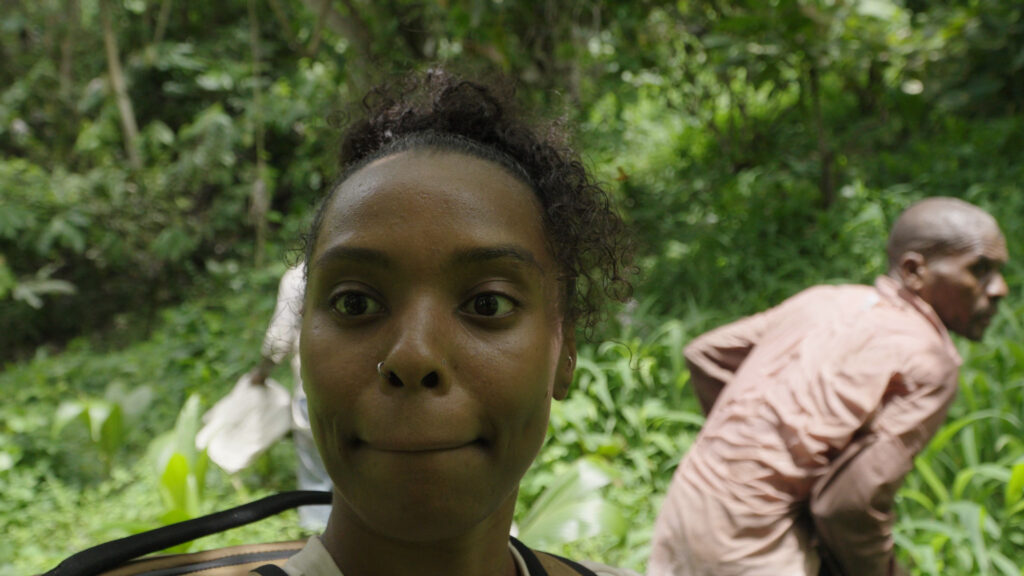
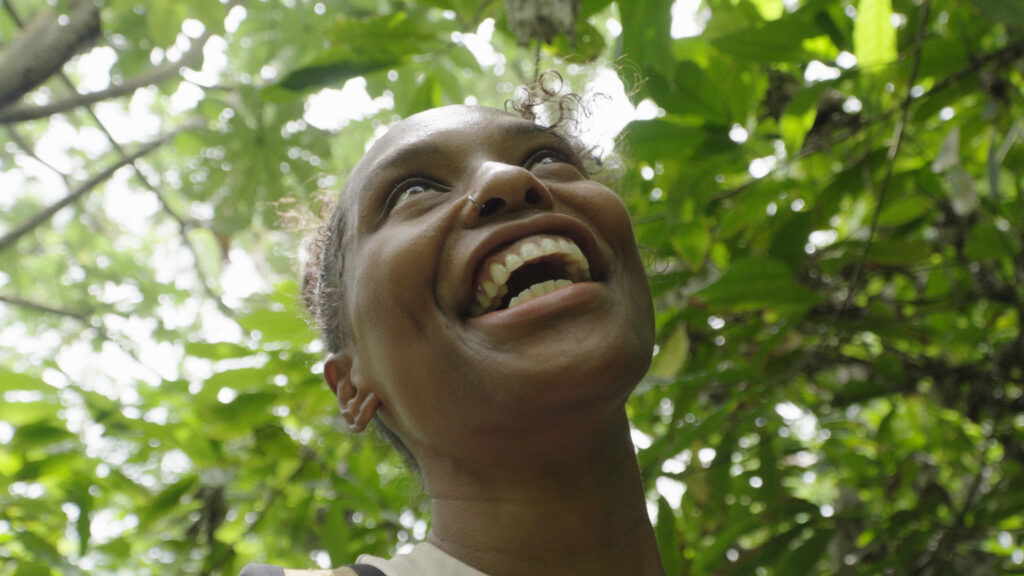
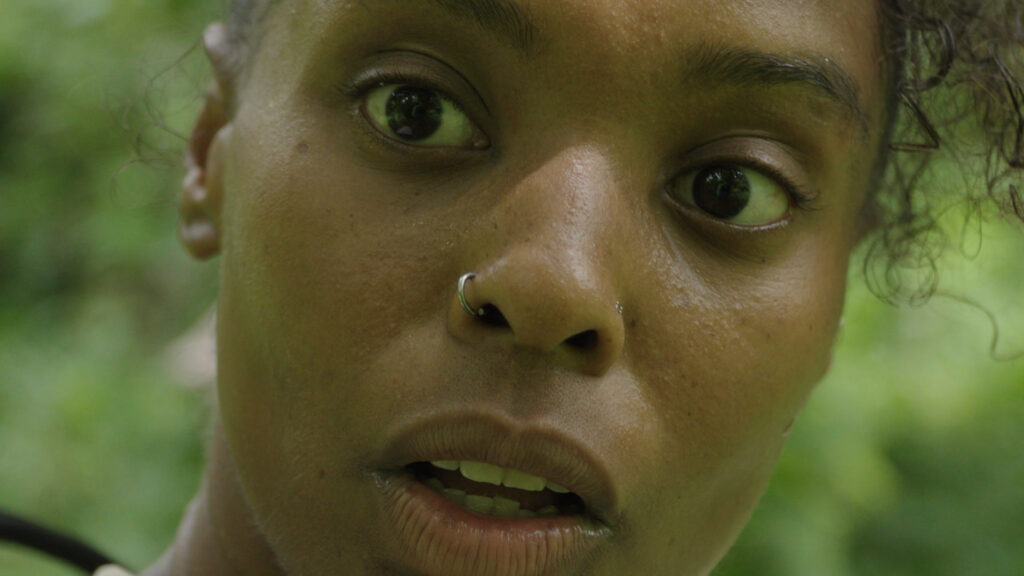
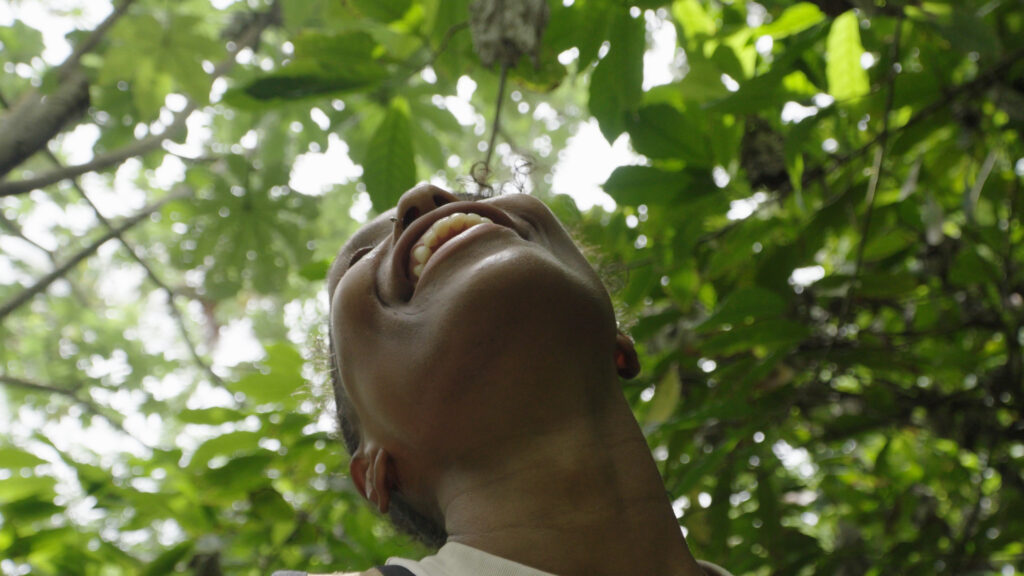

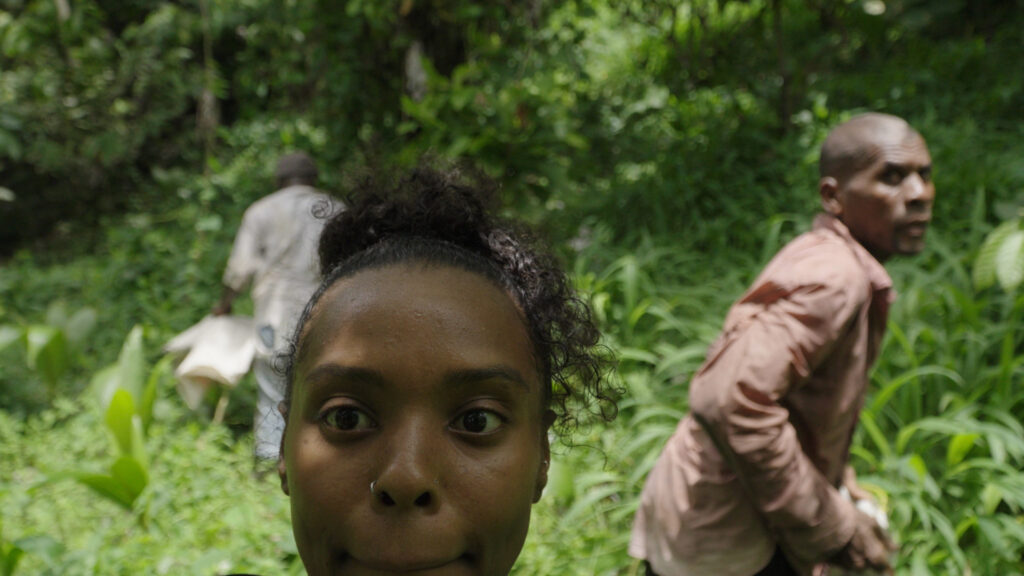
Filming the harvest on Mick Jagger’s (and friends) cocoa farm brought me close to the practical work behind cocoa production on mainland St Vincent.
It was difficult phyiscally. We were on a hill, come rain or shine. Slipping and sliding
I’m complaining now, but I was also carrying my entire cinema documentary equipment in my Peak Design backpack. Cameras, mic, drone, lenses and big bottle water in a glass bottle (added that detail for the weight!)
These extraordinary men do it every day, and although I now also live on a farm… the little London born girl in me was wondering sometimes why I chose this exact profession. Then I remembered the mission of My Ideal World and snapped out of it (in and out).
But St Vincent’s Cocoa Story Belongs to Its Farmers

I watched the trees being pruned, the pods harvested and opened, and the beans prepared for fermentation. I also listened as a farmer described the family history behind his work and the traditional ways cocoa can be turned into chocolate.
His words stayed with me because they connected farming with identity, independence and cooperation. “It’s already in my blood,” he said. Later, he explained the value of growing food and the need for people with different skills to work together.
Those ideas are relevant to the future of cocoa in St Vincent. The crop has a value that begins long before it becomes a chocolate bar, and that value depends on farmers who know how to care for the trees and handle the harvest.
If the aim is to raise the price paid for cocoa, the people doing this work need to be part of the story. Their skills, time and experience should be visible in conversations about the crop’s future, and their voices should be heard when decisions are made about its value.
This is the entire harvest: not only the pods and beans, but the knowledge, labour and people behind them.
Contact: Spring Farm for prices and more information
