

There is a tree connected to the fragrance of Chanel No. 5. A plant that smells like garlic but is not garlic. A thousand-finger banana. A tree whose sap once helped make chewing gum.
And a doctor who can take you from the history of Caribbean medicine to the survival of mangroves, the legacy of Indigenous resistance and the extraordinary journeys plants have made around the world, all without leaving a public park in Saint Vincent.
Meet Dr Gerald Thompson, a former politician and medical doctor who identifies himself as an infectious diseases specialist and public health specialist.
Walk with him through Prospect and a familiar-looking tree becomes a story about perfume. A fruit becomes a clue to the history of global trade. A mangrove becomes a lesson in coastal survival. And a patch of greenery becomes a doorway into the intertwined histories of Saint Vincent, Africa and the wider Caribbean.
This is not the kind of place you rush through ticking off the sights. It is somewhere to stop, smell a leaf, taste a fruit when invited, ask questions and discover just how extraordinary the natural world can be.
One of the Most Fascinating Things to Do in St Vincent Is Hiding in Plain Sight

Saint Vincent and the Grenadines has no shortage of natural wonders.
But Prospect Mangrove Conservation Park offers a different kind of encounter with the island: one in which the smallest details can turn out to have the biggest stories.
On my visit, Dr Thompson did not simply point out plants.

He opened up entire worlds around them. We moved between tropical fruit trees, edible plants, medicinal traditions, mangrove habitats, unusual flowers and displays devoted to the wildlife and heritage of Saint Vincent. Every stop brought another revelation, often one that made me look twice at something I might otherwise have walked straight past.
“This park is about a journey into nature, a journey into nature.”
Dr Gerald Thompson
It is a simple description for an experience that reaches far beyond botany. Prospect connects the living landscape to human curiosity, cultural memory, food, health, environmental protection and the movement of people and plants across continents.
And the extraordinary part? This is a public park that visitors can come and experience for themselves. You do not need to be a botanist, a historian or a naturalist. You simply need to be curious.
The Doctor Who Turns a Walk into a World of Discovery

Dr Thompson brings an unusual range of perspectives to Prospect.
He identifies himself as a medical doctor specialising in infectious diseases, with a broader interest in public health. He told me about growing up in England, living in Canada, practising medicine in the United States, including New York and New Jersey, and travelling extensively through Africa, Central America and South America.
His enthusiasm is infectious.

He wants you to notice the details, but he also wants you to understand why they matter. A plant is rarely just a plant. It may tell us something about traditional knowledge, nutrition, migration, trade, medicine or the ecosystems on which communities depend.
His political background adds another dimension to his biography. Dr Thompson is a former politician, although his precise offices and dates of service need to be confirmed against reliable official records before publication. His medical qualifications and professional credentials should likewise be listed using verified information.
What is immediately evident during the walk is the breadth of his knowledge and the care with which he wants to share it. He is building more than a botanical collection. He is creating a place where people can encounter the natural and cultural worlds as connected parts of the same story.
The Tree Behind a World-Famous Perfume

Of all the discoveries at Prospect, one of the most unexpected comes with a name many people will recognise from the world of fragrance: ylang-ylang.
Dr Thompson showed me the tree and spoke about its extraordinary aroma, connecting it to Chanel No. 5, one of the world’s most recognisable perfumes. The fragrant flowers of ylang-ylang are indeed used in perfumery, and the plant has a place in the wider story of how botanical ingredients travel from tropical landscapes into products known around the world.
It is the kind of revelation that changes the way you encounter a garden. A perfume you may know from a dressing table or a department store suddenly has a botanical connection you can explore in person.
Here, luxury is no longer an abstract idea contained in a bottle. It has flowers, leaves, a scent and a living tree rooted in the earth.
Dr Thompson invited me to notice the aroma of the tree and consider the connection between the living plant and the fragrances people know around the world.
From my visit to Prospect Mangrove Conservation Park
That is the magic of being shown around by someone who sees connections everywhere. What looks like an ordinary tropical tree becomes a reminder that some of the world’s most familiar products begin with the remarkable chemistry of plants.
A Plant That Smells Like Garlic, but Isn’t Garlic


At another stop, Dr Thompson handed me a leaf and asked me to smell it.
I brought it to my nose. Garlic was the first thing that came to mind.
That was the point.
The plant he was showing me was a garlic-scented plant, not garlic itself. Its aroma brought an immediate association with a familiar ingredient, even though the plant was something entirely different. Dr Thompson used the moment to explain how smell and memory work together: a scent can transport us to a food, a kitchen or a moment from our past before we have even identified what is producing it.
“The memory of a smell is etched in your mind.”
Dr Gerald Thompson, explaining the idea of scent and memory
He described this kind of sensory recognition as part of the experience he wants people to have at the park. We do not experience nature through sight alone. We smell, touch, listen, taste and remember. A garden can engage the senses in ways that a photograph or a page of text simply cannot.
It was a tiny moment, but it captured something essential about Prospect. You are not just being told what the natural world contains. You are invited to experience it yourself.
The Tree That Helped Make Chewing Gum

Then there is the story of chicle, the natural latex traditionally harvested from certain tropical trees and historically used to make chewing gum.
Dr Thompson explained how the sapodilla tree became associated with the original chewing-gum industry. The milky latex known as chicle was collected and processed into a gum long before modern synthetic ingredients came to dominate commercial chewing gum.
It is a fascinating piece of botanical and commercial history.
Something as ordinary as chewing gum has a story rooted in trees, tropical forests, harvesting and the development of an international industry.
Dr Thompson took the story further, describing how demand for natural chicle grew and how synthetic substitutes eventually became widespread. The details of particular companies and individuals in that history deserve their own careful fact-check, but the underlying connection is real: plants have supplied raw materials for products that transformed everyday life.
At Prospect, these connections make the plant collection feel like a living archive. The trees are not merely decorative. They carry clues to the histories of trade, invention and the relationship between people and the natural resources they use.
A Thousand-Finger Banana and Other Botanical Surprises
Some discoveries need very little explanation to inspire wonder. They simply look extraordinary.
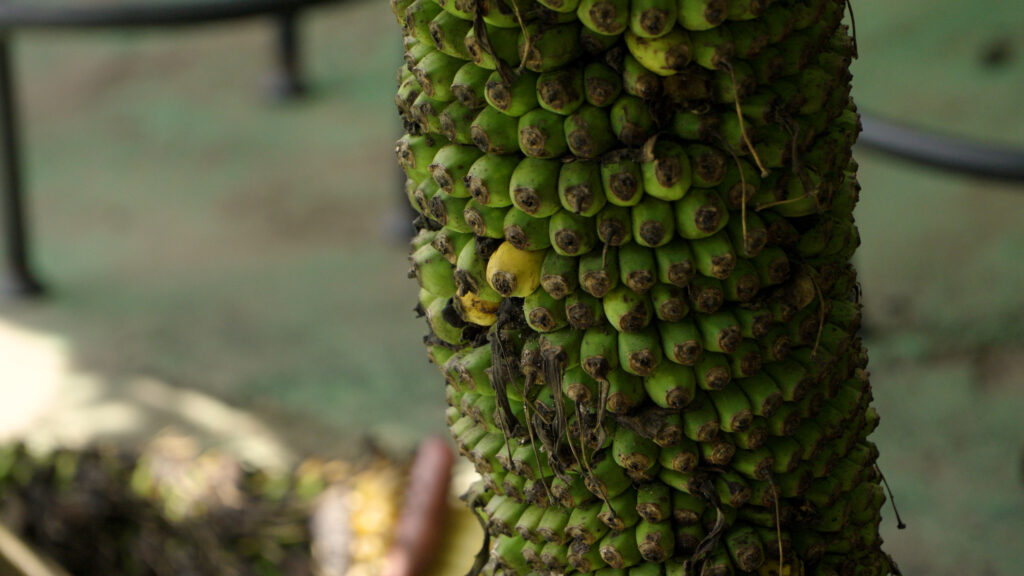

Among the plants Dr Thompson showed me was a thousand-finger banana, a type of banana known for producing an unusually long fruiting structure with many small fruits. It is the sort of plant that makes you stop and ask whether you have understood what you are looking at.
There were other surprises: unusual tropical fruits, different varieties of mint, bay, allspice, coffee plants, cotton and sugar-cane-like fruits. Some were familiar by name but unfamiliar in their growing form. Others were plants I had never encountered before.
Dr Thompson’s collection reflects an interest in the diversity of the plant world, including species and varieties with different origins and uses. The park brings together plants associated with food, fragrance, traditional practices, household gardens and the histories of tropical agriculture.
Fruit trees you might never expect to find together
As we walked, Dr Thompson pointed out fruit trees and invited me to look closely at what was growing on them.
We came across West Indian cherries, lime berries, hog plums, passion fruit and other tropical fruits, some still developing and others approaching ripeness.

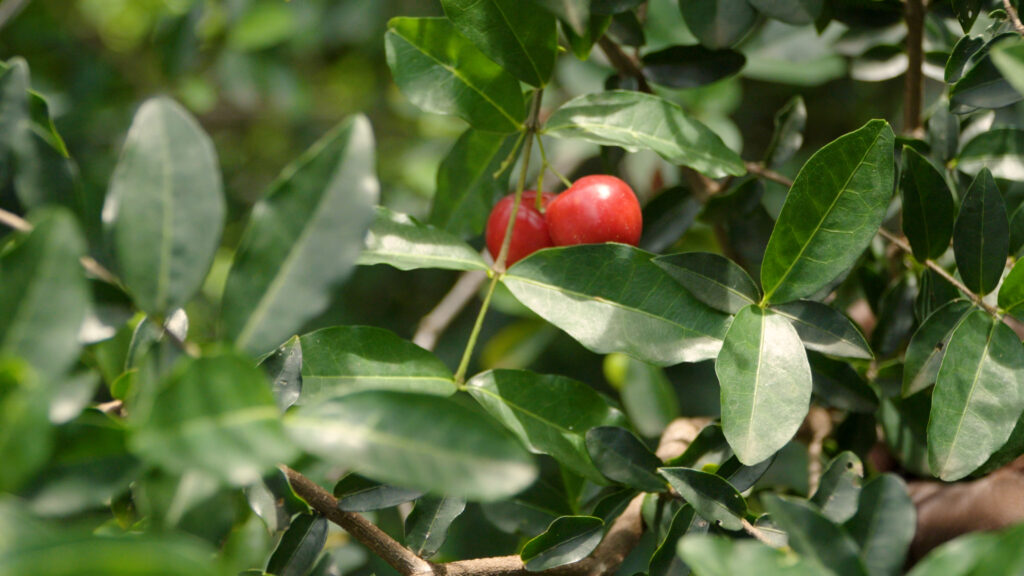

There is something special about seeing food in its original context. In a supermarket, fruit is usually presented as a finished product, removed from the tree, the soil and the time it took to grow. Here, you can see the plant itself, learn how to recognise the fruit and hear the stories that have travelled with it.
Dr Thompson hopes to expand the garden’s fruit production so visitors can increasingly experience what the grounds have to offer at different stages of the growing season. Whether a particular fruit is ready to sample will naturally depend on the time of year and what is growing at the time of your visit.
Plants, Traditional Medicine and the Knowledge We Should Not Lose
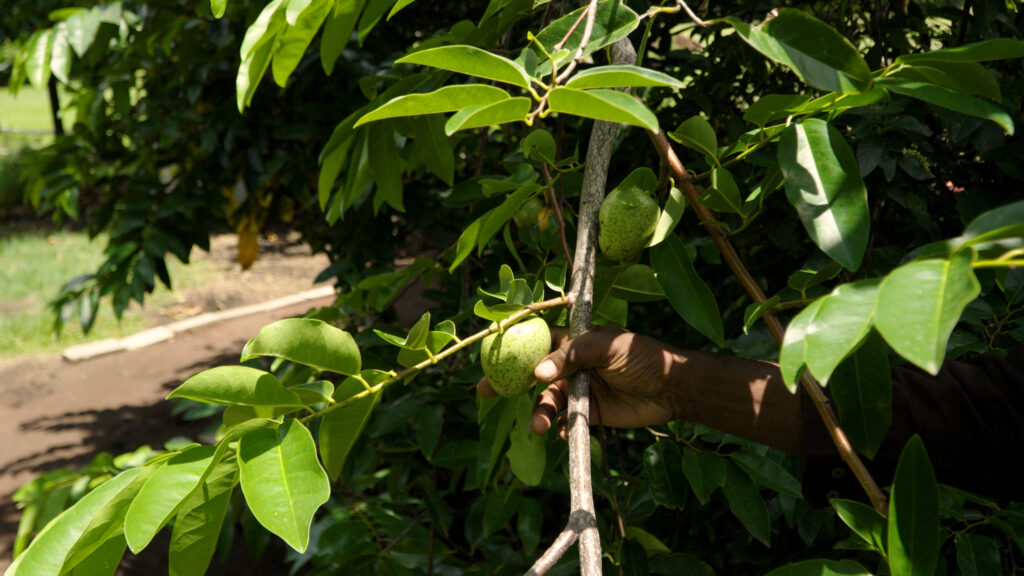
One of the most absorbing parts of the walk was hearing Dr Thompson discuss plants used in traditional medicine and everyday health practices.
He showed me plants associated with herbal teas, food, traditional remedies and household gardens. He talked about the knowledge that communities have accumulated over generations, and the importance of understanding which plant uses have scientific support and which still need careful investigation.
It is an important distinction. Traditional knowledge is a valuable part of cultural heritage and can help guide scientific research, but a plant’s historical use does not automatically prove that it is safe or effective for treating a medical condition. Correct identification, dosage, preparation and potential interactions all matter.
Dr Thompson also discussed periwinkle, whose compounds have contributed to important medicines used in the treatment of certain cancers.


The story of plant-derived medicines is a powerful reminder that biodiversity is not simply a matter of beauty. Plants have supplied compounds that have become important in modern medicine, and researchers continue to study natural substances for their potential uses.
At Prospect, these conversations invite visitors to appreciate the knowledge held in plants without confusing curiosity with medical advice. The garden becomes a place to ask questions, learn about the history of plant use and understand why conserving biodiversity matters.
Dr Thompson’s message is that the natural world contains knowledge worth exploring, preserving and passing on, while claims about health and medicine must be treated with care.
From my visit to Prospect Mangrove Conservation Park
The Caribbean’s Living History, Growing All Around Us
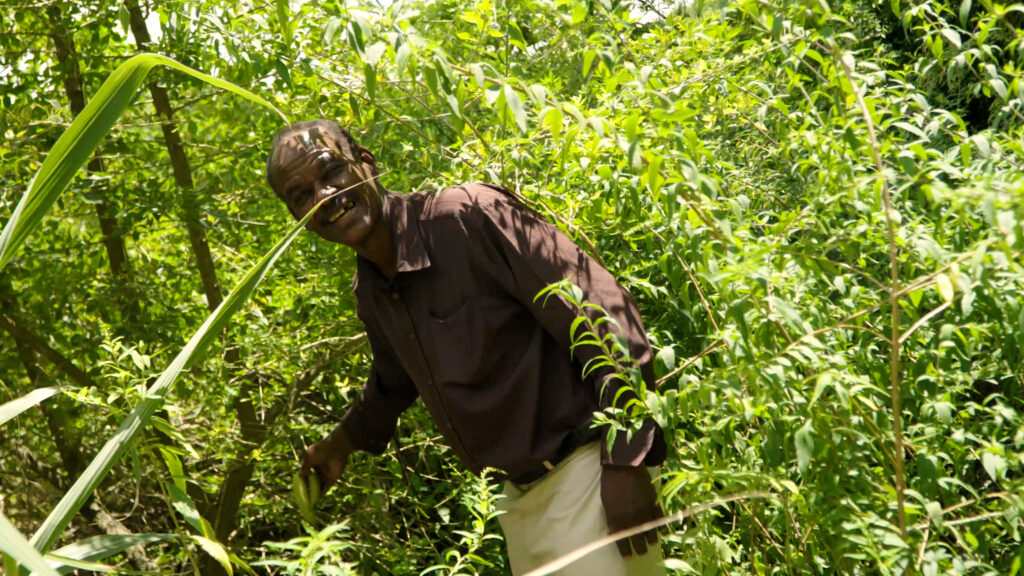
Prospect’s plant life also opens a window onto the history of the Caribbean.
The region’s landscapes have been shaped by Indigenous peoples, African communities, European colonialism, migration, plantation agriculture and the movement of crops between continents.
Dr Thompson spoke about the ways plants travelled, how different communities cultivated food, and how the botanical landscape changed as forests were cleared for sugar cane and other crops. He also discussed plants that became familiar in Caribbean kitchens and gardens despite originating elsewhere.
This is a reminder that the Caribbean’s natural and cultural histories cannot be separated neatly. The plants people grow, the foods they prepare and the knowledge they preserve all reflect centuries of movement, adaptation and exchange.
The Colombian Exchange: How plants crossed oceans

Dr Thompson described the movement of crops between the Americas, the Caribbean, Europe, Africa and Asia following European voyages across the Atlantic. This broad historical process is often called the Columbian Exchange.
Foods now deeply familiar in many parts of the world, including potatoes, maize, cocoa, peanuts, pineapples and chilli peppers, have histories that stretch across continents. Their journeys transformed diets, agriculture and economies. Those exchanges were also bound up with conquest, enslavement, disease and colonial exploitation, with devastating consequences for Indigenous communities.
Walking among tropical plants while hearing these histories makes the past feel unexpectedly close.
The story of a crop is not only a story of what grows in the soil. It is also a story of who cultivated it, who transported it, who profited from it and how it became part of everyday life.
Prospect offers a setting in which these questions can be explored through tangible examples rather than distant dates alone.
Garifuna heritage and the history of Indigenous resistance
Some of the most significant conversations at Prospect move beyond plants to the people whose histories are inseparable from Saint Vincent.
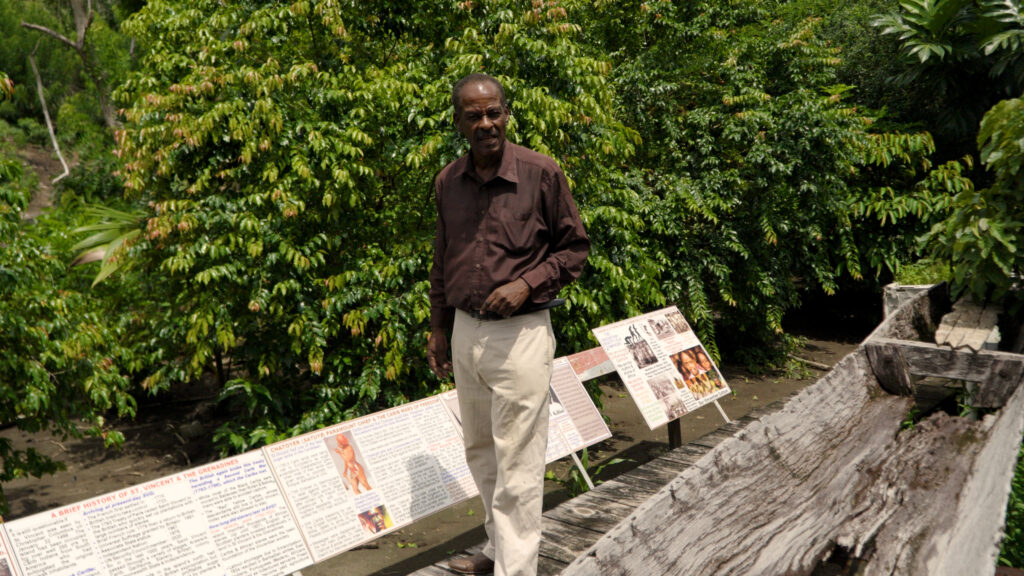
Dr Thompson spoke about the Indigenous peoples of the Caribbean, the resistance of the Garifuna ancestors to British colonial rule, and the forced removal of thousands of people from Saint Vincent in the late eighteenth century. He also showed me a display relating to a traditional canoe and discussed the importance of preserving knowledge of Indigenous life and heritage.
The history is painful and complex. The Garifuna people emerged from the histories of Indigenous Caribbean communities and Africans, and their descendants have maintained a distinct culture, especially in Central America. The British deportation of Garifuna ancestors from Saint Vincent to Central America remains a defining chapter in the history of the region.
Dr Thompson spoke personally about his own ancestry and the different origins that have contributed to the people of Saint Vincent. His reflections returned to a central idea: the Caribbean is a region of intertwined histories, and understanding the landscape means understanding the people who have lived with it.
Prospect’s value lies in bringing these conversations into a place where living plants, cultural displays and environmental stories sit alongside one another. Nature is not presented as a world separate from human history. It is part of the story.
The Mangroves That Helped Protect the Neighbourhood
For all the stories about perfume, fruit and traditional knowledge, one of the most consequential things at Prospect is something easy to underestimate: the mangroves themselves.
Dr Thompson described how the park’s mangroves were affected by a powerful storm surge. Sea water pushed inland, reaching the area around the park and nearby homes. Some trees were damaged or killed, but the mangrove habitat helped shield surrounding households from the force of the water.
He recalled that the park had contained close to 800 mangrove trees before losses caused by the hurricane and storm surge. The exact number and the extent of the losses should be confirmed with the park, but his account illustrates the value of protecting these coastal ecosystems.
“They did their job in the sense that they protected all the homes around here.”
Dr Gerald Thompson, speaking about the mangroves after the storm surge
Mangroves provide important habitat for wildlife, help stabilise shorelines and can reduce wave energy and erosion under suitable conditions. They are not a guarantee against every storm or flood, but healthy coastal ecosystems can play an important role in resilience.
Seeing the mangroves in this context changes the conversation about conservation. Protecting trees is not only about preserving a beautiful view or safeguarding wildlife. It can also be about protecting homes, supporting coastal ecosystems and maintaining natural defences that communities depend on.
At Prospect, environmental protection is not an abstract message. It is written into the landscape.
Crabs, Birds and the Wildlife Living Beyond the Leaves
The park’s living world extends well beyond its plants. Dr Thompson described Prospect as a habitat for wildlife including iguanas, mongooses, crabs and birds, and explained why protecting the area matters.
He drew attention to the many crab burrows in the ground. During our conversation, he used the size of the holes to explain how people can observe the signs of wildlife without needing to see the animals themselves. His specific estimates of crab age based on burrow diameter should be treated as his interpretation rather than a universal scientific rule, but the underlying invitation is a good one: look closely at the evidence an animal leaves behind.
Birds, crabs and other wildlife make the park more than a collection of plants. They are reminders that a habitat is a network of relationships, from the trees that provide shelter to the animals that use the ground, water and vegetation around them.
For visitors, this is another reason to slow down. Look for movement among the leaves. Listen for birds. Notice the burrows in the soil. A walk becomes a chance to observe the environment rather than simply pass through it.
When Prince Charles Came to Prospect and Stayed for Three Hours

Prospect has welcomed visitors with an interest in the environment, including King Charles III, who visited in March 2019 when he was Prince of Wales.
Dr Thompson recalled that the visit was expected to be relatively brief. Instead, he said, the Prince became so interested in what was being shown that he remained for around three hours. A plaque unveiled during the visit commemorates the occasion.
According to Dr Thompson, one moment that caught the visitor’s attention involved a crab disappearing into its burrow. It is an apt little story for a place built around looking more carefully at the natural world: even a small animal can stop a busy visitor in their tracks when somebody helps reveal what makes it fascinating.
The visit is part of Prospect’s story, but its appeal does not depend on celebrity. What matters is the same quality that made the experience memorable for me: there is always another detail to discover, another question to ask and another connection to make.
A Garden Designed to Wake Up Your Senses

Dr Thompson wants a visit to Prospect to be an experience of the senses.
He spoke about the pleasure of recognising a familiar smell, noticing colours, hearing birds, touching plants appropriately and tasting fruit when it is available and safe to do so.
That approach gives the park a different rhythm from a conventional sightseeing stop. Rather than moving quickly from one attraction to the next, visitors are encouraged to pay attention to what is happening around them.
“You can’t help but at the end of the day just feel good about life.”
Dr Gerald Thompson, describing the experience he hopes the park will offer
His ambition includes making nature a source of calm and perspective. A walk among plants can create room to pause, breathe and reconnect with the physical world. That does not mean the park is a medical treatment for stress or illness. It means that spending attentive time outdoors can be a rewarding part of everyday well-being.
And perhaps that is one of the most appealing things about Prospect. You do not need to arrive with specialist knowledge. You can simply come ready to be surprised.
A Living Collection with a Bigger Ambition
Prospect is still evolving.
Dr Thompson spoke about rehabilitating plants damaged by severe weather, moving some into protected growing areas and gradually restoring parts of the collection. He also described plans for a richer visitor experience, including additional plant displays and spaces that allow people to explore the grounds at a more leisurely pace.
His longer-term ambition is to grow more of the collection to maturity and share the results with visitors. He hopes that people will be able to see, learn about and sample a wider range of fruits as the garden develops, depending on the season and availability.
What makes that ambition compelling is its emphasis on experience. Conservation becomes more meaningful when people have a chance to form a connection with the thing being conserved. A plant that you have smelled, studied or learned about is no longer an anonymous piece of greenery. It has become part of a story you can remember and share.
Dr Thompson’s vision reaches beyond the boundaries of Prospect. He wants to see more trees and healthy natural habitats flourish throughout Saint Vincent, the Caribbean and the wider world, helping protect biodiversity and support the generations who will inherit these landscapes.
“My ideal world is one where this sort of nature flourishes.”
Dr Gerald Thompson
It is a generous ambition for a place that begins with something as simple as a walk among trees. The idea is that what people discover here will encourage them to value and protect the natural world elsewhere.
Why Prospect Mangrove Conservation Park Belongs on Your St Vincent Itinerary


There are many wonderful things to do in St Vincent, from exploring the island’s volcanic landscapes to enjoying its beaches and coastal waters. Prospect offers something different: a chance to discover the extraordinary stories hidden inside the natural world.
You might arrive for the plants and leave thinking about the history of perfume. You might come for the wildlife and find yourself learning about mangroves and storm protection. You might stop to look at a fruit tree and leave with a new understanding of how plants, food and cultures have travelled around the world.
Most of all, you get to experience Dr Thompson’s enthusiasm in person. His knowledge is not confined to a display board. It comes alive in conversation, through questions, demonstrations, memories and the small surprises that unfold as you walk.
Prospect is a reminder that some of the most memorable travel experiences are not necessarily the loudest or most famous. Sometimes they are found in places where someone has spent years learning to see the world differently, then opens the gate and invites others to look.
If you are looking for a fascinating thing to do in Saint Vincent and the Grenadines, put Prospect Mangrove Conservation Park on your list. Come curious. Leave time to explore. And be prepared for the possibility that a tree, a leaf, a crab hole or an unfamiliar fruit will become the detail you remember long after your visit.
Plan Your Visit to Prospect Mangrove Conservation Park
Prospect Mangrove Conservation Park is a public park in Saint Vincent where visitors can explore plant life, learn about local wildlife and discover the connections between nature, culture and conservation.
Before visiting, contact the park to confirm opening hours, admission arrangements, whether guided walks with Dr Gerald Thompson are available, and any access requirements. Plant displays, fruit availability and the condition of walking areas may change with the season and weather.
Contact and visitor information
- Park: Prospect Mangrove Conservation Park
- Location: Prospect, Saint Vincent and the Grenadines
- Contact person: Dr Gerald Thompson
- Telephone: 784 528 6600
- Email: prospectmangrove@gmail.com
- Opening hours and admission: Contact the park directly to confirm current details before travelling.
Make time for Prospect. Come for a walk through the park, stay for the stories, and discover just how much the natural world has to tell us.