

Naturally coloured cotton, as Vivi showed it to me
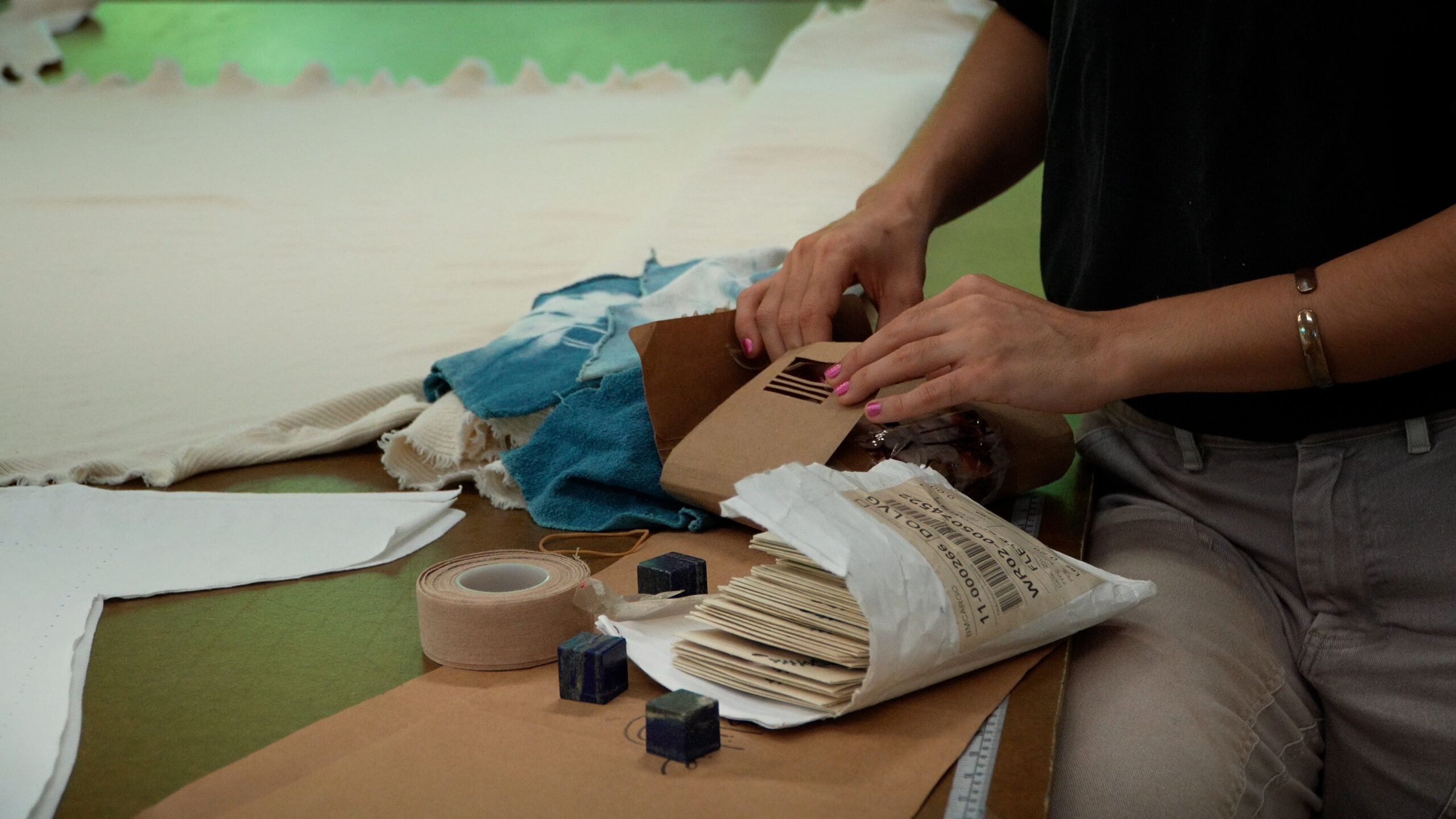
Cotton is not only white, and Vivi proved it to me with a handful of samples that rewired how I see a cotton field. We had been talking through the fibres she works with when she said she wanted to show me her current obsession, and she came back with swatches of cotton in pink, in green, in soft brown. Vivi described the colours as naturally present in the cotton, without an added dye.
How Cotton Grows Pink, Green and Brown
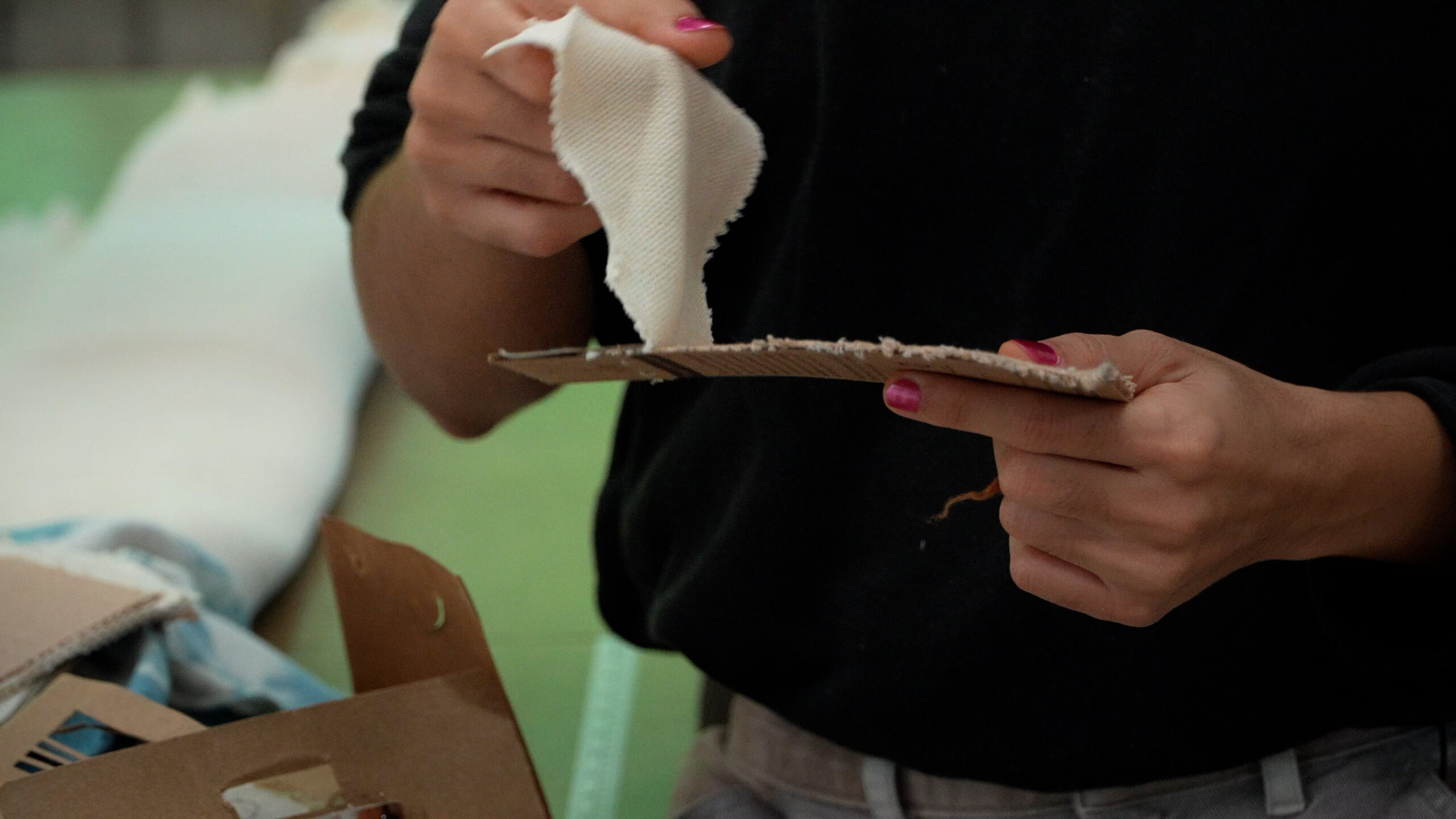
She built up to it slowly, then laid out the swatches. “I was going to show you my current obsession, what we’re working with, some cotton,” she said. “And what most people don’t know is that it is not only white. This is cotton. It’s brown. This is from Brazil.”
Then the colours kept coming. “You have like this pink shade. This is 100% natural, no dyes. But you have color there. And you also have this other shade that is like green, and that is not dyed. That is just how God colored this, naturally.” The pink, the green, the brown, none of it touched a dye. “What’s this cotton called? It’s called ancestral cotton. And the company is organic cotton colors. The company is from Spain, but they grow it in Brazil.” Vivi was showing me the fibre and describing its source; I had not visited the cotton field.
Why No Dye Matters So Much For Sustainable Clothing And Clean Water
The reason this thrills her is the reason she gave up colour for years in the first place. “The problem with most colors in the industry is that they’re synthetic, and you end up contaminating so much water with the process,” she said. Going undyed was one of her hardest calls, and the undyed pieces became her bestsellers. Naturally coloured cotton is her way back to colour while avoiding that dyeing step; growing and processing the fibre still use resources.
The Challenges of Naturally Coloured Cotton
There is always a catch with the most beautiful materials, and here it is the price. “The only thing is, that material is super pricey,” she said. “It’s actually the most expensive material we know.” Why? “The price is due to the lack of demand. The higher price is because there’s not enough demand for this material.”
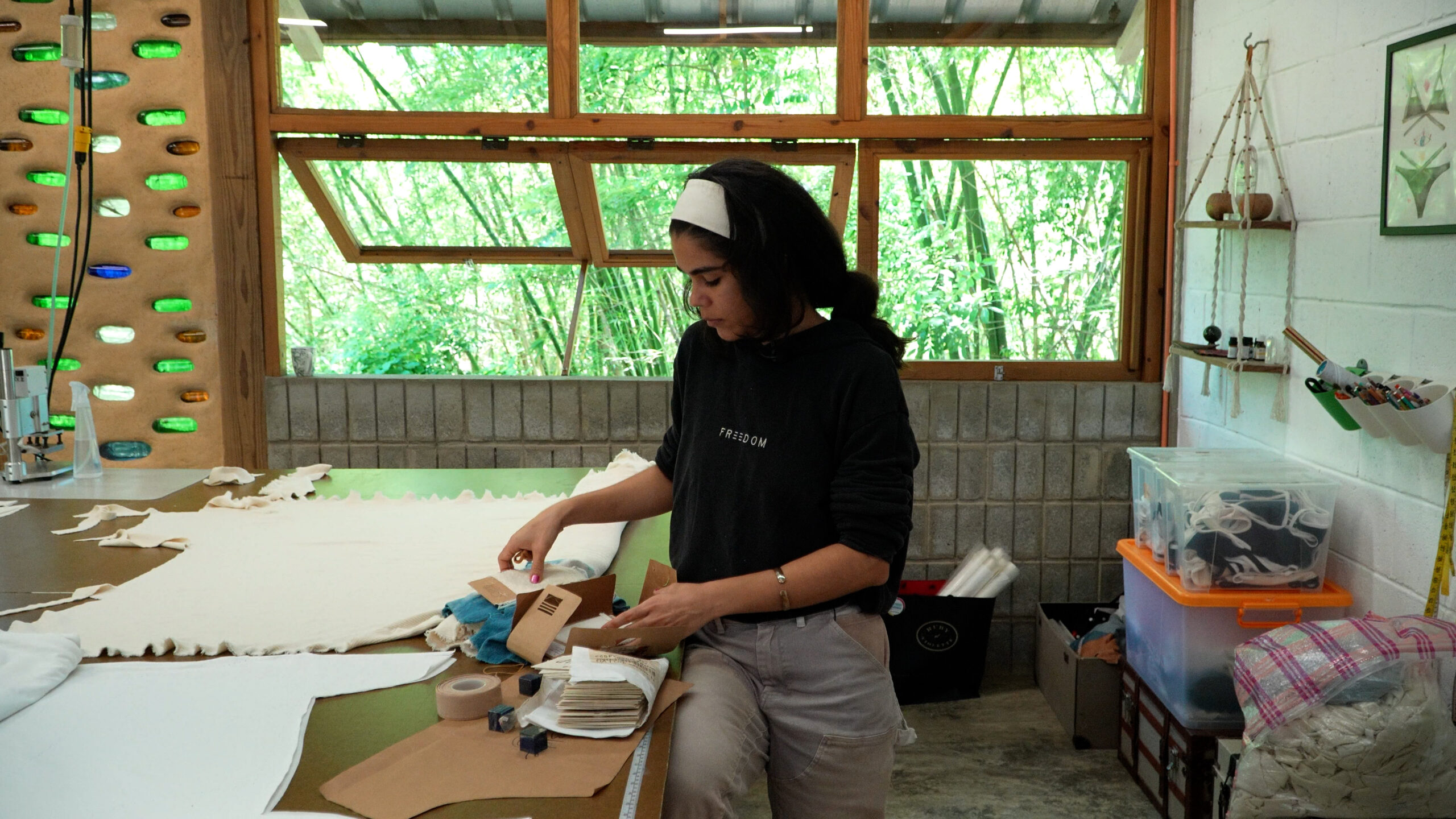
So she introduced it the clever way, a little at a time. “We did the kimono I told you about, it uses this trim all around. This is exactly that cotton,” she said. “This is the first material we were able to afford and use, just this trim. It’s a way for us to introduce this new material to the brand.” The trim was her way of introducing a material she described as expensive. Her account connected the supplier in Spain with cotton grown in Brazil; the samples alone did not establish the farm’s practices or the finished kimono’s compostability.
What Ancestral Cotton Seeds Can Bring Back
We think of cotton as a blank white thing that gets its colour later. These samples break that assumption. Vivi describes them as ancestral cotton: colour already present in the fibre, and a supply chain she wants to understand closely. The swatches tell us about the colour. They do not, on their own, verify every claim about how a field was managed.
The practical lesson is to ask better questions: who grew the cotton, how was it farmed, and which steps were used to turn it into cloth? Vivi sees demand as one reason the material is expensive, and is introducing it through small details her brand can afford. It is a window into possibilities beyond the standard white fibre and dye bath. Our clothing stories give you more questions to take to a maker.