
Exclusive footage filmed inside Flomarine with the villa’s staff, exploring the architecture, gardens, food and questions behind a luxury stay on Mustique, Saint Vincent and the Grenadines.
The first thing Alex tells me about Flomarine is not the price, the plunge pools or the five bedrooms. It is a love story.
“Flomarine originated from the previous owner,” he tells me, before we have even left the entrance. “His two daughters, Flo and Marina.”
Inside Flomarine, Mustique: Oliver Messel-Inspired Architecture, Island Life and the Reality of Luxury
The villa is named after two little girls. I love that detail. Before I have properly seen the house, I have a glimpse of the people and memories behind it.
Alex is Flomarine’s butler and head of staff. I am here to film the private villa from the inside, speaking with the people who know how it works, from the rooms and gardens to the kitchen. This is not simply a look at a beautiful property from the outside. I wanted to understand what it feels like to spend time here, what gives the house its character and what its approach to luxury might tell us about sustainability in the Caribbean.
I have reviewed eco-conscious stays around the world, and I am interested in a particular question: can luxury architecture respond to its environment, rather than simply shut it out? Flomarine offered an intriguing place to explore that question. Its design belongs to a wider Mustique tradition associated with British theatre and set designer Oliver Messel, whose work helped shape the island’s distinctive architectural identity.
The Mustique Company’s official Flomarine listing describes the property as an Oliver Messel-style villa. That wording matters. I am describing the house I visited and filmed, not claiming that Messel personally designed Flomarine.
Oliver Messel and the Architecture That Made Mustique Distinctive
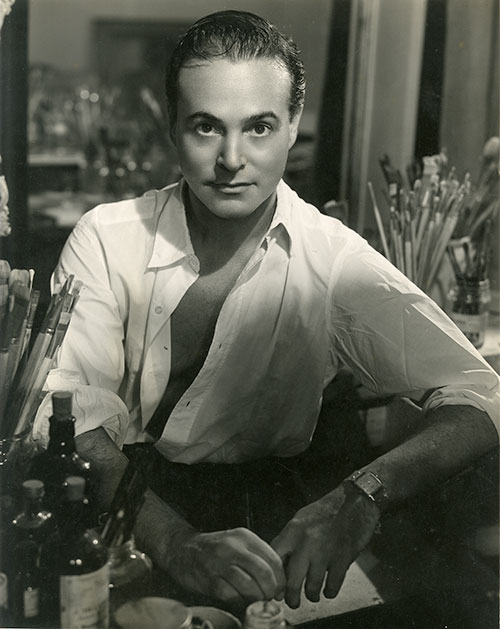
To understand Flomarine’s aesthetic, it helps to understand Oliver Messel.
He was not a conventional architect who happened to have a talent for decoration. He was a celebrated theatre and film designer whose work was concerned with atmosphere, perspective, colour and the art of making an audience feel transported somewhere else.
Messel worked across theatre, ballet, opera and film. His work included the 1940 film The Thief of Bagdad and productions of The Sleeping Beauty. In the theatre, a set must create a world within a limited space. A doorway can become an entrance to another universe; a carefully placed column can change the apparent scale of a room. Messel brought that instinct for visual illusion into domestic architecture and interiors.
His Caribbean houses became part of his wider legacy. In Mustique, his work helped establish a style that feels romantic and theatrical while responding to the appeal of island living: open terraces, shaded spaces, shutters, garden views and a strong relationship between indoors and outdoors.
For the historical context, the University of Bristol Theatre Collection’s Oliver Messel archive is a particularly useful source. It explores his architectural and interior work, including his Caribbean projects and collaborations. It is a better starting point for understanding his contribution than repeating unsourced claims about which houses he designed.
Messel was not a formally trained architect in the conventional sense. His architectural work involved collaboration, including with architect Arne Hasselqvist. That distinction is important when discussing the houses associated with his name: a recognisable style, a documented commission and a later building inspired by that style are not necessarily the same thing.
The difference between a Messel house and a Messel-inspired house
Two well-known properties help put the Mustique tradition into context. The Cotton House, now the island’s hotel, includes buildings associated with Messel’s work. Les Jolies Eaux, the villa built for Princess Margaret, is another celebrated example connected with his Mustique legacy.
Flomarine belongs in this conversation because its style draws on that broader architectural tradition. That does not establish that Messel designed the villa himself. The distinction is not a technicality; it is the difference between documenting architectural history and turning an association into a claim of authorship.
Inside Flomarine: Arches, Shutters and Messel Green

There is a line often used to describe the feeling of a Messel house: there are more windows than walls. Walking around Flomarine, I understand the sentiment.
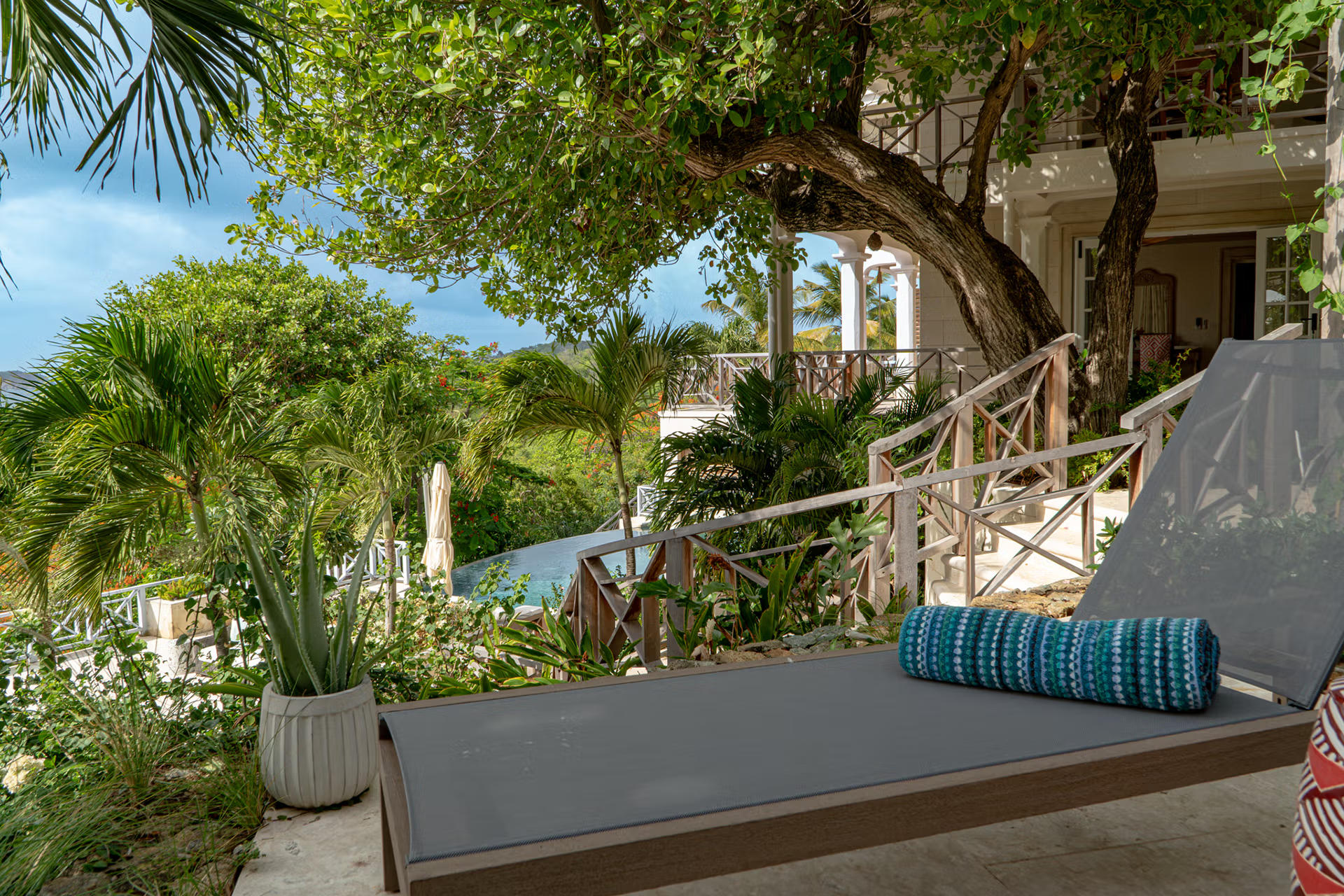
Slender columns, flattened arches, wooden fretwork and shuttered openings give the rooms their rhythm. The architecture does not rely on enormous expanses of solid wall to make an impression. Instead, the eye travels through the house, towards the terraces and out into the garden.
One of the most effective details is the way the openings frame what lies beyond them. A doorway can direct your attention towards a tree or a patch of greenery, making the landscape feel like part of the interior. It is a theatrical idea, but the scenery is real. There is no painted backdrop to lower when the scene ends.
The colour palette matters. Pale surfaces reflect daylight, while the green associated with Messel’s Caribbean interiors sits comfortably against tropical planting. The result is not minimalism in the modern, stripped-back sense. There is ornament, pattern and a distinct point of view, but the rooms still feel light.
What I find interesting is how much atmosphere can come from relatively simple architectural decisions. The proportions of a doorway, the position of a shutter, the shade cast by a veranda and the view from a bedroom all influence how a house feels. Luxury here is not only about what has been added to the room. It is also about what the room allows you to experience.
The bedrooms and bathrooms


The original plan and the details worth keeping
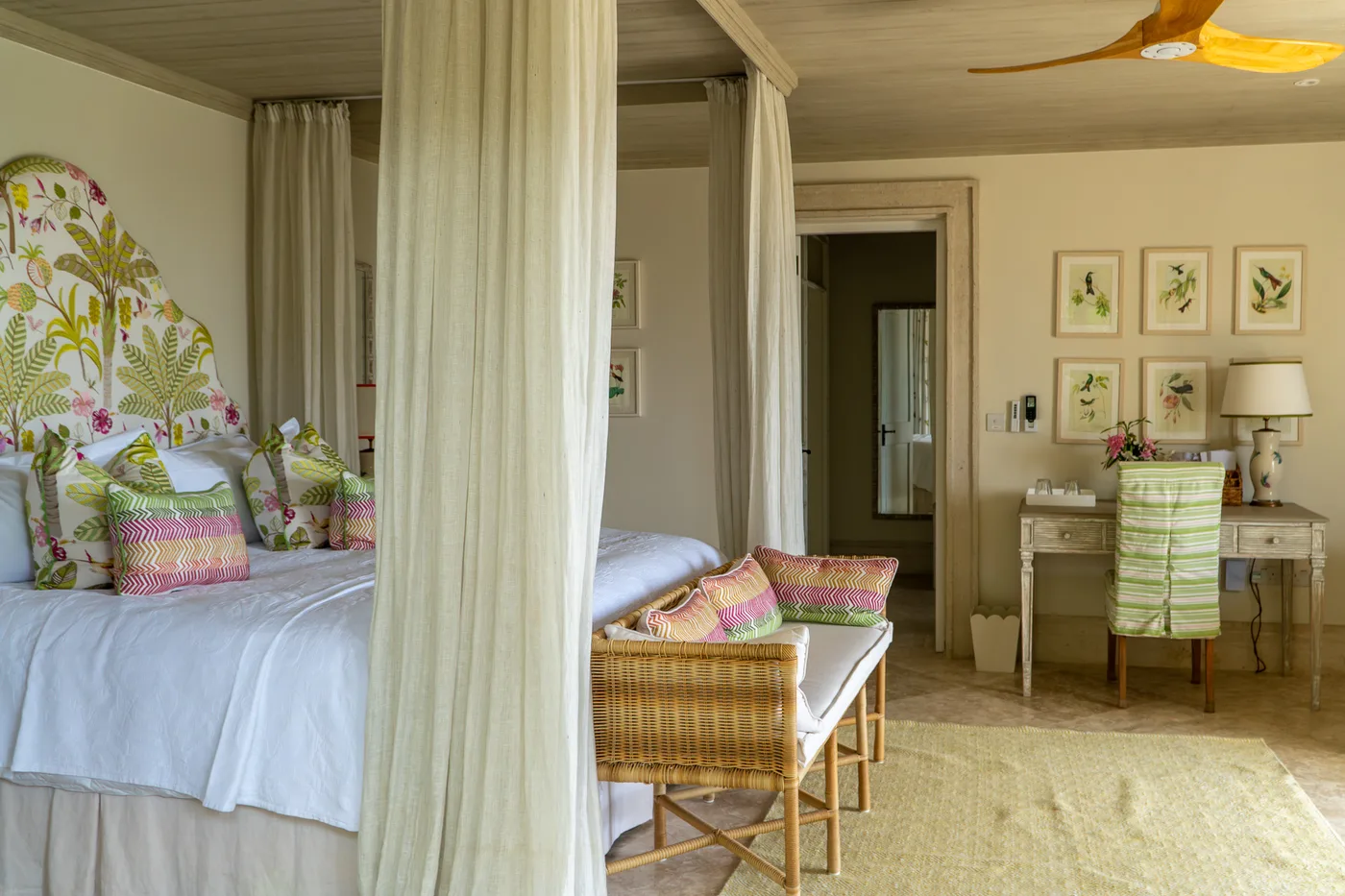
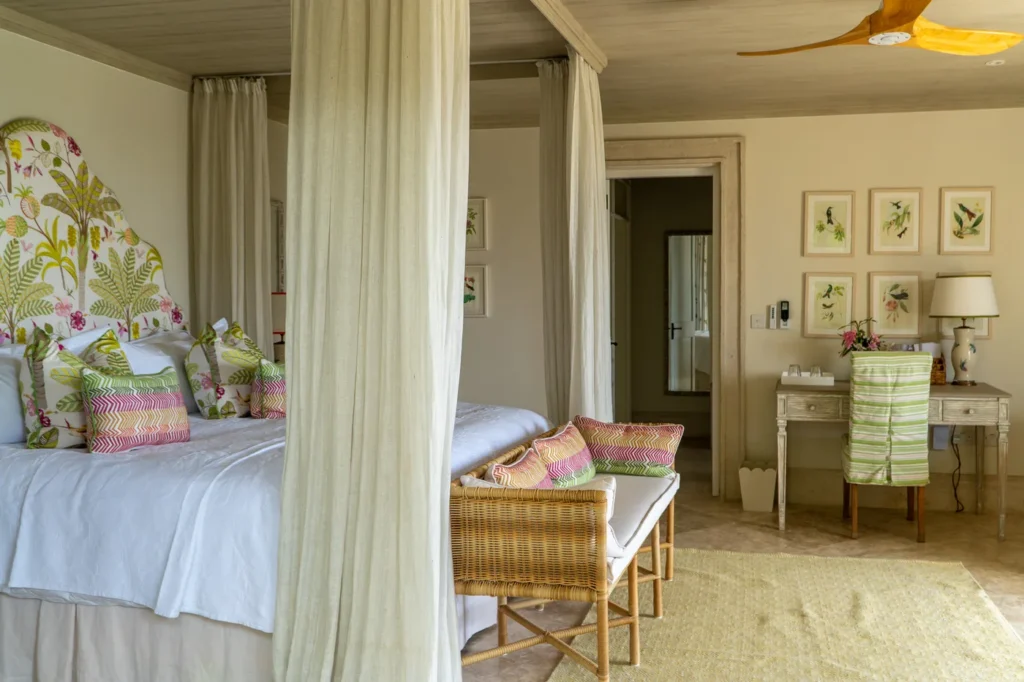
You notice the design language in the bedrooms as well as the main living spaces: shuttered openings, terraces and a softer boundary between indoors and outdoors. There is also a skylight above the main bedroom.
While filming, I kept asking Alex to adjust the lamps because the daylight was overpowering my camera. It was one of those practical problems I was happy to have. We love light, we live in light, and here it felt like part of the architecture rather than something that needed to be switched on at the wall.
Of course, daylight alone does not make a building sustainable. Orientation, glazing, insulation, roof design, mechanical cooling and day-to-day operation all affect energy use. I did not measure Flomarine’s electricity consumption or cooling demand, so I cannot make a claim about its overall energy performance. What I can describe is what I saw: rooms that use natural light and openings to connect the interior with the garden.
In the boot room, Alex showed me the original plan, framed and preserved through renovations.
“Oliver built a lot of these houses,” he said. “But this is just the original plan that was kept.”
He also spoke about decorative work from the previous owner that had been retained. I liked that. Renovation does not always have to mean erasing the past and starting again. Maintaining a building, repairing its details and keeping features that still work can preserve both its character and its materials.
That is not, by itself, proof of a sustainable renovation. We would need information about the materials used, construction waste, energy performance and the extent of the work to assess that properly. But preserving a building’s history is a more interesting starting point than assuming everything must be replaced to feel new.
Open-Air Living: Can Flomarine Work With the Caribbean Climate?

We were standing in the main living room when I noticed there was nothing to close. No doors, just openings.
“Just open concept,” Alex said.
I asked if there was a benefit.
“Yeah. Get the cool breeze.”
It was a simple answer, but it brought the architecture back to something I could feel. Air moved through the room. The garden was not a view separated from the house; it was part of the experience of being in it.
Shade, ventilation and the question of energy use
In a hot climate, shading, shutters and cross-ventilation can help a building respond to outdoor conditions. But the effectiveness of those features depends on orientation, prevailing winds, humidity, the building envelope and how the house is actually operated.
I did not conduct an energy audit at Flomarine. I cannot say how much electricity it uses, how often air conditioning runs or what proportion of its energy demand is met by passive design. I can say that the open living area made the relationship between architecture and climate tangible.
Luxury is often presented through addition: more rooms, more equipment and increasingly elaborate finishes. At Flomarine, some of the qualities I remembered most came from what the architecture allowed: daylight, shade, air moving through a room and an uninterrupted view towards the garden.
That is a useful question for any luxury property, whether on Mustique or elsewhere: how well does the building use its location and climate before relying on mechanical cooling? The answer should come from the design and the data, not from the appearance of openness alone.
The Garden: Local Plants and a Sense of Place
The garden was one of the first things I wanted to explore. When I review a stay, I pay attention to the landscaping because it can tell you something about how a property relates to its surroundings. A garden is not just a decorative frame for a building. It affects shade, privacy, water use, maintenance and the experience of being outside.
Alex walked me through the planting near the entrance and spoke about plants sourced from Saint Vincent.
“These are some local plants that we source from Saint Vincent,” he said. “We tend to support local here at Flomarine.”
He pointed out the red foxtail, as he called it, and a ficus he described as resistant to the dry season. Then he showed me a plant with white flowers known as lady of the night.
“At night, these white flowers, they give off a sweet aroma, like a perfume.”
I liked hearing the garden described through the way its plants behave, rather than simply how they look in a photograph. Alex also talked about neem trees and their traditional uses. I took that as part of his knowledge of the garden, not as proof of any particular medical benefit.
What does a locally sourced garden actually mean?
Sourcing plants from Saint Vincent creates a local connection, but it does not automatically mean every plant is native, that the garden supports biodiversity or that it requires less water. Those claims would need a botanical assessment and more information about the garden’s management.
For me, the conversation raised a broader point: landscaping should be considered part of the architecture, not decoration added at the end. In the Caribbean, planting shapes the shade, scent, privacy and views around a house. The species selected and the way they are maintained can also influence water use and habitat.
I did not conduct a botanical survey at Flomarine, so I cannot label the garden as wholly native or independently verified as biodiversity-friendly. What I can report is what Alex told me about sourcing some plants from Saint Vincent, and why that detail matters when considering how a luxury villa connects with its location.
Chef Loretta: Local Food at Flomarine
A villa is more than its architecture. It is also the people who make it run, the ingredients that arrive in its kitchen and the knowledge that turns them into a meal. At Flomarine, I spoke with Chef Loretta, who told me she has cooked on Mustique for more than twenty years and has catered for parties of a hundred.
She explained that much of the fruit and vegetables used in the kitchen come from Saint Vincent, arriving by boat and being sold through the local market.
“It is all grown locally,” she told me. “Most of our fruits and vegetables come from Saint Vincent. They come to the market here, and then we buy them.”
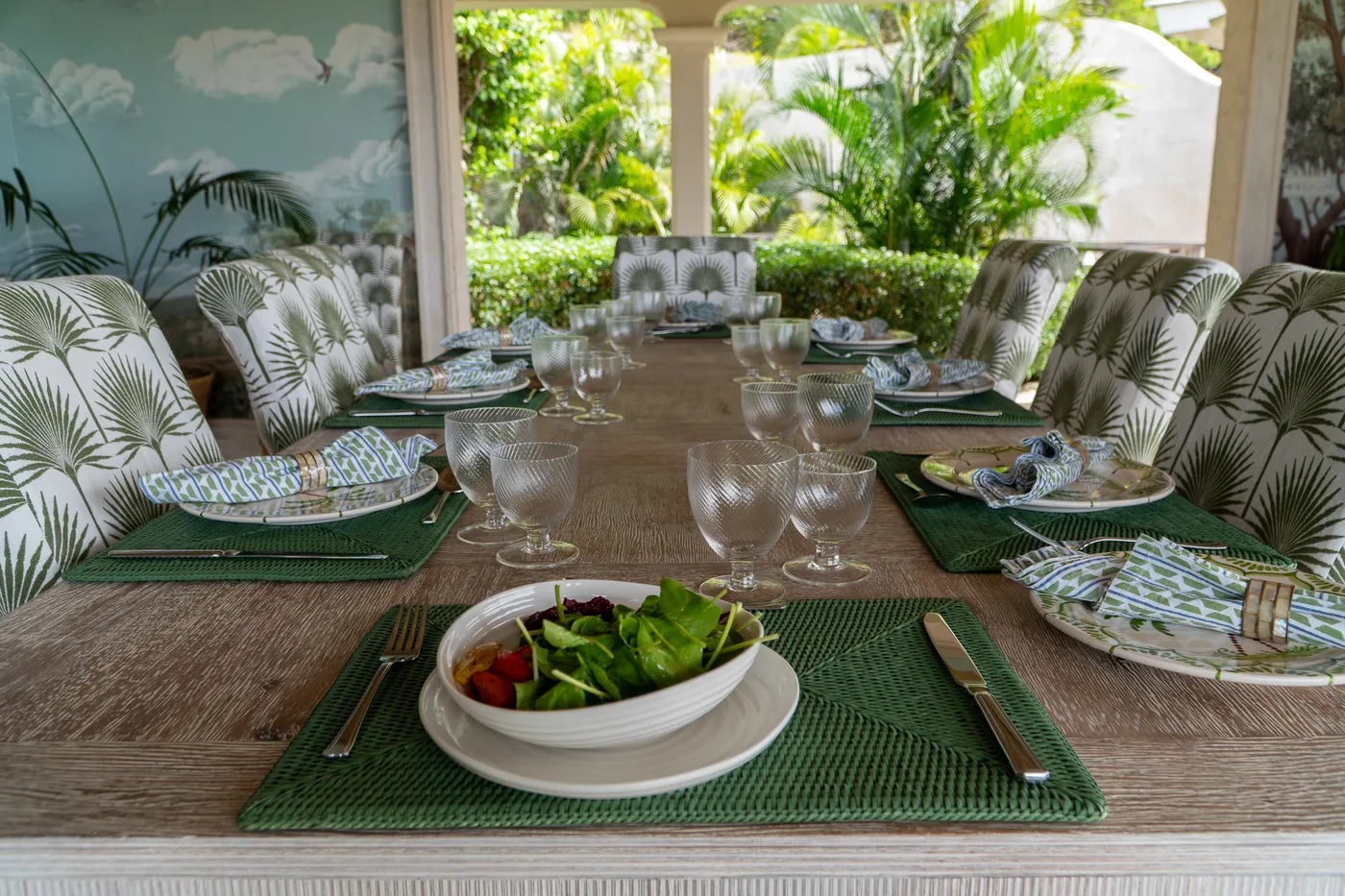
The meal she prepared while we filmed included rocket, beetroot purée, carrots, red onions and grilled peppers served alongside lamb. The kitchen felt like a practical example of how a villa’s character is shaped by more than its interiors. It is also shaped by the people who work there and the relationships that help bring ingredients to the island.
A private villa kitchen, not a standard hotel menu
Loretta told me she started in the hotel system but prefers working in a private villa because it gives her room to experiment.
“Here you can explore, create new things to give the guests new things every day.”
She spoke about cooking local goat and beef, fish from surrounding waters and lobster when it is in season. Conch is also available on request. These details give the menu a connection to the islands rather than a generic idea of luxury dining.
There is another side to local sourcing, of course. The environmental impact of a menu depends on where ingredients come from, how they are produced, their seasonality and the pressures placed on local fisheries. Buying locally is not a guarantee that every ingredient is sustainably produced. Those questions deserve to be part of the conversation, particularly in a destination whose natural surroundings are central to its appeal.
Plant-based requests and homemade tropical ice cream
When Loretta made an arugula salad, I asked for a version without parmesan so I could eat it. She plated two without a pause. I appreciated that plant-based guests were not treated as a complication; the kitchen simply accommodated the request.
Her signature dish is rack of lamb in herb breadcrumbs with beetroot purée. When I asked why lamb, she said, “It’s just very beautiful when it’s on the plate.”
But the detail I loved most was the ice cream. Past the four ovens, Alex pointed out the machine.
“We can also make local ice cream for you. Guava, soursop, banana, papaya, whatever you like.”
Local fruit, made into ice cream in the house. It is a small detail, but it captures what I look for when reviewing a stay: not a sustainability slogan, but something tangible about how the place operates. I cannot calculate the carbon footprint of that ice cream against an imported alternative without information about the ingredients, energy use and supply chains. What I can say is that the kitchen gives tropical fruit a place in the guest experience.
Mustique’s Conservation Work: What Is Reported, and What Needs Measuring?
I came across the island’s conservation information after filming Flomarine, while walking around Lagoon Beach following a snorkelling trip. Signs referred to conservation, birdwatching and mangroves. They made me think about the relationship between an individual villa and the wider environment in which it operates.
A private house can be beautiful and well managed, but it exists within an environment shared with wildlife, marine habitats, workers and the people who sustain the destination. The environmental story of a luxury stay cannot be told entirely from inside the property.
The Mustique Company’s conservation page describes initiatives including coral restoration, monitoring of Hawksbill and Leatherback turtle nests, composting and glass recycling. The company has also described a hybrid solar-and-diesel electricity system.
These are activities and systems reported by the island’s operator. They should not automatically be treated as independent evidence of environmental outcomes. To understand performance fully, we would need current, measurable information: the proportion of electricity supplied by renewables, energy consumption over time, waste recovery rates, water use and the results of habitat monitoring.
Why conservation claims need context
I do not think conservation efforts should be dismissed simply because they are reported by the organisation carrying them out. But neither should an initiative be treated as proof that a destination is sustainable. There is a difference between announcing a programme, carrying it out and independently demonstrating its results.
For a destination whose appeal depends on its landscape and marine environment, these questions are not peripheral. They are part of what makes the place possible. The more useful conversation is not whether Mustique is sustainable or unsustainable in one sweeping judgement. It is what is being done, what the available evidence shows and where there is room to improve.
That is also the approach I have taken with Flomarine. I can describe the natural light, the open living area, the garden and the staff’s comments about sourcing food and plants locally. I cannot use those observations alone to certify the villa as environmentally sustainable. A credible assessment would also need data about energy, water, waste, materials and operations.
What Does It Cost to Stay at Flomarine?
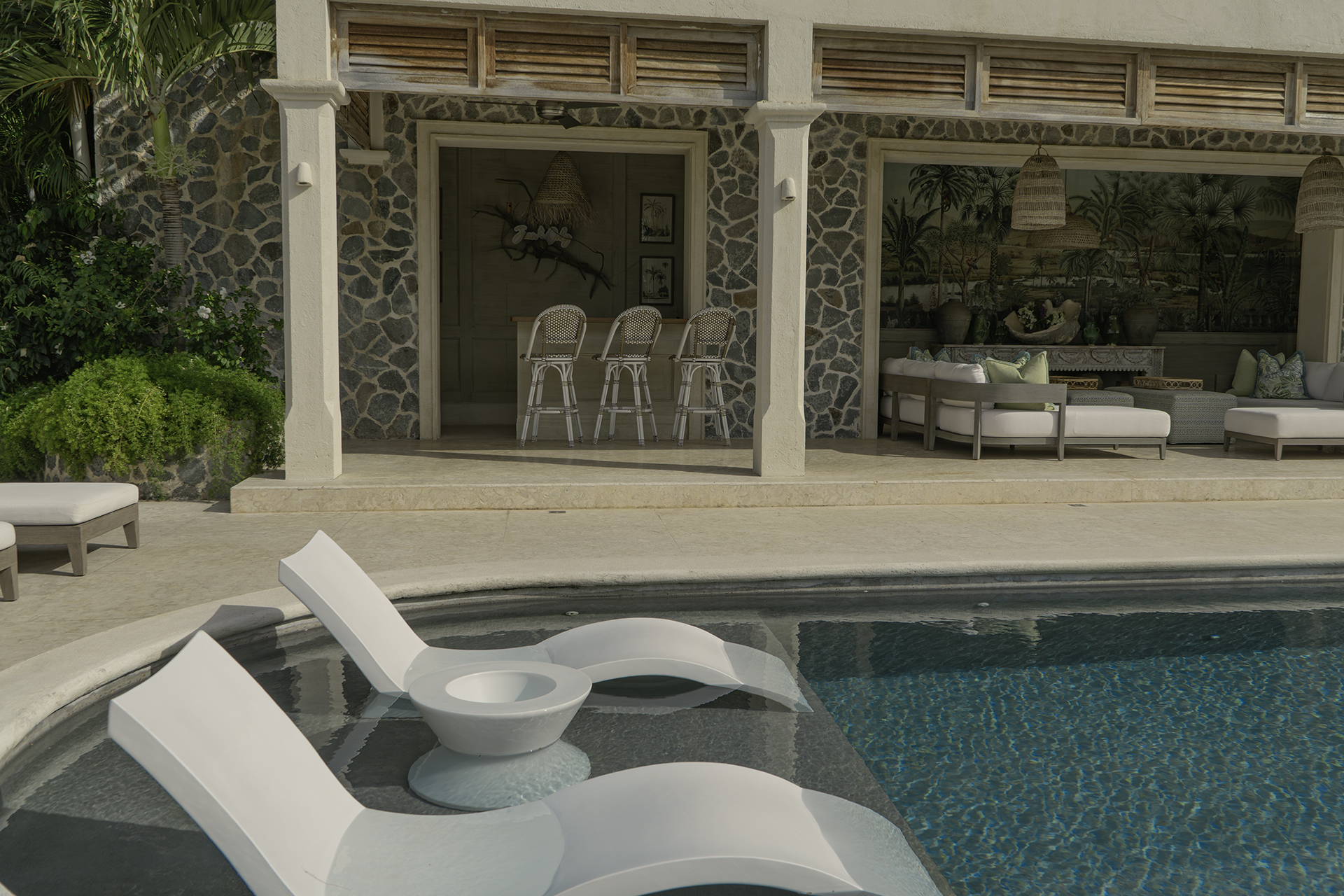
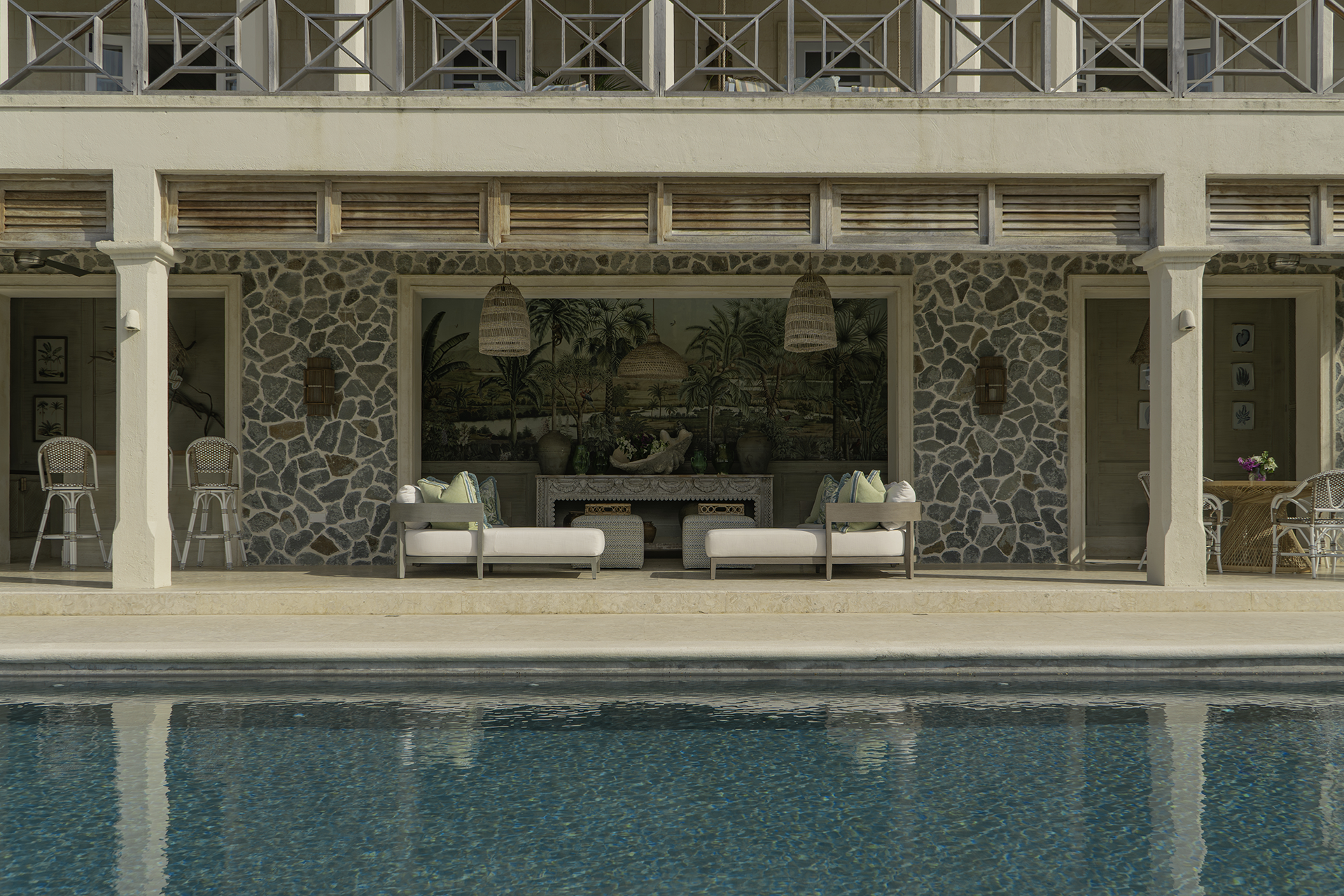
Flomarine sits firmly at the top end of the luxury rental market. The Mustique Company’s official villa listing has advertised weekly rates of approximately US$31,000 at the lower end, rising towards US$43,000 in high season. Rates can change, so treat those figures as a guide rather than a live quote and confirm the price, dates and inclusions directly with the operator.
The villa sleeps ten across five en-suite bedrooms and comes with staff, including Alex and Loretta. At a weekly rate of US$31,000, ten guests sharing would pay approximately US$443 per person per night for accommodation alone, before additional charges. Food, beverages, flights and applicable taxes or island fees may cost extra, depending on the booking terms.
Is Flomarine worth the price?
There is no point pretending this is accessible luxury for most people. It is an exceptionally expensive private villa. Whether it is worth the price depends on what a guest values: privacy, a staffed house, the architecture, the garden, the food and the experience of staying on Mustique.
For me, the more interesting question is what the price buys beyond the pools and the privacy. Flomarine offers a particular architectural atmosphere, a team of people who know the island, a kitchen that uses produce sourced through local markets and a layout that connects the rooms with the outdoors. Those are meaningful parts of the experience, even though they do not, on their own, prove environmental sustainability.
If your budget is very different, Frangipani Eco Lodge in Barbuda offers another approach to Caribbean hospitality, with an off-grid, solar-powered model. Our eco-stay guides cover a wider range of properties, including stays across the Caribbean.
For another perspective on remote luxury, I have also reviewed properties such as the Four Seasons Resort Seychelles at Desroches Island and Anantara Kihavah in the Maldives. Each represents a different version of an island escape. What interests me is not simply which looks the most spectacular, but how the architecture, operations and surrounding environment fit together.
The Moment I Remember Most Was Not the Architecture
We were wrapping up by the dining area when I stopped mid-sentence.
“Oh. One sec. There’s a turtle. Go, go, go.”
And off we went, camera swinging, after a tortoise crossing the garden at dusk, apparently on its way to tuck itself away for the night. It was not quite the architectural shot I had planned, but it became one of my favourite moments of the visit. I had come to film a luxury villa and ended the day chasing a tortoise across the lawn with the butler.
Once you start looking, tortoises seem to be everywhere on Mustique, ambling along the edges of the roads as though they have a long-standing claim to the island. I did not spot a single famous face all week.
I lost count of the tortoises. What stayed with me about Flomarine was the way its architecture invited me to look outward: through the rooms, towards the garden and into the light. The villa is described as Oliver Messel-style, and its design carries elements of a tradition that helped make Mustique visually distinctive. That is different from claiming it is a documented Messel original.
Can a Luxury Villa Be Sustainable?
I came to Mustique with a blunt question: can an island associated with extraordinary wealth be sustainable?
Flomarine did not give me a simple answer. It gave me a house worth looking at closely, a design history worth understanding and a chance to hear from the people who make the property work. Alex spoke about the building and garden. Loretta talked about the kitchen, the ingredients and the freedom to create dishes for guests. My own observations brought me back to the role of natural light, open rooms and the relationship between the house and its setting.
Those are valuable parts of the story, but they are not a sustainability certification. To make that judgement, I would want to see data on energy and water use, waste management, purchasing, maintenance and the property’s wider environmental impact. I would also want to understand how the island’s conservation initiatives are measured over time.
Messel’s work offers a different way to think about luxury. A room can feel generous without being closed off. A garden can become part of an interior. Colour, proportion and the placement of an opening can create a sense of occasion without relying only on expensive materials.
That does not automatically make a building environmentally responsible. The materials, energy, water, maintenance and operation still matter. But it is a more interesting starting point than defining luxury solely by consumption.
For me, the best architecture does not simply impress you when you arrive. It changes how you experience the place around you. At Flomarine, that meant daylight moving across a room, air passing through the living space, local fruit being turned into ice cream and a tortoise quietly making its way across the garden while we were trying to finish filming.
That is the kind of luxury I want to keep looking for: character, a sense of place and a closer relationship between the way we live and the world outside the door.
Sources and Further Reading
Flomarine villa details and rental information: The Mustique Company’s official Flomarine listing. Use the operator’s current listing to confirm rates, availability, occupancy and booking inclusions.
Oliver Messel’s architecture and interiors: University of Bristol Theatre Collection, Oliver Messel archive. Historical context for Messel’s architectural and interior work.
Mustique architecture and hospitality: The Cotton House and the official Mustique website. Useful starting points for exploring the island’s properties and architectural heritage.
Conservation information: The Mustique Company’s conservation page. This is the operator’s own account of its programmes; it should be read as a primary source, not as an independent environmental audit.
Reporting note: Descriptions of Flomarine’s rooms, garden and staff conversations are based on my visit and filming. Statements about the villa’s history, prices and the island’s conservation activities are attributed to the sources linked above where applicable. I have not independently audited the property’s environmental performance.