
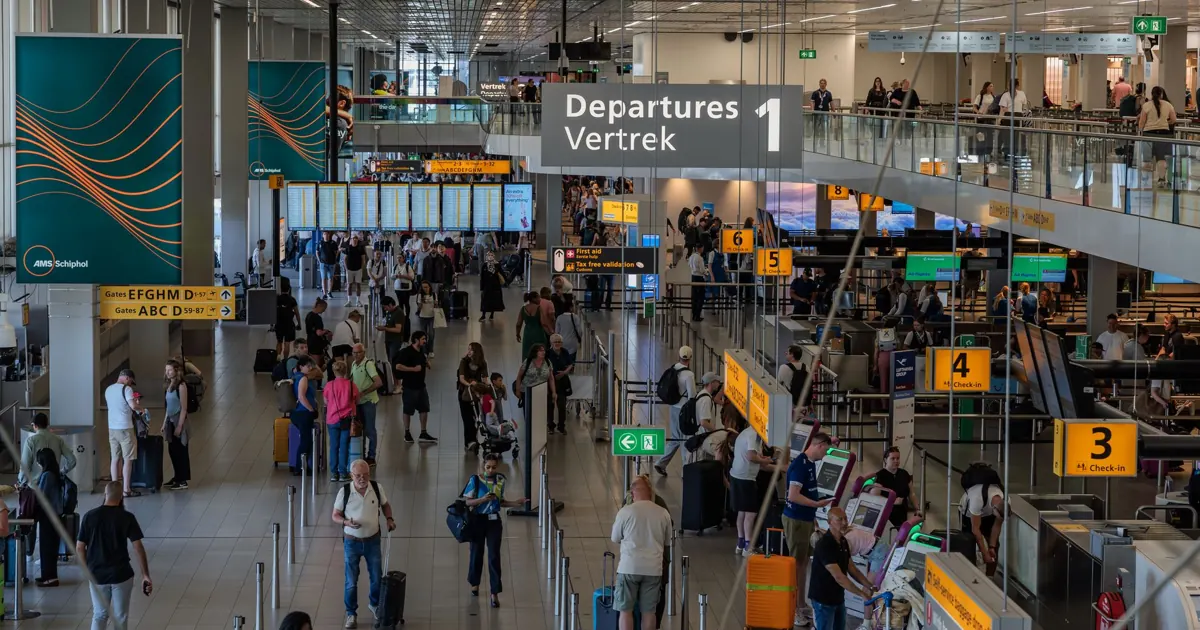
The aircraft is there. The crew is there. Your bag is probably already in the system.
Yet the flight isn’t leaving.
If you’ve ever watched a departure time move further and further away, you’ll know how quickly the questions multiply. Is the connection gone? Will someone cover the hotel? Is the airline even able to tell you what went wrong?
On November 16, United Airlines had a technology problem that disrupted departures. It was resolved, but the experience shows just how much of modern flying rests on systems passengers never see.
I’ve travelled around the world, and I know a journey is rarely just a flight number. There are people expecting you, plans you saved for and sometimes a very small margin for things to go wrong.
So who takes responsibility when a technical problem turns into your very real problem?
There is an environmental question here too. Not because every delay automatically increases emissions, but because more reliable, thoughtfully designed travel would benefit passengers and the places they visit.
What actually happened to United Airlines?
The Associated Press reported on November 16 that United said it had resolved the technology issue affecting departing flights. FlightAware showed 418 delayed United flights late that afternoon, though the total does not identify which delays were caused by this particular problem. Flights already airborne and United Express regional operations were reported unaffected. United said there was no indication that the issue was connected to cybersecurity. The count is a time-stamped snapshot, not a final tally, and it is not proof that every listed delay was caused by this specific issue.
Ninety minutes to fix. But what about everyone’s plans?
The Associated Press reported that the issue was resolved around 90 minutes after pilots began notifying controllers. That estimate gives an idea of the disruption, but the longer effects on individual journeys varied.
The departure board cannot tell you what happens next
There is a reason I am less interested in the company’s technical vocabulary than in the person waiting at a gate. A reassuring statement about restored systems doesn’t automatically restore a lost connection or a missed night with family.
In a highly active United passenger discussion on November 16, the dominant concerns were not technical curiosity. People worried about tight connections, uncertain gate information, repeated disruptions after the recent FAA ground stop and whether someone already in the air was affected.
Another recently discussed rebooking complaint raised a different fairness issue. A passenger said an involuntary change moved them from first class to economy while alternative arrangements appeared to require additional payment. It is a single unverified account about the earlier disruption, not proof of airline-wide conduct. It nevertheless points to an important consumer question. Does a traveler have a clear and accessible path to challenge an unsuitable replacement itinerary?
Forum discussions also describe the real costs of missed connections. People may face hotel bills, extra childcare, new ground transport, unexpected meals and several days between available flights. These burdens are distributed unevenly. A traveler with substantial savings can absorb disruption far more easily than someone traveling for an urgent family reason or trying to reach hourly paid work.
What if you paid for first class and were moved into economy?
This came up in a United passenger discussion after the separate November 13 air traffic control disruption. A traveler said their first-class booking had been replaced with an inconvenient economy itinerary, while alternatives in the original cabin appeared to cost more.
That case was not caused by the November 16 United technology outage, so it would be wrong to merge the two incidents. But it illustrates a familiar problem when plans change. Getting a seat on another aircraft is not necessarily the same as receiving what you paid for.
Before agreeing to a change, ask whether the original cabin is available, whether there is a fare difference, and how any downgrade refund will be calculated. Save the original booking and the new itinerary. If you are already on the way to the airport, speak to an agent before giving up a workable booking.
A ninety-minute problem can unravel a whole trip
For a passenger, a booking is one journey. It does not matter whether the problem starts with check-in software, crew communication or the gate. What matters is whether the flight leaves and whether someone can explain what happens next. One disrupted departure can cause problems long after someone leaves the airport. Missed work, extra hotel nights, discarded food, long lines and uncertainty for families and people needing additional assistance.
The real question is who ends up paying when a system fails. Airlines sell schedules. Passengers often have to assemble their own recovery plan when the schedule fails. Clear communication, accessible human support and prompt explanations are part of responsible travel, not optional extras.
Why a pilot can’t simply leave because the gate is ready
Reuters reported that a pilots’ union memo described a company-wide web-based outage affecting several applications, including crew communication. It also described difficulties obtaining final aircraft weights for departing flights.
Aircraft load information is safety-critical. Treating a departure delay as an ethical failure would miss the point if stopping is necessary for safe operations. The better question is whether the airline has dependable contingency procedures, understandable passenger updates and fair remedies after the safety decision is made.
In a November 16 passenger discussion, people described being held at the gate or on the taxiway while crews waited for the weight-and-balance system to return. These firsthand accounts cannot establish the technical cause, but they explain why a passenger might be told to wait even when the aircraft appears ready.
I would rather be late than have a crew pushed into taking off without information needed to operate safely. The criticism belongs with unreliable systems and poor communication, not with a captain refusing to compromise on safety.
What happened in the days before the United outage
The airline’s November 16 issue followed a separate FAA telecommunications failure that triggered a nationwide ground stop on November 13. Officials attributed that earlier disruption to a router problem during infrastructure work. There is no basis for presenting the FAA failure and the subsequent airline system issue as one coordinated event.
Was this a cyberattack?
United said it had no indication of a cybersecurity connection. The cause and the particular systems involved had not been publicly detailed in that report. Online speculation should not be presented as a confirmed explanation.
An apology isn’t a replacement flight
Real-time explanations that distinguish confirmed facts from estimates. Accessible support beyond a broken app. Clear rules about rebooking in a comparable cabin, meals, hotel assistance and refunds. Fair consideration for passengers with disabilities, children, limited income and essential travel needs.
The US Department of Transportation explains the refund requirements for qualifying cancellations and significant changes. Other expenses and compensation are governed by different rules, so a delayed passenger should preserve records and ask precisely which policy applies.
Travel choices can also carry a sustainability dimension. A longer, purposeful trip, locally owned accommodation and public transport where workable may reduce unnecessary movement while supporting the places visited. See our Caribbean eco-lodge reporting for the difference between a green label and evidence of benefit.
Reporting updated November 16, 2026. Delay totals and airline status can change.
What should you do if your flight is delayed?
- Check the airline directly. Use your booking and official notifications, not a viral screenshot alone.
- Keep records. Save the itinerary, updates, receipts and any written explanation of the disruption.
- Ask about rerouting or refunds. Eligibility depends on departure country, itinerary, carrier, reason for delay and applicable law.
- Consider the full onward journey. Contact hotels and ground transport as early as practical rather than automatically buying a replacement ticket.
- Make room for staff. A gate agent may be dealing with system limits they cannot fix. Escalate clearly and document your request.
Do you have to accept a voucher?
Not always. The US Department of Transportation explains that when an airline cancels a flight or makes a significant change, passengers generally have a right to a refund if they choose not to travel or accept the offered alternative. The rules depend on the itinerary and what you accept.
If you still want to travel, a refund may not be the outcome you need. Ask about the next realistic departure, connections and accommodation. A credit that looks generous on a screen is not necessarily helpful if you cannot use it. Take the time to understand the terms before tapping accept.
What does sustainability have to do with a systems outage?
We cannot say this outage increased emissions without figures for extra flying, diversions or other changes. A delay alone does not tell us that. But reliability and sustainability do intersect. A resilient operation avoids preventable disruption and makes it easier for travellers to choose direct, efficient routes instead of last-minute workarounds.
There is a second connection. We have normalized taking a flight as though the only meaningful cost is its ticket price. The resources behind travel, including fuel, airport infrastructure, catering, packaging and the work of thousands of people, remain mostly out of view. A credible sustainability claim must account for the journey, not simply offer an offset at checkout.
Maybe the most memorable trip isn’t the busiest one
Not every journey is optional. People fly to work, see family, receive care and build livelihoods. The most useful conversation is not about shaming passengers. It is about expanding choices. Staying longer in one place rather than making multiple short visits, using rail where credible, prioritizing locally owned hospitality and supporting businesses that can explain how they treat workers and communities.
I would rather a travel budget support the place I’m visiting where possible, from independent places to stay to local food producers and guides. A journey can be about more than how many stops fit into an itinerary.
The questions passengers still need answered
Were United flights grounded nationwide
Departures were affected across the network, but describing every aircraft as grounded is misleading. Airborne flights continued, and United Express was reported unaffected.
Should a delayed passenger buy another ticket
Check rebooking, cancellation and refund options with the operating airline first. The best decision depends on the itinerary and whether the replacement is refundable.
The question I would ask before booking again
Technical problems happen. Safety checks must come first. But when an airline’s system fails, the burden shouldn’t quietly move onto the people who trusted it with their plans.
I would want to know how quickly passengers were told what was happening, whether they could reach a real person and whether the offered solution actually got them where they needed to be.
The most revealing part of a disruption isn’t always what broke. It’s how the company treats people while putting it right.
If you are planning a trip beyond the airport, our Negril guide and Caribbean eco-lodge investigation look at what happens once you arrive, and whose communities benefit.
On this story
Comments, questions and answers from signed-in paid members. The conversation will also be available in the app when it launches. Community contributions are not verified editorial findings.
Contribute evidence
Reviews share first-hand experience. Observations can include opinions and objections. Evidence is checked against its sources before publication. Community contributions do not change MIW scores.
Article discussions and evidence contributions are for paid members. They will also be available in the app when it launches.
Sign in to contribute or join the discussion Read this next
Flight Comparison Apps Need to Show the Trip You Will Buy
Compare flight comparison apps by final fare, baggage, booking seller and emissions method. Use filters that match your trip before trusting the lowest result.Read the story Keep exploring
Train vs Plane Depends on the Whole Journey You Can Take
Compare train vs plane for emissions, final cost and door to door time. Check transfers, baggage, ticket conditions and the route before booking your journey.Read the story Keep exploring