
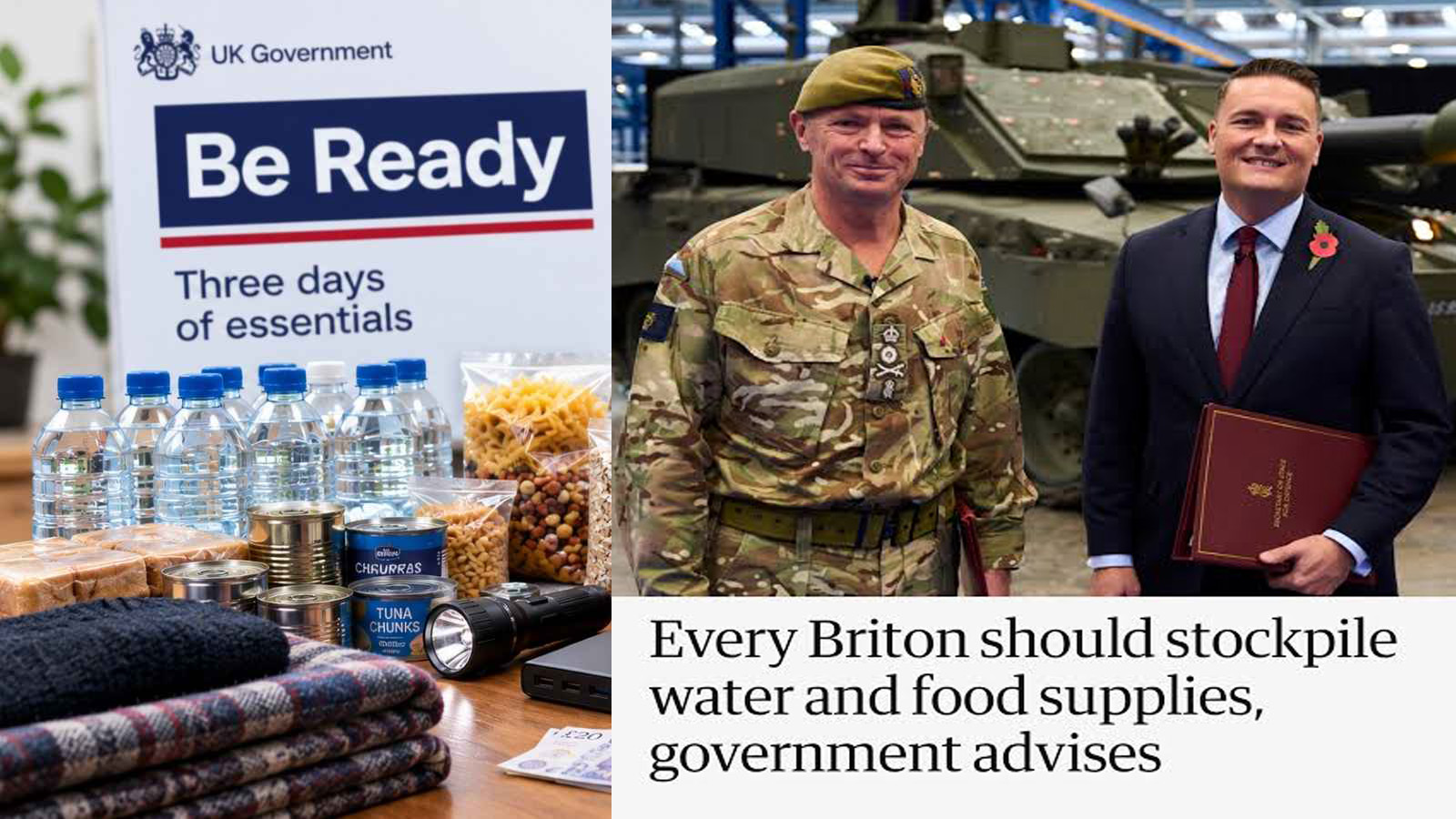
When governments tell people to prepare for an emergency, the obvious questions concern food, water, electricity and what happens when everyday services stop working. But there is another question worth asking: why are we so dependent on systems that can leave us struggling to access essentials when something goes wrong?
Britain has farmland, farmers, gardeners, allotments and people who know how to grow food. Do not forget this!
Yet the food we buy depends on international shipping, imported ingredients, fertiliser, fuel, packaging, refrigeration and distribution networks. Food may exist somewhere in the country while becoming more expensive, harder to transport or less accessible to the people who need it.
This is the bigger issue behind emergency preparedness. A government recommendation to keep essential supplies at home does not mean the country is suffering a food shortage, nor does it prove that one is imminent. It does, however, offer an opportunity to examine the vulnerabilities in the systems we rely on every day.
At IdealWrld, the question is not simply how to prepare for a crisis. It is how to build a food system that is less vulnerable in the first place. Local farmers, independent food producers, community gardens, allotments, home growing and direct relationships between growers and the people they feed all have a role to play.
History provides examples of what happens when established supply routes fail, but also of what people can do when they grow food, support local producers and develop alternatives. The lesson is not that imports should disappear. It is that relying too heavily on them can leave communities exposed when they are interrupted.
Emergency Preparedness Through History: What Food Shortages Teach Us About Local Resilience

This timeline looks at emergencies from the Second World War to the UK’s Be Ready campaign in October 2026. They are different events, with different causes and consequences. What connects them is the question of how people get the food and other essentials they need when normal systems are disrupted.
Not every disaster leads to a food crisis, and buying locally will not protect us from every emergency. A flood can destroy nearby crops; a war can disrupt trade; a power cut can stop refrigeration and payments. But when people have only one or two ways to get food, a problem in one place can quickly become a problem in their own homes.
1939 to 1945: Britain’s Dig for Victory Campaign
During the Second World War, Britain’s dependence on imported food became a serious vulnerability. German attacks on shipping threatened the routes bringing food into the country. Rationing and restricted supplies changed what people could buy and how they cooked, while farmers were under pressure to produce more at home.
The Dig for Victory campaign urged people to turn gardens, allotments and any suitable patch of land into places to grow food. Lawns became vegetable plots, and people were encouraged to make use of what was in season. It was a national effort, not a quaint hobby.
Britain did not become self-sufficient through Dig for Victory, and home gardens could never replace the country’s farms. But the campaign made a point worth remembering: land can feed people. Growing vegetables, preserving a harvest and wasting less food all helped households make better use of what was available.
Food security is about more than what is on supermarket shelves.
It also depends on farmland, seeds, knowledge, growers and the people who get food from farms to households. Britain needs international trade. That does not mean we should overlook our own farmers or take their ability to keep producing for granted.
There is another lesson here. Preparedness does not have to begin with a shopping trolley full of packaged goods. A sensible cupboard reserve can help for a few days, but so can knowing how to cook, understanding what grows locally and having farmers nearby who can supply people.
Read the Imperial War Museums’ account of Britain’s wartime food effort and the National Archives’ Home Front resources.
1973 to 1974: The Oil Crisis and the Hidden Cost of Food Imports
The 1973 oil crisis showed how quickly an energy shock can ripple through everyday life. An oil embargo and production cuts drove prices up, affecting transport, manufacturing and the cost of goods.
Food is tied to energy at almost every stage. Tractors need fuel; fertiliser takes energy to produce; and food may need to be processed, chilled, packaged and transported before it reaches a shop. So even food grown in Britain can depend on imported fuel, fertiliser, equipment or packaging.
This is why the distinction between locally produced food and food imported from abroad is important, but not as simple as it first appears.
A local farm that relies on expensive imported fertiliser and fuel is still exposed to international disruption. At the same time, a diverse network of smaller producers using different growing methods and selling through several routes may give a community more options than a system dependent on a narrow range of suppliers.
Local food helps, but the farms producing it need to be resilient, too.
Healthy soils, water management, crop diversity, appropriate equipment and practical agricultural knowledge matter alongside access to markets.
The answer to imported energy dependence is not to pretend that every farm can operate without it. It is to recognise how much of the food system depends on energy and to build greater diversity into production, distribution and household food choices.
Background: US Department of State history of the 1973 oil embargo.
2003: The US Ready Campaign and the Limits of Household Preparedness
The United States launched its Ready campaign in 2003, encouraging households to understand potential risks, make plans, assemble essential supplies and stay informed. It helped establish household preparedness as a familiar part of public emergency guidance.
There is value in knowing what to do during a power cut or severe storm and in keeping essential supplies available. But a household emergency kit is only one part of resilience. It cannot repair a damaged road, restore electricity, make food affordable or replace farmers whose production has been affected.
Nor should emergency guidance be confused with a prediction that a disaster is about to happen. Preparing for a possibility is different from claiming that the possibility is imminent.
Prepare sensibly. Do not mistake advice for a prediction.
It should sit alongside investment in infrastructure, agriculture, public services and local food networks. A family may keep a modest supply of food at home while also buying seasonal produce from a nearby grower, learning to cook from basic ingredients and understanding where its food comes from.
Official resource: Ready.gov.
2005: Hurricane Katrina and What Happens When Essential Systems Fail
Hurricane Katrina struck the Gulf Coast of the United States in August 2005. Catastrophic flooding, damage to flood protection and failures in the emergency response caused widespread destruction, particularly around New Orleans. Approximately 1,800 people died in connection with the disaster.
The consequences extended far beyond the initial storm. People lost their homes, livelihoods and access to essential services. Roads, electricity, communications and distribution systems were disrupted, making it difficult to obtain food and other necessities.
Katrina is not proof that locally sourced food would have prevented the disaster. A hurricane can destroy nearby farms, contaminate water, damage roads and make it dangerous to distribute fresh produce. It does show why communities need more than a single route to essential supplies and why emergency planning must account for people who cannot easily evacuate or obtain assistance.
Local food matters, but it cannot prevent every disaster.
Producers need safe storage, alternative distribution arrangements and ways to communicate with customers. Communities need to know which food sources remain accessible when roads close or electricity fails.
Local food is not a guarantee against disaster. It is one part of a wider system that should be designed to cope with disruption rather than assume every service will always work as expected.
Background: NOAA’s Hurricane Katrina resources.
2011: Japan’s Earthquake, Tsunami and Fukushima Disaster
On 11 March 2011, a powerful earthquake off Japan triggered a devastating tsunami. Around 20,000 people were killed or left missing, with the vast majority of deaths associated with the earthquake and tsunami. The tsunami also overwhelmed the Fukushima Daiichi nuclear power station, causing a nuclear accident and widespread evacuations.
The disaster damaged homes, roads, electricity supplies and other essential infrastructure. In affected areas, food production and distribution faced severe disruption. Fishing communities, agricultural land and local businesses were also affected, while concerns about contamination created additional difficulties for some food producers and markets.
This illustrates an important limit to local sourcing: local production is valuable, but concentrating all production in one area can create its own vulnerabilities. When a disaster affects a region’s farms, fisheries and transport links simultaneously, nearby consumers may need supplies from elsewhere.
One source is never enough.
A strong food system connects local farms and fisheries with wider regional and international networks. It also protects agricultural land, maintains distribution options and plans for the possibility that a local source may temporarily become unavailable.
Food security requires both local capacity and wider cooperation. The aim is to avoid a situation in which the failure of one supplier, region or transport route leaves people with no practical alternative.
Background: International Atomic Energy Agency resources on Fukushima.
2015 to 2016: Europe’s Refugee and Migration Crisis
Wars, persecution and instability drove large numbers of people to seek safety in Europe. The crisis placed pressure on reception facilities, transport routes and public services in several countries. People arriving in unfamiliar places needed safe shelter, food, water, healthcare and reliable information.
This was not a conventional natural disaster, and people fleeing conflict should not be treated as the cause of the problems they faced. It is relevant to preparedness because it demonstrates what happens when large numbers of people suddenly lose access to stable housing, livelihoods and ordinary ways of obtaining food.
Food is about community, not just buying and selling.
Farmers, community kitchens, food cooperatives, charities and neighbourhood organisations can help connect available food with people who need it. These networks are not a replacement for public services or humanitarian assistance, but they can become useful partners when demand changes quickly.
A resilient food system is not simply one that produces enough food in total. It must also make nutritious food accessible to people whose circumstances change suddenly, including people displaced from their homes.
Background: UNHCR, the UN Refugee Agency.
2018 and 2024: Sweden’s Civil Preparedness Guidance
Sweden distributed the booklet If Crisis or War Comes to households in 2018 and issued an updated version in 2024. The guidance covers practical matters such as food, water, heating, communications, payments and trustworthy information during periods when normal services may be disrupted.
Household preparation can be sensible, particularly where extreme weather or other incidents may interrupt services. But a country’s resilience is not measured solely by how many days of food each household stores. It also depends on whether food continues to be produced, whether farmers can reach buyers, and whether people can afford and access the supplies available to them.
Preparedness should be practical, not a reason to buy more things.
Knowing how to prepare a meal from staple ingredients, growing some food, preserving seasonal produce and identifying local suppliers can be useful skills long before an emergency occurs.
Preparedness should build confidence and capability. It should not turn uncertainty into a reason for panic buying or imply that ordinary households can solve every weakness in the national food system by themselves.
Official resource: Swedish Civil Contingencies Agency advice for individuals.
2020 to 2023: COVID-19, Home Growing and the Return to Local Food
COVID-19 changed everyday life around the world. Panic buying, sudden shifts in demand, labour pressures and transport problems affected the supply of some goods. Food did not simply disappear everywhere, but shoppers did see empty shelves and struggled to find particular products at certain times.
For some people, lockdown changed their relationship with food. They started growing vegetables, cooking from scratch, baking or asking where their food came from. In several places, demand for seeds and gardening supplies rose. Not everyone had the space or money to grow food, but for those who could, it was a practical way to learn and do something for themselves.
These experiences were not universal. Not everyone had access to a garden, suitable outdoor space, spare time or money to start growing. But the renewed interest in growing and cooking showed that people could respond to uncertainty by developing practical skills, not only by purchasing more supplies.
Some farmers adapted, too. When restaurants and wholesale customers disappeared, producers tried vegetable boxes, farm collections, local deliveries and direct sales. Community-supported agriculture and food cooperatives gave some households another way to buy food. These changes were not possible for every farm, but they showed the value of having more than one route from grower to customer.
This is not evidence that local farmers prevented every shortage, or that a country could have replaced all its imports. Farmers were struggling too, with lost customers, labour shortages and rising costs. But where producers and communities could find another way to grow, sell or share food, that extra option mattered.
We need farmers, and we need to stay connected to them.
Direct relationships between growers and households can create additional routes to market. Home growing can supplement the food people buy, build practical knowledge and encourage a closer understanding of seasonality. Cooking from basic ingredients can also make it easier to use what is available rather than depending on a narrow range of products.
For many people, the pandemic also brought health and everyday wellbeing into sharper focus. Fresh food, balanced meals and knowing where ingredients come from are worth caring about in ordinary times, too. We should not need a crisis to take an interest in what we eat or in the people who grow it.
COVID-19 is therefore an important reminder that food resilience is not simply about keeping a cupboard full. It is also about retaining the skills, relationships and productive capacity that allow people to obtain food in different ways when established routines are disrupted.
First-person accounts: what growers and neighbours actually did
Alongside research and news reporting, first-person accounts help show what people actually tried when normal routines changed. They are testimony, not independently audited evidence of how much food a country could produce, but they give useful detail about the practical responses that statistics alone can miss.
In a May 2020 account, Muneeba Junejo described growing potatoes, mint, garlic, tomatoes and chillies in pots on a hostel rooftop during lockdown. Her experience was modest in scale, but it illustrates how even limited growing space can provide fresh ingredients and practical knowledge. It does not suggest that pots can replace a household’s full food supply. Read Junejo’s first-person account on Medium.
Christian Frommelt has written about growing beans at home, rising grocery costs and the possibility of sharing more food with others. The essay also points readers towards community food projects in St. Louis, including New Roots Urban Farm and Urban Harvest STL. This is a personal argument for growing and sharing more food, rather than evidence that a household or city can become self-sufficient. Read the essay on Medium.
Growers have also shared accounts in gardening forums of donating produce to food banks, sharing vegetables with neighbours and running free or pay-what-you-can farm offers. For example, Reddit users have described volunteering at a food bank during COVID-19, a farm offering produce on a free or pay-what-you-can basis, and a gardener reporting that they donated around 2,000 pounds of produce in a year. These are self-reported posts and have not been independently audited, so they should be read as examples of community action, not as verified totals or proof of a national outcome.
Examples and discussion: a Reddit account of volunteering at a food bank during COVID-19; a farm’s free or pay-what-you-can offer; a gardener’s account of donating produce; and a discussion about sharing vegetables.
What independent reporting found during the pandemic
Independent food newsroom Civil Eats reported in April 2020 that some farms and food businesses rapidly built new ways to reach customers when restaurants and wholesale markets shut down. At Eatwell Farm in California, farmer Nigel Walker’s restaurant and wholesale business was disrupted almost overnight, while community-supported agriculture orders rose from 470 boxes to 700 and a waiting list reached 350. The Ecology Center in Southern California sold 200 online produce boxes in 10 minutes and supplemented its own produce with food from neighbouring farms. Rancho Gordo received 1,700 orders in a single Saturday. These cases show how direct sales and relationships between farms and customers could help some producers adapt; they do not show that every farm could pivot or that a region could feed itself entirely.
Read Civil Eats’ reporting on the surge in community-supported agriculture.
In the UK, research and reporting also found renewed interest in farm shops and direct sales during lockdown. A University of Huddersfield report described local food businesses coming to the fore, while research published in the journal Cities examined how local food initiatives responded to the pandemic. Some producers and areas saw strong growth in demand, including reports of vegetable-box sales doubling. The results varied by location and business, but they show why local routes to market can be a useful complement to supermarkets and national distribution systems.
Sources: University of Huddersfield on farm shops during lockdown; research on local food initiatives and the pandemic; and Farm Aid’s guide to finding food from family farms during COVID-19.
US Department of Agriculture data provides a wider, but still qualified, picture: farms sold nearly $10.7 billion of edible food through direct-to-consumer outlets and intermediary supply chains in 2020, up 35% from 2019. The increase shows the scale of these routes to market, although it should not all be attributed to the pandemic alone. See the USDA Economic Research Service data.
Local growing under deeper crisis: Cuba and Puerto Rico
Cuba offers a longer historical example of urban agriculture expanding under severe pressure. After the collapse of the Soviet bloc disrupted trade and access to inputs in the 1990s, urban gardens and other forms of local production became an important part of Havana’s food response. A Food First report estimated that Havana produced about 541,000 tons of food for local consumption in 1998. That is a historical estimate, and urban agriculture did not remove every shortage or hardship. The wider lesson is that local production can become more important when external supplies are constrained, especially when people, land and practical support are organised to make growing possible.
Sources: Yale’s case study on Cuba’s urban agriculture and Food First’s report on urban agriculture in Havana.
Puerto Rico is an important counterpoint. After Hurricane Maria in 2017, the island’s farms suffered severe damage; a later report estimated that about $780 million in agricultural value had been wiped out. That experience is a reminder that local farmers can be part of the response, but they are also vulnerable to the same disaster affecting everyone else. Stronger local production needs support, diversified crops and distribution, and contingency plans, alongside access to outside supplies when they are needed.
Further reading: The New York Times Magazine on Puerto Rico’s farms and hurricanes; The Guardian on efforts to revive farming in Puerto Rico; and The Guardian on Puerto Rican agroecology.
The point is not that local farmers can always save the day on their own. It is that local production, direct relationships, community food projects and home growing can provide additional options when established routes are strained. Those options work best when they are supported before a crisis and combined with diverse suppliers, functioning infrastructure and fair access to food.
Sources: World Health Organization COVID-19 information and its global excess-deaths estimates.
For the food resilience side of preparedness, read The Be Ready Campaign: A UK Guide to Stocking Your Home With Healthy, Local Food.
2021: The Texas Winter Storm and the Importance of Local Capacity
In February 2021, a severe winter storm hit Texas, causing widespread power failures and water disruption. Homes lost heating, pipes froze and getting food and other essentials became difficult in some places. Hundreds of deaths were linked to the storm, although official estimates differ depending on how they are counted.
The crisis revealed vulnerabilities in electricity generation and infrastructure. It also illustrated how dependent food access is on services that are often invisible to consumers. Refrigeration needs power. Shops and warehouses need electricity. Deliveries depend on roads, fuel and functioning communications and payment systems.
Local food production would not have prevented the power failures. Farms can be affected by the same extreme weather as the people they supply, and food can spoil when refrigeration fails. However, the event demonstrates why food resilience needs to include the conditions under which food is produced, stored and distributed.
Communities need a range of food sources and practical plans for interruptions to electricity, water and transport.
Households can keep suitable food on hand, while farms and food businesses can consider backup arrangements, safe storage and alternative ways of reaching customers where feasible.
Local sourcing is strongest when it is part of a broader resilience plan, rather than treated as a guarantee that food will always be available nearby.
Background: National Weather Service information on the February 2021 Texas freeze.
2021 to 2022: Shipping Disruption and the Risks of Long Supply Chains
In 2021 and 2022, shipping delays, crowded ports, labour shortages and the after-effects of the pandemic disrupted supply chains. Deliveries took longer and costs rose.
The disruption demonstrated how a problem in one part of the global transport system can affect people far away. Food that appears to be readily available in a supermarket may depend on imported ingredients, packaging, fuel, machinery or fertiliser. A disruption does not need to empty every shelf to make food more expensive or limit the choice available to consumers.
This is where a strong local food economy matters. If households can buy some produce directly from nearby farms, and if those farms have several ways to sell what they grow, consumers and producers have options beyond a single distribution route. Vegetable box schemes, farm shops, farmers’ markets and community-supported agriculture can provide additional connections between production and consumption.
Those routes are not immune to disruption. Local farms still need labour, transport, supplies and customers, and not every producer can supply every food throughout the year. But a food system with multiple producers and distribution routes has more options than one that depends too heavily on a limited set of suppliers.
Efficiency is not the same as resilience.
A system designed mainly to reduce costs and storage can become vulnerable when deliveries are interrupted. The answer is not to abandon global trade, but to maintain domestic production, diversify suppliers and make local food easier to find and buy.
Background: UN Trade and Development’s work on transport and trade logistics.
2022: Russia’s Invasion of Ukraine, Energy Costs and Food Security
Russia’s full-scale invasion of Ukraine in February 2022 brought immense human suffering and disrupted energy and agricultural markets. Russia and Ukraine are important exporters of agricultural commodities. The war, alongside transport problems and other market pressures, added to uncertainty and rising costs across parts of the food system.
Higher energy costs affected households and businesses. They also increased costs in parts of agriculture and food distribution, including fertiliser production, processing, refrigeration and transport. The effects varied between countries and commodities, and the war was one of several factors influencing food prices.
For countries that rely heavily on imported food, fertiliser or fuel, international price shocks can make everyday food less affordable even when products remain available. That is a different problem from a country having no food at all, but it can still have serious consequences for households on limited incomes.
Local agriculture can help diversify food supply, but farmers also need access to affordable inputs, water, land, labour and markets.
Strengthening local food production means supporting the conditions that allow farms to keep producing, not simply asking people to buy local.
Countries and communities benefit when they can obtain food from a mix of local, regional and international sources. Reducing excessive dependence on imports is about creating options, not pretending that one source can meet every need.
Background: International Energy Agency analysis of Russia’s war on Ukraine and energy markets.
2022: The Global Food Price Crisis
Food prices rose sharply in many parts of the world in 2022. The war in Ukraine added pressure to markets already affected by pandemic disruption, energy and fertiliser costs, transport problems and other factors. People on lower incomes were hit particularly hard by higher prices for basic food.
This distinction is central to understanding food security. A country can have food in its shops while people struggle to afford enough of it. Food security depends on availability, access, nutrition and stability. Full shelves do not guarantee that everyone can afford a healthy diet.
Local food can help when it provides access to seasonal produce, direct sales or alternative sources. But locally grown food is not automatically cheaper, and small farmers also face rising costs. The goal should be to make local food accessible and affordable, while recognising the economic pressures facing both growers and consumers.
Households can build flexibility by learning to cook with seasonal ingredients, using beans and other nutritious staples, reducing food waste and buying directly from producers when the prices and arrangements suit them. Community food projects and food cooperatives can also help connect people with produce and share resources.
Preparedness is not simply about buying extra food before prices rise.
It is about building everyday access to nutritious food and supporting a food system that is less exposed to concentrated supply risks. A household that can obtain food through several routes may have more options when one route becomes expensive or unreliable.
Background: FAO Food Price Index.
2022 to 2023: European Heatwaves, Drought and the Farmers Behind Food Security
Europe faced severe heat and drought in 2022 and 2023. Extreme temperatures put people at risk, strained water supplies and increased wildfire danger. In some regions, drought also affected crops, livestock and the water farmers needed.
These events make one point particularly clear: food security begins on the land. Food does not simply appear in shops. Farmers need healthy soils, suitable water supplies, seeds, labour, knowledge and the ability to respond to changing weather. When growing conditions deteriorate, the effects can travel through domestic and international food markets.
Local sourcing cannot remove the risks of drought. If a nearby region loses its harvest, the community may need supplies from elsewhere. But maintaining a diverse base of producers across different areas and growing systems can help prevent dependence on a single source. Protecting soil, improving water management, diversifying crops and supporting farmers are therefore part of food resilience.
Supporting local farmers is not just about choosing where to shop.
It is about valuing the land, labour and expertise needed to produce food. A resilient food system needs farmers who can continue operating through difficult seasons, customers who can access what they grow and policies that recognise the importance of agricultural production.
Background: Copernicus Climate Change Service.
2023: Canada’s Record Wildfire Season
Canada’s 2023 wildfire season was exceptionally severe. Fires burned across vast areas, communities were evacuated, homes and infrastructure were damaged, and smoke affected people far from the fires themselves.
Wildfires can affect food production directly by damaging farmland, forests, livestock operations and infrastructure. They can also affect agriculture indirectly through smoke, transport disruption, pressure on water supplies and the loss of workers or access to land.
This is another reminder that local production is not a promise that food will always be available. A local disaster can affect local growers, just as a distant disaster can interrupt imports. The more useful question is whether a community has a diverse network of producers and reliable alternative sources when one area is affected.
Local sourcing should be part of a varied food system, not a single point of dependence.
Supporting farms in different regions, maintaining more than one route to market and protecting agricultural land can all contribute to resilience.
Background: Canadian Wildland Fire Information System.
2023 to 2024: Volcanic Activity in Iceland
Volcanic eruptions on Iceland’s Reykjanes Peninsula from late 2023 into 2024 led to evacuations and disruption, particularly around Grindavík. Authorities had to assess the risks to homes and infrastructure and decide when people could safely leave or return.
Volcanic activity can disrupt transport, damage infrastructure and force businesses and households to leave familiar surroundings. Where food production, processing or distribution is affected, access to food may depend on supplies arriving from elsewhere.
Local food systems need flexibility.
Farmers and food businesses cannot prevent volcanic eruptions, floods or earthquakes, but communities can reduce dependence on a single producer, route or facility. Alternative suppliers, clear communication and distribution arrangements can help maintain access to essentials while affected areas recover.
Background: Icelandic Meteorological Office.
2024: Flooding in Spain and Hurricanes Helene and Milton
In October 2024, catastrophic flooding in Spain’s Valencia region killed more than 200 people and devastated communities. Homes, roads and infrastructure were damaged. Hurricanes Helene and Milton also caused major destruction in the United States, disrupting electricity, transport, housing and access to essentials.
Floods and hurricanes can damage crops, contaminate farmland, interrupt deliveries and prevent people from reaching shops. They can also affect food production well beyond the immediate disaster area if roads, warehouses, processing facilities or important agricultural regions are disrupted.
These events are a reminder that local sourcing is not an all-purpose solution. When a local area is flooded, it may need food from outside the region. But a country that has maintained its own agricultural capacity, along with several distribution routes and trading relationships, has more ways to respond than one that has allowed domestic production to become overly dependent on external supply.
Resilience comes from a mix of strong local production, regional cooperation and wider supply networks.
Food planning should consider where production is concentrated, which transport routes are vulnerable and how food can reach people when the usual route is blocked.
Sources: Spain’s State Meteorological Agency, US National Hurricane Center and NOAA.
Recent Years: UK Flooding and Severe Winter Weather
Flooding, storms and severe winter weather regularly affect parts of the UK. Roads can become impassable, power can fail and public transport can stop, making it harder for people to reach shops and other essential services.
For some households, the immediate problem is not that Britain has run out of food. It is that they cannot reach a shop, a delivery is cancelled, electricity fails or a local road becomes impassable. This is an important difference. A food system can have enough food overall while particular communities struggle to access it.
Local shops and farms can provide additional options, particularly where people can collect produce directly or access more than one supplier. But farms can also be affected by floods and storms, and a flooded road may cut off a local producer just as easily as a supermarket. Resilience means having alternatives and understanding local risks, not assuming that local food will always be available regardless of circumstances.
Communities benefit when they know their local food producers, understand where to obtain supplies and maintain relationships before they need them. Supporting local food businesses during ordinary times helps keep skills, land and distribution networks active, rather than expecting them to appear when a crisis begins.
Useful UK resources: check flood warnings in England, Met Office forecasts and warnings and the UK Health Security Agency.
October 2026: The UK’s Be Ready Campaign
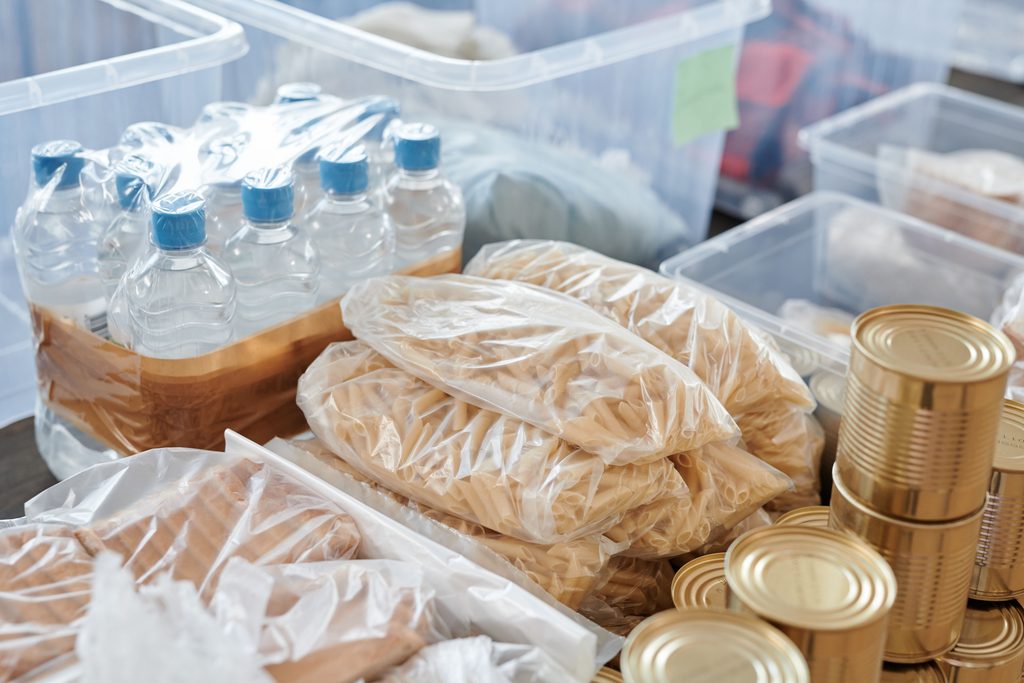
In October 2026, the UK government launched its Be Ready campaign, encouraging households to prepare for possible emergencies and keep essential supplies for three days of disruption. The guidance covers the possibility of extreme weather, cyber incidents and interruptions to essential services.
It is important to be clear about what this means. A recommendation to prepare for disruption is not, by itself, evidence that the UK is about to experience a food shortage or that a particular emergency is imminent. The campaign concerns household readiness for possible interruptions. It does not mean the country itself is already suffering from a shortage of food.
However, the public conversation raises a wider question that goes beyond emergency kits: how much control do households and communities have over their access to food? When so much of daily life depends on complex supply chains, even a temporary interruption can affect prices, availability and delivery.
Keeping a sensible supply of food at home can help with a short interruption. But it is not the only answer, and it should not become an excuse to overlook the farmers and food businesses that sustain the food supply every day. The people growing food, maintaining productive land, supplying local markets and connecting growers with households are part of the infrastructure that makes a community resilient.
Read official guidance, make proportionate preparations and avoid panic buying.
At the same time, use this moment to consider how to support domestic food production, diversify where food comes from and build stronger relationships with local producers. Preparedness should mean having more options, not becoming frightened into purchasing goods that may never be needed.
The wider challenge is not to persuade everyone to become a survivalist. It is to build a food system that can continue to feed people when one supplier, route or service is disrupted. That requires capable farmers, affordable nutritious food, reliable distribution and consumers who have alternatives to a single way of shopping.
Official guidance: UK government announcement on the Be Ready campaign.
What These Emergencies Have in Common
These events happened in different places and under very different circumstances. A war is not a pandemic, and a volcanic eruption is not a power cut. Each has its own causes and consequences.
Still, some patterns repeat. Food depends on transport, energy, labour and infrastructure. Having food in a country is not enough if people cannot afford it or reach it. And when there are few alternatives to the usual supply routes, disruption can quickly reach the kitchen table.
1. Dependence on External Supplies Creates Vulnerability
Imports matter. They provide foods that cannot be grown locally, or cannot be produced in sufficient quantities. The problem is not international trade itself. It is relying so heavily on a small number of suppliers, routes or production regions that one disruption leaves people with few alternatives.
A country may have fertile land and skilled farmers yet remain exposed if domestic production is too limited to provide meaningful alternatives. When transport is disrupted or international prices rise, the consequences can reach households even when there is no physical shortage of food within the country.
Supporting local farms, regional producers and independent distribution networks gives people additional options. The objective is not to eliminate international trade, but to avoid relying on it so heavily that a problem elsewhere leaves households with few alternatives.
2. Food Security Is About Who Can Access Food
A country can have food on its shelves while people cannot afford it, get to the shop or find what they need. The pandemic, rising food prices and extreme weather all showed how access can break down even when food has not disappeared altogether.
Local sourcing can create additional routes to fresh produce, especially when farmers sell directly to consumers or through vegetable box schemes and farmers’ markets. It does not automatically make food cheaper, but it can widen the range of ways people obtain it and help keep value within local food economies.
A resilient food system should make nutritious food accessible, not merely ensure that products exist somewhere in a warehouse or supermarket.
Read the official Be Ready checklist for the government’s own advice, and remember what it does, and does not, imply: it asks households to prepare, not to stockpile.
3. Farmers Are Part of the Infrastructure That Keeps People Fed
We talk a lot about supermarket shelves, warehouses and emergency supplies. But before food reaches any of them, someone has to grow it. Farmers work the land, manage changing seasons, grow crops and raise livestock. Without them, the rest of the system has nothing to distribute.
During disruptions, farmers and independent food businesses may be able to adapt by selling directly to households, changing distribution arrangements or finding alternative customers. COVID-19 provided examples of producers developing vegetable boxes, collections and local delivery arrangements when established routes to market changed. These responses varied by place, but they showed the value of having more than one way to connect food with consumers.
Farmers cannot do this alone. They need land, water, workers, seeds, equipment, fuel, transport and customers. If farms are allowed to disappear in ordinary times, we cannot expect them to replace missing imports overnight.
Supporting farmers now is therefore more useful than treating them as a last resort. Buying from local producers when it suits your budget and needs helps sustain the businesses and skills that may become especially valuable when other routes are disrupted.
4. Home Growing Builds Skills, Not Just a Supply of Vegetables
Dig for Victory and the renewed interest in gardening during COVID-19 both showed how people turn to growing when they think differently about food. A few pots of herbs, a container of salad leaves, an allotment or a garden will not feed a whole household, but they can provide something useful and teach skills that last.
Growing food also teaches practical skills: understanding seasons, recognising when crops are ready, caring for soil, conserving water and making use of produce before it spoils. Those skills have value beyond emergencies. They can help people connect with nature, appreciate the work behind their food and become more confident in the kitchen.
Not everyone has a garden, time, physical ability or suitable space to grow food. Local food resilience must therefore include allotments, community gardens, shared growing spaces, accessible farm shops and affordable routes to fresh produce, rather than placing the entire responsibility on individuals.
5. Preparedness Should Not Become Panic Buying
Buying far more than you need can waste food, strain your budget and leave less on the shelves for others. A sensible reserve is different from panic buying. Build it gradually, with food you actually eat, can store safely and can afford.
Everyday food choices can also strengthen resilience. Learning to cook with seasonal ingredients, using nutritious staples, reducing waste and identifying local sources of produce can all make households less dependent on a narrow range of products or shopping routines.
Read Be Ready Prepping: The UK Guide to Emergency Supplies, Eco Alternatives and Self-Reliance for practical ways to prepare without unnecessary purchases.
6. Resilience Is a Shared Responsibility
Households can plan for short interruptions and learn practical skills. Communities can support local producers, maintain relationships and help people who face barriers to obtaining food. Farmers and food businesses can develop more than one route to market where possible. Governments have responsibilities for infrastructure, agricultural policy, public information and access to essential services.
This cannot all be left to individuals. Asking households to keep a few days of supplies does not replace the need for functioning farms, affordable food, reliable transport, energy and public infrastructure.
The stronger approach is to prepare at several levels at once. A household reserve can help with a short interruption. A healthy domestic agricultural sector can provide productive capacity. Local food networks can create additional routes to consumers. Regional and international trade can fill gaps and provide foods that cannot be produced locally in sufficient quantities.
When Imports Are Disrupted, Why Local Food Matters
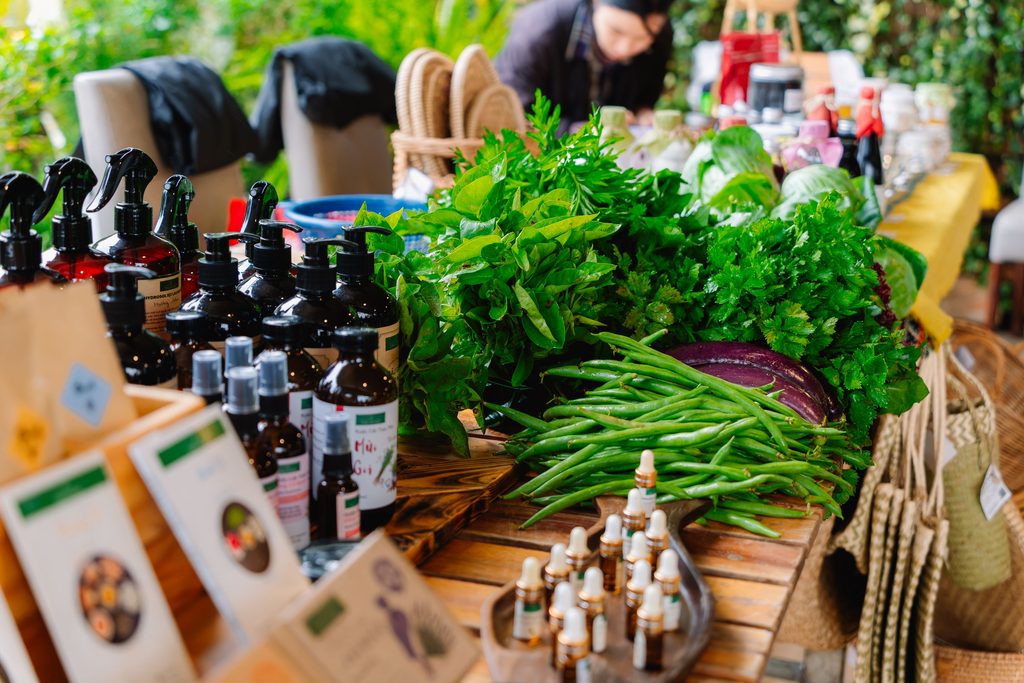
A community with productive farms has another source of food when imports become expensive or difficult to obtain. How much that helps depends on what those farms grow, how much they produce, what inputs they rely on and whether people can afford and access the harvest.
Countries and communities that have experienced interruptions to imports have had to rely more heavily on domestic production, alternative suppliers or changes in what people eat. Cuba’s experience following the collapse of the Soviet Union in the early 1990s is a frequently cited example of the severe effects of losing established trade and energy supplies, alongside the development of urban agriculture and other local food-growing approaches. The transition was difficult, and urban agriculture did not erase the country’s food problems, but the experience demonstrated the value of developing local production when external supplies become less dependable.
COVID-19 offered a different example. In many places, the pandemic disrupted established food businesses and shopping routines, while some farmers shifted towards direct sales, home deliveries and vegetable boxes. At the same time, people took up home growing and paid renewed attention to cooking and food origins. These changes did not replace imports or eliminate supply problems, but they demonstrated that alternative ways of producing and distributing food can become valuable when normal channels are under pressure.
There are limits. A country cannot quickly replace all its imported wheat, rice, cooking oil or other staples. Local farmers may also rely on imported fertiliser, fuel, seeds, machinery and packaging. Local food is not a guarantee that there will be enough of everything during every emergency.
But a country with a diverse and productive agricultural sector has options that a country relying heavily on external supply may lack. Local growers can contribute fresh produce, regional producers can diversify supply, and households can build skills that make better use of seasonal food. The goal is to strengthen these options before they are urgently needed.
Local sourcing is also worthwhile when there is no emergency at all. It can strengthen relationships between growers and consumers, support agricultural livelihoods, make seasonal food more visible and help people understand the land and labour behind what they eat.
Use the Be Ready Map: UK Farm Shops and Local Food Guides to find local food sources. For practical ideas on building a household food supply around nutritious ingredients, read The Be Ready Campaign: A UK Guide to Stocking Your Home With Healthy, Local Food.
How to Build Food Resilience Without Panic Buying
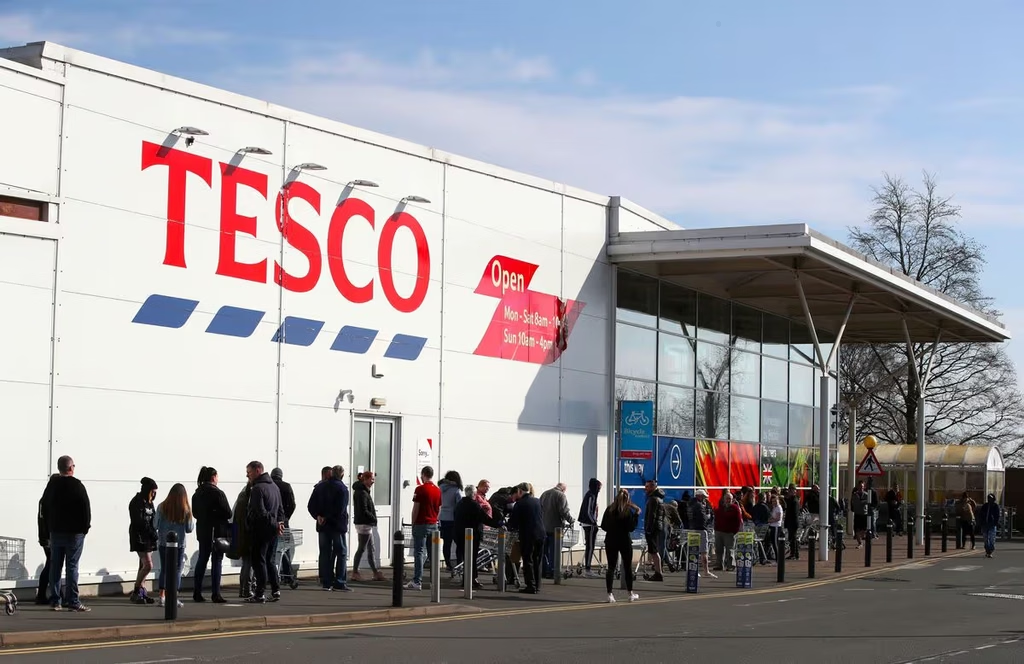
You do not need to become a survivalist to be better prepared. Practical steps and a few alternatives can make a difference when everyday services are interrupted. Food resilience can be part of ordinary life, rather than an expensive project that begins with a government warning.
- Read official guidance carefully and distinguish preparation advice from claims that a shortage or emergency is imminent.
- Check what food, drinking water, medication and household essentials you already have before buying anything additional.
- Build a modest supply gradually, choosing foods your household normally eats and can store safely.
- Learn to prepare nutritious meals from basic ingredients, including seasonal produce and suitable staples.
- Find local farms, farm shops, farmers’ markets and vegetable box schemes that fit your location and budget.
- Grow something if you can, even if it is only herbs, salad leaves or vegetables in containers. If you cannot grow food yourself, support accessible community growing projects or local producers where possible.
- Learn what is in season locally and how to store, cook or preserve produce safely to reduce waste.
- Consider how you would manage if electricity, water, mobile networks, transport or electronic payments were unavailable.
- Make plans for children, pets, medication, mobility needs and important contacts.
- Avoid panic buying. Buying more than you need can create unnecessary waste and make food harder for other people to access.
These steps are useful even if no emergency occurs. They can improve everyday food choices, strengthen practical skills and help households become less dependent on a single shopping routine. For a step-by-step guide, read Be Ready Emergency Preparedness and the official Be Ready checklist.
The Outcome: A More Resilient Food System Starts Before a Crisis
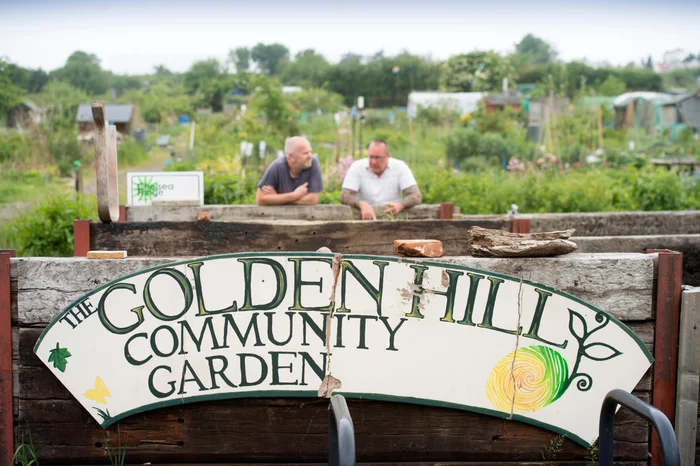
History cannot tell us what emergency will come next. It can show us how disruption spreads, how people lose access to food and how much we depend on the people who grow, transport and sell it.
The wartime Dig for Victory campaign demonstrated the value of growing food when imports were under pressure. COVID-19 showed how people and producers could adapt when familiar shopping and distribution routines changed. Shipping disruption and food-price rises exposed the vulnerability of long supply chains and the consequences of depending heavily on external inputs and markets.
None of these examples proves that local production can replace every import or protect a community from every disaster. They do show why domestic agriculture, home growing, direct sales and diverse distribution networks deserve more attention than they often receive.
The UK’s Be Ready campaign has put household preparedness into the public conversation. It does not mean Britain is running out of food. But it does give us a reason to ask a more useful question: if normal supply routes are interrupted, how do we make sure people can still get nutritious, affordable food?
Keeping a few days of essential supplies at home can be sensible. But long-term resilience also means protecting productive land, supporting farmers, making local food easier to access, encouraging practical growing skills and ensuring that households can afford the food available to them.
We should not wait for an emergency to value the people who grow our food. Buying locally when possible, finding out what grows in our region, cooking with seasonal ingredients and supporting community food projects are useful actions in ordinary times, too.
We do not need to frighten people to make the case for a stronger food system. We need to support the people who grow our food, protect productive land and make local food easier to access. We need more options, not more fear.
That is the deeper lesson of emergency preparedness: resilience is not only about what we store. It is also about what we grow, who we support, the skills we retain and the food systems we choose to build.
Sources and Further Reading
The sources below provide historical, scientific and official context for the events discussed. Personal accounts from gardeners, farmers and local food communities can add valuable detail, but individual experiences should be distinguished from evidence about national food supply.
- UK government: Be Ready campaign announcement
- Imperial War Museums: Britain’s wartime food effort
- The National Archives: Home Front resources
- Ready.gov: US emergency preparedness guidance
- World Health Organization: COVID-19
- Food and Agriculture Organization: Food Price Index
- Food and Agriculture Organization: Urban agriculture
- UN Trade and Development: Transport and trade logistics
- Copernicus Climate Change Service
- National Oceanic and Atmospheric Administration
- Swedish Civil Contingencies Agency: Advice for individuals
- UK Met Office