
In October 2026, the UK government asked households to be ready for three days of disruption. Keep some water and food at home. Have a torch, a radio and a little cash. Know who you would call and who might need checking on. It is sensible advice, and most of it costs very little.
But the advice also raises a question worth sitting with. If a storm, a power cut or a cyber attack can disrupt the services we rely on for food, water and information, what else could we do to make ourselves less exposed in the first place?
This guide covers both. It explains what the Be Ready campaign actually recommends, how to put together an emergency kit and household plan without panic buying, what to eat for three days if you cannot cook, and where local food fits into all of this: what it can genuinely do for your resilience, and what it cannot.
Be prepared, not panicked. Advice to prepare is not a prediction that something is about to happen.
What the UK’s Be Ready Campaign Actually Asks You to Do
The Cabinet Office launched the Be Ready campaign on 22 October 2026. It is described as the first stage of a three-year campaign to help households across the UK prepare for events such as severe weather that can occasionally affect power, water, phones and the internet. The headline advice is to be ready for three days of disruption, the same benchmark used in France, Ireland and the Netherlands.
The government points to last winter’s storms and this summer’s wildfires as examples of how severe weather can interrupt everyday life. The campaign’s reasoning is practical: if households that are able to look after themselves for a few days do so, emergency services can focus on people who need more help.
Be Ready is not entirely new. The government has published household resilience advice since May 2024 through its Prepare website, which has now been rebranded. Much of the advice is unchanged. More than five hundred organisations, from charities to businesses, have signed up to share it, and advertising will focus on families with young children and older people, who are often most affected when services stop.
If you live in Scotland or Northern Ireland, local advice is also available through Ready Scotland and NI Direct.
It is worth being clear about what the campaign does not say. It does not say Britain is short of food, that a particular emergency is imminent or that people should stockpile. It asks households to take small, steady steps. For the longer history of why governments ask this, and what past emergencies teach us about food, read Emergency Preparedness Through History.
How to Be Prepared for Emergency Situations: Start With What You Already Have
The most useful first step is also the cheapest: look in your cupboards. The government’s own checklist starts there, and for good reason. Most households already own a torch, some tins, blankets and a first aid box, even if they are scattered around the house.
- See what you already have. Check cupboards, drawers and the shed before buying anything.
- Plan for your household. Write down what is missing, including the things your family specifically relies on: medication, baby formula, pet food, spare glasses, chargers for medical devices.
- Build it gradually. Add an item or two to your normal shopping. This spreads the cost and avoids the empty shelves that panic buying creates.
- Check it regularly. Set a reminder every six months to check dates, rotate food and water, and update the kit if your household has changed.
- Talk to your neighbours. Swap numbers, and find out who nearby might need extra help in a power cut.
Not everyone can do every step, and the government acknowledges this. People with insecure housing, limited storage or tight budgets were involved in shaping the advice. Doing some of it is better than doing none of it.
The Be Ready Emergency Kit, Item by Item
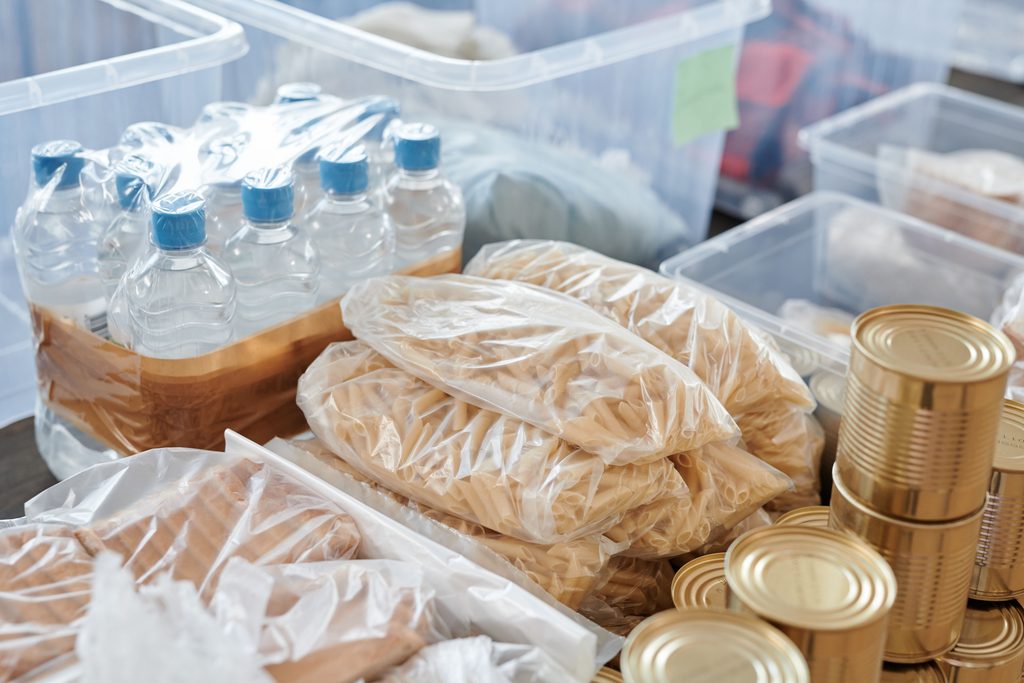
The government’s checklist is short. Below is what it recommends, alongside some notes on choosing items that are useful in ordinary life too, so your kit does not become a box of things that sit unused until they expire.
| What to have | Government guidance | IdealWrld note |
|---|---|---|
| Water | Bottled water for 3 days: 3 litres per person per day for drinking, more for cooking and washing | For a household of four, that is 36 litres for drinking alone. Larger bottles mean less packaging per litre. Drink and replace them in rotation. |
| Food | Non-perishable food for 3 days that needs no fridge or cooking, such as tinned fish, meat or vegetables, dried fruit and nuts. Buy food you would usually eat | Choose foods that are nourishing, not just long-lasting. See our guide to stocking a healthy, local reserve. |
| Hygiene | Hand sanitiser, wet wipes and bathroom products | A washing-up bowl of water with soap is the government’s own suggestion for handwashing when the taps stop. |
| Light | Torch and spare batteries. Torches are safer than candles | Rechargeable batteries or a wind-up torch avoid a drawer of dead disposables. |
| Warmth | Blankets, sleeping bags and warm clothing | Homes cool quickly without heating. Wool and other natural fibres stay warm even when damp. |
| Information | Battery or wind-up FM radio, and a written list of station frequencies | Your phone may not work if the local mast loses power. |
| Power | A charged power bank | Charge it every few months, and before forecast storms. |
| Money and documents | Cash in coins and notes, cards, copies of ID and important documents, a written list of numbers and medication | Electronic payments and cash machines can fail in a power cut. |
| Medical | First aid items and essential medication | Order repeat prescriptions up to five working days before you need them. |
| Babies | Ready-to-feed formula, nappies and wipes | Ready-made formula is safest because you may not be able to boil water. |
| Pets | Pet food and bottled water | Include any medication your animals take. |
If you already have spare items, the government suggests donating them to people who may not be able to prepare their own households, or helping someone by printing their important documents. Preparedness works better when it is shared.
For a closer look at lower-waste, lower-plastic versions of each item, read Be Ready Prepping: The UK Guide to Emergency Supplies, Eco Alternatives and Self-Reliance.
Be Ready for an Emergency: Plan Ahead
A kit helps you stay put. A plan helps you know what to do. The government provides a printable household emergency plan, and it is worth filling in with everyone you live with.
- Write important numbers on paper. To report a power cut, call 105 in England, Scotland and Wales, or 03457 643643 in Northern Ireland. Add family contacts, your GP, your insurer, your water company and anyone you would want to check on.
- Agree a meeting point in case you cannot get home or reach each other. Choose somewhere public and easy to find.
- Know how to turn off your gas, electricity and water, in case of flooding or a leak.
- Find your load block letter at powercut105.com. In the unlikely event of a national energy shortage, power cuts could be rotated area by area for around three hours at a time.
- Add emergency contacts to your phone using the ICE or Medical ID feature, so responders can see them without unlocking it. Think about what personal information you include.
- Check your child’s school has up-to-date numbers for you.
- Make a backup plan for anyone who lives alone or needs extra support, such as agreeing that someone will visit in person if phones are down.
A plan written on paper still works when the phone does not.
The Priority Services Register is free, and many households are eligible
One of the simplest steps in the whole campaign costs nothing. The Priority Services Register tells your electricity, gas and water companies that you may need extra support during an outage. Households with children under five are eligible, as are many people who are older, disabled, chronically ill or reliant on medical equipment. Registered customers may receive advance notice of planned power cuts and help with alternative water supplies. In Northern Ireland, the equivalent is called a Customer Care Register.
Be Ready Emergency Meals: Three Days Without Cooking

The government’s food advice assumes you may have no power to cook and no fridge. That rules out a lot of what is usually in a kitchen, but it does not rule out eating well. The key is to choose foods you already enjoy, that need nothing more than a tin opener, and that together give you some protein, fibre, fruit and vegetables.
Remember the tin opener. It is the single most forgotten item in emergency food supplies.
A simple no-cook pattern looks like this:
- Breakfast: oats soaked in long-life milk or a plant drink, with dried fruit and seeds.
- Lunch: tinned beans, lentils or chickpeas with tinned sweetcorn or peppers, a squeeze of lemon from a bottle and crackers or oatcakes.
- Dinner: tinned fish or a tinned bean salad, with crispbread and any raw vegetables that keep, such as carrots.
- Snacks: nuts, dried apricots, apples, peanut butter, rice cakes.
Tinned foods often contain added salt or sugar, so choose versions in water or their own juice where you can, and drink plenty of water. For a full three-day plan built around the NHS Eatwell Guide, with UK-grown and seasonal options, read The Be Ready Campaign: A UK Guide to Stocking Your Home With Healthy, Local Food.
Keeping Food Safe in a Power Cut
If the power goes off, the food you already have becomes a resource, and the order in which you eat it matters. The Food Standards Agency advises keeping fridge and freezer doors closed as much as possible. A closed fridge should stay cold for up to four hours. A full freezer should keep food frozen for up to 48 hours, or about 24 hours if it is half full. These are estimates, and a warm room shortens them.
- Eat from the fridge first, especially leftovers, cooked meats, dairy and anything that spoils quickly. If the fridge reaches 8°C or above, chilled foods should be eaten within four hours or thrown away.
- Then the freezer, which keeps its cold for longer.
- Then the cupboard, which is why your three-day supply is shelf-stable.
A cheap fridge thermometer takes the guesswork out of this. Never taste food to decide whether it is safe. The full guidance is on the Food Standards Agency website.
Does Local Food Make You More Resilient? What It Can and Cannot Do
An emergency kit is designed for a few days. Resilience over months and years depends on something larger: whether food keeps being grown, and whether people can get to it. That is where local food comes in, and it is worth being honest about both its strengths and its limits.
What local food can do
The UK produces about 62% of the food it consumes by value, and about 75% of the foods that can actually be grown here, according to the government’s own Food Security Report. The rest is imported. That balance has been broadly stable for years, and trade with many countries is part of what keeps supply reliable.
But the picture changes by food type. The UK produces more oats, barley and milk than it consumes, and 96% of its carrots, turnips and swedes. Yet it produces only around 53% of its fresh vegetables and 16% of its fresh fruit. The report notes that the UK is highly dependent on imports for fruit, vegetables and seafood, which are major sources of vitamins and minerals.
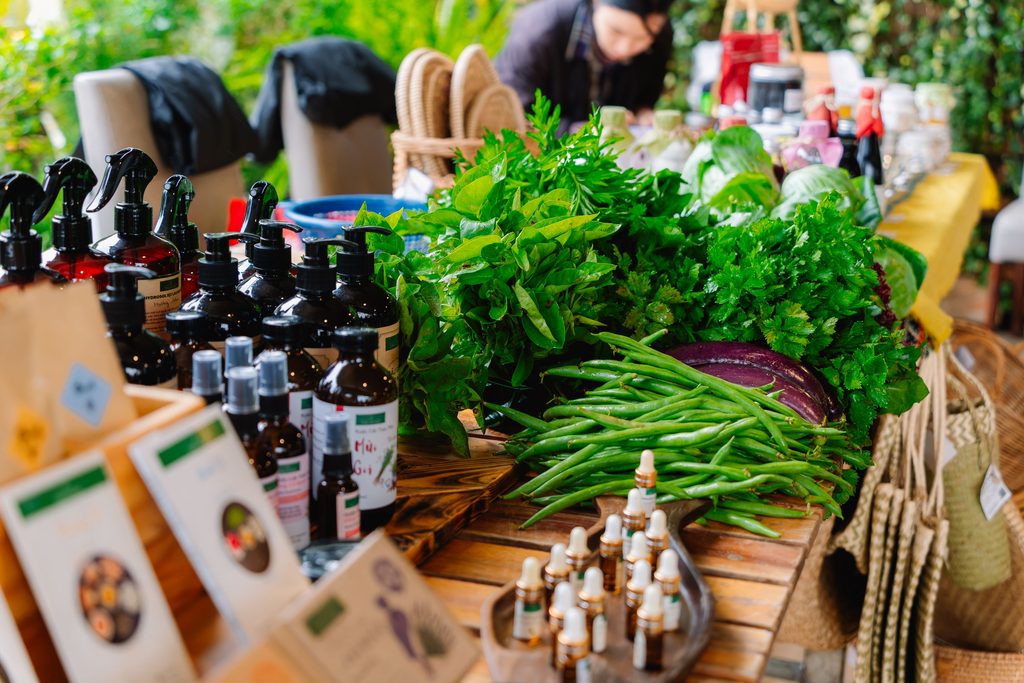
Local food gives households another route to some of those foods. A farm shop, a veg box, a farmers’ market or a pick-your-own farm is a second way in when one way is blocked. During the pandemic, many farms in the UK and elsewhere switched quickly to boxes, collections and local deliveries when restaurants and wholesale buyers disappeared. Those who had already built relationships with nearby growers had more options.
Local food also builds knowledge. People who know what grows near them, and when, find it easier to cook with what is available rather than depending on a narrow range of products that all travel the same route.
What local food cannot do
Local food is not a shield. A flood that closes the road to the supermarket can close the road to the farm shop too. The storms that cut power to your home can cut power to a dairy. A wet spring can ruin a local harvest, as UK growers saw when vegetable production fell by 13% between 2021 and 2023, largely because of extreme weather.
Local farms are also connected to the wider world. Many rely on imported fuel, fertiliser, animal feed, seeds and packaging, and the government’s report notes that domestic production is not independent of global supply chains. And local is not automatically cheaper. Small producers face rising costs too.
Local food adds options. It does not remove risk.
The goal is not to replace imports or to treat local food as an emergency supply. It is to make sure the food system around you has more than one route, and that you know what those routes are before you need them.
Use the Be Ready Map: UK Farm Shops and Local Food Guides to find farm shops, veg box schemes, farmers’ markets and pick-your-own farms near you. If you are new to markets, our farmers’ market checklist for first-timers explains what to expect. You can also browse our local guides to farm shops near Huddersfield and farm shops in Leicester, and our guide to pick-your-own fruit across the UK.
Who May Need Extra Support
Emergencies do not affect everyone equally. The government identifies older adults, babies and young children, and people with long-term health conditions as among those most at risk during power and water outages. People who rely on powered medical equipment, telecare alarms or devices such as diabetes sensors should speak to their care team or device provider now about what happens if the power goes off.
If you use a landline for emergency calls, ask your provider whether it will work in a power cut. Many offer a free backup battery for vulnerable customers that lasts at least an hour.
The government has published specific advice for disabled people and carers. If someone in your street lives alone, does not use the internet or does not speak English well, a five-minute conversation now may matter more than anything in your own kit.
What Not to Do
- Do not panic buy. Buying more than you need wastes food and money and leaves less for others. Build a reserve gradually from food you actually eat.
- Do not rely on candles. Torches are safer.
- Do not use barbecues, camping stoves or generators indoors. They can produce carbon monoxide, which you cannot see or smell.
- Do not drink water from a rain butt. It is useful for flushing toilets and watering plants, not for drinking.
- Do not taste food to check whether it has spoiled. Use a thermometer and the timings above, and if in doubt, throw it out.
- Do not forget the people around you. Checking on neighbours is part of the official advice for a reason.
Your Be Ready Checklist
- Three litres of drinking water per person per day for three days, plus extra for pets and cooking
- Three days of non-perishable food you would normally eat, and a tin opener
- Torch, spare or rechargeable batteries, and a wind-up or battery FM radio
- Charged power bank
- Blankets, sleeping bags and warm clothing
- First aid items and essential medication
- Cash in coins and notes
- Paper copies of documents, contacts, medication lists and radio frequencies
- Baby and pet supplies if needed
- A completed household emergency plan
- Registration on the Priority Services Register, if eligible
- Numbers swapped with neighbours
- At least one nearby source of local food you know and trust
The Bigger Picture: Preparedness That Lasts Longer Than Three Days
A three-day kit is a sensible starting point. It can turn a frightening power cut into an uncomfortable one. But it is not the whole story of resilience, and the government does not claim it is.
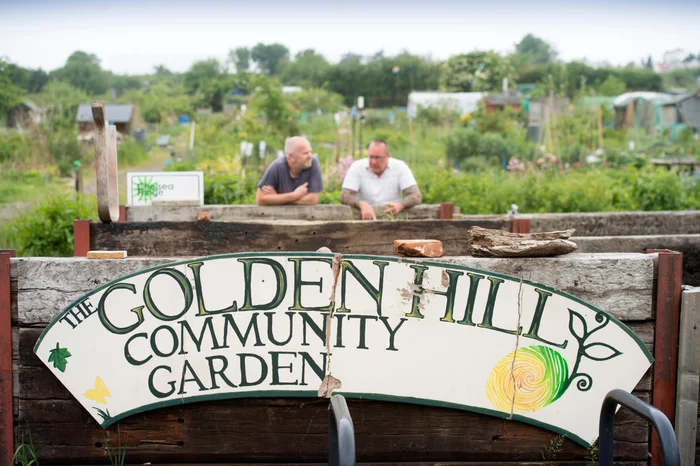
Longer-term resilience is built in ordinary times. It is a kitchen that knows how to cook from simple ingredients. It is a household that knows where its nearest farm shop or market is. It is a street where neighbours have each other’s numbers. It is a country that values the farmers who grow its food and keeps the land, skills and routes to market that let them keep doing it.
None of that requires fear. It requires a little attention, a little planning and a few relationships, most of which make everyday life better whether or not an emergency ever comes.
Be ready for three days. Build resilience for every day after that. We need more options, not more fear.
Sources and Further Reading
- UK government: Be Ready campaign announcement, 22 October 2026
- Be Ready: Be ready for emergencies and the official checklist
- Be Ready checklist (PDF)
- Be Ready: Power cuts
- Be Ready: Water supply interruptions
- Priority Services Register
- Food Standards Agency: Food safety in a power cut
- Defra: United Kingdom Food Security Report 2024, UK food supply sources
- Ready Scotland
- NI Direct: Be ready for emergencies
- Met Office weather warnings