
A recycling symbol on a packet is a claim about what could happen somewhere. Your own collection decides where the packet goes, not the symbol printed on it. When the symbol and the council list disagree, follow the council.
The bin is a handover to a system you do not run. That system might recycle the material, burn it for energy or bury it. Confusing a symbol with a collection is how people rinse a crisp packet for a lorry that will not take it.


Does recyclable mean your council collects it?
No. Recyclable, collected and compostable are three different claims.
Recyclable means some process can turn the material back into something useful. That describes a material's potential, not what happens to the packet in your street. A plastic pouch may be technically recyclable through a specialist scheme but still be rejected by ordinary kerbside collections.
Look for the material and the specific collection route, not the recycling arrows alone.
Collected means your local service accepts it, in the form you have it, clean enough that the load is not rejected. This is the question that decides what you should actually put in the bin. Councils differ on tubs, films, cartons, black plastic and lids, and contamination can spoil a whole load.
Check your own council's current list and preparation instructions before sorting.
Compostable usually means it breaks down in an industrial composter, which runs much hotter than a home heap. A compostable cup or film may need an industrial facility and may not be accepted in your food-waste collection. If it goes into ordinary recycling it can contaminate that stream; if it goes to landfill it may not break down as intended.
Check whether your local service accepts that exact item and certification.
Glass bottles and aluminium cans are widely collected and worth recovering because the material survives the process. Flexible plastic films, multi-layer pouches and paper fused to plastic often are not collected at the kerb, even if the packet carries a resin number. The number identifies the type of plastic. It is not a promise from the lorry. Collection rules in England are being standardised, so what your council takes may change over the next few years, which is another reason to check its page rather than rely on memory.
Whatever is left goes into residual waste. Councils send it to landfill, incineration or a mix that depends on their contracts. Burning waste can generate energy but still emits carbon and leaves ash, while landfill stores the problem and can leak. Neither is a reason to feel neutral about creating the waste. The government’s overview is at waste and environmental management. For your street, find your local council and read its recycling page.
What happens if the wrong thing goes in the bin?
Food in a pot, a nappy in the paper, or a battery among the plastics can get a whole batch rejected.
Empty and rinse items enough that the bin does not smell and the paper does not get soaked. Follow your council’s instruction on whether to bag recycling or leave it loose. Never put batteries or small electricals in the recycling or the rubbish, because they can start fires in lorries and at sorting plants. Use a shop take back or the council’s collection point.
Labels can run ahead of the local service, and some are marketing. “Widely recycled” has meant different things in different schemes. Look at your council’s list for the exact format in your hand, whether bottle, tub, film, carton or sleeve. A bottle may be accepted while its plastic sleeve is not, and the council will say whether to remove it. Coffee cups that look like paper are often lined with plastic, and many collections do not want them. Bottle tops are accepted in some areas and not in others.
What is better than recycling the packet?
Not needing the packet. Recycling is what you do with what is left.
Refill shops, markets, shops that let you bring your own container, and simply not buying the double wrapped version all sit upstream of the bin. They are not always available. Where you do have a choice, a glass bottle you will return or recycle beats a mixed pouch your council already refuses. Where you do not, put the item in the stream that will take it and save your effort for the next purchase.
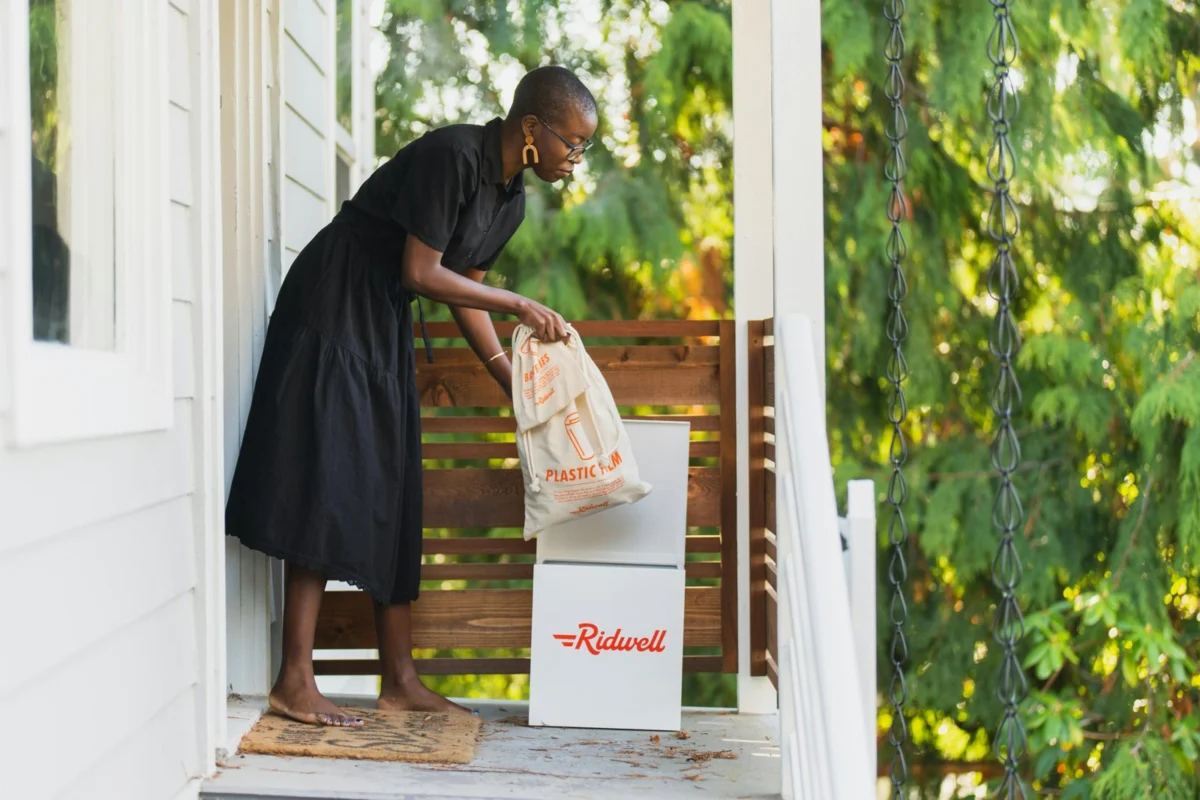
A private collection service, like the one in the photograph, can take materials a council will not. It can be worth paying for if you have a steady supply of those materials and have read what the company does with them. Ask where the material goes. “We recycle it” is not an answer. A named plant, a named process and a list of what the company refuses is.
Clothes are not packaging, so a textile rule does not decide the wrapper. Mend them, or pass them on only if someone will wear them. Food that is still safe to eat is a different question from the wrapper it came in.
Follow the council list for the packet in your hand. The My Ideal World app looks at products and brands, including food and clothing, so you can see materials before you buy packaging your street will not collect.
Why do the symbols confuse people?
One packet can carry a material code, a marketing claim and a local instruction that disagree.
People are not confused because they have failed to learn the recycling symbols. They are confused because one packet can carry a material code, a manufacturer claim and a local collection rule that do not mean the same thing. In r/recycling, one person asked why a container marked non-recyclable also carried a plastic number accepted by their city; replies pointed to sleeves and the fact that different parts of one pack can have different routes. See the real-world question. That is why your council collection list matters more than the triangle on the packet.
On this story
Comments, questions and answers from signed-in paid members. The conversation is shared with the app. Community contributions are not verified editorial findings.
Contribute evidence
Reviews share first-hand experience. Observations can include opinions and objections. Evidence is checked against its sources before publication. Community contributions do not change MIW scores.
Article discussions and evidence contributions are for paid members and are shared with the app.
Sign in to contribute or join the discussion Read this next
BDS Boycott Checker and How to Verify a Company
Use a BDS boycott checker with original campaign sources, current ownership evidence and clear dates. Check what a company result proves before choosing.Read the story Keep exploring
How to Spot Greenwashing: 12 Red Flags Before You Buy or Book
Spot greenwashing by checking the exact environmental claim, its scope and the source behind it. Use real evidence before buying products or booking a stay.Read the story Keep exploring