
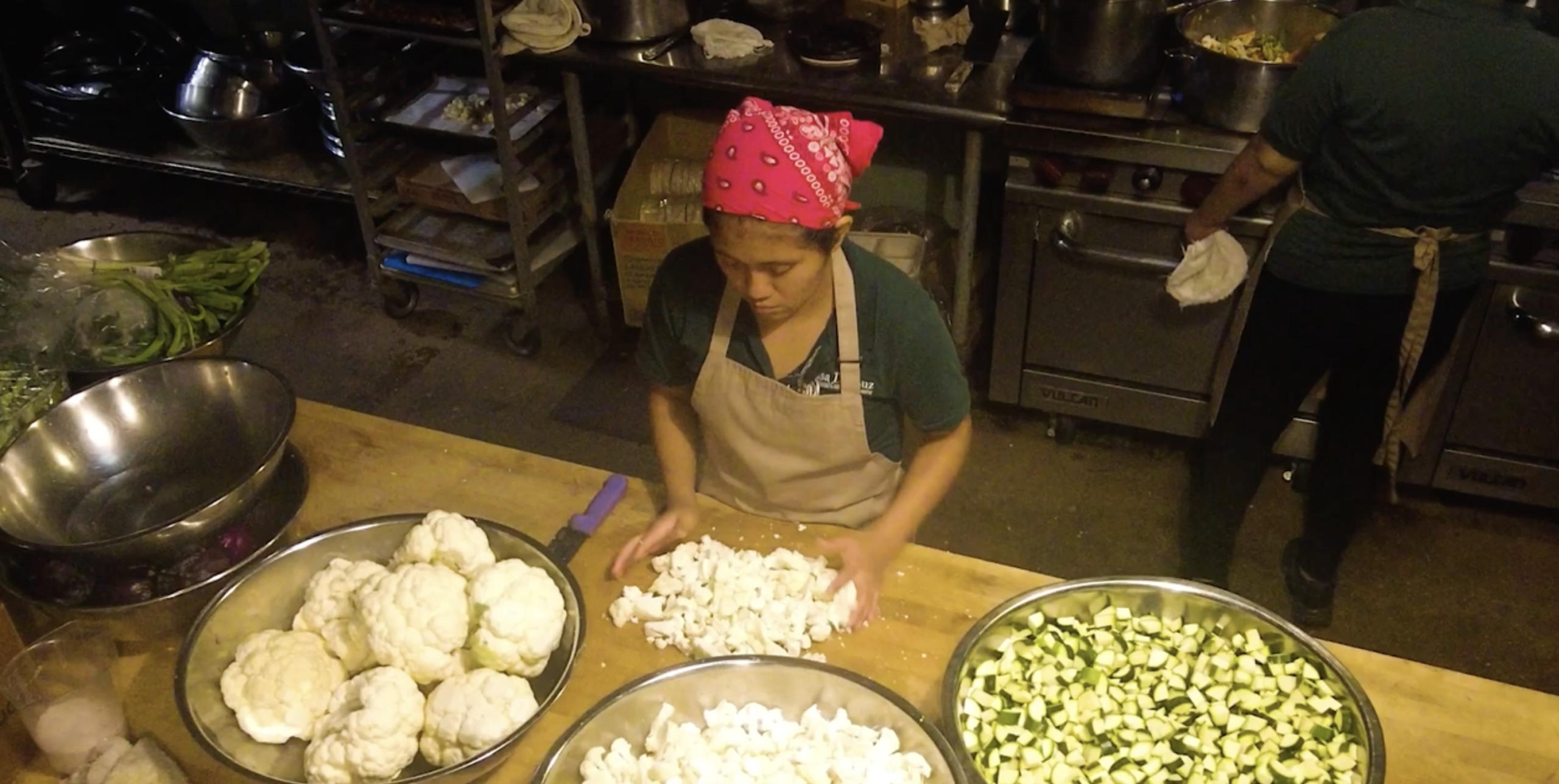
At Casa de Luz in Austin, Texas, you do not need to arrange a lunch with friends, negotiate over a menu or arrive with a group to feel part of something.
You can walk in, sit at a communal table and share the same whole plant-based meal as everyone else. The people sitting around you may be strangers when you arrive. They may not be by the time you leave.
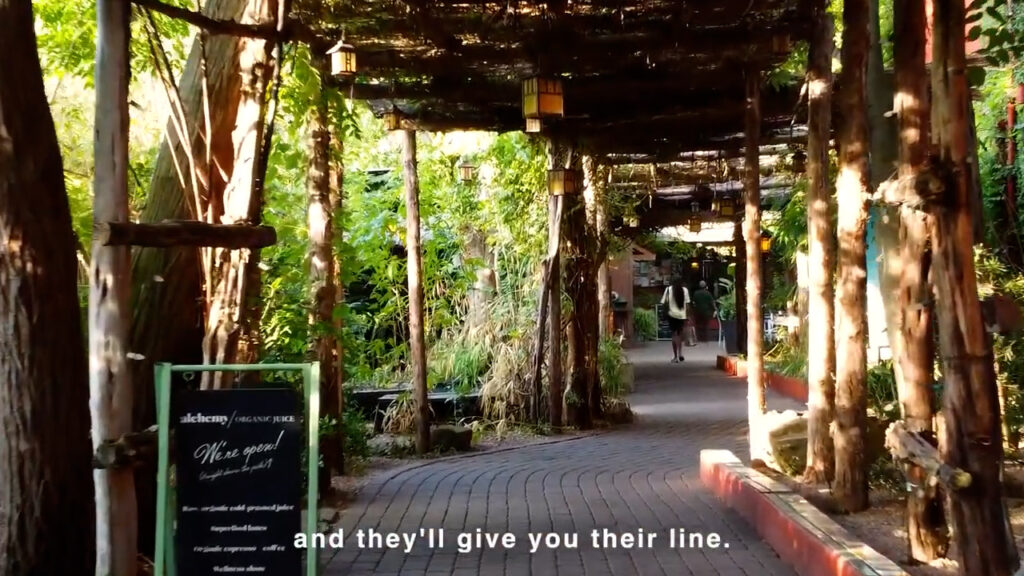
I spent several days at Casa de Luz documenting the place and speaking with Eduardo “Wayo” Longoria, who has been involved in its development since its early days. What stayed with me was not simply its commitment to plant-based food, but the idea behind it: that eating together can be a way of building community, that a kitchen can be a place of participation rather than simply service, and that wellness means more than what happens on a plate.
Casa de Luz describes itself through a different vocabulary from that of conventional hospitality. Wayo calls it a nonprofit community wellness centre. He is, in fact, emphatic about what it is not.
“I’m an enemy of the R word, and that would be restaurant,” he told me.
He explained that the centre is intended to function more like a family kitchen and living room, a place people can return to without having to organise an occasion. Its purpose is not exhausted by the meal it serves. The relationships that form around that meal are part of the point.
“We never close because this is more like your mother’s kitchen and living room and a place to hang out than anything else,” he said.
It is an unusually ambitious idea for a food space. And in a city such as Austin, where the relationship between food, independent business, wellness and community has become an important part of local culture, Casa de Luz offers a model that invites a closer look.
A Different Kind of Food Culture in Austin, Texas
Austin has long attracted people interested in alternative approaches to food, health and living. Its food culture encompasses everything from farmers’ markets and independent restaurants to natural-food businesses, vegetarian and vegan dining, and communities organised around environmental and wellness concerns.
Casa de Luz belongs to that broader landscape, but it does not fit neatly into the usual categories.
It is not simply a vegan restaurant catering to people who have already decided what they want to eat. Nor is it a conventional wellness business selling a programme for personal improvement. It is a shared space built around a daily practice: people come together, eat whole plant-based food and participate in a community that has developed over decades.
That distinction matters because plant-based eating has become a much broader cultural conversation. The term can refer to anything from adding more vegetables and legumes to an otherwise conventional diet to following a strictly vegan way of eating. Veganism, in turn, can extend beyond food to questions of animal exploitation, consumer choices and the relationship between human beings and other animals.
Wayo’s position is unambiguous when it comes to the food served at Casa de Luz. He described the centre’s approach as whole plant-based eating without meat, eggs or dairy. Yet his emphasis is not on creating an identity around dietary rules. He is interested in what happens when the food becomes part of a wider environment that supports people in changing how they live.
“I do want to underpin the importance of community and eating whole plant based food,” he told me. He described their combination as “so, so symbiotic and powerful when they come together.”
The significance of that pairing is easy to overlook in a food culture that often treats dietary change as an individual undertaking. People are told what to buy, what to avoid and what to prepare. Less attention is given to the social circumstances in which habits are formed and maintained.
Wayo’s argument is that those circumstances are central. It is one thing to decide to eat differently. It is another to find yourself in a place where the food is already being prepared, other people are eating it, and you do not have to make the transition alone.
A Community That Survived the Loss of Its Home

Casa de Luz grew out of an earlier community space in South Austin called the East-West Center. According to Wayo, that building burned to the ground in 1988.
The loss could have ended the community’s daily life together. Instead, he and a friend began cooking from her home while they waited for the original organisation to be revived.
The priority was to keep people connected.
The food mattered, but the community could not be reduced to the building in which it had gathered. By continuing to cook and eat together, they preserved something that a fire could not destroy.
Eventually, they found an abandoned meatpacking factory. The irony was not lost on Wayo: a building associated with the processing of animal flesh would become home to a community committed to food made entirely from plants.
Casa de Luz served its first meal in the new location in January 1991.
The history gives the centre a different starting point from that of a restaurant conceived around a business plan. It emerged from a community that needed to keep going, then found a place in which to do so. Its identity developed through the work of sustaining that community rather than through a marketing strategy built around a dietary trend.
Wayo told me that his hope in speaking about Casa de Luz was to inspire others to create similar places in their own hometowns.
That invitation is important. He does not present the centre as a finished blueprint that other communities must reproduce exactly. He wants people to see what has worked, understand the principles behind it and adapt those principles to their own circumstances.
John Mackey and the Two Sides of the Plant-Based Movement

The evolution of plant-based food culture has involved different kinds of people and institutions, from animal-rights advocates and health educators to farmers, chefs, independent food businesses and major retailers.
One of the most recognisable figures in the commercial natural-food movement is John Mackey, the co-founder and former CEO of Whole Foods Market. His career helped bring natural and organic food into a much larger retail conversation, while his book, Conscious Capitalism, explored the proposition that businesses can pursue a purpose beyond maximising profits for shareholders.
Mackey’s work provides a useful point of comparison for understanding the kind of alternative food culture that emerged in places such as Austin. One route to changing the food system is through the marketplace: expanding the availability of natural, organic and plant-forward products and reaching consumers through established retail structures.
Casa de Luz represents a different approach. Rather than placing the purchase of a product at the centre of the experience, it puts a shared meal and the participation of a community first.
These approaches are not necessarily in opposition. A natural-food retailer can make ingredients and products more accessible, while a community kitchen can provide a place in which people learn to prepare and eat whole plant foods, develop relationships and establish new habits. But their priorities and measures of success can differ.
Wayo explained that Casa de Luz has to manage its finances. It must pay for ingredients and compensate the people who do the work. Yet he said the commercial aspect remains in the background rather than the foreground.
“Yes, we have cash flow. We have to pay for the plants and we have to pay salaries. But mostly the commercial aspect is in the background, not in the foreground.”
That is a revealing distinction. Casa de Luz is not free of economic realities. It is an attempt to prevent those realities from becoming the reason the place exists.
Its model raises a question that reaches beyond vegan food: what would hospitality look like if the primary measure of success were not the volume of transactions, but the quality and continuity of the community that gathers around them?
Mackey’s association with natural-food retail and conscious capitalism offers a useful lens through which to consider that question. It should not, however, be mistaken for evidence that he has visited Casa de Luz or is personally involved in its operation. The connection here is an intellectual and cultural comparison between two different approaches to changing how people eat.
The Round Table as a Social Institution

At Casa de Luz, many of the communal tables are round. Wayo sees this as more than a design preference.
He described the way an ordinary lunch can become a social occasion without the planning that usually accompanies one. In a conventional restaurant, a group may need to agree on a time, decide where to go, wait for everyone to arrive and then work through individual menus. At Casa de Luz, he said, the gathering can happen simply because people show up.
“I come here, I sit down, and that party that I would try to orchestrate happens with no effort.”
He does not know who will be sitting at the table. That uncertainty is part of the attraction.
“The rule of the land is you just sit at a table and pretty soon you’re meeting people. You’re having worthy conversations.”
The point is not that every lunch must produce a profound encounter. It is that the arrangement creates the possibility of one. People do not have to arrive with a social network already in place. The table gives them an opportunity to begin building one.
This is a small but significant departure from the way many public spaces are organised. Restaurants often accommodate groups that already know one another. Casa de Luz makes room for people who arrive alone.
Wayo believes that the shape of the table can help support the philosophy. Referring to A Course in Miracles, he described a circle as an infinite collection of straight lines, each representing a different point of view.
“The more points of view that you can bring to the table, the more whole you’re going to be,” he said.
The idea is not that everyone must agree. It is that a fuller understanding becomes possible when people are willing to listen to perspectives beyond their own.
In this sense, the communal table is not merely furniture. It is part of the centre’s social structure. It encourages a different kind of encounter, one in which the other person is not necessarily a friend, a customer or someone who shares your assumptions.
The Practice of Asking, “And What Else?”
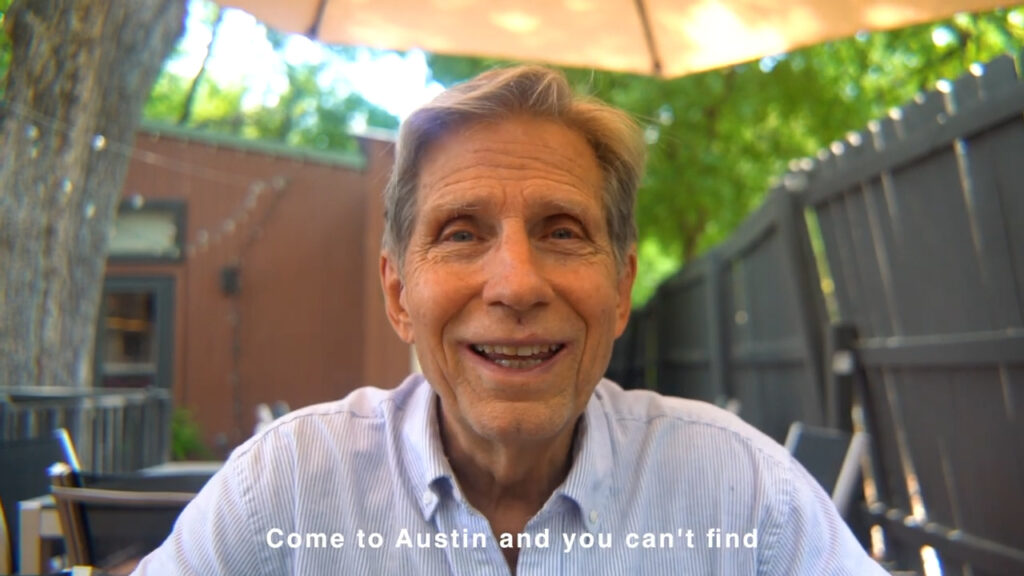
One of the most useful ideas Wayo shared with me concerned how people speak to one another when their views differ.
He described a suggestion made at a gathering of independent thinkers in Austin: when someone expresses a point of view, listen to the initial response, then ask a further question.
“And then once they’ve given you that line, you say, and what else?”
It sounds simple, but the question changes the terms of a conversation. Instead of treating the first answer as a complete statement of someone’s beliefs, it gives them room to think further. They may discover a more complicated position, explain the experience behind it or identify something they share with the person listening.
Wayo believes that people often have more in common than their first responses suggest.
“We want to be healthy. We want to survive. We want to be connected. We don’t want to be lonely,” he said.
His wider philosophy is that disconnection contributes to many of the problems people experience, from personal isolation to social conflict. At one point, he put the argument in sweeping terms: “We wouldn’t have wars if you get to know the other side.”
That is his conviction, not a claim that conversation alone can resolve political or international conflict. But the principle behind it is relevant to the everyday experience Casa de Luz creates. People who might otherwise remain strangers have an opportunity to encounter one another as individuals.
A shared meal cannot guarantee understanding. It can, however, give understanding somewhere to begin.
Wayo also described a custom at Casa de Luz in which people try to sustain one conversation at a table rather than allowing multiple discussions to compete with one another. He contrasted this with crowded social environments where people stand alongside several conversations without necessarily having a meaningful one.
His reference to the dinner gatherings associated with Thomas Jefferson was intended to illustrate the value of sustained conversation around a common subject. The broader point is not about recreating a historical dinner party. It is about giving people enough time and attention to develop an idea together.
At Casa de Luz, the table is a place to eat, but also a place to listen, question and reconsider.
The Kitchen Is Open to Participation

Another feature of Casa de Luz is that people can ask to help prepare the food.
Wayo explained that someone can enter the kitchen and say they want to cook. Basic safety requirements apply, including covering the hair, wearing sleeves and avoiding open-toed shoes, but he emphasised the absence of unnecessary bureaucracy.
“You just come and start cooking and have that dance with plants.”
The phrase captures something distinctive about his approach. Cooking is not only a service performed by staff for customers. It can be an activity through which people contribute, learn and become part of the community.
The invitation also changes the relationship between a person and the food they eat. Instead of remaining at a distance from the preparation process, participants can work directly with the ingredients. They can experience the kitchen as a shared space rather than a place hidden behind the service counter.
This is especially relevant to whole plant-based eating, which can seem unfamiliar to people whose usual meals are built around meat, dairy or heavily processed products. Learning to prepare legumes, vegetables, grains, nuts, seeds and other plant foods is one part of adopting a different way of eating. Having people around who can share that experience may make the process less intimidating.
Wayo’s language is notably different from the language of optimisation and personal performance that often accompanies modern wellness culture. He talks about participation, connection and the experience of working with plants.
The emphasis is not on becoming the perfect vegan or following an inflexible set of rules. It is on taking part in a practice that can be sustained with other people.
What Does It Mean to Eat Whole Plant-Based Food?
During our conversation, Wayo returned repeatedly to the distinction between eating plants and eating foods that merely contain plant-derived ingredients.
He described Casa de Luz’s food as non-processed and spoke about the ingredients he values: legumes, vegetables, grains, nuts, seeds, pickles and fungi. His approach is shaped by decades of personal experience and by his belief that food should remain connected to the natural world from which it comes.
It is worth distinguishing his particular philosophy from the wider terminology. “Plant-based” is used in different ways, and not every plant-based product is minimally processed or nutritionally equivalent to another. A vegan diet excludes animal-derived foods, but vegan does not automatically mean whole-food, minimally processed or nutritionally balanced.
Casa de Luz brings these ideas together in a specific way. Its meals are entirely plant-based, and Wayo places a strong emphasis on whole ingredients and a less industrialised relationship with food.
He is sceptical of the tendency to reduce eating to a calculation of fats, carbohydrates, protein and calories. When he looks at his plate, he said, he sees the plants themselves rather than a series of nutritional measurements.
This is a philosophical preference, rather than a reason to dismiss nutrition science. Scientific evidence remains important when assessing the health effects of dietary patterns, and individual nutritional needs vary. But Wayo’s point is that a relationship with food can involve more than the numbers used to describe it.
Food also has a cultural and social dimension. It is grown, prepared, shared and remembered. It can connect people to a landscape, a tradition or a group of people with whom they eat regularly.
For Casa de Luz, that connection is inseparable from the meal itself.
Wayo also spoke about his belief that food preparation and the surrounding environment influence how people experience what they eat. His position is grounded in personal observation and the accumulated experience of the community. Those observations can help explain why he has sustained this approach for so long, even when they do not, by themselves, establish medical conclusions.
The centre’s contribution is not that it has proved a single diet will produce the same result for everyone. It is that it provides a setting where people can explore whole plant-based eating as a shared, everyday practice.
From Running a Cattle Ranch to Becoming More Vegan
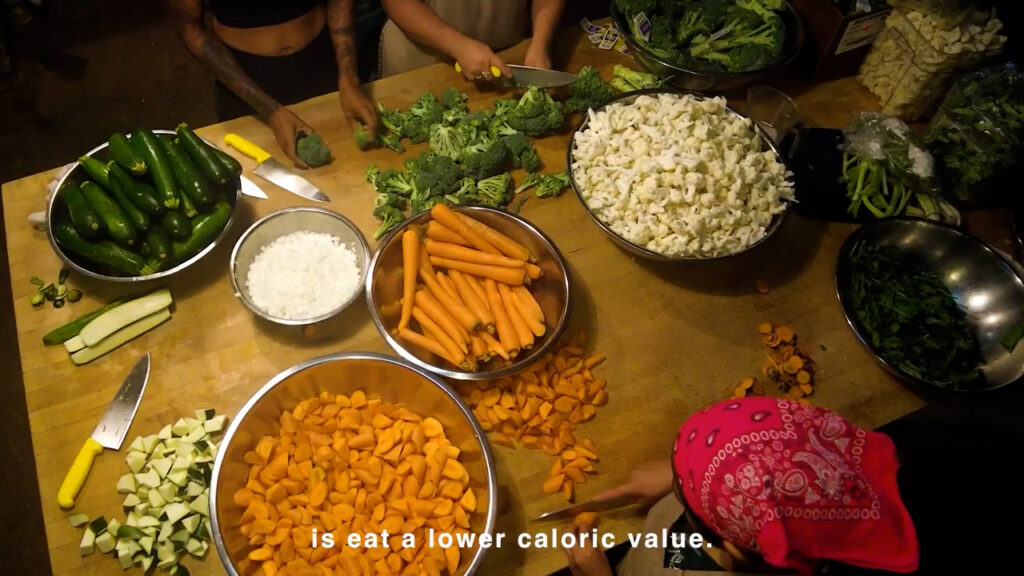
One of the most striking parts of Wayo’s story is the distance between his earlier life and the values he now describes.
He told me that he had not eaten animal foods for around 40 years. Before that change, he had managed a large cattle operation. He recalled working on a ranch of approximately 100,000 acres with 8,000 mother cows, and described a past in which he was directly involved in the killing of cattle.
He now sees that earlier life as a period of disconnection.
“I was totally occluded and disconnected,” he said, reflecting on his past. “And on the contrary, this is a place of connection.”
His account is not simply a conversion story about changing a diet. It is an account of changing how he understands his relationship with other living beings.
Wayo told me that he feels he has become more vegan each year, despite having avoided animal foods for decades. For him, veganism is not a fixed identity reached once and for all. It is an evolving awareness of the relationship between personal choices, animals and the wider world.
He spoke about seeing a cow as no less deserving of consideration than a dog. He also made clear that Casa de Luz maintains a firm boundary around the food it serves: no meat, eggs or dairy.
At the same time, he described the centre’s wider philosophy as resistant to dogma. The community continues to discuss its practices and remains open to doing things differently where it can.
That combination is revealing. A place can maintain a clear ethical commitment without assuming that every other aspect of its operation is beyond question.
For Wayo, becoming more connected has helped him understand how he wants to live. His account offers a personal perspective on veganism as an ongoing process of ethical reflection, not simply a decision about what to order for dinner.
Wellness Is Also a Question of Environment
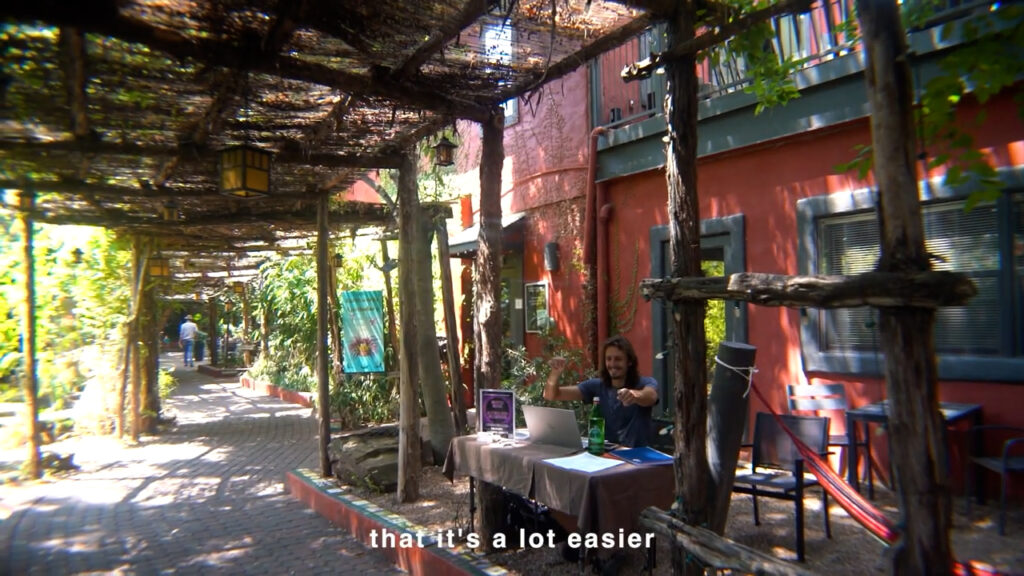
Wayo repeatedly returned to the importance of the environment in shaping behaviour.
He used the example of someone who wants to begin jogging but whose friends are not interested in exercise. The individual may have a strong intention, but their social circumstances do not necessarily support it. He sees a similar difficulty for someone trying to change their diet while their usual social activities revolve around foods and habits they are attempting to leave behind.
“The first thing is start hanging out with people that are already doing it,” he advised. “It really makes it easy. Doing it by yourself. Difficult.”
It is a practical observation about the relationship between individual decisions and the people around us. A change in eating habits may require new ingredients, unfamiliar cooking methods and a different approach to social occasions. If those changes are treated as a private struggle, maintaining them can be difficult.
A community food space offers another possibility. It gives people somewhere to go where the food is already part of the routine and where they can spend time with others who understand the choice.
Wayo described this as a relationship between nature and nurture. Our lives are shaped by our inherited characteristics, but also by the environments in which we spend our time.
At Casa de Luz, that environment includes the meals, the kitchen, the communal tables and the people who return day after day.
The centre does not claim to replace medical care, and personal accounts of feeling better are not proof that a particular diet can cure disease. Wayo spoke openly about people who arrive with serious illnesses and about individuals whose experiences he regards as remarkable. Those stories help explain his commitment, but they should be understood as his observations rather than established clinical evidence.
What is clear from the interview is that he believes social support matters. Casa de Luz provides an opportunity for people to practise a different way of eating without having to create the entire environment around themselves.
A Place That Keeps Evolving
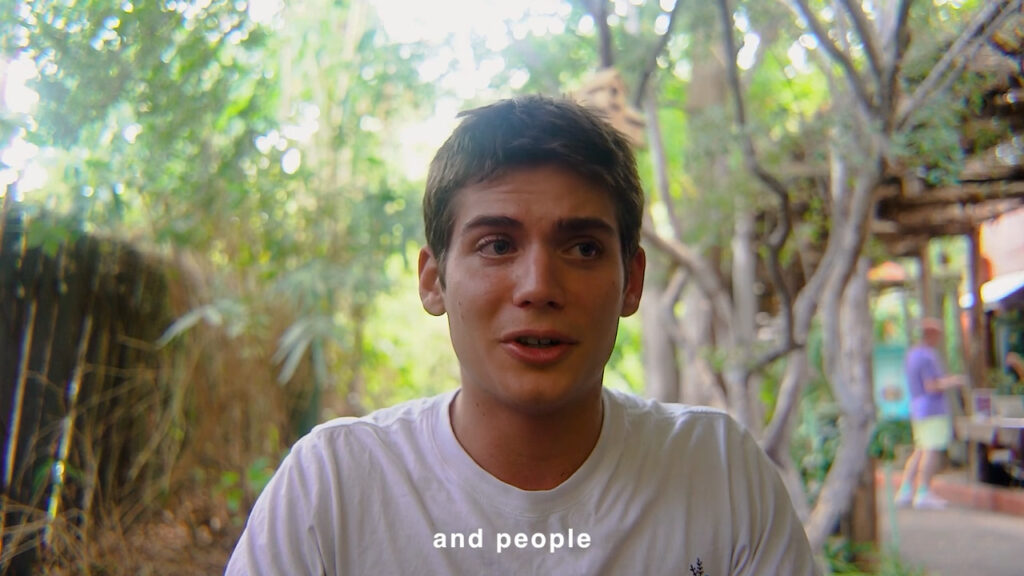
Despite its longstanding principles, Casa de Luz is not presented as a project with a fixed endpoint.
Wayo explained that decisions about the centre’s direction emerge through discussion. When a question arises, people bring it to the tables, where whoever happens to be present can contribute to the conversation.
“We live in the question and not the answer,” he said.
The phrase captures his resistance to the idea that one person should own the vision or dictate every decision. Although he has been involved since the early days and often acts as a spokesperson, he said his role is to keep what he called “the center of the wheel empty.”
In other words, the centre should not belong to one personality. It belongs to the people who participate in it, including newcomers.
Wayo gave the example of Casa de Luz’s cookbook, which he said was largely developed through conversations at the tables. People contributed ideas, someone recorded them, and the collective discussion became a resource that could be used by others.
The process is an extension of the same principle that governs the meals. Participation is not limited to showing up and being served. People can contribute to the culture and direction of the place.
It also explains why Wayo resists the idea of a single founder being treated as the sole author of Casa de Luz. His involvement matters, but he does not want it to eclipse the wider community.
That is a meaningful distinction in a culture that often celebrates individual entrepreneurs as the central figures in a successful venture. Casa de Luz’s story is instead one of accumulated participation: a place shaped by the people who keep returning to it.
The City Around the Table
Casa de Luz’s location also informs Wayo’s thinking about the future of community spaces.
He described the area around the centre as having changed significantly since the organisation arrived. What was once a neglected part of Austin has developed, with new housing and more people living within walking distance.
He pointed to a nearby apartment development and argued that dense urban neighbourhoods need places where residents can gather without having to organise a special trip.
His concern about parking and car-dependent development reflects a broader question in urban design: whether neighbourhoods are organised to bring people into contact or to move them past one another as efficiently as possible.
Wayo believes that streets and cars can create separation. He wants more people to be able to walk to a place where they can eat, meet neighbours and participate in community life.
The idea connects Casa de Luz to a wider conversation about walkable neighbourhoods and the role of shared public and community spaces. A city is not made liveable by buildings alone. It also depends on the opportunities residents have to encounter one another in ordinary life.
For Wayo, a community food space can be part of that infrastructure.
His vision is straightforward: dense urban neighbourhoods should have places where people can gather regularly, eat together and develop relationships. The model is not limited to Austin, although each community would need to adapt it to local conditions and resources.
Could Another Town Build Its Own Casa de Luz?
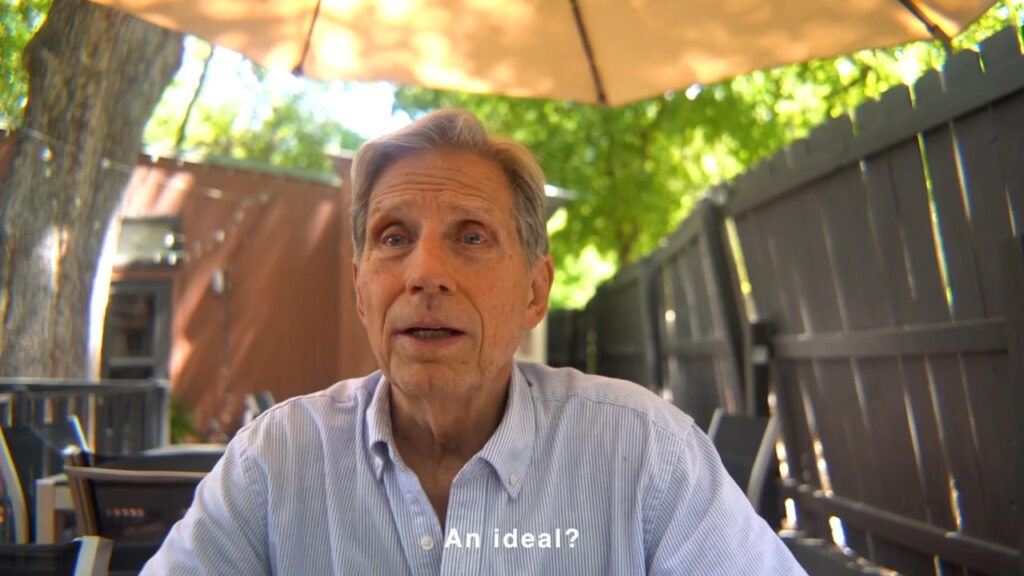
Wayo believes the model can be adapted elsewhere, and he has a direct invitation for people who are interested.
“Get health minded people. Community minded people, come to Austin. See how this one runs, and we’ll teach you everything we know,” he told me.
He also advised people to start small. A community does not necessarily need a dedicated building, a large investment or an elaborate organisation to begin sharing meals. It could start in someone’s home, with a group of people who want to cook and eat together.
“Make it noncommercial,” he said.
That does not mean pretending that food and labour cost nothing. Casa de Luz has to pay for ingredients and the people who keep the centre running. Rather, Wayo wants the commercial transaction to remain secondary to the community purpose.
The practical lesson is that a shared food culture can begin with participation rather than infrastructure. A group of people can start by cooking together, learning what works and creating a reason to meet regularly. A larger space may develop later, if the community needs it.
Nor does Wayo expect every version to look exactly like Casa de Luz. Food availability, local culture, climate and community needs will shape what is possible in different places.
That flexibility is important. The point is not to export a single menu or aesthetic. It is to explore the principles that have allowed this community to endure: shared food, open participation, collective decision-making and a space where people can keep returning.
Who Are We Going to Have Dinner With?
At the end of our conversation, I kept returning to the relationship between food and connection.
Wayo spoke about the importance of knowing where food comes from, staying connected to nature and spending time with other people. He invoked the permaculture thinker Bill Mollison while discussing the distance that can develop between people and the food they eat. His concern is that modern life can make it easy to lose sight of those relationships.
He described a different way of approaching dinner. Instead of asking only what people are going to eat, he suggested asking who they are going to eat with.
It is a small shift in emphasis, but it changes the question. The meal is no longer just an item to select, prepare or consume. It becomes an occasion for being together.
This is where Casa de Luz’s approach to plant-based food becomes more than a dietary philosophy. The food is the shared foundation, but the community is what gives the daily practice its wider meaning.
Wayo’s life has taken him from ranching and other commercial ventures to a place where he measures the value of his work through the relationships and sense of purpose he finds there. His story is personal, but the questions it raises are widely relevant.
Can a food space make it easier for people to adopt new habits? Can it offer a place for people who might otherwise eat alone? Can the preparation of food become a form of participation rather than a service delivered across a counter? And can the people who sustain a community have a genuine voice in how it develops?
Casa de Luz does not offer a universal answer to those questions. It offers an example that has been sustained through years of shared meals and collective effort.
When I think back on the time I spent documenting the centre, what stands out is not a claim that food can solve every problem. It is the quieter possibility that a place organised around food can help people become less isolated, more willing to listen and more connected to the everyday work of living together.
The meal is only the beginning.
For more information, visit Casa de Luz’s official website.