Destinations › Asia · The Destination Index · universal template · every figure sourced
Philippines.
Southeastern Asia, archipelago between the Philippine Sea and the South China Sea, east of Vietnam. 300,000 sq km and 116,786,962 people, 36,289 km of coastline, tropical marine; northeast monsoon (November to April); southwest monsoon (May to October).
Region · AsiaPopulation · ~116,786,962Languages · Tagalog and Filipino, Cebuano, Ilocano, Hiligaynon, Bikol, Waray. English is co-officialEco Index · 57/100 · Weak
The Eco Index across 12 pillars · scored 0 to 5 · World Bank, OWID, WHO/UNICEF JMP, FiBL, Protected Planet, IUCN, UNESCO (2023-24)
Water
Food & farming
Plant-based
Organic
Conservation
Wildlife
Materials
Pollution
Recycling
Energy
Culture
Heritage
The History of the Philippines.
The Philippines holds diverse living heritage, and UNESCO recognises the Hudhud chants of the Ifugao, the Darangen epic of the Maranao, the Buklog ritual of the Subanen, Aklan piña weaving and Asin Tibuok salt making on Bohol. Kulintang music, played mostly on metal instruments, is an ancient heritage shared by many cultures, mainly in the southern Philippines.
Where the name comes from
The country's name derives from Las Islas Filipinas, first given to Spain's original possessions in the archipelago and named for the Spanish king Philip II, according to the UK Permanent Committee on Geographical Names.
The land itself: mountainous across the islands, with coastal lowlands from narrow to extensive. Its high point is Mount Apo, 2,954 m. Source: UK Permanent Committee on Geographical Names toponymic factfile.
Where it starts
A human species of its own
Butchered rhinoceros bones and stone tools at Kalinga in Luzon show that hominins were active in these islands by about 709,000 years ago. A foot bone from Callao Cave, dated to about 67,000 years ago, was found in the same layer as fossils of Homo luzonensis, a human species new to science. All the human remains from Tabon Cave on Palawan are modern humans, with a frontal bone dated to about 16,500 years ago and older dates for other bones. Pottery-making people were living in the Batanes Islands, north of Luzon, by 2000 BC.
How it got here
Copperplate to independence
The Laguna copperplate, from the tenth century, is one of very few written documents from the Philippines before Spanish rule, and its Indic script and Old Malay language tie Luzon to the wider maritime world. By 1500 Islam was established in the Sulu Archipelago and was spreading to Mindanao. Permanent Spanish settlement began at Cebu in 1565, and six years later Manila became the Spanish capital. Spain lost the islands to the United States in 1898, the Philippine-American War followed, and the Republic of the Philippines became independent on 4 July 1946.
The timeline
c. 709,000 years ago
Kalinga.
Stone tools and a butchered rhinoceros skeleton at Kalinga in northern Luzon show that hominins were active in the islands by about 709,000 years ago. ↗
c. 67,000 years ago
Callao Cave.
A foot bone from Callao Cave, dated to 67,000 years ago, is the earliest direct evidence of humans in the islands. Fossils from the same layer belong to Homo luzonensis, a species new to science. ↗
c. 58,000 to 16,500 years ago
Tabon Cave.
All the human remains from Tabon Cave on Palawan are modern humans. A frontal bone dates to about 16,500 years ago, and dates on a jaw fragment and a shin bone run from about 24,000 to 58,000 years ago, the oldest to be treated with caution. ↗
c. 2000 BC onward
Pottery makers reach Batanes.
People making pottery are living in the Batanes Islands, north of Luzon, by 2000 BC, and nephrite and slate from Taiwan reach the islands over the following centuries. ↗
10th century
The Laguna copperplate.
The Laguna Copperplate Inscription, a record of a debt being cleared, is one of very few written documents from the Philippines before Spanish rule. Its Indic script and Old Malay language tie Luzon to the wider maritime world of Southeast Asia. ↗
1898 to 1946
United States rule.
Spain loses the islands at the end of the Spanish-American War in 1898, and the Philippine-American War follows from 1899 to 1902. ↗
1946
Independence.
The Treaty of General Relations, signed at Manila on 4 July 1946, provides for "the recognition of the independence of the Republic of the Philippines as of July 4, 1946 and the relinquishment of American sovereignty over the Philippine Islands". ↗
Terrestrial protected areas cover about 16.0 percent of the land and formal marine protection remains low at about 1.6 percent (World Bank, 2025), and the country runs thousands of small community marine sanctuaries plus flagship sites such as Apo Island and the UNESCO listed Tubbataha Reefs. Enforcement is uneven, with illegal fishing and logging persisting, but the best run marine protected areas are genuinely effective.
Is wild Philippines protected? 16% of the land is, against a 30% target for 2030
How protected is nature in Philippines?
Forest cover24.8%
Terrestrial protected area15.87%
Marine protected area1.6%
1179 (mammals, birds, fish & plants) listed as threatened.
Found only here. Philippine eagle, Philippine tarsier, Palawan and Visayan endemics
The watchlist
ThreatenedSus cebifronsCritically Endangered on the IUCN Red List, and recorded in Philippines in GBIF occurrence data (mammal).
ThreatenedChinese Crested Tern (Thalasseus bernsteini)Critically Endangered on the IUCN Red List, and recorded in Philippines in GBIF occurrence data (bird).
ThreatenedHawksbill (Eretmochelys imbricata)Critically Endangered on the IUCN Red List, and recorded in Philippines in GBIF occurrence data (turtle).
ThreatenedGiant clam (Tridacna gigas)Critically Endangered on the IUCN Red List, and recorded in Philippines in GBIF occurrence data (species).
ThreatenedSpoonbill Sandpiper (Calidris pygmaea)Critically Endangered on the IUCN Red List, and recorded in Philippines in GBIF occurrence data (bird).
ThreatenedSteere's Coucal (Centropus steerii)Critically Endangered on the IUCN Red List, and recorded in Philippines in GBIF occurrence data (bird).
ThreatenedPhilippine Cockatoo (Cacatua haematuropygia)Critically Endangered on the IUCN Red List, and recorded in Philippines in GBIF occurrence data (bird).
Critically Endangered, the last IUCN category before Extinct in the Wild, and still recorded in Philippines. GBIF holds 14 verified occurrence records.
Chinese Crested Tern (Thalasseus bernsteini)
Critically Endangered, the last IUCN category before Extinct in the Wild, and still recorded in Philippines. GBIF holds 65 verified occurrence records.
Hawksbill (Eretmochelys imbricata)
Critically Endangered, the last IUCN category before Extinct in the Wild, and still recorded in Philippines. GBIF holds 152 verified occurrence records.
Giant clam (Tridacna gigas)
Critically Endangered, the last IUCN category before Extinct in the Wild, and still recorded in Philippines. GBIF holds 22 verified occurrence records.
Species named here are drawn from GBIF occurrence records for Philippines filtered to the IUCN Red List threatened categories. Species are listed where GBIF holds occurrence records for them in this country. Record counts are not published here because the figure cannot be reproduced from a public GBIF query.
Nature reserve in Siquijor, mapped and named in the open record for Philippines. OpenStreetMap.
Water and Ocean in the Philippines.
High rainfall and many rivers give the Philippines ample raw freshwater, but delivery and quality lag: WHO/UNICEF JMP and World Bank data put safely managed drinking water at about 47.5 percent of the population in 2020, and Metro Manila and other cities face seasonal supply stress and contamination. Typhoons disrupt supply, and tap water is not reliably safe for visitors. Abundant rain, uneven safe delivery.
Does the Philippines have enough fresh water? Yes, with headroom
48.5% of people here have safely managed drinking water at home (2024, WHO/UNICEF JMP). Coverage is well short of universal, so a visitor should not assume the tap is safe.
Cleanest water: Tubbataha Reefs, El Nido and Coron's Kayangan Lake in Palawan; Apo Island
How much fresh water does the Philippines have, per person?
4,203 m³
Philippines
1,000 m³
the UN “water scarce” line
Philippines withdraws about 91,037 million cubic metres of fresh water a year (2022). That is 27.8% of the fresh water actually available to it, which FAO counts as medium water stress. Of what is taken, farming takes 75%, homes and towns 10%, industry 15%. Source: FAO AQUASTAT.
What are the rules on Philippines beaches?
✕Tap water: Not drinkable.
✕Plastic rules: No comprehensive national ban; 2022 Extended Producer Responsibility Act and many local bag bans.
✕Solo travel: rated take care on the record for this destination.
✕Marine protection: 1.74% of the sea is protected. The 30x30 pledge for 2030 is not met yet.
Named on the open map: Balogo Beach, Baranayan Beach, Buko Beach, Cabrera Beach, Cainget Beach, Cambonga Beach, Capati Beach, Casay Beach Park. That is 14 named beaches in the public record for Philippines, each one a place you can look up before you go. OpenStreetMap.
Where does the sewage go?
62.2%
of people have safely managed sanitation
62.2% of people here use a safely managed sanitation service, meaning waste is contained, emptied and treated rather than reaching the ground or the sea untreated (2024, World Bank / WHO-UNICEF JMP, SDG 6.2.1). The rest is what the rivers and the coast receive.
How is the sea around Philippines doing?
One cross-section, every answer measured.
Surface
What the coast carries
Typhoon season Jun–Nov; the dry season Dec–May is the window.
Nearshore
Protected water
1.6% of territorial waters are protected, against the 30% pledged for 2030 under the Global Biodiversity Framework.
Cleanest
Where the water is cleanest
Tubbataha Reefs, El Nido and Coron's Kayangan Lake in Palawan; Apo Island.
The record
Measured
High rainfall and many rivers give the Philippines ample raw freshwater, but delivery and quality lag: WHO/UNICEF JMP and World Bank data put safely managed drinking water at about 47.5 percent of the population in 2020, and Metro Manila and other cities face seasonal supply stress and contamination. Typhoons disrupt supply, and tap water is not reliably safe for visitors.
Philippines scored 65 out of 100 on the Ocean Health Index in its 2025 assessment, below the global average of 72, and ranked 174th of 220 coastal regions. The index team says it is no longer updating scores, so the 2025 figures may be the last.
Sea protected
1.6%
Against the 30% pledged for 2030 under the Global Biodiversity Framework.
Threatened species
1179 (mammals, birds, fish & plants)
Mammals, birds, fish and higher plants on the IUCN list.
Is the tap water safe in Philippines?
48.5% of people have safely managed drinking water at home (2024, WHO/UNICEF JMP). Renewable fresh water works out at about 4,203 cubic metres per person a year (World Bank).
How hard is the water supply being pushed?
Of every 10 buckets nature refills, 3 are already taken. Withdrawals run at 27.8% of what the Philippines renews internally each year (2022, World Bank / FAO AQUASTAT). That is past the 25% mark generally treated as water stress, so the supply is being pushed towards its limit.
When is the best time to visit Philippines? Tap your month.
Tap your month.
JanFebMarAprMayJunJulAugSepOctNovDec
.
How much fresh water does Philippines actually have?
Nature renews about 4,203 cubic metres of fresh water per person per year here. That ranks the Philippines 129 of 208 countries measured, putting it in the wetter half of the world. The UN treats anything under 1,000 cubic metres as water scarce, and this is above that line. World Bank / FAO AQUASTAT.
The Philippines grows sugarcane, rice, coconuts, maize, bananas, vegetables and tropical fruit in large amounts, yet in January 2024 the US Department of Agriculture projected it would stay the world's largest rice importer. Food made up about 15% of the country's merchandise imports in 2024.
Where does the food in Philippines come from?
15.0% imported
about US$21,193m a year
On the plate: Rice, coconut, root crops, tropical fruit and vegetables
2 of 10
bites are imported
Philippines buys in more food energy than it eats. About US$21,193m a year leaves the country to pay for it. The green slice is roughly what still grows here.
About 15% of everything the Philippines buys in from abroad is food, roughly 2 in every 10 imported items on the dock (2024, World Bank). Farming itself is 8.6% of the economy and 42.7% of the land is agricultural, of which 18.7% is arable. The green slice is roughly what still grows here.
What is killing people in the Philippines? The imported diet.
Cause of death, and the diet behind it.
Non-communicable diseases, all combined68.5%
Diabetes7.5%
There is no national count. At the diabetic foot clinic of East Avenue Medical Center in Quezon City, a study of 216 patients with Type 2 diabetes and foot ulcers, published in 2021, found that 11 per cent ended in a major amputation and 21.5 per cent in a minor one. Source: Journal of the ASEAN Federation of Endocrine Societies.
Adults living with overweight or obesity. 35%.
Can the Philippines feed itself?
18.8%
Arable land
42.7%
Agricultural land
10,695,525
Farmers
13,813,170
Arable acres
8.6%
Agriculture, share of GDP
Harvest: Two rice harvests (main October to December, second March to May); mango season March to June
Feeding itself
The Philippines is a major farming and fishing nation, the world's top exporter of coconut products and a big producer of banana, sugarcane, rice and tropical fruit, yet it is also the world's largest rice importer and buys in significant food. Domestic agriculture is large but staple self sufficiency is only moderate.
Certification
FiBL records about 1.5 percent of agricultural land as certified organic in 2020, roughly 192,000 hectares, supported by the Organic Agriculture Act and a growing organic rice, muscovado and coconut sector.
Water for crops
High rainfall and many rivers give the Philippines ample raw freshwater, but delivery and quality lag: WHO/UNICEF JMP and World Bank data put safely managed drinking water at about 47.5 percent of the population in 2020, and Metro Manila and other cities face seasonal supply stress and contamination. Typhoons disrupt supply, and tap water is not reliably safe for visitors.
Why the organic number looks like that. Certification covers only part of what is grown cleanly, so a small certified share is a gap in the paperwork rather than proof that nothing is. What the official land record does show: 42.7% of the country is agricultural land and 18.7% is arable (2023, World Bank). Certification is paid for per farm per year by a foreign body, which prices out smallholders, so the organic number reads worse than the practice.
The plant-based kitchen here is not an import. By tonnage, the largest crops grown in Philippines are rice, sugarcane, coconuts, maize and bananas (FAO, FAOSTAT crop production, 2024). That is what the land itself puts on a plate.
Buy direct where residents buy: Abucay Market, Bendita Public Market, Bonifacio Market, Bugallon Public Market, Cartimar Market, Citra Mina Seafood Market. Each is a mapped, named marketplace, so the money stays with the seller rather than the importer. OpenStreetMap.
Not yet checked by us. Plant based kitchens listed publicly: Cosmic, vegan restaurant in Poblacion, Makati: Filipino style dishes, tempura, lasagne and desserts; Greens, vegan restaurant on Scout Lozano Street in Quezon City: mock meats, pasta, veggie burgers and Filipino dishes, with weekday lunch combos; Veggie Guys, vegan restaurant in Teachers Village, Quezon City: pasta, salads and Filipino dishes such as tofu sisig; The Vegetarian Kitchen, vegan kitchen on Mother Ignacia Avenue in Quezon City: Filipino vegan dishes, takeaway and catering; Indulge, vegan restaurant in Malingap, Quezon City: pizza, pasta, sandwiches and rice meals. Tell us how they are.
The Philippine grid remains dominated by coal, which supplied about 62% of electricity in 2024, while renewables, mainly geothermal, hydropower, solar and wind, provided roughly 22%. Fossil carbon dioxide emissions are very low at around 1.51 tonnes per person in 2024, reflecting widespread energy poverty rather than a clean system. The government placed a moratorium on new coal plants in 2020 and targets 35% renewable electricity by 2030 and 50% by 2040 under the Renewable Energy Act. The very low per person emissions are balanced against a heavily coal reliant grid.
What powers the Philippines?
Renewable 23.3%Fossil 76.7%
The National Grid Corporation of the Philippines (NGCP), a private company, has run the transmission grid since 2009 under a 50 year franchise granted by Republic Act 9511. State Grid Corporation of China owns 40 per cent of NGCP and Filipino shareholders the other 60 per cent. In June 2022 the Energy Regulatory Commission (ERC) ruled that NGCP had met the law's requirement to offer shares to the public, through the stock market listing of Synergy Grid & Development Philippines, which holds 40.2 per cent of NGCP indirectly. In May 2023 senators said the ERC had not audited NGCP and that at least 71 of its projects were delayed, and the chair of the Senate energy committee warned the franchise could be revoked if violations were found.
Climate pollution per person
The safe amount, what the planet can absorb
2 tonnes
One person here
1.5 tonnes
The world average, for comparison
4.7 tonnes
The worst it ever got
1.5 tonnes
The grid
The Philippine grid remains dominated by coal, which supplied about 62% of electricity in 2024, while renewables, mainly geothermal, hydropower, solar and wind, provided roughly 22%. Fossil carbon dioxide emissions are very low at around 1.51 tonnes per person in 2024, reflecting widespread energy poverty rather than a clean system.
Pollution
The Philippines is repeatedly ranked among the world's largest contributors of plastic to the ocean, driven by a sachet economy and gaps in waste collection (Jambeck and later studies). The 2022 Extended Producer Responsibility Act and many local bag bans are steps forward, but there is no comprehensive national single use ban and marine plastic remains severe.
Water stress
High rainfall and many rivers give the Philippines ample raw freshwater, but delivery and quality lag: WHO/UNICEF JMP and World Bank data put safely managed drinking water at about 47.5 percent of the population in 2020, and Metro Manila and other cities face seasonal supply stress and contamination. Typhoons disrupt supply, and tap water is not reliably safe for visitors.
What pollutes most here
1The gridThe share of electricity still generated from fossil fuel.76%
2IndustryLarge scale nickel mining, for example on Sibuyan and in Palawan, and destructive fishing.named
3AirModelled annual mean against a WHO guideline of 5 µg/m³.18.1
4On the recordThe Philippines is repeatedly ranked among the world's largest contributors of plastic to the ocean, driven by a sachet economy and gaps in waste collection (Jambeck and later studies).
What has the Philippines promised on climate?
Electricity renewable today22.6% (2021)
Land protected, against a 30% target16% by 2025
Sea protected, against a 30% target1.6% by 2025
Measured on delivery, 22.6% of electricity is already renewable (2021, World Bank), so 77.4% of the grid is still to be converted. The pledge on file is measured here against what has actually been delivered, not taken on its own (UNFCCC NDC Registry, CBD Kunming-Montreal Target 3).
The biggest line item
One return flight against a whole year of living.
A resident's entire year1.5 t CO2e
Safe-climate budget, per year2 t CO2e
New York return, economy2.47 t CO2e
Los Angeles return, economy2.12 t CO2e
Johannesburg return, economy1.98 t CO2e
London return, economy1.94 t CO2e
Paris return, economy1.93 t CO2e
How much CO2 does flying to the Philippines emit?
Tap where you would fly from. One return flight, economy.
New YorkLos AngelesJohannesburgLondonParis
.
Firsts on climate finance. In November 2019 the World Bank issued catastrophe bonds for the Philippines over three years: a US$75 million tranche against earthquakes and a US$150 million tranche against typhoons. The Department of Finance calls it the first cat bond for any Asian sovereign and the first cat bond listed on any Asian exchange, the Singapore Exchange. The Philippines pays the risk premium part of the coupon. In January 2022 Typhoon Odette (Rai) reached the partial trigger for wind, and the bond paid the government US$52.5 million.
Every prompt runs on a machine in a building on somebody’s grid. What that costs the planet depends less on the prompt than on what is burning to power it. Here is what would power one in the Philippines.
Data centres
24
Registered colocation and interconnection facilities, PeeringDB, 2026
Grid renewable
23.3 %
What a machine here runs on.
What powers a data centre in the Philippines?
Almost everything a machine here consumes is burned fossil fuel.
Renewable 23.3%Fossil 76.7%
Cooling water. Every one of those halls runs on the national grid, which is 22.6% renewable today (World Bank). A data centre is only as clean as the electricity behind it, so the same figure that decides this country's climate score also decides the footprint of the AI running inside it. Cooling water use is not separately published by facility, and no operator here reports it.
The rules. Philippines has 24 colocation and interconnection facilities on the public PeeringDB register, concentrated in Makati (5), Quezon City (3), Davao (3), alongside 15 internet exchanges (BAYANTEL, GIX, PhOpenIX-Manila, GetaFIX Manila). Named sites include VITRO Makati 1 - Yuchengco Tower, VITRO Makati 2, VITRO Pasig, Equinix MN1 - Manila.
Where the cables land. 71 landing points · Allen, Baclayon, Bacolod, Bacong
93% residents to 7% visitors across a year. 8,261,000 international arrivals in 2019 against 116,786,962 people who live here (2025, World Bank / UN Tourism).
Where a visitor dollar goes in Philippines
1,483k
Visitors a year
0.0
Visitors per resident
How deep in debt is the Philippines?· for every $100 the Philippines earns in a year, it owes…
Pay to the order of: the creditorsmemo · the 1993 peak
$ 74The worst year on the IMF record. The Philippines owed $74 for every $100 it earned.
IMF World Economic Outlook, 1993signed, the creditors
Pay to the order of: the creditorsmemo · today
$ 60What is owed now, for every $100 of national income (2026).
IMF World Economic Outlook, 2026signed, the creditors
Pay to the order of: the creditorsmemo · projected 2031
$ 55The IMF's own forecast has this falling to $55 by 2031.
IMF World Economic Outlook projection, 2031signed, the forecast
For every $100 the Philippines earns in a year, it owes $60 (2026, IMF World Economic Outlook). The interest on that is paid before schools, clinics or coastline get their turn.
Where does a tourist dollar actually go in the Philippines?
Play one tourist dollar around the board. Every square is a measured fact from this page.
START!
1
GO: a visitor lands
$100 goes on the table. 8,261,000 international arrivals in 2019 against 116,786,962 residents, one visitor a year for every 14 residents (World Bank / UN Tourism).
$100 in play
2
The bed
Who owns the largest places to stay in the Philippines is not published in the records we can check, so this square is left open rather than guessed. Where a listing names its owner, it is shown in the ownership table below.
not published
3
The plate
Food is 15% of everything the Philippines imports (2024, World Bank), so a large part of every restaurant bill is paid to a supplier abroad. Eating what the land here actually grows, sugarcane, rice, coconuts, maize, bananas, vegetables, tropical fruits, plantains, pineapples, cassava, keeps that money with the grower.
sails in
4
The power
77.4% of the electricity is fossil (2021, World Bank). Lighting, cooling and hot water are paid for largely in imported fuel.
burns away
5
What actually stays
Of the two parts of a visitor's bill that can be measured here, the plate and the power mostly leave the Philippines. Choosing locally grown food is the part of that a visitor can actually control.
less than you think
6
Pay the bank first
The Philippines owes $60 for every $100 it earns (IMF World Economic Outlook, 2026 projection). The interest is paid before anything else on this board.
$60 per $100
7
Community chest
Tourism earns 3.5% of everything the Philippines makes from exports (2020, World Bank / UN Tourism). That is how much of the economy depends on the game continuing.
3.5% of exports
8
The flight
Getting here is usually the biggest single line on the bill. From New York a return economy seat is 2.47 t CO2, on the UK Government's published conversion factors. It is the one part of the trip this board cannot reduce.
2.47 t CO2
9
Back to GO
The economy turns over about US$512 billion a year (IMF World Economic Outlook, 2026 projection). Every lap of this board is a choice about how much of it stays.
US$512bn
GDPUS$487.1bn
Agriculture, share of GDP8.6%
Visitors a year1,483,000
Visitors per resident0
Residents~116,786,962
Agriculture
Farming is 8.6% of the economy. The Philippines is a major farming and fishing nation, the world's top exporter of coconut products and a big producer of banana, sugarcane, rice and tropical fruit, yet it is also the world's largest rice importer and buys in significant food.
Natural materials
The archipelago is a global source of native plant fibres: abaca (Manila hemp), pina woven from pineapple leaves for the barong tagalog, banana fibre, and the sacred abaca ikat t'nalak woven by T'boli communities, alongside pandan and buri weaving. These fibres are cultivated, woven and worn today.
Energy
The Philippine grid remains dominated by coal, which supplied about 62% of electricity in 2024, while renewables, mainly geothermal, hydropower, solar and wind, provided roughly 22%. Fossil carbon dioxide emissions are very low at around 1.51 tonnes per person in 2024, reflecting widespread energy poverty rather than a clean system.
Who owns the biggest hotels in the Philippines?
By rooms · company records and press.
Dianao Beach Club · ~10 roomsIndependentnot published
Visitors, over time
20155,361k
20165,967k
20176,621k
20187,168k
20198,261k
20201,483k
International tourism receipts run at about US$2.77 billion in 2020 (World Bank / UN Tourism). That is 3.5% of everything the country earns from exports.
How much of your money actually stays here?
Tap the holiday you are planning.
All-inclusive resortForeign-owned hotel and tourist restaurantsLocally owned stay and local restaurantsGuesthouse, markets and public transport
Resort guest, villa renter, family, nomad or backpacker. The honest playbook for each, from the same sourced numbers.
Already booked a resort? · the rescue list
Practical swaps that keep more of your money in the local economy
1. Eat where the country eats Choose kitchens cooking what the land here grows, sugarcane, rice, coconuts, maize, bananas, vegetables, tropical fruits, plantains, pineapples and cassava, over an imported menu.
2. Book with a local operator Never the lobby desk. The margin on a tour is the part that stays.
3. Stay somewhere locally owned Ownership decides where the room rate books. Eco stays →
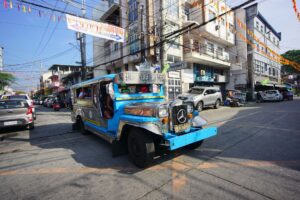
4. Use the transport residents use Domestic flights for island hopping; jeepneys and tricycles in towns; ferries and outrigger bangka boats between islands
5. Buy the craft, not the souvenir Natural-materials work made here pays the maker directly; imported gifts pay a shipping line.
swipe →
First time here
The Philippines is a 7,000 island biodiversity hotspot with exceptional endemism and living fibre and terrace farming traditions, but also serious plastic pollution and low safe water coverage.
Best time: Dry season for island hopping, before the typhoon months
Getting around
Domestic flights for island hopping; jeepneys and tricycles in towns; ferries and outrigger bangka boats between islands
Transport is where the fare either stays or leaves.
Eating here
The everyday plate that actually grows here is sugarcane, rice, coconuts, maize, bananas, vegetables, tropical fruits, plantains, pineapples and cassava. Ordering those keeps the money with the grower and cuts the imported share of the meal.
Eating what the country grows is the cheapest way to cut the import bill.
Good to know
Cash widely used; PHP. English is spoken widely.
Rate my hotel. Tap yours for the honest verdict.
Ownership from company records and press.
Dianao Beach Club
.
Who owns the place to stay
Dianao Beach ClubIndependent · 10 rooms
The one property listed here does not publish who ultimately owns it, so no claim is made either way. Ownership is what decides how much of a room rate stays in the country, which is why we show it when a listing states it.
Society and Governance in the Philippines.
How well is the Philippines actually run?
Governance, measured · World Bank WGI
Four measured answers, none of them opinion. Averaged across corruption control, delivery and accountability, the Philippines scores 47 out of 100 (2024, World Bank Worldwide Governance Indicators). That matters here because every pledge on this page is only as good as the machinery meant to deliver it.
How well is Philippines run? · each scored out of 100, higher is better
Clean government, scored 36 of 100
Control of corruption scores 36.2 out of 100 (2024, World Bank Worldwide Governance Indicators). That is below the halfway mark of governments measured.
36
Freedom and rights, scored 53 of 100
Voice and accountability, which measures free expression, free media and the ability to choose a government, scores 53.0 out of 100 (2025, World Bank WGI). Citizens have some room to question their government.
53
Government effectiveness, scored 56 of 100
Government effectiveness, which measures the quality of public services and how well policy is actually delivered, scores 56.3 out of 100 (2025, World Bank WGI). Delivery is rated above average.
56
Income equality, scored 39 of 100
The Gini index of income inequality reads 39.3 (2023, World Bank). Zero is perfect equality and 100 is one person holding everything. Below 40 is the level usually treated as manageable, and the Philippines sits inside it.
39
LGBTQ+ status: MixedSolo female travel: Take care98.5% adult literacyIndustry to avoid: Large scale nickel mining, for example on Sibuyan and in Palawan, and destructive fishing
What is daily life in Philippines really like? Measured
Getting around, breathing, throwing away, learning. The honest checklist.
TransportAirWaterWastePower
✓How you get around Domestic flights for island hopping; jeepneys and tricycles in towns; ferries and outrigger bangka boats between islands
✓Air quality, measured Modelled annual mean 18.1. The WHO guideline is 5 µg/m³.
✓Where the air is cleanest Batanes and the Cordillera highlands around Sagada
·Tap water Not drinkable
✓What to drink Bottled water; typhoon season changes drinking logistics on islands.
✓Plastic rules No comprehensive national ban; 2022 Extended Producer Responsibility Act and many local bag bans
✓Sockets and voltage Type A/B/C, 220V (varies)
98.5%
literacy. Public spending on education runs at 4.0% of GDP and 15.2% of all government spending, and secondary enrolment stands at 85.3% gross (UNESCO Institute for Statistics, 2024 to 2025).
Made in the Philippines.
The archipelago is a global source of native plant fibres: abaca (Manila hemp), pina woven from pineapple leaves for the barong tagalog, banana fibre, and the sacred abaca ikat t'nalak woven by T'boli communities, alongside pandan and buri weaving. These fibres are cultivated, woven and worn today. Every step of processing done at home is value that stops leaving the country.
What Philippines actually sells the world
Philippine Statistics Authority figures show the Philippines earned US$84.48 billion from goods exports in 2025, up 15.3 per cent on 2024, while it spent US$134.20 billion on imports, leaving a trade deficit of US$49.72 billion. Preliminary figures put 2025 export growth at the highest since the PSA series began in 1991. Electronic products are the biggest earner: in December 2025 they brought in US$4.04 billion, 57.8 per cent of all exports that month. The United States was the top market in 2025, buying US$13.46 billion of Philippine goods, with Hong Kong, Japan and China next in December.
Made now · natural materials
Pina woven from pineapple leaves for the barong tagalog
Worked in Philippines from local material, and still a working craft rather than a museum piece.
Made now · natural materials
Banana fibre
Worked in Philippines from local material, and still a working craft rather than a museum piece.
Made now · natural materials
T'nalak abaca ikat, woven by T'boli communities
Worked in Philippines from local material, and still a working craft rather than a museum piece.
Made now · natural materials
Alongside pandan
Worked in Philippines from local material, and still a working craft rather than a museum piece.
Could make · grown here already
Rice
Grown in Philippines and mostly sold raw. Processing it here would keep the margin here.
Could make · grown here already
Coconut
Grown in Philippines and mostly sold raw. Processing it here would keep the margin here.
Could make · grown here already
Root crops
Grown in Philippines and mostly sold raw. Processing it here would keep the margin here.
The maths for an entrepreneur. the Philippines produces about US$487 billion a year, which is roughly US$4,171 per person (2025, World Bank). Farming is 8.6% of that, while food is 15% of everything the country imports. The country buys in more food than its own farms contribute to the economy, and every point of that gap is a business someone could build here rather than ship in. With 18.7% of the land arable, the raw material for that is already in the ground.
The Darangen, the epic of the Maranao people of Lake Lanao, runs to 17 cycles and about 72,000 lines. Specialist singers chant it at weddings over several nights, sometimes with music and dance.
Buklog thanksgiving ritual
The Subanen hold Buklog to give thanks to the spirits, dancing on a raised wooden platform whose sound is believed to please them. UNESCO listed it for urgent safeguarding in 2019.
Kulintang gong musicKulintang music, played mainly in the southern Philippines and most often on metal instruments, is an ancient heritage shared by many cultures across the islands, among them the Maguindanaon and Maranao.
Does Philippines protect its heritage by law?
Partly, and the gaps say as much as the protections.
What is kept alive. The Philippines holds diverse living heritage across indigenous, Islamic and lowland communities. Folk dances such as tinikling, the bamboo dance, and the Maranao singkil are widely performed, alongside kulintang gong music and rondalla string ensembles. In the Cordillera the Ifugao still chant the Hudhud, and the Maranao keep the Darangen epic, both inscribed by UNESCO, while babaylan and anito ancestral traditions persist among many indigenous groups.
Who it belongs to. Living indigenous communities remain strong, above all the Ifugao who still farm the UNESCO listed rice terraces, long dated to 2,000 years ago although radiocarbon and archaeobotanical work now points to construction from about AD 1600, plus Cordillera, Lumad, Mangyan, T'boli and Palawan groups with intact crafts and traditions. Genuine community and homestay tourism exists in these areas, but much mainstream tourism is beach and resort based and more extractive, as the 2018 Boracay closure for overtourism showed.
Only here. The endemic Philippine eagle, one of the world's largest eagles, found only in the Philippines.
Three futures for the Philippines, every one run forward from measured data.
Where the making actually happens
Named cultural and craft sites on the open map: National Museum of Fine Arts (Manila), National Museum of the Philippines, Rizal (Binangonan), Ayala Museum (Makati), Metropolitan Museum of Manila (Manila), The Mind Museum (Taguig). OpenStreetMap. Named craft workshops on the open map: 5 Cents Up Fashion & Craft, 7J Handicrafts, Art Whale, Beadworks, Brownline Arts & Design, Butingting atbp..
Every measured trend on one line
Run forward at the pace already recorded.
-2%
Forest cover
1995: 25.3% → 2024: 24.8%
-39%
Renewable electricity
1995: 36.9% → 2021: 22.6%
+62%
CO2 per person
1995: 0.93 t → 2024: 1.5 t
-16%
Tourist arrivals
1995: 1,760k → 2020: 1,483k
+47%
Protected land
2013: 10.9% → 2025: 16%
-52%
Farm workforce
1995: 42.8% → 2025: 20.5%
+60%
Protected sea
2013: 1% → 2025: 1.6%
+16%
Agricultural land
1995: 36.8% → 2024: 42.7%
+49%
Urban population
1995: 37.4% → 2025: 55.8%
-38%
Air pollution
1995: 35.7 µg/m³ → 2023: 22.2 µg/m³
-38%
Fresh water per person
1995: 6,790 m³ → 2022: 4,203 m³
+107%
Adult overweight
1995: 16.9% → 2022: 35%
+37%
Electricity access
1995: 69.1% → 2024: 94.8%
+248%
GDP per person
1995: 1,200 → 2025: 4,171
+66%
Population
1995: 70,546k → 2025: 116,787k
-26%
Renewable energy use
1995: 37.8% → 2021: 28%
+33%
Energy per person
1995: 460 kg → 2024: 612 kg
+50%
Protected area, total
2013: 2.4% → 2025: 3.6%
+5%
Life expectancy
1995: 66.3 yrs → 2024: 69.9 yrs
+69%
Cereal yield
1995: 2,273 kg/ha → 2024: 3,833 kg/ha
+125%
Fertiliser use
1995: 113 kg/ha → 2024: 254 kg/ha
-29%
Rural population
1995: 62.6% → 2025: 44.2%
+87%
Water productivity
2006: 2.39 $/m3 → 2022: 4.48 $/m3
+67%
Health spending
2000: 3.06% → 2023: 5.1%
-1%
Forest area
1995: 75,440 km2 → 2025: 74,386 km2
+151%
Electric power use
1995: 394 kWh → 2024: 988 kWh
+39%
Emissions: Agriculture
1990: 47.2 MtCO2e → 2023: 65.9 MtCO2e
+52%
Emissions: Building
1990: 10.2 MtCO2e → 2023: 15.5 MtCO2e
+761%
Emissions: Electricity/Heat
1990: 10.8 MtCO2e → 2023: 93.1 MtCO2e
+254%
Emissions: Energy
1990: 45.4 MtCO2e → 2023: 160.7 MtCO2e
+428%
Emissions: Industrial Processes
1990: 3.2 MtCO2e → 2023: 16.8 MtCO2e
+34%
Emissions: Manufacturing/Construction
1990: 9.4 MtCO2e → 2023: 12.6 MtCO2e
World Bank open data, recorded series
How much forest is left?
Forest cover moved from 25.3% to 24.8% across 29 recorded years.
World Bank, Forest area (% of land area) (AG.LND.FRST.ZS) https://data.worldbank.org/indicator/AG.LND.FRST.ZS?locations=PH
How clean is the grid?
Renewable electricity moved from 36.9% to 22.6% across 26 recorded years.
World Bank, Renewable electricity output (% of total electricity output) (EG.ELC.RNEW.ZS) https://data.worldbank.org/indicator/EG.ELC.RNEW.ZS?locations=PH
How much climate pollution per person?
CO2 per person moved from 0.93 t to 1.5 t across 29 recorded years.
World Bank, Carbon dioxide (CO2) emissions excluding LULUCF per capita (t CO2e/capita) (EN.GHG.CO2.PC.CE.AR5) https://data.worldbank.org/indicator/EN.GHG.CO2.PC.CE.AR5?locations=PH
How many people visit?
Tourist arrivals moved from 1,760k to 1,483k across 25 recorded years.
World Bank, International tourism, number of arrivals (ST.INT.ARVL) https://data.worldbank.org/indicator/ST.INT.ARVL?locations=PH
How much land is protected?
Protected land moved from 10.9% to 16% across 12 recorded years.
World Bank, Terrestrial protected areas (% of total land area) (ER.LND.PTLD.ZS) https://data.worldbank.org/indicator/ER.LND.PTLD.ZS?locations=PH
How many people still farm?
Farm workforce moved from 42.8% to 20.5% across 30 recorded years.
World Bank, Employment in agriculture (% of total employment) (modeled ILO estimate) (SL.AGR.EMPL.ZS) https://data.worldbank.org/indicator/SL.AGR.EMPL.ZS?locations=PH
How much sea is protected?
Protected sea moved from 1% to 1.6% across 12 recorded years.
World Bank, Marine protected areas (% of territorial waters) (ER.MRN.PTMR.ZS) https://data.worldbank.org/indicator/ER.MRN.PTMR.ZS?locations=PH
How much land is farmed?
Agricultural land moved from 36.8% to 42.7% across 29 recorded years.
World Bank, Agricultural land (% of land area) (AG.LND.AGRI.ZS) https://data.worldbank.org/indicator/AG.LND.AGRI.ZS?locations=PH
How fast is it urbanising?
Urban population moved from 37.4% to 55.8% across 30 recorded years.
World Bank, Urban population (% of total population) (SP.URB.TOTL.IN.ZS) https://data.worldbank.org/indicator/SP.URB.TOTL.IN.ZS?locations=PH
Is the air getting cleaner?
Air pollution moved from 35.7 µg/m³ to 22.2 µg/m³ across 28 recorded years.
World Bank, PM2.5 air pollution, mean annual exposure (micrograms per cubic meter) (EN.ATM.PM25.MC.M3) https://data.worldbank.org/indicator/EN.ATM.PM25.MC.M3?locations=PH
Is water getting scarcer?
Fresh water per person moved from 6,790 m³ to 4,203 m³ across 27 recorded years.
World Bank, Renewable internal freshwater resources per capita (cubic meters) (ER.H2O.INTR.PC) https://data.worldbank.org/indicator/ER.H2O.INTR.PC?locations=PH
Is diet-related disease rising?
Adult overweight moved from 16.9% to 35% across 27 recorded years.
World Bank, Prevalence of overweight (% of adults) (SH.STA.OWAD.ZS) https://data.worldbank.org/indicator/SH.STA.OWAD.ZS?locations=PH
Who has power?
Electricity access moved from 69.1% to 94.8% across 29 recorded years.
World Bank, Access to electricity (% of population) (EG.ELC.ACCS.ZS) https://data.worldbank.org/indicator/EG.ELC.ACCS.ZS?locations=PH
Is income rising?
GDP per person moved from 1,200 to 4,171 across 30 recorded years.
World Bank, GDP per capita (current US$) (NY.GDP.PCAP.CD) https://data.worldbank.org/indicator/NY.GDP.PCAP.CD?locations=PH
How fast is it growing?
Population moved from 70,546k to 116,787k across 30 recorded years.
World Bank, Population, total (SP.POP.TOTL) https://data.worldbank.org/indicator/SP.POP.TOTL?locations=PH
What share of all energy is renewable?
Renewable energy use moved from 37.8% to 28% across 26 recorded years.
World Bank, Renewable energy consumption (% of total final energy consumption) (EG.FEC.RNEW.ZS) https://data.worldbank.org/indicator/EG.FEC.RNEW.ZS?locations=PH
How much energy does one person use?
Energy per person moved from 460 kg to 612 kg across 29 recorded years.
World Bank, Energy use (kg of oil equivalent per capita) (EG.USE.PCAP.KG.OE) https://data.worldbank.org/indicator/EG.USE.PCAP.KG.OE?locations=PH
How much land and sea is protected together?
Protected area, total moved from 2.4% to 3.6% across 12 recorded years.
World Bank, Terrestrial and marine protected areas (% of total territorial area) (ER.PTD.TOTL.ZS) https://data.worldbank.org/indicator/ER.PTD.TOTL.ZS?locations=PH
How long do people live?
Life expectancy moved from 66.3 yrs to 69.9 yrs across 29 recorded years.
World Bank, Life expectancy at birth, total (years) (SP.DYN.LE00.IN) https://data.worldbank.org/indicator/SP.DYN.LE00.IN?locations=PH
How much does a hectare of cereal produce?
Cereal yield moved from 2,273 kg/ha to 3,833 kg/ha across 29 recorded years.
World Bank, Cereal yield (kg per hectare) (AG.YLD.CREL.KG) https://data.worldbank.org/indicator/AG.YLD.CREL.KG?locations=PH
How much fertiliser goes on the land?
Fertiliser use moved from 113 kg/ha to 254 kg/ha across 29 recorded years.
World Bank, Fertilizer consumption (kilograms per hectare of arable land) (AG.CON.FERT.ZS) https://data.worldbank.org/indicator/AG.CON.FERT.ZS?locations=PH
How many people still live rurally?
Rural population moved from 62.6% to 44.2% across 30 recorded years.
World Bank, Rural population (% of total population) (SP.RUR.TOTL.ZS) https://data.worldbank.org/indicator/SP.RUR.TOTL.ZS?locations=PH
How much value per cubic metre of water?
Water productivity moved from 2.39 $/m3 to 4.48 $/m3 across 16 recorded years.
World Bank, Water productivity, total (constant 2015 US$ GDP per cubic meter of total freshwater withdrawal) (ER.GDP.FWTL.M3.KD) https://data.worldbank.org/indicator/ER.GDP.FWTL.M3.KD?locations=PH
How much goes on health?
Health spending moved from 3.06% to 5.1% across 23 recorded years.
World Bank, Current health expenditure (% of GDP) (SH.XPD.CHEX.GD.ZS) https://data.worldbank.org/indicator/SH.XPD.CHEX.GD.ZS?locations=PH
How much forest is there in total?
Forest area moved from 75,440 km2 to 74,386 km2 across 30 recorded years.
World Bank, Forest area (sq. km) (AG.LND.FRST.K2) https://data.worldbank.org/indicator/AG.LND.FRST.K2?locations=PH
How much electricity per person?
Electric power use moved from 394 kWh to 988 kWh across 29 recorded years.
World Bank, Electric power consumption (kWh per capita) (EG.USE.ELEC.KH.PC) https://data.worldbank.org/indicator/EG.USE.ELEC.KH.PC?locations=PH
How have agriculture emissions moved?
Agriculture emissions moved from 47.22 to 65.85 MtCO2e across 33 recorded years.
Climate Watch (WRI), historical emissions
How have building emissions moved?
Building emissions moved from 10.2 to 15.53 MtCO2e across 33 recorded years.
Climate Watch (WRI), historical emissions
How have electricity/heat emissions moved?
Electricity/Heat emissions moved from 10.81 to 93.06 MtCO2e across 33 recorded years.
Climate Watch (WRI), historical emissions
How have energy emissions moved?
Energy emissions moved from 45.39 to 160.73 MtCO2e across 33 recorded years.
Climate Watch (WRI), historical emissions
How have industrial processes emissions moved?
Industrial Processes emissions moved from 3.17 to 16.75 MtCO2e across 33 recorded years.
Climate Watch (WRI), historical emissions
How have manufacturing/construction emissions moved?
Manufacturing/Construction emissions moved from 9.43 to 12.63 MtCO2e across 33 recorded years.
Climate Watch (WRI), historical emissions
Worst caseCurrent pathBest case
Worst case
Every measured decline continues at the pace already recorded. The weakest pillar, energy at 1/5, is the one that gives way first.
Computed from: recorded series extended with no policy change
Current path
Every line above is a recorded World Bank series for this country. The current path is simply those series continuing at the pace already measured.
Computed from: recorded series, no policy change assumed
Best case
The pledges are met on their own stated timetables and the weakest pillars are lifted to match the strongest. Philippines already shows it can do this: heritage scores 5/5.
Computed from: each published target delivered on its own date
What the best case actually asks for
Lift energy
It scores 1 out of 5 today, among the weakest parts of Philippines's record. The Philippine grid remains dominated by coal, which supplied about 62% of electricity in 2024, while renewables, mainly geothermal, hydropower, solar and wind, provided roughly 22%.
measured each year
Costs: spending and enforcement, not new technology
Lift water
It scores 2 out of 5 today, among the weakest parts of Philippines's record. High rainfall and many rivers give the Philippines ample raw freshwater, but delivery and quality lag: WHO/UNICEF JMP and World Bank data put safely managed drinking water at about 47.5 percent of the population in 2020, and Metro Manila and other cities face…
measured each year
Costs: spending and enforcement, not new technology
Lift organic farming
It scores 2 out of 5 today, among the weakest parts of Philippines's record. FiBL records about 1.5 percent of agricultural land as certified organic in 2020, roughly 192,000 hectares, supported by the Organic Agriculture Act and a growing organic rice, muscovado and coconut sector.
measured each year
Costs: spending and enforcement, not new technology
Government and Goals in the Philippines.
Who is in charge of Philippines now · Office-holders from the UN Protocol and Liaison Service public list of Heads of State and Heads of Government, 20 October 2026. Legislature and election dates from IFES ElectionGuide. Constitution dates from the Constitute Project. Governance scores from the World Bank Worldwide Governance Indicators 2024.
Ferdinand Marcos Jr.
President
Ferdinand Marcos Jr. is the head of government of Philippines, in office since 30 June 2022. Every climate, protection and energy pledge on this page is delivered, or not, under this administration.
Public opinion, measured
Voice and accountability, the freedom to question government scores 53.0 out of 100 in 2025. On this World Bank scale, 100 is the strongest governance measured. Down from 53.9 in 2024. World Bank Worldwide Governance Indicators, 2025 data (updated 25 September 2026) https://www.worldbank.org/en/publication/worldwide-governance-indicators
Control of corruption scores 36.5 out of 100 in 2025. On this World Bank scale, 100 is the strongest governance measured. Up from 36.4 in 2024. World Bank Worldwide Governance Indicators, 2025 data (updated 25 September 2026) https://www.worldbank.org/en/publication/worldwide-governance-indicators
Political stability and absence of violence scores 51.0 out of 100 in 2025. On this World Bank scale, 100 is the strongest governance measured. Down from 52.0 in 2024. World Bank Worldwide Governance Indicators, 2025 data (updated 25 September 2026) https://www.worldbank.org/en/publication/worldwide-governance-indicators
Rule of law scores 50.9 out of 100 in 2025. On this World Bank scale, 100 is the strongest governance measured. Up from 49.4 in 2024. World Bank Worldwide Governance Indicators, 2025 data (updated 25 September 2026) https://www.worldbank.org/en/publication/worldwide-governance-indicators
Regulatory quality scores 58.5 out of 100 in 2025. On this World Bank scale, 100 is the strongest governance measured. Up from 57.4 in 2024. World Bank Worldwide Governance Indicators, 2025 data (updated 25 September 2026) https://www.worldbank.org/en/publication/worldwide-governance-indicators
Ferdinand Marcos Jr.President
Congress (Kongreso)Legislature, bicameral
Last election12 May 2025
Constitution1987
Government typepresidential republic
Philippines national goals: what has been pledged, and how far it has got · each pledge measured against this country's own recorded delivery
2030
30% of land protected
! behind
Target 3 of the Kunming-Montreal Global Biodiversity Framework, adopted by more than 190 parties in December 2022. Philippines currently protects 15.9% of its land, which is 53% of the way to the pledge. ↗
2030
30% of sea protected
✕ far behind
The marine half of the same 30x30 pledge. Philippines currently protects 1.6% of its territorial waters, which is 5% of the way there. ↗
2030
Paris Agreement pledge
on record
Philippines has a Nationally Determined Contribution lodged with the UNFCCC. The registry holds the current text, its target year and the sectors it covers. ↗
Plastic policy
no national ban
No comprehensive national ban; 2022 Extended Producer Responsibility Act and many local bag bans.
Grid, as it stands
24% renewable
Recorded renewable share of electricity output, the number every energy pledge is measured against. ↗
Plain Answers About the Philippines.
The questions people actually type, answered in full sentences from the sourced data above.
swipe →
Is Philippines sustainable?
Philippines scores 57 out of 100 on the Throne Eco Index, across twelve equally weighted pillars. The Philippines is a 7,000 island biodiversity hotspot with exceptional endemism and living fibre and terrace farming traditions, but also serious plastic pollution and low safe water coverage.
Is the water in Philippines safe and plentiful?
High rainfall and many rivers give the Philippines ample raw freshwater, but delivery and quality lag: WHO/UNICEF JMP and World Bank data put safely managed drinking water at about 47.5 percent of the population in 2020, and Metro Manila and other cities face seasonal supply stress and contamination. Typhoons disrupt supply, and tap water is not reliably safe for visitors. Abundant rain, uneven safe delivery.
Can Philippines feed itself?
The Philippines is a major farming and fishing nation, the world's top exporter of coconut products and a big producer of banana, sugarcane, rice and tropical fruit, yet it is also the world's largest rice importer and buys in significant food. Domestic agriculture is large but staple self sufficiency is only moderate.
Is it easy to eat plant-based in Philippines?
Rice, root crops, coconut, tropical fruit and vegetables are everywhere and cheap, so plant food is easy to source, but everyday Filipino cuisine is strongly meat and fish centred, built on pork, chicken and fish. Whole food plant eating is available but not a dominant culture.
How much of Philippines is actually protected?
Terrestrial protected areas cover about 16.0 percent of the land and formal marine protection remains low at about 1.6 percent (World Bank, 2025), and the country runs thousands of small community marine sanctuaries plus flagship sites such as Apo Island and the UNESCO listed Tubbataha Reefs. Enforcement is uneven, with illegal fishing and logging persisting, but the best run marine protected areas are genuinely effective.
What wildlife is left in Philippines?
The Philippines is a top tier biodiversity hotspot with some of the highest endemism per unit area on Earth: the critically endangered Philippine eagle, the Philippine tarsier, Palawan and Visayan endemics, and rich but heavily threatened marine life at the apex of the Coral Triangle. Many species are found nowhere else, and many are at risk. The World Bank and IUCN list about 42 threatened mammal and 91 threatened bird species (2022).
Is Philippines on clean energy?
The Philippine grid remains dominated by coal, which supplied about 62% of electricity in 2024, while renewables, mainly geothermal, hydropower, solar and wind, provided roughly 22%. Fossil carbon dioxide emissions are very low at around 1.51 tonnes per person in 2024, reflecting widespread energy poverty rather than a clean system. The government placed a moratorium on new coal plants in 2020 and targets 35% renewable electricity by 2030 and 50% by 2040 under the Renewable Energy Act.
How polluted is Philippines?
The Philippines is repeatedly ranked among the world's largest contributors of plastic to the ocean, driven by a sachet economy and gaps in waste collection (Jambeck and later studies). The 2022 Extended Producer Responsibility Act and many local bag bans are steps forward, but there is no comprehensive national single use ban and marine plastic remains severe. Ambient PM2.5 averages about 18.1 micrograms per cubic metre (World Bank, 2017), moderate.
Does recycling work in Philippines?
The Ecological Solid Waste Management Act (RA 9003) mandates segregation and material recovery, and a large informal junk shop sector recovers materials, but formal municipal recycling rates are low and compliance is uneven across local governments.
Is the farming in Philippines organic?
FiBL records about 1.5 percent of agricultural land as certified organic in 2020, roughly 192,000 hectares, supported by the Organic Agriculture Act and a growing organic rice, muscovado and coconut sector.
Are there natural materials and craft in Philippines?
The archipelago is a global source of native plant fibres: abaca (Manila hemp), pina woven from pineapple leaves for the barong tagalog, banana fibre, and the sacred abaca ikat t'nalak woven by T'boli communities, alongside pandan and buri weaving. These fibres are cultivated, woven and worn today.
Is there living culture in Philippines?
Living indigenous communities remain strong, above all the Ifugao who still farm the UNESCO listed rice terraces, long dated to 2,000 years ago although radiocarbon and archaeobotanical work now points to construction from about AD 1600, plus Cordillera, Lumad, Mangyan, T'boli and Palawan groups with intact crafts and traditions. Genuine community and homestay tourism exists in these areas, but much mainstream tourism is beach and resort based and more extractive, as the 2018 Boracay closure for overtourism showed.
What heritage does Philippines keep alive?
The Philippines holds diverse living heritage across indigenous, Islamic and lowland communities. Folk dances such as tinikling, the bamboo dance, and the Maranao singkil are widely performed, alongside kulintang gong music and rondalla string ensembles. In the Cordillera the Ifugao still chant the Hudhud, and the Maranao keep the Darangen epic, both inscribed by UNESCO, while babaylan and anito ancestral traditions persist among many indigenous groups.
So is the Philippines actually green? The measured answer
What is working: the record is thin on the headline measures, and the sourced numbers below say why.
What is not: sea protected at 1.6% against a 30% mark, renewable electricity at 22.6% against a 100% mark.
Philippines sits 67 of 77 at 57/100. Every name links to its own destination page, built exactly like this one. The full ranking →
What is Philippines particularly good at?
✓Heritage, scored 5/5. The Philippines holds diverse living heritage across indigenous, Islamic and lowland communities. Folk dances such as tinikling, the bamboo dance, and the Maranao singkil are widely performed, alongside kulintang gong music and rondalla string ensembles. In the Cordillera the Ifugao still chant the Hudhud, and the Maranao keep the Darangen epic, both inscribed by UNESCO, while babaylan and anito ancestral traditions persist among many indigenous groups. Weaving, tattooing and community rituals continue to carry ancestral meaning.
✓Natural fibres, scored 4/5. The archipelago is a global source of native plant fibres: abaca (Manila hemp), pina woven from pineapple leaves for the barong tagalog, banana fibre, and the sacred abaca ikat t'nalak woven by T'boli communities, alongside pandan and buri weaving. These fibres are cultivated, woven and worn today.
✓Culture, scored 4/5. Living indigenous communities remain strong, above all the Ifugao who still farm the UNESCO listed rice terraces, long dated to 2,000 years ago although radiocarbon and archaeobotanical work now points to construction from about AD 1600, plus Cordillera, Lumad, Mangyan, T'boli and Palawan groups with intact crafts and traditions. Genuine community and homestay tourism exists in these areas, but much mainstream tourism is beach and resort based and more extractive, as the 2018 Boracay closure for overtourism showed.
Where does Philippines score worst?
✕Energy, scored 1/5. The Philippine grid remains dominated by coal, which supplied about 62% of electricity in 2024, while renewables, mainly geothermal, hydropower, solar and wind, provided roughly 22%. Fossil carbon dioxide emissions are very low at around 1.51 tonnes per person in 2024, reflecting widespread energy poverty rather than a clean system. The government placed a moratorium on new coal plants in 2020 and targets 35% renewable electricity by 2030 and 50% by 2040 under the Renewable Energy Act. The very low per person emissions are balanced against a heavily coal reliant grid.
✕Water, scored 2/5. High rainfall and many rivers give the Philippines ample raw freshwater, but delivery and quality lag: WHO/UNICEF JMP and World Bank data put safely managed drinking water at about 47.5 percent of the population in 2020, and Metro Manila and other cities face seasonal supply stress and contamination. Typhoons disrupt supply, and tap water is not reliably safe for visitors. Abundant rain, uneven safe delivery.
✕Organic farming, scored 2/5. FiBL records about 1.5 percent of agricultural land as certified organic in 2020, roughly 192,000 hectares, supported by the Organic Agriculture Act and a growing organic rice, muscovado and coconut sector.
Similar countries doing it better and worse
Sri LankaScored on the same twelve pillars as Philippines.65
IndiaScored on the same twelve pillars as Philippines.67
ThailandScored on the same twelve pillars as Philippines.62
MongoliaScored on the same twelve pillars as Philippines.58
JordanScored on the same twelve pillars as Philippines.50
MaldivesScored on the same twelve pillars as Philippines.47
A note from the lens of mother natureswipe →
Energy, 1/5
The Philippine grid remains dominated by coal, which supplied about 62% of electricity in 2024, while renewables, mainly geothermal, hydropower, solar and wind, provided roughly 22%.
Consequence: It is the lowest-scoring part of Philippines's record, so it is where the score moves first.
Water, 2/5
High rainfall and many rivers give the Philippines ample raw freshwater, but delivery and quality lag: WHO/UNICEF JMP and World Bank data put safely managed drinking water at about 47.5 percent of the population in 2020, and Metro Manila and other cities face seasonal supply stress and contamination.
Organic farming, 2/5
FiBL records about 1.5 percent of agricultural land as certified organic in 2020, roughly 192,000 hectares, supported by the Organic Agriculture Act and a growing organic rice, muscovado and coconut sector.
The Philippines Directory.
Everything on My Ideal World that sits in Philippines, checked and listed.
How the rest of the world scores Philippines
Independent global indices, for calibration.
Forest cover
24.8
World Bank, 2024.
Protected land
16.0
World Bank, 2025.
Protected sea
1.6
World Bank, 2025.
Renewable grid
22.6
World Bank, 2021.
CO2 per person
1.5 tonnes (2024)
World Bank, 2024.
Threatened species
1179 (mammals, birds, fish & plants)
Recorded figure, sourced on this page.
Control of corruption
36.5 / 100
World Bank Worldwide Governance Indicators, 2025. Score from 0 to 100, where 100 is the strongest governance.
Government effectiveness
56.3 / 100
World Bank Worldwide Governance Indicators, 2025. Score from 0 to 100, where 100 is the strongest governance.
Rule of law
50.9 / 100
World Bank Worldwide Governance Indicators, 2025. Score from 0 to 100, where 100 is the strongest governance.
Political stability
51.0 / 100
World Bank Worldwide Governance Indicators, 2025. Score from 0 to 100, where 100 is the strongest governance.
Voice and accountability
53.0 / 100
World Bank Worldwide Governance Indicators, 2025. Score from 0 to 100, where 100 is the strongest governance.
Environmental Performance Index
27.9 / 100 · 162 of 177
Yale Environmental Performance Index 2026, ranked 162 of 177 countries assessed.
Ecosystem vitality
31.9 / 100 · 150 of 177
Yale Environmental Performance Index 2026, ranked 150 of 177 countries assessed.
Biodiversity and habitat
28.3 / 100 · 137 of 177
Yale Environmental Performance Index 2026, ranked 137 of 177 countries assessed.
Air quality
18.3 / 100 · 160 of 177
Yale Environmental Performance Index 2026, ranked 160 of 177 countries assessed.
Terrestrial biomes protected
51.5 / 100 · 99 of 177
Yale Environmental Performance Index 2026, ranked 99 of 177 countries assessed.
Marine habitat protected
5.2 / 100 · 84 of 111
Yale Environmental Performance Index 2026, ranked 84 of 111 countries assessed.
Where the numbers come from.
The institutions above are the ones cited on this page, ranked by how many of its figures they carry. This same sectioned page renders for all 77 scored destinations, each with its own researched history, comparison charts and three-way future. Read the full methodology
Every figure on this page, and where it came from: 88 sources across 36 institutions
World Bank18 FIGURES
Terrestrial protected areas (percent of total land area) ER.LND.PTLD.ZS, 2021. check
Marine protected areas (% of territorial waters) ER.MRN.PTMR.ZS, 2025 check
PM2.5 air pollution, mean annual exposure (micrograms per cubic metre) EN.ATM.PM25.MC.M3, 2017. check
Threatened species (mammals EN.MAM.THRD.NO, birds EN.BIR.THRD.NO, fish EN.FSH.THRD.NO, higher plants EN.HPT.THRD.NO), 2022 check
Renewable electricity output (% of total) EG.ELC.RNEW.ZS, 2021 check
CO2 emissions per capita EN.GHG.CO2.PC.CE.AR5, 2024 check
UNESCO National Commission of the Philippines (UNACOM)10 FIGURES
World Heritage Sites, Philippines, Living indigenous communities remain strong, above all the Ifugao who still farm the 2,000 year old UNESCO lis check
World Heritage Sites, Philippines corroboration check
World Heritage Sites, Philippines corroboration check
World Heritage Sites, Philippines corroboration check
World Heritage Sites, Philippines corroboration check
World Heritage Sites, Philippines corroboration check
World Heritage Sites, Philippines corroboration check
Intangible Cultural Heritage, Philippines, In the Cordillera the Ifugao still chant the Hudhud, and the Maranao keep the Darangen epic, both inscribed by check
Intangible Cultural Heritage, Philippines corroboration check
Intangible Cultural Heritage, Philippines corroboration check
Meijer et al. 20215 FIGURES
More than 1000 rivers account for 80% of global riverine plastic emissions into the ocean, Science Advances, The Philippines is repeatedly ranked among the world's largest contributors of plastic to the ocean, driven by check
More than 1000 rivers account for 80% of global riverine plastic emissions into the ocean, Science Advances corroboration check
More than 1000 rivers account for 80% of global riverine plastic emissions into the ocean, Science Advances corroboration check
More than 1000 rivers account for 80% of global riverine plastic emissions into the ocean, Science Advances corroboration check
More than 1000 rivers account for 80% of global riverine plastic emissions into the ocean, Science Advances corroboration check
Critical Ecosystem Partnership Fund4 FIGURES
Philippines Biodiversity Hotspot profile, The Philippines is a top tier biodiversity hotspot with some of the highest endemism per unit area on Earth: t check
Mijares et al. 2019, A new species of Homo from the Late Pleistocene of the Philippines, Nature 568, 181-186, A foot bone from Callao Cave belongs to Homo luzonensis, a human species found nowhere else on earth, dated to check
Mijares et al. 2019, A new species of Homo from the Late Pleistocene of the Philippines, Nature 568, 181-186 corroboration check
Mijares et al. 2019, A new species of Homo from the Late Pleistocene of the Philippines, Nature 568, 181-186 corroboration check
Mijares et al. 2019, A new species of Homo from the Late Pleistocene of the Philippines, Nature 568, 181-186 corroboration check
FAO4 FIGURES
FAOSTAT, Trade in crops and livestock products, bulk data (release 23 July 2026), The Philippines is a major farming and fishing nation, the world's top exporter of coconut products and a big check
FAOSTAT, Trade in crops and livestock products, bulk data (release 23 July 2026) corroboration check
FAOSTAT, Trade in crops and livestock products, bulk data (release 23 July 2026) corroboration check
FAOSTAT, Trade in crops and livestock products, bulk data (release 23 July 2026) corroboration check
GBIF4 FIGURES
occurrence search, Philippines, IUCN category Critically Endangered, class Mammalia, Critically Endangered on the IUCN Red List, and recorded in Philippines in GBIF occurrence data (mammal). check
occurrence search, Philippines, IUCN category Critically Endangered, class Aves, Critically Endangered on the IUCN Red List, and recorded in Philippines in GBIF occurrence data (bird). check
occurrence search, Philippines, IUCN category Critically Endangered, order Testudines, Critically Endangered on the IUCN Red List, and recorded in Philippines in GBIF occurrence data (turtle). check
60th anniversary of the Tabon Caves archaeological research, Human remains from Tabon Cave on Palawan are among the oldest modern human fossils in the islands. check
60th anniversary of the Tabon Caves archaeological research corroboration check
60th anniversary of the Tabon Caves archaeological research corroboration check
BirdLife International, IUCN and UNEP-WCMC3 FIGURES
UN SDG Global Database, terrestrial Key Biodiversity Areas covered by protected areas (%) ER_PTD_TERR, Philippines, 2025 (42.8%), country-reported check
UN SDG Global Database, marine Key Biodiversity Areas covered by protected areas (%) ER_MRN_MPA, Philippines, 2025 (46.6%), country-reported check
UN SDG Global Database, freshwater Key Biodiversity Areas covered by protected areas (%) ER_PTD_FRHWTR, Philippines, 2025 (56.1%), country-reported check
FAO, Global Forest Resources Assessment3 FIGURES
UN SDG Global Database, forest area (% of land area) AG_LND_FRST, Philippines, 2025 (24.9%), country-reported check
UN SDG Global Database, forest area under a long-term management plan (%) AG_LND_FRSTMGT, Philippines, 2025 (15.0%), country-reported check
UN SDG Global Database, forest area inside legally established protected areas (%) AG_LND_FRSTPRCT, Philippines, 2025 (23.6%), country-reported check
Forest area (percent of land area) AG.LND.FRST.ZS, 2022. check
FiBL1 FIGURE
The World of Organic Agriculture 2022 (2020 data), organic farmland share. check
Genuinely contested: Acabado1 FIGURE
Martin and Datar report that the 2,000 year inception 'does not have a scientific foundation' and that terrace and palaeoethnobotanical dating gives less than 500 years, about AD 1600 check
IEA, World Energy Balances1 FIGURE
UN SDG Global Database, renewable share of total final energy consumption (%) EG_FEC_RNEW, Philippines, 2023 (27.3%), modelled estimate check
IEA and World Bank), Philippines electricity mix, 2025. check
Other published sources1 FIGURE
16.0% terrestrial and 1.6% marine in the World Bank series last updated 13 July 2026; 15.9/1.7 were the 2021 to 2023 values. Reordering also stops 'UNESCO listed' reading as though it covers Apo Island as well as Tubbataha. check


 Sri LankaScored on the same twelve pillars as Philippines.65
 IndiaScored on the same twelve pillars as Philippines.67
 ThailandScored on the same twelve pillars as Philippines.62
 MongoliaScored on the same twelve pillars as Philippines.58
 JordanScored on the same twelve pillars as Philippines.50
 MaldivesScored on the same twelve pillars as Philippines.47