

I travelled by boat through the mangroves of the Dominican Republic’s Lower Yuna region with Carmen Danae Azor, the environmental activist previously featured in Vogue.
What I saw raises an urgent question: after years of warnings, public attention and promises of action, why is so much plastic still ending up here?
The plastic is still there.
The Dominican Republic’s Plastic Pollution Crisis: Why the Mangroves Keep Filling Up
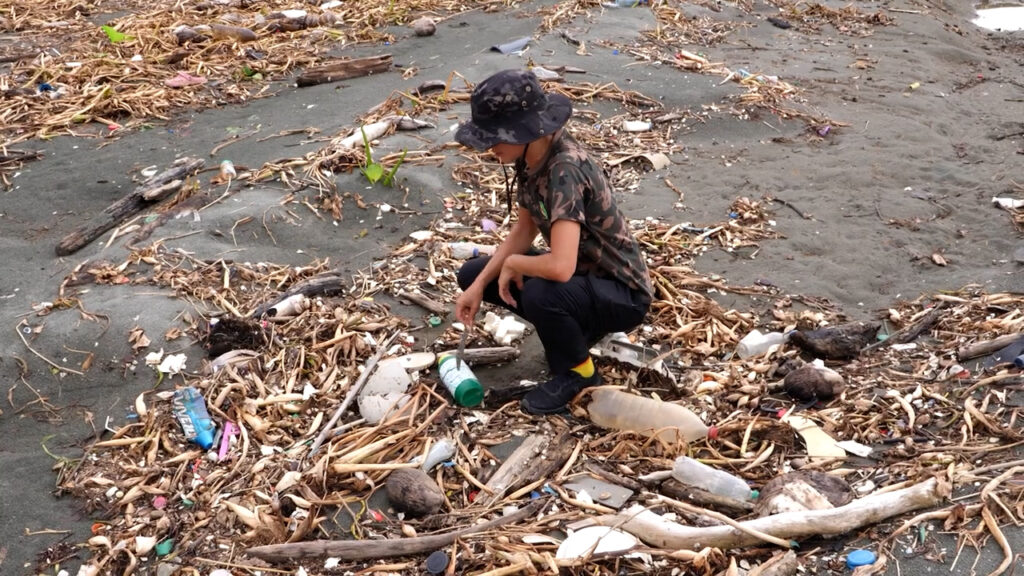
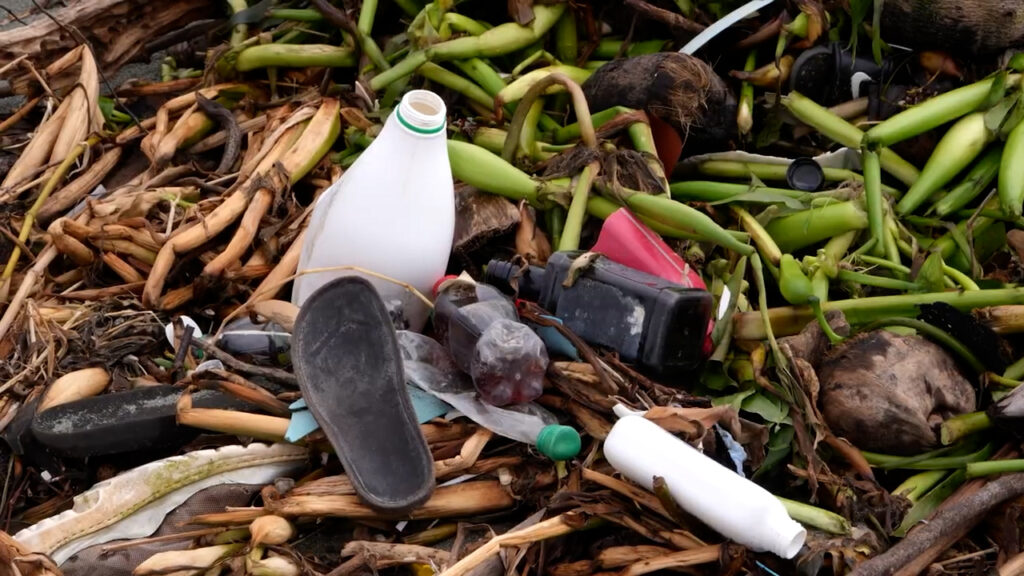
We moved through waterways where discarded packaging had become tangled in the roots, plastic bottles and shoes were caught among the vegetation, and fragments of white polystyrene were scattered across the landscape.
It was difficult to look at the pollution without wondering how much more had accumulated since the world first heard Carmen’s story.
Her work has received international attention. The documentary Isla Plástica has helped bring the crisis into view. Yet, on the water, the problem was not an abstract environmental issue or an old story being revisited for nostalgia. It was directly in front of us.
Plastic was everywhere.
I filmed what I saw because this is what happens when the cameras leave, the headlines move on and the waste-management problem remains. I wanted to understand not only the scale of the pollution, but why the same places keep filling up and what would have to change for that cycle to end.
The question is no longer whether the Dominican Republic has a plastic pollution problem. The question is why, after so much attention, the waste is still arriving.
A river carries the problem downstream
We were travelling along the Yuna River, one of the major waterways in the Dominican Republic. Carmen explained that the river stretches for more than 210 kilometres, carrying waste downstream towards the mangroves and coastline. That distance is her estimate from our conversation, but the wider point was visible from the boat: the rubbish accumulating here cannot be understood by looking at this stretch of water alone.
A discarded container does not necessarily remain where it was thrown away. Waste can move through drains, streams and rivers, travelling far beyond the place where it first entered the environment. When it reaches mangroves, roots and vegetation can trap it, creating dense accumulations that are difficult to remove.
The mangroves become the final resting place for decisions made elsewhere.
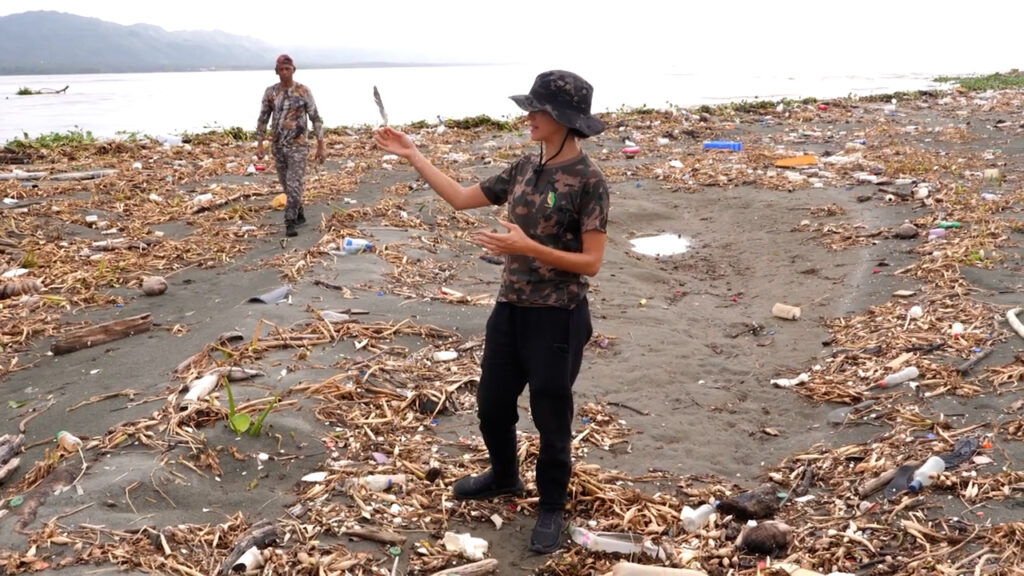
That distinction matters. It is easy to look at a polluted shoreline and blame the people living nearby. It is harder to trace the journey of each item, examine whether waste was collected properly, establish where it entered the water system, and ask why products that are difficult to recycle continue to be used in the first place.
Carmen was clear that this cannot be reduced to individual littering or blamed solely on local communities. She argued that manufacturers and the wider plastics industry must take responsibility for the materials they put into circulation.
Looking at the waste around us, it was difficult to dismiss that argument.
The material that will not stay in one piece
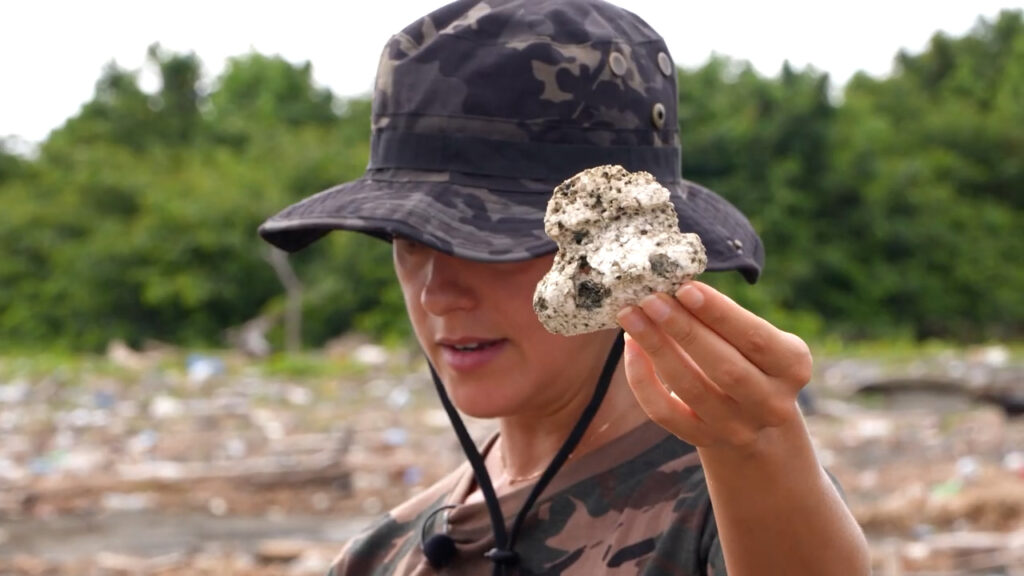
One of the most disturbing things we saw was expanded polystyrene, commonly known as Styrofoam. It was caught in the mangrove roots and scattered in fragments across the surrounding environment.
Carmen pointed to pieces breaking apart into smaller and smaller fragments.
“Just breaking into smaller and smaller pieces,” she said.

The problem is not simply that polystyrene is unsightly. As it fragments, it becomes increasingly difficult to collect. A whole container can be picked up. Tiny pieces dispersed through roots, mud and water are another matter entirely.
Carmen described the fragments as a growing concern because they can become too small to see easily. Her explanation touched on the wider problem of microplastics and nanoplastics, although the footage itself cannot establish the size of every fragment or demonstrate what has entered the food chain.
What it does show is a material breaking apart in a living ecosystem, where recovering every piece becomes increasingly difficult.
During our conversation, Carmen described the recycling options available to her team. Some plastics, including certain types of high-density polyethylene and PET, may be recyclable when suitable collection and processing systems exist. But a product’s theoretical recyclability does not mean that it will actually be recycled. Its condition, construction, local infrastructure and access to processing facilities all matter.
She described polystyrene as particularly problematic in this location because, in her experience, there was no effective local infrastructure or technology available to deal with it.
That is the central contradiction of disposable packaging. It can be used for a few minutes, but the waste it creates may remain in the environment long after the convenience has passed.
Carmen explained that polystyrene is widely used locally for takeaway food and drinks, including by ordinary restaurants and small businesses. This is not only a problem of international fast-food chains. It is woven into everyday consumption.
When a material is cheap, widely available and difficult to recover once discarded, the consequences do not disappear simply because the person who used it has finished eating or drinking.
Twenty-five tonnes in a day
At one point during our journey, Carmen showed me footage from a previous cleanup. She described the haul as 25 tonnes of rubbish collected in a single day by a team of ten.
That is Carmen’s reported figure, rather than an independently audited measurement. But even as a reported total, it conveys the scale of the work taking place.
Twenty-five tonnes. Ten people. One day.
And the waste keeps coming.
Carmen explained that the team had already cleaned the area repeatedly. In our conversation, she described the same sections being cleared again and again, only for more rubbish to arrive with the river.
“You clean it every day, it’ll keep coming down.”
It is a devastating sentence because it describes the limits of the very work that is meant to offer hope.
A cleanup can remove waste from the mangroves. It can protect a particular area from further accumulation, recover some materials and make a visible difference. It can also give people a way to act when the problem feels overwhelming.
But it cannot, by itself, prevent the next wave of waste from entering the river.
The cleanup project was something Carmen described as her own idea. She told me that Parley had subsequently funded it, despite the project initially falling outside the organisation’s planned scope of work.
“This is my baby,” she said.
There is something both admirable and deeply troubling about that. An individual has helped develop a project to remove enormous quantities of waste from an ecosystem, relying on a small team to do work that must be repeated. The dedication is real. So is the structural failure that makes the work necessary.
The people removing the waste cannot be expected to compensate indefinitely for a system that continues to produce it.
The brands in the mangroves
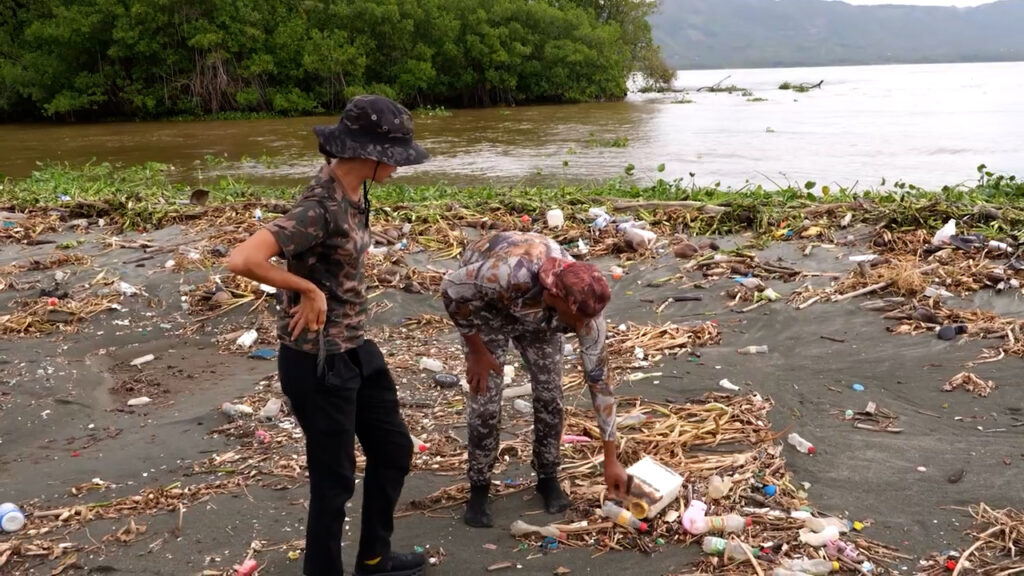
As we moved through the debris, recognisable products and branding appeared among the rubbish. Carmen pointed out items bearing names including CeraVe, Crocs, Adidas and Coca-Cola.
These were products or packaging found among the waste. Their presence does not establish who discarded them, how they reached the river or whether a particular company caused the pollution at this location. But it does make one question unavoidable: what responsibility should a company have for the waste generated by the products it sells?
Carmen believes that responsibility should not end at the point of sale.
She argued that companies should contribute to cleaning up the damage associated with their products and supported the principle of extended producer responsibility. Under such an approach, producers can be made financially or operationally responsible for the collection, recycling and end-of-life management of products and packaging.
The principle challenges a familiar arrangement. A company sells the product, the consumer uses it, and the cost of dealing with the waste falls on households, municipalities, cleanup teams and the environment.
In the mangroves, that cost is no longer theoretical.
Carmen pointed towards the debris and spoke about the responsibility of companies whose products end up in the environment. Her position was that brands should help fund restoration and take responsibility for what happens after their products are used.
The footage does not prove that any of the companies whose branding we saw deliberately polluted the mangroves. It does, however, document branded consumer waste within an ecosystem already struggling under the volume of discarded material.
That is a legitimate starting point for a wider investigation into packaging design, producer responsibility, collection systems and corporate commitments.
If businesses profit from selling disposable products, who pays when those products become pollution?
And how much of the cost is currently being carried by people who did not design, manufacture or profit from them?
The tourism question
The Dominican Republic is one of the Caribbean’s major tourism destinations. Its beaches, coastlines and tropical landscapes are central to the country’s international appeal. Tourism brings employment, business opportunities and significant economic activity. It also creates demands on water, energy, transport, food supply and waste-management systems.
The relationship between tourism and the pollution in these particular mangroves requires careful investigation. The waste we saw cannot all be attributed to hotels or resorts, and I have not seen independently verified figures showing what proportion of the Lower Yuna pollution comes from tourism.
But the question deserves to be asked.
When a destination welcomes millions of visitors, where does the packaging from meals, drinks, deliveries and other everyday consumption go? How much waste is generated by hotels and resorts? What proportion is reused, recycled, sent to landfill or lost to the environment? Are the facilities and collection systems keeping pace with the volume of consumption?
These are questions for the tourism authorities, municipalities, waste contractors, hospitality businesses and environmental regulators.
A resort can maintain a spotless beach within its property while waste continues to accumulate elsewhere in the wider region. A hotel can remove single-use plastics from guest rooms while other forms of packaging remain in its supply chain. A sustainability statement can describe good intentions without showing how much waste is actually prevented.
None of this means every resort is behaving irresponsibly. It means that sustainability claims need to be measured against evidence, including waste audits, procurement policies, recycling records and the management of materials beyond the property boundary.
The country should not have to choose between tourism and healthy ecosystems. But a tourism economy that depends on the beauty of its natural environment has a clear interest in protecting it, including the places visitors may never see.
The Lower Yuna mangroves are part of that wider environmental picture. Their condition should matter to anyone who benefits from the country’s natural appeal.
What happened to the promises?
The Dominican Republic passed General Law 225-20 on Comprehensive Management and Co-processing of Solid Waste in 2020. The law is an important part of the country’s waste-management framework.
But the existence of a law does not tell us how effectively it is being implemented, how much funding has been allocated, whether local authorities have the infrastructure they need, which provisions are being enforced or what penalties are imposed when obligations are ignored.
Nor should the law automatically be described as a comprehensive nationwide ban on all single-use plastics without checking the exact legal provisions and any subsequent regulations.
Those distinctions are important. A law, a proposed ban, a phased restriction and an enforced prohibition are not the same thing.
During our journey, I asked Carmen what would happen if the offending materials were banned. Her answer was direct:
“We could finally clean this and it wouldn’t come back.”
It was a striking contrast to the reality around us. The team had been cleaning these areas repeatedly, yet the waste continued to arrive. In Carmen’s view, stopping the flow of certain disposable materials would make it possible to clean the area without facing the same accumulation again.
That is her assessment of what would happen if the sources of the waste were stopped. Whether a ban alone would achieve that outcome would depend on its scope, enforcement, alternatives, waste collection and the many different routes by which rubbish reaches the water.
But the underlying question is sound: why should people have to keep clearing the same pollution if the system can be changed to prevent it?
The next stage of reporting needs to establish what the government has promised, what the law requires, which measures have actually been implemented, and what has happened in the places where waste continues to accumulate.
It also needs to establish who is responsible for making those decisions. That means examining the relevant national waste-management bodies, their current membership, the role of industry representatives, their powers, their decisions and the resources available to enforce policy.
I have not independently verified the current membership of the relevant national council or established that any particular individual or company has obstructed reform. It would be irresponsible to imply that without evidence. But transparency about who makes waste policy, who influences it and who is accountable for its results should be part of any serious investigation.
If the country has a legal framework intended to improve waste management, the public deserves to know whether it is working.
If a restriction has been promised, the public deserves to know when it will take effect and how it will be enforced.
And if the same materials continue to wash into the same mangroves, someone should be able to explain why.
Alternatives already exist
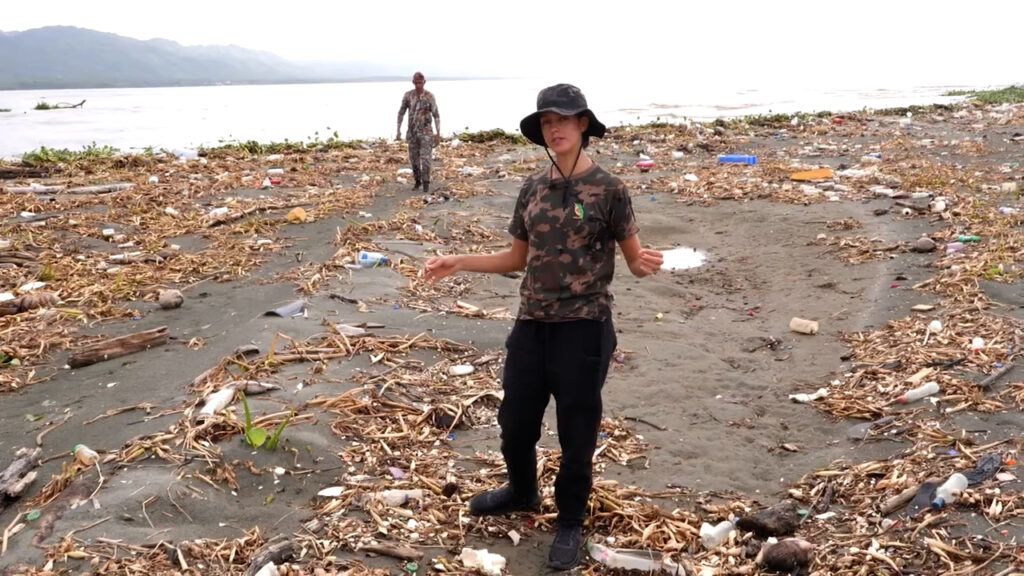
The problem is not that society has never imagined a life beyond disposable plastic.
During our conversation, Carmen spoke about alternatives to conventional packaging, including materials made from banana leaves. She also pointed towards traditional ways of carrying food and water, including the use of ceramics and natural materials.
Her point was not that every alternative can be introduced overnight. It was that the current dependence on disposable packaging should not be treated as inevitable.
Alternatives need to be assessed properly. A replacement must be suitable for its purpose, safe for food contact where relevant, affordable, available at scale and supported by a realistic end-of-life system. A material described as biodegradable is not necessarily going to break down quickly in a river or mangrove, and compostable packaging may require specific facilities that are not available everywhere.
But those practical challenges are reasons to invest in better systems, not reasons to abandon the search for alternatives.
The question is particularly urgent for polystyrene used for food and drinks. When packaging is difficult to collect and recover after use, reducing unnecessary consumption and switching to workable alternatives may be more effective than relying on recycling alone.
Carmen’s argument was simple: producers have choices, and those choices shape what becomes waste.
That is where responsibility has to begin. Not with the assumption that every consumer can solve the problem individually, but with a serious examination of the materials being placed into circulation and the systems available to manage them.
More than a rubbish problem
The mangroves are not empty land waiting to be cleaned. They are living ecosystems.
During our journey, Carmen also spoke about the birds she observes in the area. She described seeing new species and adding sightings to her bird list. Her enthusiasm was a reminder that this place is not defined by the rubbish alone.
There is wildlife here. There are interconnected habitats, roots, water and vegetation. The mangroves form part of a wider coastal environment whose value cannot be measured simply by how much rubbish a cleanup removes.
Plastic pollution is one pressure on that environment, alongside other threats that require their own investigation. Our footage cannot establish the full ecological impact of every item we saw, nor can it prove that the rubbish in front of us has caused a particular decline in wildlife. Those conclusions require scientific evidence.
What is clear is that waste is accumulating within the habitat, and that fragments of plastic are difficult to recover once they disperse through the environment.
The United Nations Environment Programme estimates that 19 to 23 million tonnes of plastic waste leak into aquatic ecosystems each year worldwide. That is a global estimate, not a measurement of the pollution in the Dominican Republic. It nevertheless places what we saw within a much larger crisis affecting rivers, lakes and seas around the world.
The scale of that global problem makes prevention more urgent, not less. Once plastic has dispersed into an ecosystem, removing it can be costly, labour-intensive and incomplete.
There is also a human dimension. Communities downstream and along polluted waterways live with the consequences of waste systems that may not adequately collect, process or contain what is discarded. The people who depend on local environments for their livelihoods and daily lives should not be left to absorb those costs indefinitely.
The damage cannot be understood only by looking at the visible rubbish. It also requires examining the systems that allow it to arrive, the materials that are hardest to manage, and the alternatives that could prevent it from happening again.
The cost of doing nothing
Cleanups are visible. They produce photographs of volunteers, bags of rubbish and stretches of shoreline restored, at least temporarily. They can attract funding and public attention because the results are immediate.
Preventing pollution is less photogenic. It means changing procurement decisions, investing in collection and treatment infrastructure, enforcing regulations, redesigning packaging and challenging business models built around disposable materials.
It also means collecting data. How much waste is generated? Where does it go? What proportion is recovered? Which materials repeatedly escape into waterways? Which municipalities lack adequate services? How much does repeated cleanup cost, and who pays for it?
Without those figures, the public cannot easily judge whether policies are working or whether money is being spent on treating the symptoms while the source remains untouched.
There is an economic cost to allowing waste to accumulate. Public authorities and cleanup organisations must repeatedly remove material that should have been managed earlier. Communities face the burden of living alongside pollution. Businesses that depend on a healthy environment may also suffer when that environment deteriorates.
The exact financial cost of the Lower Yuna pollution has not been established in the evidence available for this article. That should be a priority for further reporting, not a number to invent.
The same applies to the tourism industry. A credible assessment would need verified visitor statistics, waste-generation data and evidence about the capacity of local waste-management systems. It would also need to distinguish between waste generated by tourism, waste generated by residents and businesses, and rubbish transported downstream from other areas.
The absence of those figures does not make the questions less important. It makes transparency more necessary.
What would it take for the plastic to stop coming back?
There is no single intervention that will solve every part of the problem. But several steps are difficult to avoid.
First, the flow of waste into waterways must be reduced. That means effective collection services, better disposal facilities, enforcement against illegal dumping and practical support for communities that do not have reliable alternatives.
Second, products and packaging that are particularly difficult to recover need serious scrutiny. Where unnecessary single-use items can be eliminated or replaced with suitable alternatives, prevention should be prioritised over repeatedly cleaning up the consequences.
Third, producers need clear responsibilities. Extended producer responsibility schemes can help ensure that the costs of managing packaging do not fall entirely on municipalities and communities. Such schemes need transparent rules, credible reporting and enforcement.
Fourth, tourism and other major sectors should disclose meaningful waste data. Businesses should be able to demonstrate what they purchase, what they discard, what they recover and what they do to prevent leakage into the environment.
Fifth, the government must show how its waste-management framework is being implemented. That includes publishing relevant plans, budgets, targets, enforcement data and the details needed to understand who is responsible for decisions.
Finally, cleanup teams need long-term support. Their work should be part of an integrated response, not a substitute for one.
These measures will not transform the mangroves overnight. But without action upstream, the burden will continue to fall on the people who return to remove the waste.
The story after the headlines
The reason I travelled through these mangroves was to see the situation for myself, not to repeat a story that had already been told.
Carmen has dedicated herself to this work. The cleanup she described is tangible, demanding and necessary. Yet her own words reveal its limits. The team removes the rubbish, and more arrives. The same places have to be cleared again. The problem is larger than the people trying to solve it by hand.
What stayed with me was the contrast between the attention this crisis has received and the condition of the place itself.
International coverage can make an environmental emergency visible. A documentary can help people understand it. Public promises can create hope that something will change. But none of those things, on their own, stop a river carrying plastic downstream.
That requires decisions made far beyond the mangroves: decisions about what is manufactured, what is sold, how waste is collected, which alternatives are supported, what the law requires and whether those requirements are enforced.
It requires accountability that lasts longer than a news cycle.
The footage I brought back is not a complete scientific assessment of the Lower Yuna ecosystem, and it cannot answer every question about the origin of the waste. It is evidence of what was visible during our journey, alongside Carmen’s account of the repeated work required to clear it.
It is also a reason to ask for a fuller investigation.
What has changed since this crisis was brought to international attention? Which commitments have been fulfilled? Which have not? What does the law require, and what is happening in practice? Who has the authority to stop the flow of disposable materials into the environment, and what are they doing with it?
These questions deserve answers from the government, waste-management authorities, producers, tourism businesses and the organisations working on the ground.
Because the measure of progress cannot simply be how many tonnes of rubbish are removed in a day. It has to be whether fewer tonnes arrive the next day.
On the water, looking at plastic lodged among the roots, the distance between those two measures felt enormous.
The mangroves do not need another promise that the problem matters. They need the flow of waste to stop.
Until that happens, the cleanup will continue. The plastic will continue to break apart. And the people trying to protect this place will be left doing the same work again.
The question is how long the world is prepared to watch that happen.
Sources and further reading
- Vogue: Carmen Danae Azor and the environmental story
- United Nations Environment Programme: From Pollution to Solution
- US Environmental Protection Agency: How Do I Recycle Common Recyclables?
- Dominican Republic Ministry of Environment and Natural Resources, for official environmental policy and waste-management information
- Dominican Republic Ministry of Tourism, for official tourism statistics and sector information
Reporting note: The 25-tonne cleanup figure is attributed to Carmen’s account and has not been independently audited for this article. The river length is also based on her account and should be checked against an authoritative geographical source before publication. The presence of branded products in the debris does not, by itself, establish that the named companies caused the pollution. The current membership and influence of the relevant national waste-management bodies, tourism-related waste volumes, implementation of Law 225-20 and any specific single-use-plastic restrictions require further verification before stronger conclusions can be drawn.