
Food sovereignty books and resources should bring you closer to the people deciding how food is grown. Buying something labelled sustainable is only one small part of that question.
I want to know who controls the land, the seed and the terms of trade. A resource becomes useful when it helps you ask those questions more precisely, rather than giving you another collection of food slogans.
Begin with the question you actually have. A movement declaration, a political economy book, a collection of plant stories and a cookbook do different work. None needs to pretend it answers everything.
The choices below include free primary movement material and named books available through their publishers or authors’ businesses. I am not claiming to have reviewed every page or tested every recipe.
Use one source carefully, then follow the question into a real farm, organisation or food routine. A long reading list is not the same as a relationship with the people growing your meal.
Nyéléni gives the discussion a movement source
The Nyéléni site documents the 2007 World Forum for Food Sovereignty in Mali and links to its declaration. Start there if you want the movement’s own account rather than a retailer’s interpretation of the phrase.
The declaration concerns people’s rights and food systems, with attention to those who produce and obtain food. Reading it as a movement statement helps keep control, participation and access visible alongside environmental questions.
I would note who is speaking, which demands they make and whose ability to decide is being defended. Those questions are different from choosing a certification logo for a single product.
The document belongs to a particular historical meeting. Use it for those principles and follow the movement’s more recent work for current campaigns. An old declaration can remain useful without being presented as a report on conditions everywhere today.
A Foodie’s Guide to Capitalism follows the structure behind the food
Published by Monthly Review Press in 2017, Eric Holt-Giménez’s A Foodie’s Guide to Capitalism is a starting point for the political economy of food. The publisher describes an account of the food system’s history and the economic forces shaping it.
I would choose it when the question is why a particular set of incentives keeps producing the same problems. A shopping guide can compare products, while a political economy book asks why the market and ownership arrangements look the way they do.
Keep the publication date beside any figure or example you carry into a current argument. A book can explain a mechanism without its numerical snapshot remaining current in 2026.
Read the author’s argument as an argument, then investigate a specific example with current evidence. That gives you something more useful than repeating a conclusion without knowing how it was reached.
Braiding Sweetgrass brings reciprocity and plant relationships into view
Robin Wall Kimmerer’s Braiding Sweetgrass is published by Milkweed Editions. Its subtitle identifies Indigenous knowledge, scientific knowledge and the teachings of plants. It offers a different entry point from an economic policy text.
I would choose it when you want to spend time with how relationships with plants are described and practised. Keep the author and her particular knowledge traditions visible. One book should not become a claim that all Indigenous peoples share one interchangeable worldview.
The publisher also provides a reader’s guide. That can help a group discuss the book without needing every person to buy a new edition, provided you use copies and access arrangements that are actually available to you.
This is not a crop calendar or a certificate for a food brand. Let its questions about reciprocity inform what you notice, then seek the practical and local information needed for a specific growing decision.
Whole Food offers a kitchen route into crops you may overlook
Hodmedod’s founders Josiah Meldrum and Nick Saltmarsh have published Whole Food. Their own book page presents recipes built around diverse whole foods, with particular attention to grains, seeds and pulses.
I would investigate it if the immediate question is what to cook with crops you want to support. A food system discussion becomes more practical when a household knows how to use the food it buys.
Do not assume the whole book is exclusively vegan. The business’s current recipe material includes dishes with dairy ingredients. Check the selected recipe and choose plant based preparations that fit your requirements.
The food gift guide includes a named British pulse bundle. A cookbook and ingredients can make a useful pairing when the recipient wants both, but neither guarantees how every farm in the supply chain operates.
Use original grower accounts beside the books
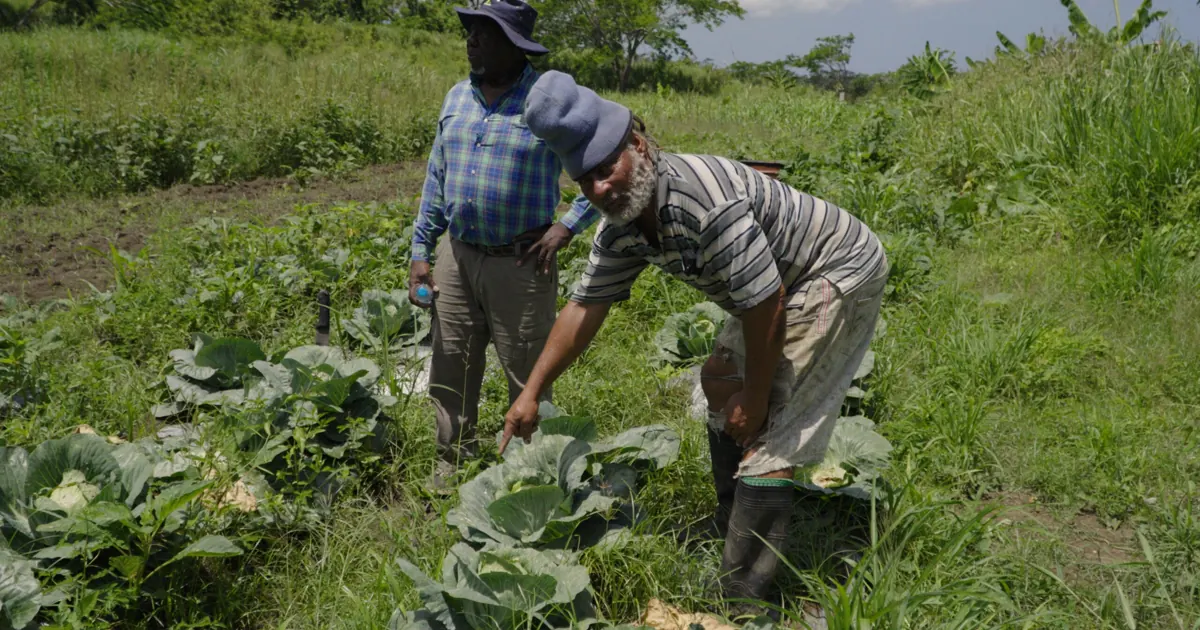
In our walk with Muffy in Jamaica, he shows crops kept for seed as well as food for the kitchen. That is one concrete practice to think about while reading wider arguments about food control.
The food sovereignty film guide also brings a public food forest, cacao making and a community food space into the discussion. Each film records a particular place and account, rather than proving an entire system works perfectly.
I would ask who makes the decisions in the organisation and who can access the food. A project using community language still needs a practical explanation of participation, labour and ownership.
The books can help you form a question. The person doing the growing should have room to answer it in their own terms.
Make one page of notes you can actually use
Choose one food you buy regularly and record its source. Then separate what you know from what is missing. You might know the shop and country of origin while still not knowing the grower, seed arrangement or producer’s share of the price.
Next, choose one question you can reasonably ask. Contact the seller or producer through its published channel, read a current account or attend an event the organisation actually offers. Avoid treating a working farm as a public classroom without agreement.
For household habits, our checklist and planner guide compares the actual free and members resources. A checklist can organise a shopping or food routine. It cannot by itself transfer control of land or change the terms under which farmers sell.
Keep the scale of each action visible. Preparing a meal, learning from a grower and participating in a food organisation are different contributions, each with its own limits.
Choose depth before collecting another resource
Look for a library copy, a lawful digital edition or the movement’s free original material before buying another book. Check the edition and format so you know what you are getting. A lower cost route can give you the same text without another unused object.
I would begin with Nyéléni for the principles, the economics book for the market structure, or the practical crop resource for a kitchen question. Choose the one that helps you take the next considered step.
The people growing and sharing food should remain visible after you close the page. Read with a question, listen to the grower and let what you learn change something you can actually do.
Sources and further reading
Nyéléni’s own account of the 2007 forum and declaration
Monthly Review Press publication record for A Foodie’s Guide to Capitalism
Milkweed Editions publication page for Braiding Sweetgrass
Milkweed’s Braiding Sweetgrass reader’s guide
Hodmedod’s Whole Food book information
Sources and resource pages reviewed on 18 November 2026. Check current access, offers and operating arrangements before making a purchase or journey.
On this story
Comments, questions and answers from signed-in paid members. The conversation will also be available in the app when it launches. Community contributions are not verified editorial findings.
Contribute evidence
Reviews share first-hand experience. Observations can include opinions and objections. Evidence is checked against its sources before publication. Community contributions do not change MIW scores.
Article discussions and evidence contributions are for paid members. They will also be available in the app when it launches.
Sign in to contribute or join the discussion Read this next
Veg Box Subscriptions Compared for Organic, Local and Wonky Produce
Compare organic, local and wonky veg box subscriptions with real UK examples. Check current prices, delivery, origins and gift rules before choosing your box.Read the story Keep exploring
Regenerative Farming and Food Sovereignty Podcasts
Find regenerative farming and food sovereignty podcasts that put growers, seeds and land at the centre. Choose a series and follow its evidence into shopping.Read the story Keep exploring