
To find locally grown food, look for the producer as well as the seller. I want to know where the tomatoes grew and who can explain how to buy the harvest.
A nearby shop can stock produce from elsewhere. A country flag or local sounding name does not identify the field behind a particular item.
A useful listing names the farm, location, available food and selling method. Direct contact can confirm whether you need a market visit, a basket order or a farm shop collection.
Harvests and selling days change, and a grower may combine its own food with bought in products. Check the current item and visit arrangements before travelling.
Start with the farms and markets you can realistically reach. Then ask who grew what you plan to put in your bag.
Local is not a flavour. It is an origin. I want to know where the tomatoes were grown, who grew them and whether the shop is selling its own harvest or somebody else’s. Those aren’t awkward questions. They’re the reason I went looking for a farm shop in the first place.
There is a grower on the other side of the map pin
People use the words farm shop as though they describe one type of business. They don’t. Some grow almost everything they sell. Others sell from surrounding growers. Some run a farm but also carry goods through wholesalers. The only problem is when a consumer cannot tell which is which.
I travel to film producers, so I pay attention to the details that a directory card leaves out. What’s in season here? Who did the planting? What happens when a crop fails? Are the carrots in the box from this farm, or have they travelled much further than the sign suggests?
USDA directories and services such as Farmish can help you find a grower. They cannot replace asking those questions. Our regional farm shop articles are there to make the next visit worth more than a postcode search.
The useful thing to keep. A local claim needs a named source for the exact food, not just a countryside photograph.
Our score and why this subject is not rated as a product
HTT does not invent a numerical purity rating to fill a blank. A result needs an identifiable item, declared composition, supporting source, coverage and a versioned category rule. This comparison makes those distinctions visible.
| Subject | HTT score | Why | Relevant standard |
|---|---|---|---|
| A named farm shop and its own-grown produce | Not rated in this article | No producer in this article has an evidence-backed current HTT composition score. A farm-shop address does not identify the formulation or organic status of everything it sells. | Farm provenance, crop origin and producer statements need specific verification. Packaged foods, if scored, use the Food declaration pack. |
| My Ideal World | Source-backed reports only | Open a specific brand or product record to see its category, method version, source date and evidence status. | Explore and sign up |
What we deliberately do not score. We do not award a 1/5 or 5/5 to a farm simply because it appears on a map. Missing or conflicting declarations stay unresolved. Check the Throne Standard 2.2 and the corrections process.
The seven questions to take with you
Can a harvest checker tell you what is ready to pick?
Seasonal calendars are a starting point, not a promise that a farm has fruit ready today. Weather, crop volume and the last busy weekend can change availability. I would rather call the grower than make a family drive based on a beautiful but outdated photograph.
Check a proposed visit using the Harvest Checker, then confirm directly with the farm. That is the difference between finding a nearby farm shop and finding food that was actually grown there.
| Ask | Why |
|---|---|
| Where was this grown? | Separates nearby production from branding |
| Did you grow it yourself? | Distinguishes farm from retailer |
| What is in season? | Helps check plausibility |
| What is sprayed or applied? | Opens discussion of agricultural inputs |
| How is the soil managed? | Goes beyond a single pesticide claim |
| Can I visit the farm? | May provide direct context |
| What do you do with surplus? | Reveals waste and reuse practices |
What our own score says about food purity
My Ideal World is not scoring food the way a nutrition app scores calories, macronutrients or a general healthy-eating index. We are interested in what a product is made of, the ingredients that have been identified under the relevant category rule and whether a current source backs the conclusion.
A purity preference is a stated standard, not a promise that every whole food is medically suitable for everybody.
Coca-Cola was raised as a 1/5 illustration, but its exact current HTT result was not available in the accessible brand records during this check. I will not turn that example into a verified published 1/5 without a linked product record, ingredient breakdown, calculation date and Standard version.
An ingredient label containing several additions is worth examining against a whole-food rule, but the result must come from the rule, not the reputation of the company.
Chocolate is another useful example of why the underlying sample matters. The Auro Chocolate report distinguishes readable ingredient evidence from supply-chain questions such as grower traceability, monitoring and living income.
The current public page did not expose a reproducible live numerical purity score in this check, so we do not restate an older cached 5/5 as current. An ethical concern is not silently blended into the product’s ingredient number.
We do not infer food safety from the word organic, declare a processed ingredient toxic just because it has a chemical name, or downgrade a brand for an unrelated social-media controversy inside its composition score. The actual product, source and dated rule must do the work. See the current Throne Standard.
Explore My Ideal World and sign up for the underlying research, rather than treating another app’s numerical score as our result.
How I use the research on a trip
Start with our existing South Dakota farm-shop guide or the state and county guide for the destination. Note likely producers and check their current hours and product range independently. Save a shortlist with questions, rather than assuming a map pin is proof of farming practice.
Organic, local and low impact are three different things. Food grown locally is not necessarily organic. Certified organic food can travel a long distance. A seasonal crop can be preferable for some reasons and still have unanswered questions about water, labour or land. Our guide to environmental labels explains why claims need clear scope.
People and place. Growers live with realities that a glossy directory cannot capture: crop losses, pests, difficult pricing, changing rainfall and limited routes to market. The purpose of a local food guide is to make connections and support informed conversations not appoint a winner without evidence.
A farm shop can be useful without growing everything it sells
A shop on a farm may sell apples from its own orchard, vegetables from neighbouring farms and pantry products imported through wholesalers. That is not automatically deceptive.
Retailers often support a network of growers by bringing different goods together. The question becomes whether a customer searching for local food can tell what came from where.
The strongest local-food guide identifies the actual producer when the information is available. It links the business’s own website, records opening times checked on a specific date and explains which seasonal crops are genuinely grown on-site. A map search is a starting point. It should not become an implied certification of every product behind the shop door.
Local, organic and seasonal mean different things
Local is a relationship to geography. Seasonal concerns the time of production and harvest. Organic refers to defined production rules and, where applicable, formal certification.
A crop can be local without being organically certified. A certified organic ingredient can travel thousands of kilometres. A seasonal food can still raise questions about water use, agricultural inputs or labour.
A guide that merges those labels into a single green verdict makes it harder for shoppers to express their own priorities. I want to know exactly what the farmer grows and how. Someone else may care chiefly about supporting a small business nearby. Both deserve the same accurate record.
Farmish and the direct-producer marketplace
Farmish provides map-based discovery and a way for participating producers to communicate with customers. Its Google Play listing shows more than 100,000 Android downloads, but that is a total installation threshold, not a live count of active farms. Its strength is practical local discovery where enough sellers participate.
An app listing does not automatically verify pesticide use, soil health, organic certification or the origin of each item. A shopper can contact the producer, ask about the crop and arrange a visit where appropriate. The result belongs in the regional guide as a dated and attributable detail, not a guess derived from a map pin.
What I ask growers because I film them. Who actually planted the crop? What did a difficult season look like? Where does the irrigation water come from? What do you apply to soil and plants, and how do you record it? What happens to surplus food?
How do prices set by retailers affect your farm? These questions are about actual working life, not an idealised farm image.
A grower’s answer is a source that should be attributed. It is not a laboratory assay. A certificate establishes a defined standard, not every possible outcome. If I need a contaminant result, the right next step is a properly documented sample and test. Keeping those forms of evidence separate is the reason the reporting can be useful to both customers and farmers.
A map pin should lead somewhere useful
A farm-shop article should link to the business, its location and a source supporting any major claim. Where hours or availability change seasonally, say so.
If a search result has not been independently verified as a functioning farm or shop, avoid presenting it as one. A reader should not have to drive an hour to discover the listing was a stale directory entry.
The same principle applies to photography. Use real pictures of the producer or market where the rights and identity are confirmed. A generic static map image is not a substitute for evidence that a farm actually grows what the article says. If the photo is only illustrative, don’t let its placement suggest otherwise.
The habits that follow a local-food visit
Buying local food can become a practical habit when people understand where to go and what is available in season. Save the farms you want to revisit, the questions you still need answered and the crops that make sense at that time of year.
A guide can connect to habits such as reducing waste, cooking with seasonal food and supporting a producer you have actually met.
My Ideal World’s role is to keep that research and the relevant hubs connected, rather than pretending every business on a map has been independently inspected. I want people to meet the growers and understand the work behind their food. The app should make that easier while leaving the evidence visible.
Before leaving for a farm shop, check what is actually in season
A directory listing might help you find a shop, but it doesn’t promise the vegetables came from its own fields. Compare the best farm shop apps and local food discovery tools by the information they provide about growers.
For a more useful visit, take a look at the Harvest Checker and My Shopping List. I’d rather arrive with two genuine seasonal questions than a saved list of farms I haven’t checked.
How do you ask a farmers market seller where food came from?
Ask whether the person selling the produce grew it, which farm supplied it and what they are harvesting now. The What to Ask the Seller offers a starting point for that conversation. A reseller can give a helpful, honest answer, so distinguish that role from being the producer rather than treating the two as interchangeable.
An organic claim needs the relevant producer or product evidence as well as a location. Check the market organiser’s current trader information, then ask about the particular food on the stall. A market directory entry identifies a possible visit, rather than certifying every seller or guaranteeing what will be available on the day.
Further reading and primary sources
Keep the evidence close. Explore the related research and create your My Ideal World account. Check the app page for current web and mobile availability.
On this story
Comments, questions and answers from signed-in paid members. The conversation will also be available in the app when it launches. Community contributions are not verified editorial findings.
Contribute evidence
Reviews share first-hand experience. Observations can include opinions and objections. Evidence is checked against its sources before publication. Community contributions do not change MIW scores.
Article discussions and evidence contributions are for paid members. They will also be available in the app when it launches.
Sign in to contribute or join the discussion Read this next
Winter Produce at Farm Shops Starts With What Is Growing Nearby
Choose winter produce at UK farm shops and markets using seasonal crops, actual origin and a useful meal plan. Compare named shops and grower delivery options.Read the story Keep exploring
Best Apps to Find Local Farms and Farm Shops
Best apps to find local farms and farm shops: compare Farmish and regional guides, check seasonal produce and buy directly from real growers. Check their reach.Read the story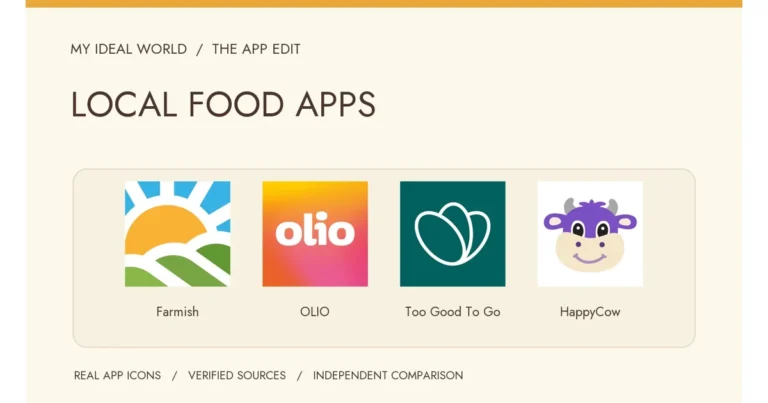 Keep exploring