
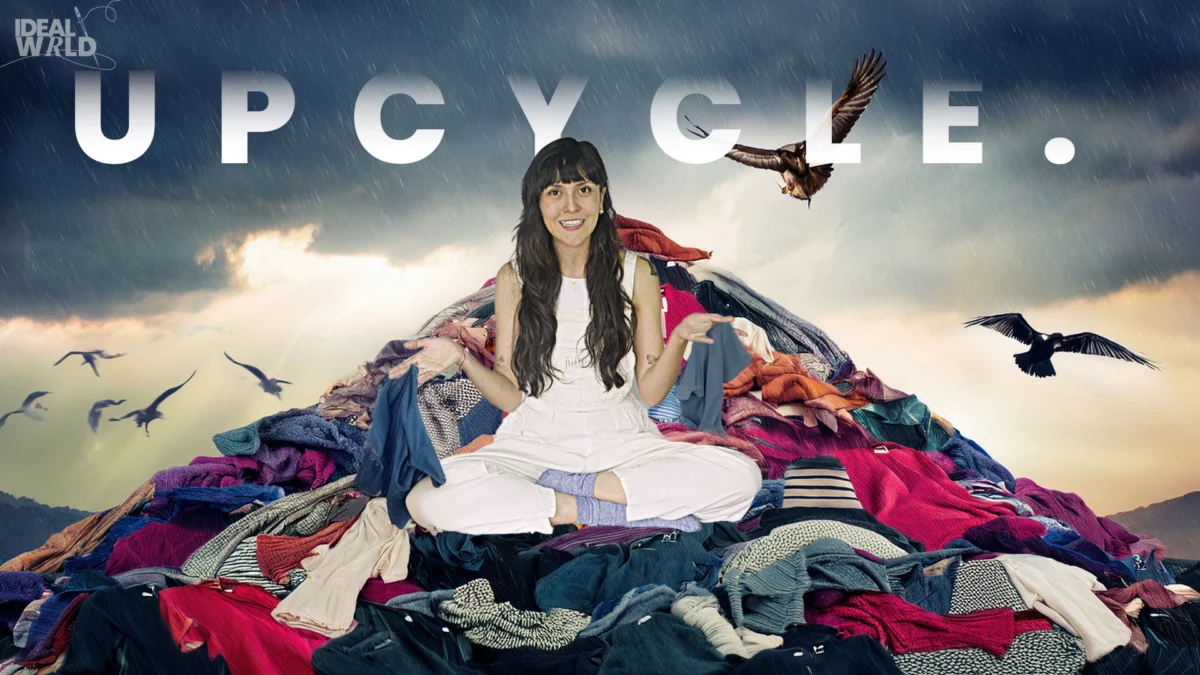
Anna’s questions about garment workers, denim washing and buying for one occasion
Someone is paying for cheap clothes beyond the till. Anna Venezuela kept returning to that cost in our interview at Vana in Bogotá.
Vana has since closed. This interview records Anna Venezuela’s work in Bogotá, Colombia, while her workshop was operating.
Who pays the human cost of cheap clothes?
What working conditions is Anna concerned about?
This gets me a little emotional because many of the clothes that we know are made in very inhumane conditions. There are kids that are working on these garments.
There are women who are sometimes trapped in spaces that have no light or air. Someone is paying the cost that we are not paying for the garments.
And it’s usually those people who are working making those things because there’s no other option for them.
The ILO recorded 1,138 deaths in the Rana Plaza collapse on 24 April 2013.
Marie Claire’s report on fashion’s heat crisis includes women working in Indian garment factories who describe limiting water and toilet breaks to meet production targets. Read their accounts alongside Anna’s concern. There is a person at the other end of the price tag.
Does knowing the cost always change how people buy?
I’m not sure if people would change the way they consume if they knew the truth. Because I know for some people it’s important.
They will be shocked and they would try to change it. But I do feel like also for some people it does they don’t care.
And that’s a very hard truth to accept.
Why did Anna question the speed of making cheap clothes?
What happens is that fast fashion came to show us that we can make these kind of things, these kind of clothes in a very fast-paced way. So we can make many of them, produce many of them and offer them to the world. I feel like that was a human necessity that we needed to fulfill and we did it. But at what price?
What did Anna show me about washed denim?
Anna compared the inside and outside of a denim garment.
Where does Anna look for the earlier colour of denim?
Anna looked inside the denim garment.
Especially for example with denim I think people don’t realize like denim the actual color of the blue that we know it’s like a dark blue. You can notice this by like looking at the pockets in your in your denim and like looking at the inside.
So what’s the inside was the actual color.
How did Anna explain the washing of the pale jacket?
Anna said washing had lightened the jacket.
Here we have a denim jacket that is a very light color and this is the actual color that it was dyed on. So this was the color and then they used tons of water and washed it.
Sometimes they wash it with rocks.
What happens to offcuts and unsold clothes?
UNEP reports 92 million tonnes of textile waste a year.
What waste did Anna describe during cutting?
Anna described discarded offcuts.
The second thing would be the amount of garbage that is created because of this industry. So not only the garments that are made, but also the waste from the garments that are made.
Because fabric comes out in meters and meters of fabric and then once you cut it out when it’s fast fashioned they cut it out in big machines and they discard all the waste.
What did Anna say about water and discarded fabric?
Anna linked dyeing and discarded fabric with water pollution.
The harms of fast fashion are the contamination of water because the fabrics come out in a natural color. So every color that we see is dyed. If it’s a synthetic fiber like polyester, it’s probably a chemical dye too.
those waste goes also to the water sources especially in Bangladesh if you want to know about the harm of this industry Bangladesh is the main focal point and also in the Atakama desert in Chile which is one of the biggest clothes discarding garbage disposals. It’s so big in Ghana as well. And then what happens with these mountains of clothes? They just remain there because like you can you can incinerate them, but also the gases that it produces are super harmful for the environment.
What happened after the Burberry case Anna recalled?
Anna recalled Burberry destroying unsold stock.
There was this one big scandal from Burberry. I don’t know if you can talk about this, but they incinerated tons of money worth of products because it was easier for them to burn it out than to try to sell it.
The BBC’s report of Burberry’s September 2018 announcement said it would stop destroying unsaleable products immediately.
How does Anna want us to change our buying habits?
Anna questioned buying clothes for one occasion.
Why does buying for one occasion trouble Anna?
Anna wanted clothes to last beyond one occasion.
The problem is the mindset that we are buying with. It’s like I need to buy for this one scenario or this one occasion and then I’m fine letting it go.
And that’s why it feels good to buy something that is so cheap. But once you change your relationship with things that you buy, it’s going to feel different.
It’s not going to be like I want the cheapest option. No, it’s going to be like I want the best option, the one that last the longer that feels better on my skin.
Does buying organic solve overconsumption for Anna?
Anna questioned buying more organic clothes.
The actual problem is over consumption. Like that is the root issue because no matter what efforts you do, if you buy everything organic, but if you buy so much organic, it’s still like a lot of water that you’re wasting.
It’s just too much like the resources are not enough for the way we are consuming.
Why did Anna want people to buy clothes made locally?
Anna connected local production with less shipping and supporting the local economy.
The second option would be to go for natural fibers and I would recommend specially cotton linen and hemp. I love hemp. Third thing I would say buy local like buy from a someone that’s producing where you are because the carbon footprint that implies just like going through plane or through the sea or whatever those things it has a big impact. So if you source locally, it’s great because you’re just like also helping your own econ economy and avoiding all those things that require like shipping
Keep Anna’s question with you before your next purchase. Her Vana repair interview begins with clothes already in the room. Find more people behind your clothes in My Ideal World.
On this story
Comments, questions and answers from signed-in paid members. The conversation is shared with the app. Community contributions are not verified editorial findings.
Contribute evidence
Reviews share first-hand experience. Observations can include opinions and objections. Evidence is checked against its sources before publication. Community contributions do not change MIW scores.
Article discussions and evidence contributions are for paid members and are shared with the app.
Sign in to contribute or join the discussion Read this next
Anna’s Idea of the Energy in Your Clothes
Anna Venezuela discusses intention, care labels and the energy in clothes in our Bogotá interview, recorded before her Vana workshop closed.Read the story Keep exploring
How Freedom Ecowear Shipped Orders From La Vega
Follow Freedom Ecowear’s La Vega post-office visit. Compare the brand’s shipping policy and FAQ, then ask about processing, carriers and your delivery deadline.Read the story Keep exploring