
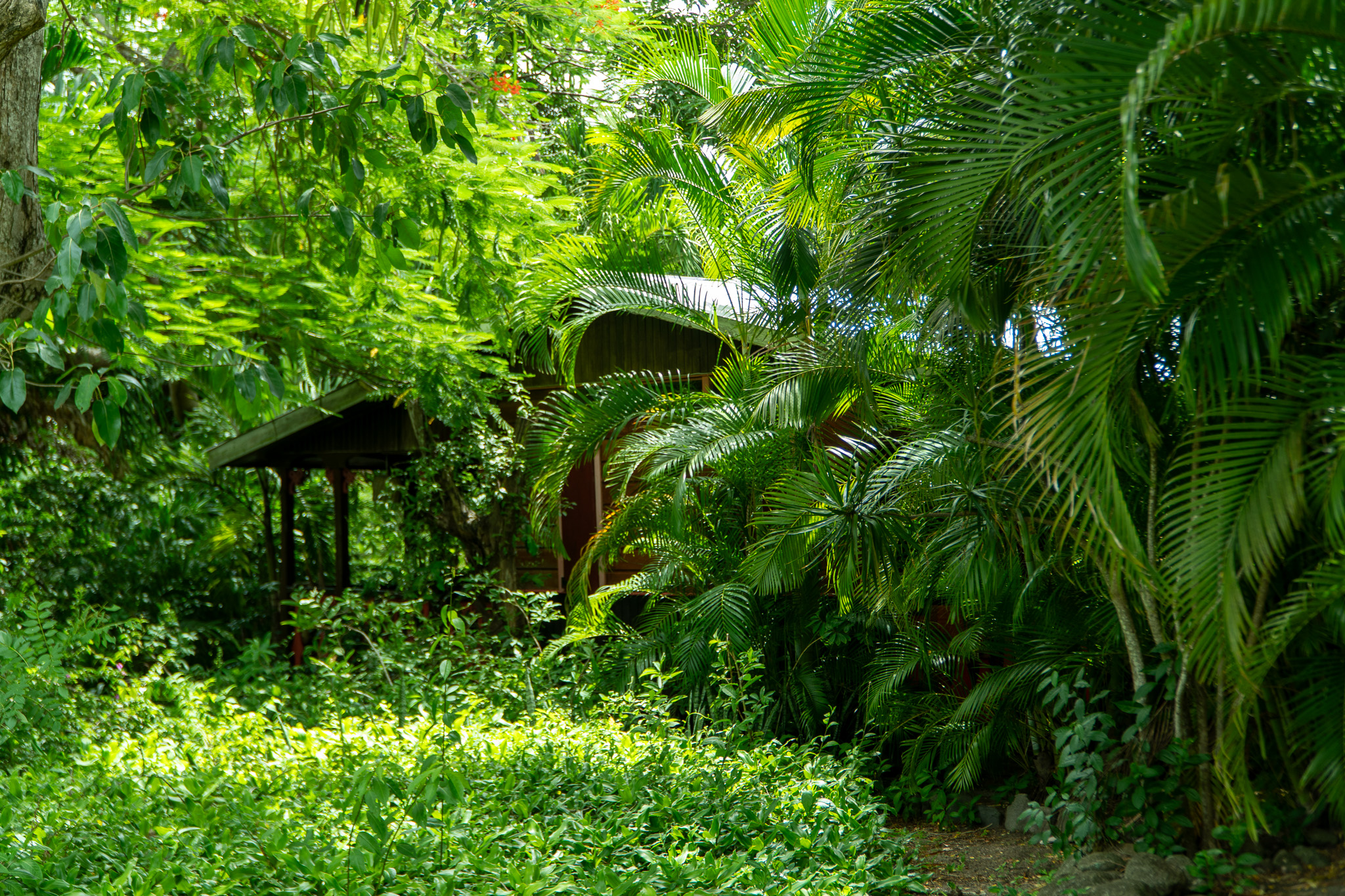
The best eco friendly stays in Saint Lucia, hand picked from solar power, farm to table estate kitchens and locally owned, locally built rooms. Find and book your sustainable stay.
Sustainable Stays in Saint Lucia
One of these stays has farmed without chemical fertilisers or pesticides since 1987, one grows certified organic cocoa on 135 acres inside a World Heritage Site and one is hand built on the ridge between the Pitons. Compare the details below before choosing your dates, and check the exact energy system and current certification rather than assuming every stay has the same arrangements.


How we decide the best place to stay in Saint Lucia
Each top rated stay in Saint Lucia is hand picked and checked for sustainability features.
On this island the standout is how the best stays tie themselves to the land they sit on, so we start with Balenbouche Estate and its heritage preservation work, caring for a 19th century plantation house, a late 18th century aqueduct and Amerindian petroglyphs along the estate river, on land the Lawaetz family has run since 1964.
We look at where the kitchen actually gets its food, like Ladera Resort, where around 70 per cent of what the Dasheene kitchen makes comes from the island through local sourcing, with fruit, vegetables and spices from its own gardens and nearby organic farms.
We check how each property keeps itself running, like Balenbouche Estate heating its water with solar power, cooling its buildings by natural ventilation and line drying its laundry.
And on an island where the rains come hard and then vanish, we look at how a stay holds onto its water, like Ladera Resort putting a rain harvesting programme in place that captures and stores rainwater for its landscape irrigation, a real piece of water conservation on a ridge that sheds water fast.
We also look at who owns the place and who works there, like Fond Doux Eco Resort, which is 100 per cent Saint Lucian owned, managed and staffed by the Lamontagne family.
Once the twin spires of the Pitons have worked their spell on you, our guide to the best sustainable hotels across the Caribbean gathers the whole region in one place, or drift south down the chain to the eco stays of St Vincent and the Grenadines, slip north to nearby Martinique and carry on east to Barbados.
New here? Start with our guide to where to stay by area.
At a glance
| Stay | Why it stands out |
|---|---|
| Balenbouche Estate | No chemical fertilisers or pesticides since 1987, solar heated hot water and six naturally ventilated cottages with no air conditioning. |
| Fond Doux Eco Resort | A certified organic cocoa plantation of 135 acres, 100 per cent Saint Lucian owned, with hand built cottages and a plantation to plate restaurant. |
| Ladera Resort | Hand built open wall suites with private plunge pools, solar heated hot water, rain harvesting and a kitchen that sources around 70 per cent of its food from the island. |
Top Picks, Where To Stay in Saint Lucia
- Balenbouche Estate, self catering cottages on a family run heritage estate near Laborie on the south coast.
- Fond Doux Eco Resort, colonial style cottages on a working cocoa plantation in Soufrière.
- Ladera Resort, open wall suites on a volcanic ridge between the Pitons in Soufrière.
Balenbouche Estate
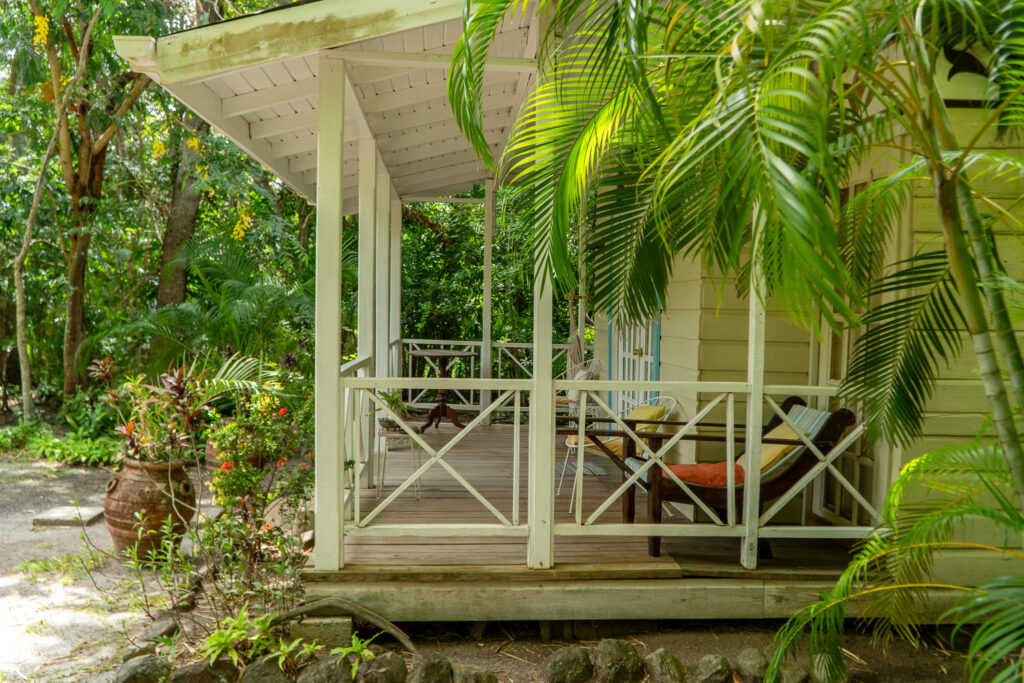
Balenbouche Estate is a family run guesthouse and organic farm on the south coast of Saint Lucia, owned and managed by the Lawaetz family since 1964. It began as a sugar plantation in the 1740s and is now a designated heritage site, with a 19th century plantation house, a late 18th century aqueduct and Amerindian petroglyphs and carved rock basins along the Balenbouche river.
The estate’s mission page says no chemical fertilisers or pesticides have been used since 1987. Free range cattle graze the land, and the tree crops include coconut, star fruit, mango, breadfruit, papaya, soursop, plantain and banana, which go into the kitchen alongside produce from surrounding farms. Around 60 acres surrounding the guesthouse are largely undisturbed habitat, and more than 30 bird species have been documented on the estate.
Buildings are cooled by natural ventilation, hot water is heated with solar, laundry is line dried, organic waste is composted and glass and plastic are recycled. Guests are asked to conserve water and electricity and to use filtered water and reusable bottles. The solar feature specified here is water heating.
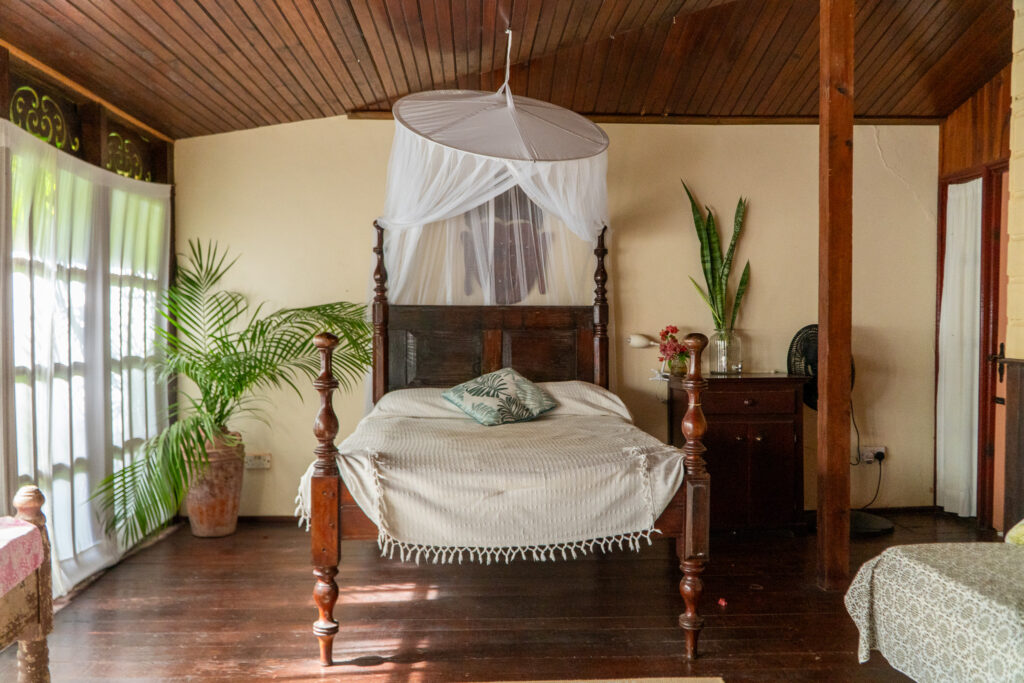
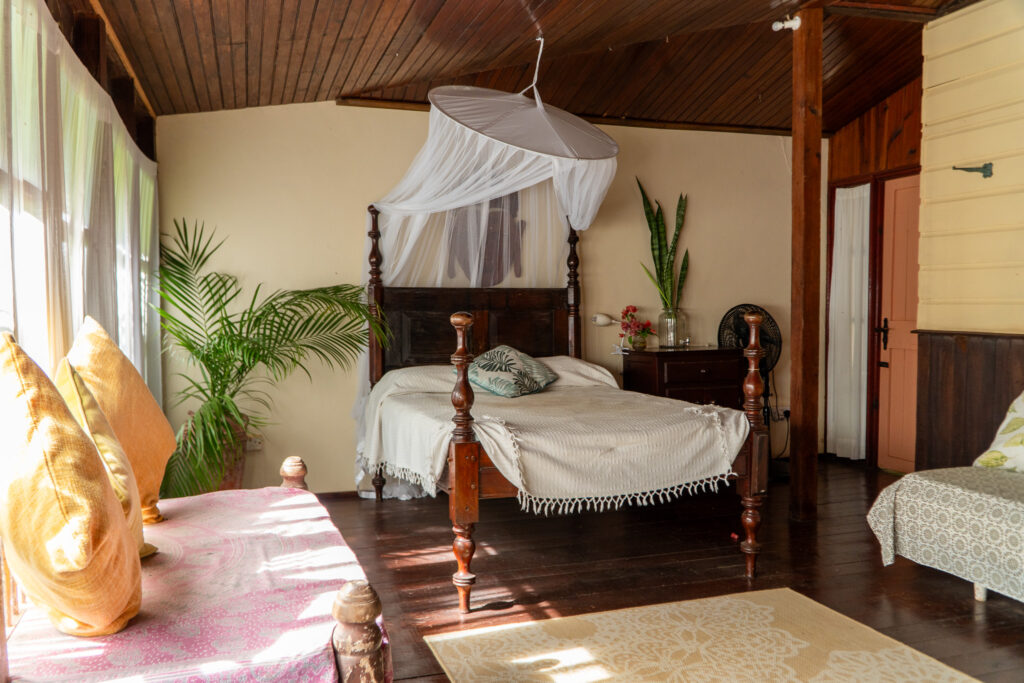
There are six cottages, Moringa, Waterlily, Banyan, Almond, Frangipani and Calabash, each with a kitchen or kitchenette. Waterlily is an octagonal house for two adults with a king four poster bed and a wraparound veranda, built between 2013 and 2015 with reclaimed lumber and glass bottles set into some of the walls. The estate lists it at US$220 a night for two with a two night minimum, so check current rates. It states that all its accommodation is open and tropical, with no window screens or air conditioning, only standing fans and mosquito nets.

Meals are available by reservation, with breakfast at US$15 and a sample dinner at US$25 to 30, blending Saint Lucian and Creole, Asian and international dishes. Vegan, vegetarian, gluten free and dairy free meals are available on request. The village of Piaye is a five minute walk away, with a fruit and vegetable stand and a beach bar, and the nearest supermarket is a five minute drive.
The estate says it has arrangements with individuals to plant gardens, keep bees, graze cattle and harvest crops on its land, buys local where it can and offers volunteering and internships. The aqueduct has been dry since 2019, so guests see the structure without running water.
Fond Doux Eco Resort

Fond Doux Eco Resort is a Green Globe member and certified organic estate, 100 per cent Saint Lucian owned, managed and staffed by the Lamontagne family, set on a 135 acre working cocoa plantation inside the UNESCO listed Soufriere World Heritage Site. The plantation is around 250 years old and sits about a 45 minute drive from the international airport.
Fond Doux explain that their accommodation was hand built to avoid damage to the surrounding rainforest, and the owners have talked about keeping the cottages tucked into the vegetation instead of overbuilding. The cottages are French colonial or Caribbean in style, historic buildings on the estate are preserved by hand, and cleaning products are eco friendly. Cocoa is now the main crop, grown with organic methods alongside a wide range of fruit and flowers, and the resort follows an environmental policy consistent with Green Globe requirements.
The Bamboo Restaurant runs a plantation to plate concept, with the chef cooking Creole dishes from fruit, vegetables and spices picked on the organic plantation. The Mamma La Terre Spa uses natural, organically grown ingredients. Guests can watch cocoa harvested, fermented and dried in the old drying sheds, including the traditional cocoa dancing, and the Plas Cacao shop sells the chocolate.
The family has opened the Fond Doux Historical Park, which includes an 18th century French fortress, prison cells, a shrine, nature trails and an interpretation centre, and it lends land to local farmers and runs student internships. The resort was named The America’s Best Sustainable Boutique Hotel at the World Boutique Hotel Awards in 2015 and 2016. Some cottages have private plunge pools and outdoor rainforest showers, and published cottage counts range from 12 to 17 across different years, so confirm what is currently on offer. Green Globe certification is renewed over time, so check current status before you book.
Ladera Resort
Ladera is a Green Globe certified resort on a volcanic ridge between the two Pitons in Saint Lucia, built by hand with wood, stone and clay that the resort says are sustainably sourced on the property. Every suite is different, with a heated private plunge pool and an open wall facing the Pitons.
Ladera’s community and sustainability page and its travel partner listings describe local craftspeople turning that timber into furniture and decor, and guests can tour the carpentry shop to see how it is done. Solar water heaters supply hot water to the suites and kitchen, lighting is LED throughout and a rain harvesting programme captures and stores rainwater for landscape irrigation. The solar claim concerns water heating.
The Dasheene restaurant sits on the ridge about 1,000 feet above the sea, serving farm to table dishes and Saint Lucian classics such as pepper pot. Partner listings say around 70 per cent of what the kitchen makes comes from the island, and most of the food served is sourced on the property and from local organic farms. The head gardener leads garden tours that show how the farm to table idea works in practice.
Ladera’s Green Team has planted trees at a local school and donated to local charities and food banks, and the Ladera Hike teaches guests about local plants and birds and the importance of the World Heritage Site. On the property there is also the Hideaway Rum Bar, mineral spring hot tubs, a four storey tree house and a weekly Sunset Fish Fry.