
The Caribbean is sold as paradise. But what does it take to keep an island healthy enough to remain one? Behind the turquoise water and white-sand photographs are small island economies dealing with rising temperatures, climate risks, pressure on freshwater, fragile marine ecosystems and the challenge of keeping more tourism value within the communities that host it. A beautiful view is not, by itself, evidence of a sustainable stay.
Tourism is economically important across the region. The OECD estimates that it represented an average of 25.4% of Caribbean GDP between 2015 and 2019, and that the sector employed 2.35 million people in 2021 13.4% of all jobs. That scale creates an opportunity, but also a responsibility. The same natural systems that attract visitors underpin the region’s economy: the OECD reports that Caribbean reef-building corals have declined by around 50% since systematic monitoring began in the late 1970s. Its regional analysis also documents the Caribbean’s exposure to hurricanes, droughts, flooding, heat and biodiversity loss. Read the OECD’s analysis of Caribbean environmental challenges and sustainable tourism.
That is why I look beyond whether a hotel has a few solar panels or calls itself “eco”. How is electricity generated? Where does the water come from, and what happens to it after guests use it? Is food grown nearby or brought in? Does the property protect the land around it, reduce waste, employ local people and buy from local producers? Does it contribute to the place, or does the place simply provide a backdrop for the visitor?
Food and land matter particularly. A working farm connected to a hotel restaurant is a different proposition from a decorative herb bed; a garden where guests can pick seasonal fruit is different again from a retreat that harvests medicinal plants for its apothecary. I have tried to keep those distinctions clear. Read about the Jamaican farm supplying a Negril hotel, the fruit, vegetables and herbs growing at Lamblion in Antigua, and my separate report on Mount Kailash’s plant-based herbal retreat in Saint Lucia.
I am also interested in what happens beyond the property boundary. A hotel can manage its own waste responsibly while depending on an island’s wider water or energy infrastructure. A villa can be beautifully designed yet have little connection to local livelihoods. Conversely, a modest guesthouse can make a meaningful contribution through local ownership, careful resource use, food growing and direct relationships with its neighbours. Sustainability is not a luxury aesthetic. It is a set of practical choices, and the details matter.
I have stayed, filmed or reported from five of the seven places in this guide. That matters here. This is not a list assembled from hotel marketing copy. For the first-hand stays, I have my own photographs, filmed conversations and transcripts to work from. For the two additional picks, I have added properties whose current sustainability systems are unusually well documented, and I label those separately.
Sustainability in the Caribbean is not one thing. Solar electricity, solar hot water, rainwater harvesting, wastewater recycling, organic farming, natural ventilation, local ownership and conservation all solve different problems. So I am not giving every property a vague “eco” badge. I am telling you what is actually there. And, where I have been there myself, what I saw and heard.
The 7 stays
- Charela INN, Jamaica. Farm-to-table food connected to working agricultural land.
- Mount Kailash Rejuvenation Centre, Saint Lucia. Rainforest retreat, herbal gardens and plant-based meals.
- Frangipani Eco Lodge, Barbuda. Locally owned, solar-powered island stay, with a note on its water-pumping generator.
- Flomarine, Mustique. Open-air architecture, local sourcing and island conservation context.
- Lamblion Apartments, Antigua Green Globe certification, solar electricity, rainwater, wastewater recycling and an edible garden.
- Jungle Bay, Dominica. Certified sustainable tourism tied to local food, employment and community programmes.
- Good Moon Farm Cottage, Tortola. A traditional West Indian cottage on a working organic farm.
How I chose them
I am looking for systems, not adjectives. Does the property generate renewable electricity? Capture water? Recycle wastewater? Grow food? Preserve existing buildings or habitat? Support local people? And can the claim be checked against something more useful than the word “eco” in a headline?
There is also a second test on IdealWrld: what did I actually experience? Five of these entries come from my own travels and reporting. I have kept the first-person observations and transcript material because that is what makes this list different from a generic Caribbean hotel roundup.
At a glance
| Stay | What makes the sustainability case interesting | My reporting |
|---|---|---|
| Charela INN | Farm-to-table food linked to working agricultural land, with documented solar, water and waste initiatives. | First-hand |
| Mount Kailash Rejuvenation Centre | Rainforest retreat with on-site herb and food gardens, hand-prepared remedies and plant-based meals. | First-hand |
| Frangipani Eco Lodge | Small locally owned stay using solar power; water pumping also relies on a petrol generator. | First-hand |
| Flomarine, Mustique | Open-air architecture and local sourcing, within Mustique’s wider conservation programme. | First-hand |
| Lamblion Apartments | Green Globe certified; grid-connected PV, solar water heating, rainwater harvesting, wastewater recycling and composting. | First-hand |
| Jungle Bay | Highest-level NISE sustainable-tourism certification, local purchasing and community programmes. | Additional pick |
| Good Moon Farm Cottage | Traditional cottage on a working organic farm, with seasonal produce and a self-catering kitchen. | Additional pick |
The five I can report on from the inside
1. Charela INN Jamaica
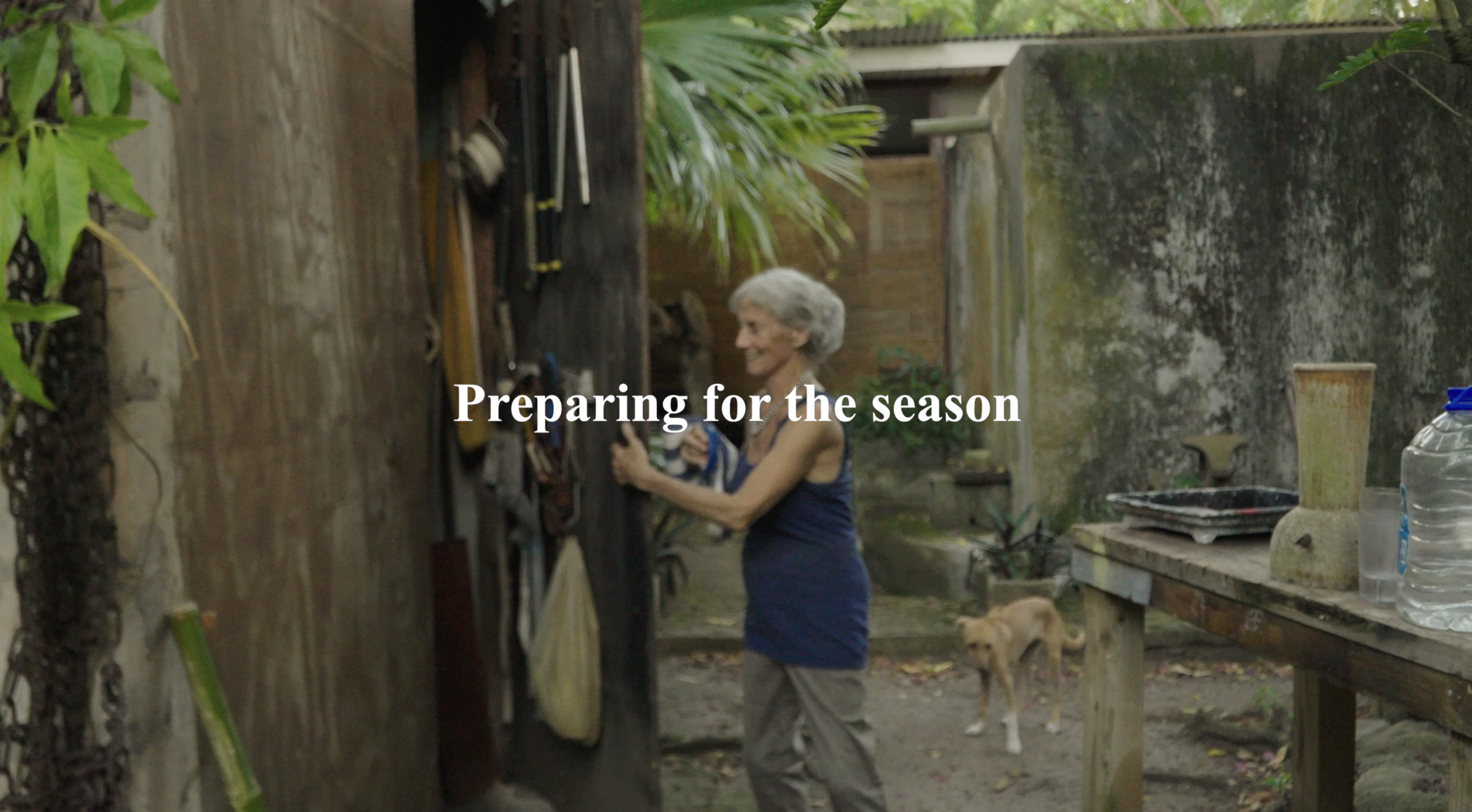
Charela is where the phrase farm to table becomes something I can actually show you. I went to the farm connected to the hotel and spent time with Muffy, walking through cabbage, callaloo, bananas, pumpkins and other crops and talking about seeds, soil and the work of recovering after the hurricane.
The connection to the hotel restaurant is important. The produce is not simply a decorative “garden” beside a resort; it is part of a working agricultural story that feeds into the kitchen. Muffy showed me cabbage that would be harvested for the restaurant, alongside callaloo, bananas and pumpkins growing on the farm. She also showed me leaves being put to use as animal feed and plants being saved for seed. Charela’s own restaurant describes its farm-to-table approach as using vegetables, spices and meat from the owners’ farm; it does not publish a fixed crop list, so these are the crops I saw and discussed during my visit. Le Vendôme’s restaurant and farm-to-table description.
One of the most revealing parts of the conversation was not a sustainability slogan at all. It was Muffy talking about patience: crops take time, trees take longer, storms can undo years of growth, and recovery happens plant by plant.
The hotel also has documented environmental measures around solar power, water conservation and waste management. For me, however, the strongest part of the story is seeing the farm and hearing the farmer explain how it works.
My Charela farm visit, filmed conversation and transcript-based report
2. Mount Kailash Rejuvenation Centre Saint Lucia
Set in the rainforest hills of Marc, Bexon, Mount Kailash is a very different kind of Caribbean stay: a secluded wellness retreat and herbal medicine centre rooted in Saint Lucian plant knowledge. I visited and verified the centre in person. Its grounds are used to harvest medicinal plants and herbs: the centre’s current website says its soursop leaves are wildcrafted from the Mount Kailash grounds and surrounding rainforest, and describes hand-harvested herbs processed at its Saint Lucia facility. Priest Kailash’s The NEW Herbal Manual is an illustrated guide featuring more than 50 herbs, their properties and recommended uses. The site does not publish a complete inventory of edible crops or confirm a guest-pick food garden, so I would distinguish its medicinal-plant harvest from a conventional farm stay. The retreat experience brings together herbal preparations, teaching and time in the surrounding forest. Mount Kailash’s current apothecary and herbal-harvest information.
The centre also operates an apothecary and herbal medicine school, so this is not simply accommodation with a wellness menu attached. The land, gardens and practical knowledge are central to the experience. Retreat accommodation is arranged through the centre, with private and group programmes available by application.
Explore Mount Kailash Rejuvenation Centre and retreat enquiries · My Ideal World’s visit and accommodation research

3. Frangipani Eco Lodge Barbuda
Frangipani is tiny, remote and deliberately simple. It is not a resort trying to make sustainability sound glamorous. It is an off-grid guesthouse and cabana on Barbuda’s Atlantic coast, created by local owners and built around a much lighter way of living.
When I visited, Afiya showed me the solar lighting, charging facilities and solar-powered guesthouse. I also saw the reality behind the system: a petrol generator was demonstrated for the water pump. That detail is important because it is exactly the kind of thing an honest sustainability story should include. Solar power does not mean every single piece of equipment is automatically powered by solar.
The current property information describes solar power, rainwater and well water, a very small footprint, dark skies and almost complete separation from the infrastructure of a conventional resort.
Frangipani’s current sustainability story · My Frangipani reporting

4. Flomarine Mustique
Flomarine is the most nuanced entry here. I filmed inside the villa with its staff, and I do not claim that Flomarine itself is an off-grid solar property. Instead, the sustainability story comes from two things I could actually investigate: the architecture I saw and the environmental programme of Mustique itself.
Inside Flomarine, Alex showed me the original plan and talked me through the house. We stood in the open living room where there were no conventional doors separating the space from the outside. When I asked whether there was a benefit, his answer was simple: “Yeah. Get the cool breeze.”
I also spoke with Chef Loretta about ingredients arriving from Saint Vincent, and Alex showed me plants sourced locally for the garden. The architecture makes daylight, shade, views and moving air part of the experience. I have deliberately stopped short of turning that into a measured energy-efficiency claim because I did not conduct an energy audit.
The wider Mustique Company, however, has a documented conservation programme covering land and marine protection, sustainable fishing, renewable energy, electric vehicles and carbon reduction. The island has a conservation area extending 1,000 yards from shore, and the company has reported a hybrid renewable-energy system and an ongoing transition toward more solar generation.
Mustique Company conservation programme · My filmed Flomarine visit and transcript-based report
5. Lamblion Apartments Antigua
Lamblion is one of the strongest small-property sustainability stories in this collection because the systems are unusually specific. Its environmental policy describes grid-connected photovoltaic panels, solar water heaters, rainwater harvesting, wastewater recycling, low-flow fixtures, composting and energy-management systems. Green Globe has also documented the property’s certification and environmental work.
I have also walked through Lionel and Lorylin’s garden myself. Their website says more than 100 kinds of plants grow across the grounds, and guests are welcome to pick herbs and fruit in season for their own kitchens. The published garden gallery identifies papaya, bananas, sage, soursop, mango, coconuts, tea herbs, aloe, kale and banana flowers, alongside raised vegetable beds. Lorilyn also explains that lemongrass. Traditionally called “fever grass” by her grandmother. Is used to make tea. The garden is fed by harvested rainwater, while garden and kitchen waste is composted back into the beds. See Lamblion’s garden and what grows there. Guests can harvest responsibly from an extraordinary collection of fruit, herbs and vegetables. During my garden tour Lionel explained the plants, how they are grown and what he does with them. One line from the recorded conversation stayed with me: “The poor ground is better than a rich home.”
That is why I would put Lamblion high on this list: the sustainability is not only about panels on a roof. It is about water, waste, food, gardening, community and how guests actually use the place.
Lamblion’s sustainability policy · My garden visit and transcript-based report · Check availability
Two more I would add to the Caribbean sustainability shortlist
These next two are not presented as first-hand stays. I added them because their current sustainability systems are unusually clear and substantial. They make the list stronger without pretending I personally stayed everywhere.

