
Farm to table dining becomes more interesting when you meet the person who planted the food. The menu gives you the finished dish. The grower can show you the work that came before it.
I have filmed food stories that lead into a Jamaican farm, an Antiguan plant based kitchen and a community space in Austin. They offer different relationships with a meal, rather than one interchangeable version of sustainable dining.
Muffy talks about seed and harvest behind Charela Inn’s food. Bushbungalow describes its plant based offer through the idea of food grown nearby. At Casa de Luz, Wayo speaks about the people gathered around the same table.
An interview records what somebody showed or explained during that visit. It does not audit every supplier or guarantee that the current menu, price or visiting arrangements remain the same.
Follow the relationship that interests you, then check the actual dish and the current arrangements before building a journey around it.
Charela Inn connects the restaurant with a working farm
Charela Inn’s Le Vendôme restaurant is in Negril, Jamaica. The operator describes a connection with its own farm, which supplies much of the restaurant’s produce. That is a specific supply relationship you can investigate beyond a broad farm to table slogan.
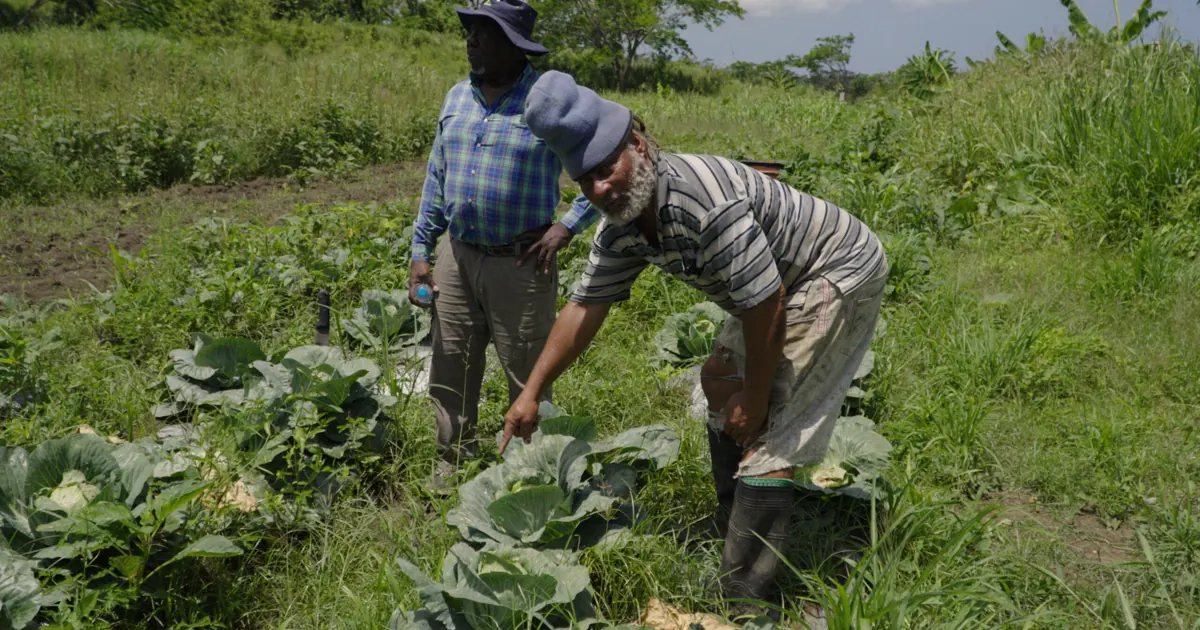
I spent time with Muffy in Haddon Hall, Green Island, walking among crops and talking about planting, harvesting and recovery after hurricane damage. Our full farm walk follows the cabbage, callaloo and decisions he showed me.
When I asked how he knew a cabbage was ready, the answer involved feeling the head rather than simply looking at it.
Feel them. Feel it. It’s hard.
That small instruction makes the relationship with the plate more concrete. Somebody has to know when the crop is ready and what to do when it is not. A restaurant can name a farm, but hearing the grower explains a different part of the work.
The current restaurant page also makes clear that the kitchen serves animal products. A farm connection does not make a menu vegan. If you want a plant based meal, confirm the actual dishes and ingredient requirements with the restaurant before booking.
The harvest includes decisions about the next crop
Muffy showed callaloo being kept for seed, alongside crops intended for the kitchen. The point was not only what could be eaten that day. Part of the growing work concerned what the farm would be able to plant next.
He also described crops recovering after the hurricane and the care still required. New shoots did not mean every plant was ready to produce again. The film records his account of that farm’s recovery, rather than a general claim that an entire region had returned to normal.
This is why I would ask a restaurant what is actually being harvested now. A longstanding farm relationship and a particular week’s available crop need different information. The answer can change without making the original relationship less real.
Do not assume a farm walk is automatically available to every diner or hotel guest. Arrange any visit with the people responsible and ask what is suitable on the day. A working field is somebody’s workplace before it is a travel experience.
Bushbungalow offers a plant based starting point in Antigua
Our Bushbungalow film is based in Freemans Village, Antigua. Its published description identifies plant based food and the phrase “Grown here not flown here”. That gives a local sourcing promise to follow rather than a reason to stop asking questions.
Watch the original Bushbungalow film for the food and the setting recorded during the visit. A film can introduce the people behind a kitchen. It does not establish a permanent menu or current opening schedule.
Before planning a meal, use the business’s own current contact channel to confirm that it is serving on your date and how to arrange the visit. Ask which produce is grown nearby, which ingredients come from elsewhere and how the meal can meet your requirements.
The wording also deserves a defined scope. A kitchen can use local vegetables alongside ingredients brought to the island. Ask about the particular dish rather than treating a memorable phrase as a declaration for every component of the business.
Casa de Luz puts a shared table at the centre
At Casa de Luz in Austin, I sat with Eduardo “Wayo” Longoria and talked about a community organised around whole plant food. The original conversation took place at the Toomey Road site. His explanation began with the kind of place he wanted people to create together.
My hope in talking to you about it is to inspire others to create places like this in their hometown.
In our Casa de Luz conversation, he describes people sharing a meal and the work of sustaining the community. Keep those statements attached to the interview period and speaker. They are an account of how he described the organisation, rather than an audit of its finances or governance.
Casa de Luz’s current website gives 1701 Toomey Road as its Austin location and describes breakfast, lunch and dinner. It also links to its current ordering and event information. Check those details for the service you intend to attend rather than assuming a filmed meal describes every sitting.
The centre’s language includes ideas about nourishment and wellbeing. I am not treating those descriptions as clinical evidence that a meal cures an illness. The concrete discovery here is a place using shared food as part of community life.
These are three different reasons to choose a food experience
Choose the Jamaican farm account if you want to follow growing work behind a restaurant’s ingredients. Choose the Antigua film if you want to investigate a particular local plant based food offer. Choose the Austin conversation if your interest begins with how a shared kitchen and table can bring people together.
They are not a ranked comparison of taste, price or environmental performance. The reporting contains different evidence for different questions. A meal can be interesting because of its grower, its method or its social setting without receiving an invented universal sustainability score.
For a practical plan, begin with one location and the time you already have there. Confirm the meal or visit, allow space for travel and avoid arranging an unannounced farm stop from a video caption. The people doing the work should be able to decide how visitors fit into it.
Our Caribbean slow travel guide builds around a workable base and actual reporting. One considered food visit can tell you more than rushing through several places whose stories you never have time to hear.
What should you ask before booking a farm to table meal?
Ask who grew the ingredients you are particularly interested in and what is currently available. Then ask how the restaurant handles substitutions when weather, yield or supply changes. A transparent answer can include food from more than one producer.
Confirm the menu format, total price and any booking conditions. For a dietary requirement, check the exact preparation with the venue. Plant based, organic and locally grown remain separate descriptions, and none automatically answers an allergy question.
Keep the source of each claim beside it. A filmed explanation, a current menu and a certificate provide different information. If you want to examine the wider operating promise, our restaurant sustainability claim guide follows sourcing, people and environmental records separately.
I want a meal to keep its connection with the people behind it. Give the grower and the kitchen room to explain the work, and choose a visit that respects the place as it actually operates.
Sources and further reading
Charela Inn’s current restaurant and farm sourcing description
Casa de Luz current site, meal services and location
Original Ideal World film of Bushbungalow in Antigua
Bushbungalow’s own contact channel for current arrangements
Sources and resource pages reviewed on 17 November 2026. Check current access, offers and operating arrangements before making a purchase or journey.
On this story
Comments, questions and answers from signed-in paid members. The conversation is shared with the app. Community contributions are not verified editorial findings.
Contribute evidence
Reviews share first-hand experience. Observations can include opinions and objections. Evidence is checked against its sources before publication. Community contributions do not change MIW scores.
Article discussions and evidence contributions are for paid members and are shared with the app.
Sign in to contribute or join the discussion Read this next
Best Local Food Apps in 2026, Find Farmers, Rescue Food and Eat Plant Based
Best local food apps for 2026 compared. Farmish, Too Good To Go, OLIO and HappyCow solve different problems. Find the right one for your area. Compare coverage.Read the story Keep exploring
Veg Box Subscriptions Compared for Organic, Local and Wonky Produce
Compare organic, local and wonky veg box subscriptions with real UK examples. Check current prices, delivery, origins and gift rules before choosing your box.Read the story Keep exploring