
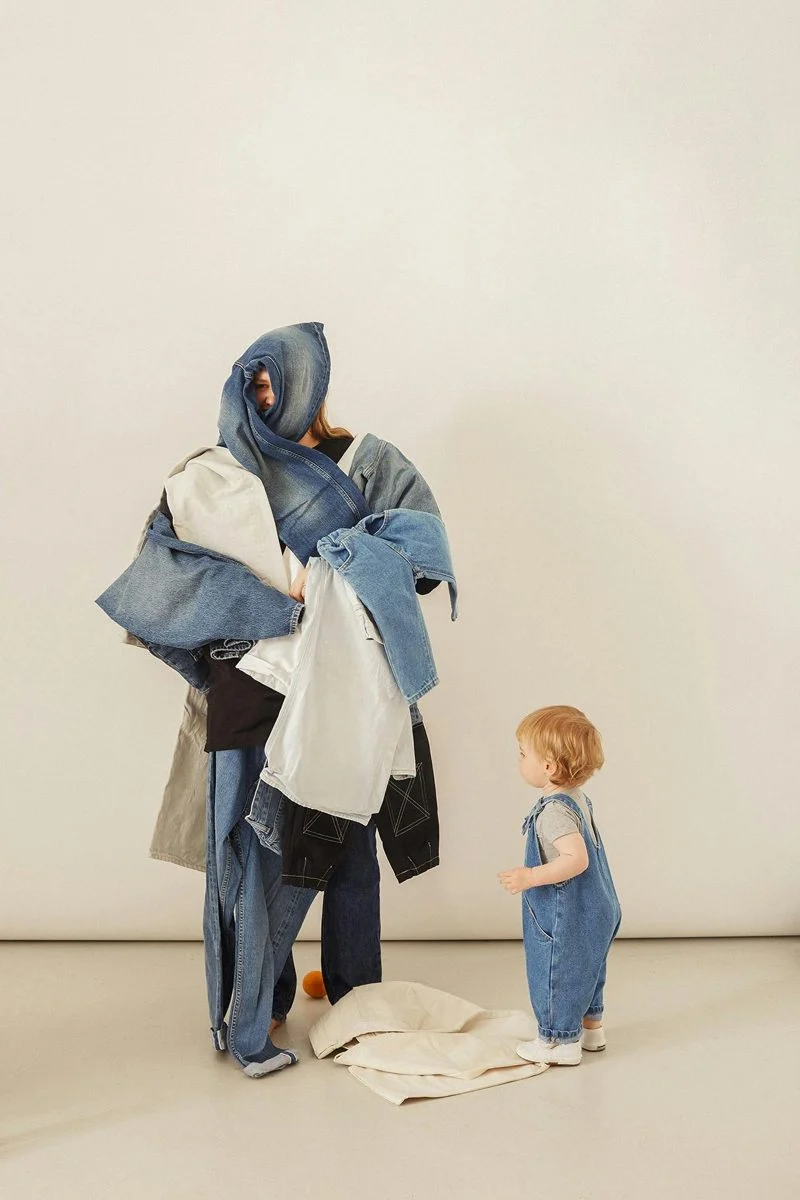
A child can outgrow a coat in a season and a car seat in a year. Rent the clothes children outgrow. Renting, borrowing and buying used make sense for most children’s clothes and toys. For anything that protects a child in a crash or a fall, you need a known history, and a shrug is not an answer.

Can children’s clothes and toys be reused?
Yes. They are often outgrown while they still have wear left, so borrowing or buying used is ordinary care.
Buying them used or borrowing them avoids a purchase you would repeat in six months. Wash what can be washed. For toys with small parts, check for recalls if the child still puts things in their mouth. Look at seams, choking hazards and whether battery compartments still close. That is enough for a jumper or a jigsaw.
A used coat is not the test for a car seat, a helmet, a cot mattress or a bike trailer. These are asked to work once, in a crash or a fall, and you cannot see whether they already have. A friend or a rental company can be careful and still not know the history. If nobody can tell you, do not use it for the safety job.
Can you treat a used car seat like a used coat?
No. The UK seat rules apply to the seat in your car, and you need its history.
The UK government’s page on child car seats sets out the rules for any seat you use, new or old. Children must normally use a child car seat until they are 12 years old or 135 centimetres tall, whichever comes first. Height-based seats carry an approval label with a capital E in a circle and “R129”, and must be rear-facing until the child is over 15 months. Weight-based seats carry a label reading “ECE R44”. If you put a rear-facing seat in a front passenger seat, the airbag must be deactivated. Check the gov.uk page for the full rules and any exemptions, for example for disabled children.
A used or rented seat has to meet those rules on the day you fit it. Beyond the law, ask:
A child car seat can have hidden damage after a collision, even when the shell looks normal. Ask the owner directly and do not accept a seat with an unknown history; follow the manufacturer's crash-replacement guidance and local road-safety advice rather than relying on a seller's reassurance.
Is the instruction booklet there, and are the labels readable? The booklet and labels tell you which child sizes, installation method and vehicle positions the seat is designed for. Without them, you may not be able to confirm that it fits your child or car, or install it correctly.
Look up the exact model with the manufacturer if the booklet is missing.
Is there any crack, frayed harness or sticky buckle? These are functional safety parts, not cosmetic wear. A buckle that does not click and release cleanly, a harness that is frayed, or a cracked shell can make a seat unsafe to use.
Do not buy it on the promise that a replacement part will be easy to find; confirm the manufacturer supports that exact model.
Does the manufacturer give a date after which the seat should be retired? Some manufacturers specify a service life because plastics, straps and components age with heat, sunlight and use. Find the date or lifespan for the exact model and compare it with the seat's manufacture date, not the date the seller bought it.
A recall can affect a particular model or production batch, and a seat can look perfect while still being subject to a safety notice.
Search the manufacturer's recall page and the relevant national product-safety database using the model and serial details before handing over money.
If you cannot answer those, it is not a cheap seat. It is an unknown object where you need a known one.
What about helmets and cot mattresses?
Replace a helmet that has taken a serious knock. A cot mattress is not a toy you pass on without knowing its condition.
You cannot see the damage in the foam. A cot mattress must fit the cot with no gap a baby could slip into. A broken seam or a soft sag is a reason to stop using it, not to pass it on. Soft toys that cannot be cleaned and that a baby will chew are poor things to circulate, while a wipeable wooden toy is a better candidate.
What should a rental company tell you?
How it cleans and checks the kit, what you owe if something breaks, and what happens if you need it longer.
A promise such as “no charges for stains” is marketing until you have read how the contract defines a stain. Ask for the replacement cost in writing before the item arrives, and if insurance is offered, read the excess.
Check the delivery window, which floor it will be carried to, and whether you must assemble something you have never seen. If assembly affects safety, the instructions need to be in the box. Also ask who pays if an item is stolen from a hallway, who pays if a part is missing on arrival, and how long you have to report damage. Those answers should be on the page before you pay a membership fee.
Borrowing from a friend skips the contract but not the checks. It is fine for a high chair you can inspect yourself. For a car seat, ask the questions above out loud and agree who is responsible if it fails. Friendship is not a service history.
When is renting worth it?
For a coat, a snowsuit or a party outfit the child will outgrow, where a quiet bit of wear is not a safety failure.
Board books and a baby bouncer you will use for four months belong in that group too. Add up a year of those purchases and the rental or second hand price is often lower. A garment worn by three children also does more than one worn by one child and then bagged up. None of that justifies passing on a seat that has been in a crash.
When your child has finished with clothes, mend them or pass them on only if someone will wear them. That is the same test as for an adult’s clothes. Do not assume a charity shop wants a stained sleepsuit. Wash it, and be willing to bin what is truly finished.
Inspect a car seat or a helmet before you trust it, whoever owned it last. Clothing is a shelf in the My Ideal World app, which is a fair place to look at what children wear. It is not a fitting check.
When does renting fail to help?
When you rent and also buy. The rental only helps if it replaces a purchase.
A rental can save money and storage space when a child needs an item briefly, but it is not automatically the lower-impact option. The useful comparison includes delivery, collection, cleaning, packaging, damage rules and how many times the item is reused. If the rental is delivered across the country for a few weeks and then sits unused, the environmental case is weaker than the headline suggests. Start with local borrowing, family swaps and community groups, then rent the specialist item you genuinely need. The point is not to turn parenting into another subscription; it is to avoid buying a new item for a short stage of childhood.
On this story
Comments, questions and answers from signed-in paid members. The conversation is shared with the app. Community contributions are not verified editorial findings.
Contribute evidence
Reviews share first-hand experience. Observations can include opinions and objections. Evidence is checked against its sources before publication. Community contributions do not change MIW scores.
Article discussions and evidence contributions are for paid members and are shared with the app.
Sign in to contribute or join the discussion Read this next
Best Sustainable Fashion Apps for Buying Less
Best sustainable fashion apps in 2026 for ethical brands, resale, repairs and natural fibres. Compare what each app can really verify. Compare the trade-offs.Read the story Keep exploring
Repair clothes you own, or pass them on
Donating clothes is not the same as those clothes being worn. Repair clothes you own, or pass them on, only when another person will actually wear them.Read the story Keep exploring