

Ethical, recycled and conflict free are labels, not measurements. The useful question is what was checked, by whom, and for this piece rather than for the brand. Ask what was checked on this piece, and who checked it.
A ring is a small object with a long supply chain. Someone mined or recycled the metal, someone cut or grew the stone, and someone chose the word on the website. A standard can describe a company. It cannot, by itself, describe the ring in your hand.
What can a jewellery standard actually say?
It can describe a member company or a traced metal pathway. Membership is not a stamp on the ring in front of you.
The Responsible Jewellery Council has published standards since 2005. Its Code of Practices covers ethical, social, human rights and environmental practices in a member company. Its Chain of Custody standard is a separate document, which the council describes as an approach for companies handling and trading gold, silver and platinum group metals so that those metals can be traced. There is also a further standard for laboratory-grown material. The council sets out all three on its standards page.
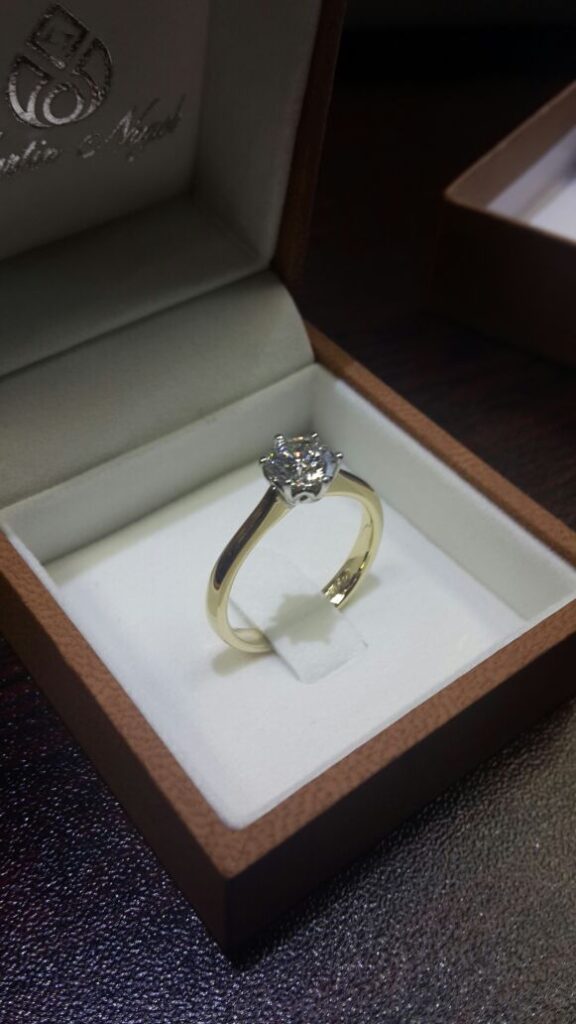
Membership is not a stamp on your ring. A company can be a member, or be working towards the code, without the particular band you are looking at having a chain of custody record. A chain of custody claim covers the metal pathway that the standard covers. It is not a guarantee that every worker in the company’s history was well treated, and it says nothing about a diamond unless the diamond is in a scheme you have been shown. Ask whether this item, not the company, is covered, and ask to see the paperwork. If the answer is the logo on the about page, you have a logo.
What do recycled, lab grown and conflict free usually mean?
Each one is a narrow claim. Ask which material it covers, and ask to see the record for this piece.
Recycled metal can reduce demand for newly mined metal, but only if the seller can say where it came from and how it was tracked.
Ask for the refiner or chain of custody evidence and whether the claim applies to the whole piece, its setting and its findings.
Lab-grown stones avoid extracting that stone from a mine, which may matter if you want to avoid mining impacts. They still require energy, equipment and labour, and they are not automatically low impact.
Ask how the stone was grown, where, whether it was treated and what evidence supports the seller's environmental claims.
A natural stone may be the right choice if origin, durability and the character of the stone matter to you, but 'natural' does not explain its mining conditions.
Ask for the named stone, origin if known, treatments and any independent grading report. Be cautious when a seller uses an attractive origin story without documentation.
Conflict free often covers a narrow set of conflict financing concerns. It does not cover wages, worker safety, environmental damage or every mineral in the piece.
Ask which standard or scheme is being used, what materials it covers and whether the claim is verified for this specific stone or only for the supplier.
What should the metal mark tell you?
Whether the piece is solid or plated, and whether a British assay office stamped it.
Plated and solid metal wear differently, and the price should tell you which you are holding. A thin plating rubs through where a ring touches a desk, so the description should give the base metal and the thickness of the coating. A hallmark stamped by a British assay office is a more serious mark than a product adjective. If a piece has no hallmark, ask what the metal is. If you are told the piece is exempt from hallmarking, ask under which rule.
Second-hand jewellery is often the most defensible purchase here, because the mining has already happened. It is also where descriptions are loosest. “Victorian style” is not Victorian, and a stone can be replaced while the setting is kept. Buy from someone who will write down the metal, the stone and any treatment, and who will take the piece back if that description is wrong. A market stall that will not may still offer a fair price for a pretty object, but it is not offering provenance.
Is keeping the piece part of the same question?
Yes. A repair keeps metal that has already been mined. Melting it down is how the hallmark disappears.
The longest life for a piece of jewellery is usually the one it already has. A jeweller who repairs is more useful than a brand that only replaces. Ask the price before you agree, and ask what solder or metal the repair adds, because a repaired ring with unknown solder is still your ring but no longer has a simple provenance story.
Selling or melting down a piece feeds the recycled stream, which is legitimate, but it is also how hallmarks and history disappear. If it could matter to someone else in the family, ask before turning it into scrap. A ring is not a T-shirt. You cannot donate it into a system that un-mines the metal. Clothes are a different object. Mend what you wear, or pass it on only if someone else will wear it.
What should you ask before you pay?
Who checked this piece, what the stone is, whether it is solid, and what happens if the description is wrong.
Where did the metal come from, and is there a chain of custody record for this piece or only a company membership? A chain of custody record connects the material in the item to a documented source; a membership badge may only show that a business belongs to an organisation.
Ask to see the document and check that it covers the metal in the piece you are buying.
What is the stone, was it mined or grown, and has it been treated? These details affect value, durability and the truth of the product description. Treatments can change appearance and care requirements, while a lab grown stone is not the same as a mined natural stone.
Get the description in writing before paying.
Is the piece solid or plated, and is it hallmarked? Solid precious metal can usually be repaired and refinished differently from plated jewellery, where wear may expose the base metal.
A hallmark can help verify metal fineness where hallmarking is regulated; check the mark and weight rather than relying on colour or a seller's wording.
Knowing the maker gives you somewhere to go if a clasp breaks, a stone loosens or a ring needs resizing. A repairable piece is more likely to stay in use than one that must be discarded after a small failure.
Ask about spare parts, repair fees and whether repairs affect any warranty.
What is the return window if the description turns out to be wrong? Jewellery can be difficult to assess from photographs, especially for stone size, colour and finish. Check the return deadline, condition requirements and who pays insured postage before ordering.
Keep the listing and written promises in case the delivered piece differs from the description.
Ask for the answers by email so you have them in writing. A spoken “it’s ethical” at the till lets the word survive without a fact attached.
Ask for the record on this piece, not the adjective on the brand. The My Ideal World app is where you look past a label, at materials, ownership and the evidence behind a product. A membership logo is not that record.
What were people actually asking for?
Evidence about the piece, not another list of brands that use the word ethical.
A person asking r/EngagementRings for ethical jewellers was not looking for another list of brands. They were trying to work out whether claims about diamond and gold sourcing meant anything beyond marketing. Replies raised a useful distinction between recycled gold and upcycled gold, and suggested pre-owned jewellery as another route. Read the discussion. That is why this guide asks for evidence about the actual metal and stone in the piece. A brand-level promise cannot tell you where this ring came from, what happened to its materials or who handled them.
On this story
Comments, questions and answers from signed-in paid members. The conversation is shared with the app. Community contributions are not verified editorial findings.
Contribute evidence
Reviews share first-hand experience. Observations can include opinions and objections. Evidence is checked against its sources before publication. Community contributions do not change MIW scores.
Article discussions and evidence contributions are for paid members and are shared with the app.
Sign in to contribute or join the discussion Read this next
Best Sustainable Fashion Apps for Buying Less
Best sustainable fashion apps in 2026 for ethical brands, resale, repairs and natural fibres. Compare what each app can really verify. Compare the trade-offs.Read the story Keep exploring
Good On You Alternatives for Ethical Fashion
Good On You alternatives for ethical fashion: compare brand ratings, natural fibres, repairs and material evidence before buying another garment in 2026.Read the story Keep exploring