

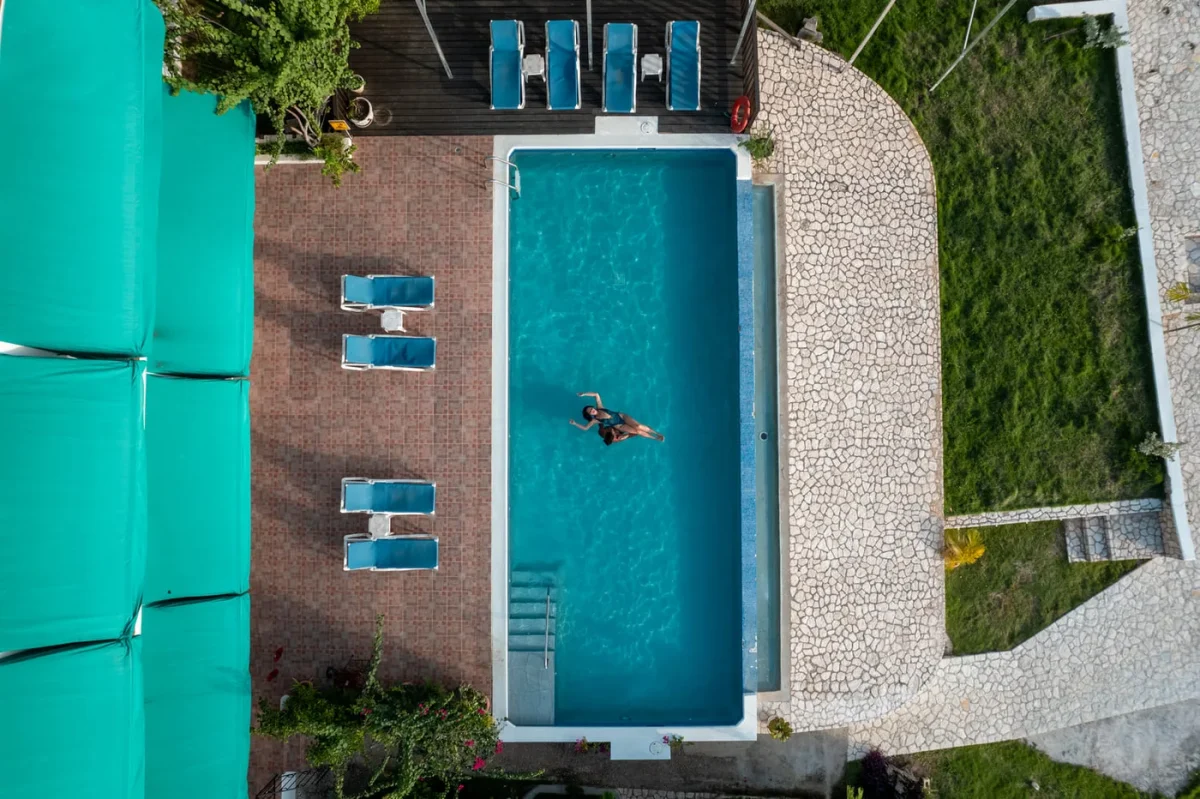
Jamaican owned hotels give you a way to choose who receives your room payment. Charela Inn and Travellers Beach Resort are strong places to begin a search for Black owned hotels in Negril. Maroon homestays require a different conversation, with the community arranging your visit. Neither a Jamaican address nor a green logo tells you who owns the land.
The money matters. In May 2024, tourism minister Edmund Bartlett said 40% of US$4.38 billion in tourism earnings for fiscal 2023/24 remained in Jamaica, reported by The Gleaner. That is his dated national estimate. It is not a calculation for your hotel, and it does not mean the rest never passed through a Jamaican worker’s hands.
I want more of our spending to reach the people growing the food, maintaining the rooms and living beside the beach. So this guide follows the owners, then asks what the business actually does. A local surname earns no exemption from the Throne Standard. Download the My Ideal World app for the evidence, the scores and the notes that do not fit in this list.
My own film at Charela and farm walk supply the lived material here. The other profiles are research, using the linked hotel pages, ownership reporting and community sources. I have not stayed at every property. Read this alongside the Jamaica destination guide when you plan the journey.
Jump to the area comparison, Black Jamaican owners, Maroon stays, Treasure Beach, hotel groups or booking questions.
Where should you stay in Jamaica?
Choose the area before the hotel.
Negril is the clearest starting point for a beach trip with several documented Black Jamaican hotel owners. Treasure Beach offers a different week around smaller stays and the south coast’s farming communities. Portland is where this guide’s Maroon visits and community accommodation sit. The right owner at the wrong end of the island still leaves you spending your holiday in a vehicle.
| Area | Choose it for | What to settle before booking |
|---|---|---|
| Negril beach | A beach holiday with several independently owned hotels and places to eat outside the property | Beachfront and West End cliff addresses are different choices. Check the actual entrance and transport. |
| Negril West End | A smaller cliff stay and time away from the long sandy beach | Cliff access is not a supervised swimming beach. Ask about sea entry, steps and transfer costs. |
| Treasure Beach and St Elizabeth | Guesthouses, farming communities and a slower south coast week | Arrange the arrival journey and ask what is operating locally during your dates. |
| Montego Bay | A city and north coast base with a wide hotel choice | Compare the exact location, noise and transport costs, not a resort group name. |
| Runaway Bay and the Ocho Rios area | A resort stay with more inclusions or a family programme | Read age rules and the specific property inclusions. One group contains very different hotels. |
| Portland and the Rio Grande Valley | Community visits, Maroon heritage and time inland | Get the host or council confirmation before travelling. Rural accommodation is not always instantly bookable. |
| Kingston, Bull Bay and the eastern hills | City culture, surfing or a stay beyond the western tourism strip | Match the address to your plans. A surf camp, a city hotel and a hill farm are not interchangeable. |
For a first trip, I would choose one base and allow time to know it. A second base makes sense when you have enough nights to absorb the transfer. It makes less sense when every morning becomes packing. Our guide to where to stay in Jamaica and Negril or Montego Bay comparison help narrow that choice.
How do these Jamaican hotels compare?
Ownership and ratings answer different questions.
The tables distinguish the owner, the Throne Standard eco score, guest ratings and operating evidence. Scores reflect the Throne Standard index updated on 3 November 2026. Eco, purity and people are separate measures, each out of five. A good guest rating does not replace environmental evidence. An undisclosed practice earns no evidence credit, but does not prove physical harm.
Google figures are the linked snapshot dated 29 October 2026. TripAdvisor figures were observed in search results on 6 November 2026, which may display cached totals. They are not live counters. A rating belongs to one property, never to every hotel in its group.
“Listed open” means the Jamaica Tourist Board’s reopening page lists that property as open. It does not mean a room is available for your dates. “Ask” means the evidence does not establish current operation or the arrangement needs a direct conversation. Please do not travel to a rural host on the strength of an old review.
Which hotels in Jamaica are Black owned?
Start with the families named here.
Charela Inn, Le Mirage and Travellers Beach Resort have named Jamaican family ownership sources. Higher Level JA is in the Bull Bay hills, away from Negril. Travel Noire’s Black owned Jamaica feature identifies the Wellington business and Rohan and Ellis’s retreat. Daniel Grizzle describes his African descent in the interview linked below.
| Hotel | Where | Owner, with source | Throne Standard | TripAdvisor | Open now | |
|---|---|---|---|---|---|---|
| Charela Inn Inn, 59 rooms | Seven Mile Beach, Negril | The Grizzle family | 1.8/5 | 4.4 (705) | 4.5 (368) | Listed open |
| Le Mirage Adults only hotel, 12 rooms | West End, Negril | The Grizzle family | 1.3/5 | 4.1 (71) | 4.2 (80) | Enquiries offered. Confirm dates |
| Travellers Beach Resort Beach hotel, 60 rooms | Seven Mile Beach, Negril | The Wellington family | 1.3/5 | 4.4 (1,705) | 4.3 (1,371) | Listed open |
| Higher Level JA Hillside cottages, current capacity unconfirmed | Bull Bay hills, St Thomas | Rohan and Ellis, profiled in 2021 | 1.6/5 | No listing found | No rating verified | Booking offered. Confirm dates |
Is Charela Inn Black owned? The Grizzle family owns the hotel and farms.
Charela Inn is owned and run by the Grizzle family, whose Jamaican and French family history is set out in the hotel’s own FAQ. Daniel and Sylvie Aicha Grizzle acquired the small inn in 1980. Today the property has 59 rooms on Seven Mile Beach, with the family also connected to Le Mirage on the cliffs.
Daniel’s account is worth reading. In a 2021 interview, he describes farming before hotel ownership, and says the farms financed the hotels. That order changes the story. The land was producing before the tourism business needed a farm to table line for its menu.
The restaurant page now describes Cocoa Farm as 174 acres and names callaloo, cabbage, lettuce, okra, string beans and ackee among its produce. It also supplies animal products. Charela is a mixed kitchen, so a plant based guest should agree meals rather than assume everything on a local menu is suitable.
In the farm film, cabbage is handled as a crop that can split if left too long, leaves are saved for livestock, and callaloo is left for seed. Those are the details I want a hotel to show. The discussion includes spraying, so it cannot support an organic or pesticide free claim. The hotel’s FAQ also states an annual September closure. Check the dates before arranging travel.
The Throne Standard records 1.8/5 for eco, 1.2/5 for purity and 2.0/5 for people. Its assessment credits partial farm sourcing and family ownership, with lighter evidence for the gardens, buildings, staff continuity and music. Energy, water and waste practices remain undisclosed. Our Negril hotel guide compares the wider choices.
Is Le Mirage a beach hotel? The Grizzle family’s smaller stay is on the cliffs.
Le Mirage is a 12 room, adults only hotel on Negril’s West End cliffs, owned by the same family as Charela. The Charela history identifies the sister property, and Le Mirage’s own site describes a clothing optional setting with a pool and continental breakfast.
This is a specific choice, my loves. The adults only policy rules it out for a family booking. A traveller wanting a small cliff base, who is comfortable with the clothing policy, has a different starting point from someone seeking a sandy beach outside the room.
The rooms page says guests can use Charela’s beach, including chairs and towels, and lists a fridge and coffee maker. Ask how you will travel between the two addresses. Access to a sister property is not the same as having its beach outside your room. The front desk hours on the site are also limited, so a late arrival needs arranging.
The Throne Standard records 1.3/5 for eco, 1.0/5 for purity and 1.3/5 for people. Its assessment gives limited credit for the natural setting and private ownership claim. Purity practices and most environmental measures are undisclosed. Shared ownership does not give Le Mirage Charela’s farm evidence or an identical score.
Watch the Le Mirage film for the setting, then read the clothing optional hotel rules. Confirm the rules directly before booking, particularly if your expectations differ from those of your travelling companion.
Who owns Travellers Beach Resort? The Wellington family continues Winston’s business.
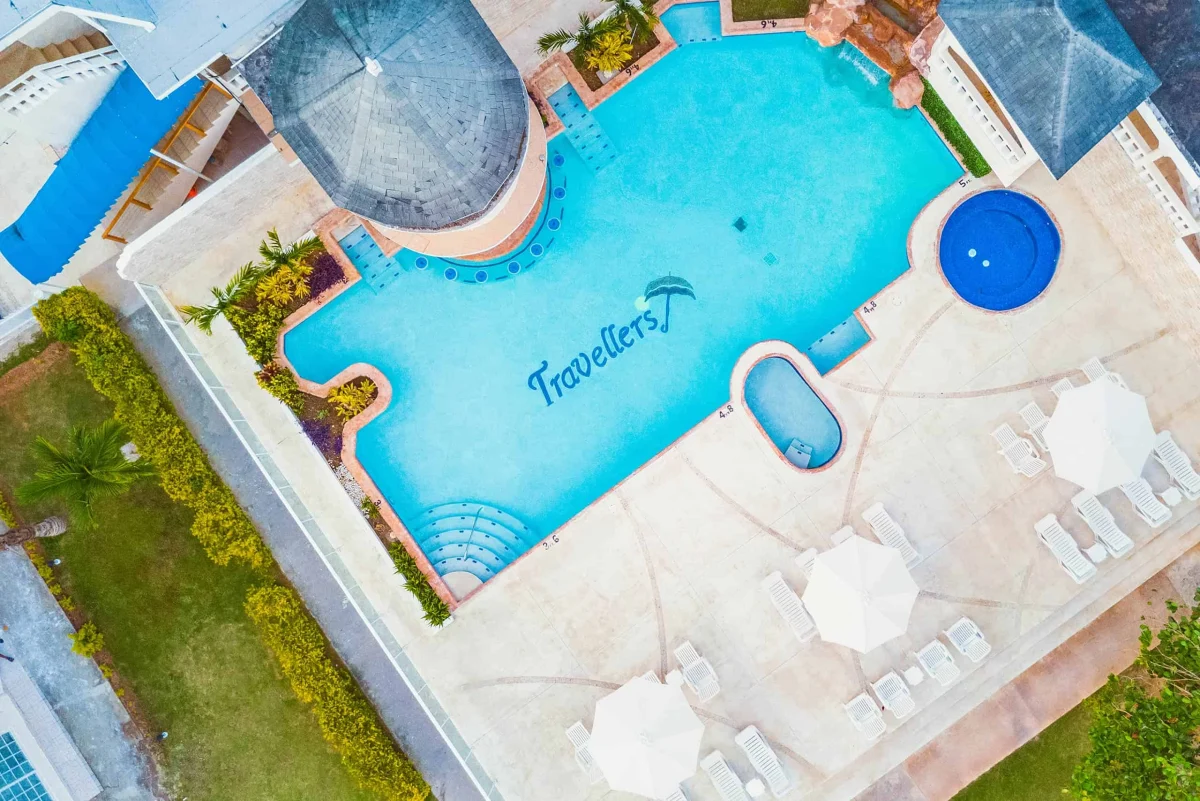
Travellers Beach Resort is the Wellington family’s 60 room hotel on Seven Mile Beach. Its official history names Winston Wellington as the founder in 1992 and describes his sons Winthrope, Winfield and Wingate continuing the business from 2011.
The hotel website lists a pool, gym and dive shop alongside the beachfront accommodation. It suits someone wanting a beach base with hotel facilities while keeping the ownership decision visible. Families should confirm the room layout and pool supervision for their booking.
The family’s education work is its clearest documented community connection. The Negril Education Environment Trust, N.E.E.T., was founded in 2003 and is based at the resort. The hotel describes books, computers and educational programmes. If contributing is part of your reason for choosing Travellers, ask the team what support the programme needs now rather than arriving with donations nobody requested.
The Throne Standard records 1.3/5 for eco, 1.0/5 for purity and 2.4/5 for people. Its assessment credits ownership and the named N.E.E.T. programme, alongside a more limited beach cleanup claim. Purity measures remain undisclosed. The education work does not establish that the whole kitchen is local or the electricity renewable.
Ask the kitchen what a full plant based day of food looks like, and ask who supplies the produce. You can stay with a Jamaican family business and still eat beyond the hotel. Our Jamaica beachfront stays guide helps compare the location with the wider coast.
Can you stay at Higher Level JA? Its cottages are advertised and your dates need confirming.
Higher Level JA advertises hillside cottages and a booking link on its current website. Rohan and Ellis described the St Thomas farm retreat in a Travel Noire interview, published in 2021 and updated in 2022. Rohan was from St Thomas and Ellis had moved from the UK. Their account places the start in 2017.
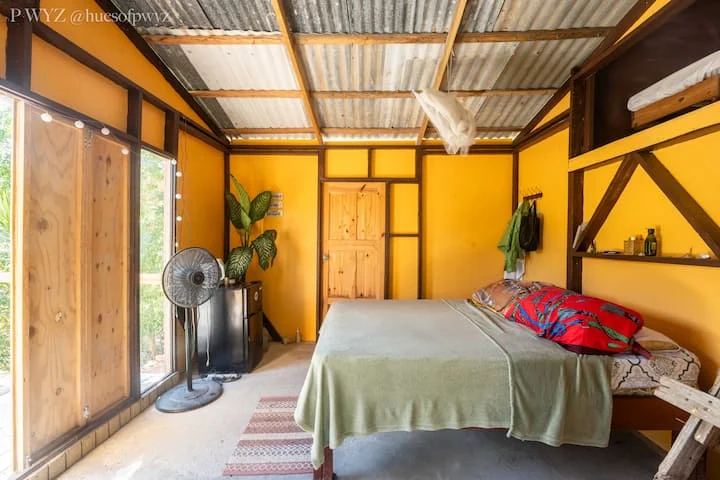
That story concerns a family social enterprise on agricultural land, rather than an international hotel brand. A Herb Jamaica listing describes Banana Cottage on a hilltop fruit farm, with an outdoor shower and kitchen and a meat free Rasta menu. It is a third party description, not a fresh inspection of the cottage or a promise that the same arrangement is being offered now.
The Throne Standard records 1.6/5 for eco, 1.0/5 for purity and 1.3/5 for people. Its assessment credits the fruit farm and natural setting, with general community and cultural claims. Purity measures remain undisclosed. The website also describes youth initiatives, but that does not establish a verified drinking water result or farm chemical policy.
If this is the kind of stay that calls you, ask who is hosting, what is included and how the final road is reached. The site places the cottages in the Bull Bay hills. Get your dates, accommodation and payment details confirmed before booking transport. The booking link is an invitation to enquire, not proof of availability for your week.
Can you stay with Maroon communities in Jamaica?
Arrange the visit with the community.
Moore Town’s community page has described family homestays, while Charles Town’s Camp In was part of a specific festival. The Jamaica National Heritage Trust identifies both as Maroon communities. The arrangements differ, and neither is an activity to add to a package without the hosts’ agreement.
| Hotel | Where | Owner, with source | Throne Standard | TripAdvisor | Open now | |
|---|---|---|---|---|---|---|
| Moore Town Maroon homestays Community homestays, capacity unconfirmed | Moore Town, Portland | Maroon family hosts described by the community | Not on the index yet | No listing found | No rating verified | Website unavailable. Hosting unconfirmed |
| Charles Town Camp In Festival camping, capacity unconfirmed | Charles Town, Portland | Charles Town Maroon community | Not on the index yet | No listing found | No rating verified | 2026 event ended. Future dates unconfirmed |
Are Moore Town homestays available? Current hosting needs community confirmation.
Moore Town’s community development page, available in a cached search copy during this check, described stays with Maroon families. The website itself returned an error on 6 November 2026. I could not verify a current booking contact or which households are hosting. Keep this as a community stay to investigate, not a confirmed room recommendation.
Moore Town is in Portland. UNESCO’s heritage listing recognises the community’s living heritage, including Kromanti traditions, music and ancestral knowledge with West and Central African roots. That recognition belongs to the community. It does not mean every visitor has permission to attend a ceremony, record a song or take photographs of private life.
The development page also connects the community with crops, herbs and craft. I would go with time to listen and pay the agreed host fee. A family meal or guided visit can support the people arranging it directly. It should never become an expectation of free access to someone’s home or spiritual practice.
There is no named accommodation entry on the Throne Standard index and no verified hotel rating. Food, water, electricity and the sleeping space depend on the host family. An attraction review cannot answer those questions or establish one uniform homestay product.
If you reach the council through a trusted local contact, ask whether an overnight or daytime visit is appropriate before discussing transport and payment. The family decides what welcome looks like.

Is Charles Town Camp In a hotel? It is festival camping with dates to confirm.
Charles Town Camp In is a community festival camping arrangement, not a hotel operating on an ordinary nightly calendar. The 2026 conference website advertised the eighteenth festival for 20 to 23 June 2026. The Gleaner’s June report described tent rental, camping space and food options.
Those four days have passed. The source does not establish the dates, programme or accommodation for 2027, and I will not turn an annual pattern into a confirmed future booking. Contact the organisers when the next programme is announced and ask whether the Camp In is part of it.
The reason to consider this stay is participation in a community led gathering about Maroon culture and history. If you only want a quiet room and a pool, it is the wrong enquiry. Camping asks different practical questions. Find out what is supplied, what you bring yourself, the bathroom arrangements, whether meals can meet your needs and what happens in heavy rain.
There is no named lodging entry on the Throne Standard index and no verified separate hotel rating. The published programme does not establish food sourcing, water treatment or an energy system for the camping area. Those practical details belong in the organiser’s next programme and your booking conversation.
Respect how the community identifies itself. Maroon history should not be casually folded into a claim of Taíno hotel ownership, and a ceremonial invitation is never implied by paying for a tent. Read the programme, agree the arrangements and follow the hosts’ rules on photography and recording.

Are there other Jamaican owned hotels in Negril?
Several families offer different kinds of stay.
White Sands, Rondel Village and Negril Footeprints have documented local family histories. I have kept them separate from the Black ownership category because the sources here establish the family businesses without requiring me to assign an identity the owners have not stated.
| Hotel | Where | Owner, with source | Throne Standard | TripAdvisor | Open now | |
|---|---|---|---|---|---|---|
| White Sands Negril Family hotel, 45 rooms | Negril | The Moo Young family | 1.6/5 | 4.3 (1,748) | 4.3 (448) | Listed open |
| Rondel Village Hotel and villas, 56 rooms | Negril | The Wright family | 1.6/5 | 4.3 (673) | 4.2 (388) | Listed open |
| Negril Footeprints Hotel Boutique hotel, current room total unconfirmed | Negril | The Foote family | 1.2/5 | 4.7 (66) | 4.0 (258) | Listed open |
Is White Sands Negril family owned? The same family has grown it since 1971.
White Sands is the Moo Young family’s hotel, expanded from four apartments in 1971 to 45 rooms and managed by the second generation, according to its own history. Its room choices matter more than the broad description. A kitchenette changes how often you can shop and cook for yourself, while the property says most rooms do without a television.
The Throne Standard records 1.6/5 for eco, 1.5/5 for purity and 2.3/5 for people. Family continuity is useful evidence, not proof of organic food or renewable power. Compare the current published tariff by season and room type, then ask for the full total including any taxes and fees.
Does Rondel Village grow food? Its greenhouse supplies the restaurant.
Rondel Village says its greenhouse grows peppers, tomatoes, callaloo and herbs for the kitchen. Its about page describes 56 rooms, including eight deluxe villas with kitchens, and the food page names the late Joyce Wright as the family business’s matriarch.
That gives you a real question to ask about dinner. What came from the greenhouse today, and what was bought elsewhere? A greenhouse does not tell us the share of every meal or the methods used on every supplier’s farm. The Throne Standard records 1.6/5 for eco, 1.4/5 for purity and 2.0/5 for people. Ask about the advertised farm to table events separately from an ordinary room booking.
Who owns Negril Footeprints? The Foote family’s story includes a recent rebrand.
Negril Footeprints is connected to the Foote family’s hotel business established in 1985. The Gleaner’s 2025 report names the family shareholders and directors while explaining the repositioning of the property.
The rebrand matters when comparing reviews. The TripAdvisor table uses the named Negril Footeprints listing, while the preserved Google snapshot may reflect a longer operating history. Do not expect the review totals to match. The Throne Standard records 1.2/5 for eco, 1.3/5 for purity and 1.6/5 for people. Confirm the current room options and operation through the hotel before relying on an old room count.
Where should you stay in Treasure Beach?
Choose a host and leave time for the community.
Treasure Beach offers several smaller stays connected to Jamaican owners, with Jakes the best documented family hotel in this part of the list. Billy’s Bay, Calabash Bay, Great Bay and Frenchman’s Bay are distinct places within the south coast area described by Jamaica Information Service. Check your actual address before assuming a shop or restaurant is beside it.
| Hotel | Where | Owner, with source | Throne Standard | TripAdvisor | Open now | |
|---|---|---|---|---|---|---|
| Jakes Hotel, cottages and villas, current capacity unconfirmed | Treasure Beach | The Henzell family | 2.3/5 | 4.6 (977) | 4.4 (753) | Listed open |
| Taino Cove Guesthouse, current room total unconfirmed | Treasure Beach | Returning Jamaican owner, unnamed in the profile | Not on the index yet | 4.6 (143) | 4.5 (56) | Enquiries offered. Confirm dates |
| Irie Rest Guest House Guesthouse, host managed listing, current capacity unconfirmed | Billy’s Bay, Treasure Beach | Lennie, born and raised in Billy’s Bay | Not on the index yet | 4.5 (46) | 4.4 (41) | Ask host before booking |
Who owns Jakes? The Henzell family built the hotel around Treasure Beach.
Jakes’ own history and FAQ names founder Sally Henzell and her husband Perry. It is a family hotel story tied to Treasure Beach, rather than a resort brand which happens to have a property there. The room, cottage and villa options need individual comparison, especially if you are planning to cook or travelling with children.
The Throne Standard now records 2.3/5 for eco, 1.2/5 for purity and 3.0/5 for people. The assessment credits local sourcing and buildings, with stronger ownership evidence and named community work. Other practices are more lightly evidenced or undisclosed. That does not establish that every purchase stays within the village.
Is Taino Cove Indigenous owned? The name does not establish that claim.
Taino Cove has an AFAR profile describing a Jamaican owner who returned from the US. The guesthouse website offers room enquiries. Neither the name nor that nationality story proves Taíno descent, and I have not labelled it Indigenous owned.
Use the profile as an ownership lead and confirm the present hosts directly. No exact entry appears on the Throne Standard index. Guest ratings do not establish its food sourcing or water practices.
Is Irie Rest locally run? Its host identifies himself as a Billy’s Bay owner.
Irie Rest’s host controlled listing names Lennie as the owner and says he was born and raised in Billy’s Bay. It describes a kitchen, screened patio and an optional cook, with children welcome. These are useful details for an independent stay, but confirm what applies to the particular unit being offered.
There is no exact Throne Standard entry. Ask the host about any produce grown on site, the optional cook and the current food arrangements before treating the kitchen as a farm to table service.
Are Jamaica’s all inclusive groups locally owned?
Some are, but compare the individual property.
Couples and the Sandals and Beaches group have Jamaican family ownership histories. S Hotels and Deja also have named Jamaican founders or owners. They differ greatly from a small guesthouse, and keeping the company local does not by itself measure imported food, wages, waste or the experience outside the gates.
The rows below use individual hotels. Where a sister property has no verified Google figure, the table leaves the gap visible.
Who owns Couples Resorts? The Issa family runs four separate Jamaican resorts.
The Couples history names Abe Issa’s Tower Isle Hotel in 1949 and the family leadership that followed. The group owns and operates Couples Tower Isle, Couples Sans Souci, Couples Swept Away and Couples Negril. Each needs its own room, food and location decision.
In eco, purity and people order, the Throne Standard scores Tower Isle 1.5, 1.3 and 2.1 out of five, Sans Souci 1.8, 1.1 and 2.1, Swept Away 1.5, 1.1 and 2.1 and Couples Negril 1.5, 1.1 and 2.1. The reopening page lists all four as open. Check the property policies when comparing packages.
Is Sandals Jamaican owned? The company identifies itself as Stewart family owned.
Sandals’ company statement describes the group as wholly Stewart family owned. That establishes the group’s ownership statement, not an identical legal title or environmental performance for every hotel building. Beaches belongs within the same group story, with different guest policies.
Sandals Negril’s Throne Standard figures are 2.0/5 for eco, 1.4/5 for purity and 1.6/5 for people. The tourism board lists future reopening dates of 18 November 2026 for Sandals South Coast and 18 December for Montego Bay and Royal Caribbean. These are announced dates, subject to change, rather than evidence they are open now.
Who owns S Hotels and Deja? These are separate Jamaican hotel businesses.
S Hotels names Christopher Richard Issa as its founder on the company website. Its two hotels have separate guest ratings. The Throne Standard records 1.2/5 eco, 1.2/5 purity and 1.8/5 people for Montego Bay and 1.2/5 eco, 1.2/5 purity and 1.7/5 people for Kingston.
Deja’s ownership belongs to another family. The Jamaica Observer identifies the Russell family, and 2026 reporting follows its expansion. Deja Montego Bay records 1.0/5 for eco, 1.2/5 for purity and 1.4/5 for people. An expansion announcement is not permission to give a new property the older hotel’s ratings.
Has Coyaba changed owners? The recent story is a return to direct management.
Coyaba in Montego Bay was reported in September 2026 as returning to direct operation under Kevin and Joanna Robertson after the Zoëtry management period. The Gleaner’s report is about the owners resuming the brand and operation, not proof that they had only just bought the property.
That report described 32 of 49 rooms operating at the time. Ask what is ready now. The exact Jamaica entry records 1.2/5 for eco, 1.2/5 for purity and 1.4/5 for people. Coyaba Beach Resort in Grenada is a different business. Its photographs, reviews and scores do not belong here.
Which other Jamaican family resorts should you compare? Check Toby’s and Franklyn D. against your needs.
Toby’s official site calls it a Jamaican family owned and operated resort. An Oyster review describes a Chinese Jamaican farming family. Those sources do not name a current individual owner. The Throne Standard records 1.0/5 for eco, 1.0/5 for purity and 1.3/5 for people.
Franklyn D. Resort in Runaway Bay identifies itself as Jamaican owned and operated. Its family offering is a separate decision from an adults only resort. Confirm childcare arrangements and what your specific booking includes. Its figures are 1.0/5 for eco, 1.2/5 for purity and 1.9/5 for people. Current dates still need direct confirmation.
Are GoldenEye, Strawberry Hill and The Caves the same stay? Their locations and scores differ.
GoldenEye, Strawberry Hill and The Caves belong in the Chris Blackwell and Island Outpost story, but one is not a substitute for another. GoldenEye is in Oracabessa, Strawberry Hill is in the Blue Mountains and The Caves is in Negril.
In eco, purity and people order, the Throne Standard records GoldenEye at 2.4, 1.6 and 2.7 out of five, Strawberry Hill at 2.1, 1.6 and 2.8 and The Caves at 1.7, 1.3 and 1.8. Choose the setting you want, then ask about that property’s food and water.
Which other Black owned hotel is in Negril?
Negril Treehouse belongs on the list.
Gail Jackson’s hotel adds another documented Black owner to the Negril choices. Her US birthplace is separately sourced, without guessing her present citizenship.
| Hotel | Where | Owner, with source | Throne Standard | TripAdvisor | Open now | |
|---|---|---|---|---|---|---|
| Negril Treehouse Resort Beach resort, 70 rooms | Seven Mile Beach, Negril | Gail Jackson | Not on the index yet | 4.5 (1,785) | No rating verified | Listed open |
Is Negril Treehouse Black owned? Gail Jackson owns the beach resort.
Negril Treehouse is a 70 room beach resort owned by Gail Jackson, according to NABHOOD’s property profile. Travel Noire’s 2022 feature explicitly identifies it as Black owned and places it on Seven Mile Beach. It describes air conditioned rooms and suites, an outdoor pool and Gail’s earlier career as a GE sales engineer.
The Jamaica Observer’s May 2025 profile says Gail was born and raised in the United States and adopted Jamaica as home. That is a precise ownership story worth keeping. A birthplace is not a current citizenship check, and it does not erase a business’s connection with the place where it operates.
The setting makes Treehouse a candidate for someone who wants a beachfront hotel with a pool, rather than Le Mirage’s cliff location or Higher Level’s hill farm. The older feature describes facilities, not their condition today. The tourism board lists Treehouse as open, while the official website provides the hotel contact. Confirm your chosen room and meal plan there.
There is no exact Throne Standard entry, so no eco, purity or people score belongs in its row. The sources checked do not establish its farm suppliers, water treatment or renewable energy share. Those gaps call for evidence from the hotel. Our Jamaica eco stays guide helps compare the wider choices.

Can you stay on a Jamaican farm or with a community?
These hosts need individual enquiries.
These three options offer different reasons to leave a resort. Ambassabeth has a named community owner, Jamnesia a documented local family, and Lime Tree a mixed Jamaican and British operating story. The table makes the remaining ownership and opening limits visible. Ambassabeth’s link leads to its national park profile because no separate verified hotel site was found.
| Hotel | Where | Owner, with source | Throne Standard | TripAdvisor | Open now | |
|---|---|---|---|---|---|---|
| Lime Tree Farm Four cottages and a four bed dorm | Mavis Bank, Blue Mountains | Operators Tifony and Rodger Bolton. Legal ownership unconfirmed | Not on the index yet | 5.0 (156) | No rating verified | Seasonal closure notice from June 2026 |
| Ambassabeth Ecolodge Community accommodation, nine cabins for 25 guests | Bowden Pen, Rio Grande Valley | Bowden Pen Farmers Association | Not on the index yet | 5.0 (9) | 4.3 (14) | Current hosting unconfirmed |
| Jamnesia Surf Camp Surf camp, current capacity unconfirmed | Bull Bay, St Andrew | The Wilmot family | 1.3/5 | 4.6 (15) | 4.4 (45) | Accommodation offered. Confirm dates |
Is Lime Tree Farm open? Its seasonal closure notice still needs checking.
Lime Tree Farm names Jamaican Tifony Bolton and her British husband Rodger as the people running the farm. Its homepage describes four cottages, a dorm sleeping four and a ten acre coffee farm, but still displays a seasonal closure notice from 1 June 2026. Present legal ownership and overnight availability remain unconfirmed. Do not plan a Blue Mountains arrival until the hosts reply.
Who owns Ambassabeth Ecolodge? The Bowden Pen Farmers Association does.
The Blue and John Crow Mountains National Park identifies the Bowden Pen Farmers Association as owner of Ambassabeth’s eco accommodation in the Upper Rio Grande Valley. It describes nine cabins with capacity for 25 guests and links the community with farm and cultural visits. That gives a clear ownership lead. Current rooms, meals and access need confirmation, and there is no exact Throne Standard entry.
Who runs Jamnesia Surf Camp? The Wilmot family combines surfing, stays and food.
Jamnesia’s own site names the Wilmot family and advertises accommodation, surf lessons, vegetarian meals at Shack’s and live music sessions in Bull Bay. Its Throne Standard entry records 1.3/5 for eco, 1.3/5 for purity and 1.9/5 for people. Confirm the room, lessons and meals included in your booking. A surf session does not automatically include an overnight stay.
Which ownership claims still need checking?
A founder story is not always the current answer.
Eden Gardens illustrates why the date matters. Dr Henry Lowe’s founder story is followed by The Gleaner’s report of a sale to MJR Real Estate Holdings in September 2021. I cannot carry the founder’s name into a present ownership recommendation. Its 29 October Google snapshot of 4.1 from 1,429 reviews does not establish present hotel operation.
Hotel Rio Bueno’s family biography says Joe and Joy James created the hotel, gallery and restaurant in 1992. It does not establish today’s legal owner or room availability. A review for Joe James Gallery or the Lobster Bowl cannot become a hotel rating. The 29 October Google hotel snapshot was 4.8 from five reviews, which cannot resolve those questions.
Other leads have named people, but incomplete present ownership evidence. Zimbali describes Alecia and Mark, Kanopi’s founder profile names Brian and Jennifer Hew, and a 2014 Mount Edge report names Michael and Robyn Fox. Neita’s Nest is in Kingston, not Montego Bay. Polkerris describes the Bennett and Scudamore families. These are leads to verify, not guesses about nationality or current equity.
Does a Jamaican address mean Jamaican ownership?
Check the owner beyond the brand.
A hotel can employ Jamaicans, use a Jamaican trading name and still have owners elsewhere. Equally, a foreign brand on a sign can be a management or franchise arrangement. Ask who owns the business, who owns the property and who operates it. Those may be three different answers.
Steuart’s own page states its majority interest in Half Moon. BLLA’s profile identifies Australian born Paul Salmon as chairman of Rockhouse and Skylark, while Geejam’s site names both Jon Baker and Steve Beaver. Mocking Bird Hill was acquired by St Martin based LF Group in 2024. Those are specific evidence trails, not one blanket nationality label.
Camp Cabarita’s founder biography connects Ryan Persitza with Wisconsin real estate. Present ownership and operation still need confirming. RIU, Iberostar, Hyatt, Hilton, Royalton, Bahia Principe, Moon Palace, Excellence, Palladium and Decameron also need property specific ownership checks. A brand name alone cannot resolve it. Hilton’s own reporting distinguishes owned or leased properties from franchise arrangements.
A useful hotel reply names the legal company and the people or organisation controlling it. Compare that with the current terms on the booking site and recent reporting. If a page only names a manager, it has not answered the ownership question. Ask separately about Jamaican suppliers and employment practices. Local ownership gives a route for money to remain local. The business’s purchases and decisions determine how much does.
How can you check a hotel before booking?
Use the My Ideal World app to follow the evidence.
The My Ideal World app brings together deep transparency data on two million brands. Scores, verdicts and findings stay free. You can create your free account on the web now, with the app due in the App Store and Google Play before December.
Points for zero waste, sustainable and local actions, such as refills, farm shop visits and rescuing food, unlock Keys to deeper reports. I want you to follow a claim beyond the hotel’s sales page and decide what matters for your trip.

Where can you eat local plant based food in Jamaica?
Look beyond the resort meal plan.
Plant based travellers can seek out Ital cooking, farm meals and market produce, but should check the actual ingredients. The tourism board’s food guide connects Ital with Rastafari and vitality. Different cooks practise it differently. Ask about fish, stock, dairy and honey instead of assuming one word guarantees your diet.
Stush in the Bush describes Lisa and Chris’s ZionItes farm and intimate food experiences in Free Hill, St Ann. The Caribbean Tourism Organization’s community tourism resource names Christopher and Lisa Binns as owners and hosts. Ask about current reservations and transport before building a day around it. Their organic language is a farm claim, not a certificate verified in this guide.
In Treasure Beach, the Women’s Group market listing from October 2026 describes a Thursday market at Old Wharf, 9 am to 1 pm, with produce, cooked food, vegan vendors, plants and crafts. Check the next date locally. Buy from the person who grew or made something, and ask about growing methods without treating a market stall as an organic guarantee.
The farmers market guide helps with those questions. If your accommodation has a kitchen, arrive with a plan for the first meal, then shop when you have time to talk. Carry a bag and ask what is abundant that week. The food you can actually buy locally matters more than an imported ingredient on a fixed holiday menu.
In the farm walk, a farmer explains the softened planting bed in plain words. “The ground already soft. So you can use a finger to plant it.” Muffy introduces himself at Haddon Hall, Green Island, later in the recording. A conversation at the planting bed gives you more to work with than a green label.

Our farm to table stays in Jamaica and coconut trees used for shade at Charela take those practical choices further. The Jamaican black castor oil film follows another local making tradition. These are people and processes worth knowing, beyond a purchase at the airport.
When is the best time to stay in Jamaica?
Match the season to the trip and confirm recovery locally.
December to April is the drier stretch described in Jamaica Information Service’s south coast guide, while May to November is wetter. The mountains and coasts do not share an identical daily forecast. Drier does not mean no rain, and a wet season booking does not tell you which afternoon will be washed out.
Hurricane recovery also differs between properties and communities. Check the tourism board’s current reopening page, then ask the actual host about roads, meals, power and any facilities still closed. A resort that has reopened bedrooms may not have restored every experience pictured on its website. A community rebuilding homes has priorities beyond a visitor timetable.
For a week, I would rather give one area enough time than race between the western beach, the Blue Mountains and Portland. Our week beyond the resort and week of Ital and mountains offer different starting points. Check every time sensitive arrangement again before travelling.
How do you get around Jamaica?
Choose licensed transport and plan the final stretch.
Jamaica has public buses, route taxis, intercity coaches and private charters. The tourism board’s public transport page describes JUTC’s Kingston routes, licensed coaster buses between towns and route taxis carrying passengers along marked routes. A route taxi is not the same product as a private car waiting for your group.
Confirm the fare and destination before setting off. The official page describes marked licensed taxis, identification and the difference between a route and a charter. Ask your host which option works for the final road. A coach arriving in a town does not prove a remote farm or homestay is reachable with luggage on foot.
Knutsford Express offers journeys between major towns and airports. Check the actual service and reserve through the operator. For a late arrival, a prearranged transfer can be a better use of money than discovering after dark that the final rural connection has finished.
Give a local driver a clear plan and agree waiting time as well as the journey. If you are changing bases, ask both hosts about luggage and arrival timing. Avoid building an itinerary around guessed driving times. The four free days in Jamaica itinerary is useful for ideas, but transport still has a cost.
Is Jamaica expensive to stay in?
Compare the whole trip rather than the room alone.
Compare costs for your dates, room and group. A nightly guesthouse price, an all inclusive package and festival camping do not buy the same things. One island average would hide the differences that shape your bill.
Ask each shortlisted host for a written total covering the same number of nights and people. Include taxes, transfers, meals, kitchen access, child charges, activities and any compulsory service charge. A kitchen is only useful if you can reach food shops. A low room price can lose its advantage when every meal needs a paid transfer.
For a concrete transfer cost, Charela’s FAQ, checked on 6 November 2026, lists Montego Bay airport transfers at US$100 one way for one to three people, or US$30 per person for four or more. Reconfirm the quote. It is Charela’s published arrangement, not a fare for all Jamaica. Ask for written deposit and cancellation terms too.
How do you stay safe in Jamaica?
Plan the address, the journey and the sea conditions.
Safer travel starts with the actual place you are staying, not a promise that an entire parish is safe. Ask the host which routes and nearby places they recommend now, arrange transport after dark and keep valuables out of sight. A recommendation for a hotel does not make every road or beach around it suitable for every visitor.
Cliff swimming and a sandy beach are different decisions. Ask about currents, entry and exit, supervision and the weather that day. Keep children’s needs separate from an adults only hotel description. For a farm, camp or homestay, ask about the final road, communications and what help is reachable if someone becomes unwell.
Share allergies and access needs before paying. For drinking water, ask how it is treated and tested. “From a spring” is a source description, not a result. The same care belongs in a small family property and a large resort.
What should you ask before booking?
Get the owner’s answers in writing.
Ask who owns and operates the business, and who will actually host you. Then ask which farms supply the kitchen, what meals can meet your diet and how the water is treated. A local family business should be able to describe its own arrangements without turning every answer into a slogan.
Ask what the quoted room includes and what is unavailable. If the property claims solar power, ask what share it supplies and whether the grid or a generator is still used. If it claims organic food, ask which ingredients, which farms and whether a certificate exists. Do not let one herb bed become the story of the entire kitchen.
For community stays, ask the council or host how payment is divided and which activities are open to visitors. Confirm photography rules, arrival arrangements and cancellation terms. Keep the reply with your booking. You are choosing a relationship with real people, and clarity protects both sides.
My pick for a Jamaican owned stay starts with the food and the family.
Charela is where I would begin for the beach and a family farming story I can follow in the film. I would book with clear meal expectations and keep its modest Throne Standard scores in view. Travellers is another useful Negril comparison, especially for its documented education connection. For a Maroon stay, the community’s answer comes before my preference.
If you are comparing islands, the ownership series covers St. Lucia, Antigua and Barbuda, Barbados, Grenada, Dominica, St Vincent and the Grenadines, Trinidad and Tobago and Anguilla.
Continue with Curaçao, The Bahamas, Cuba, Haiti, Dominican Republic, Puerto Rico, Guadeloupe, Belize, Guyana and smaller Caribbean islands. The wider Caribbean stay guide helps with the first destination decision.
A family’s ownership story can be a good reason to start asking. Let the actual food, employment and land practices decide how far the recommendation goes.
Your questions about Jamaican owned hotels, answered
Which hotels in Jamaica are Black owned?
Charela Inn, Le Mirage and Travellers Beach Resort have documented Black family ownership sources in this guide. Higher Level JA has a documented founder story and advertises cottages. Negril Treehouse is also identified as Black owned. Confirm arrangements with each property.
Are Jamaican owned hotels automatically sustainable?
Jamaican ownership does not automatically establish sustainable energy, organic food or fair employment. Check the actual property’s evidence and its Throne Standard assessment. Ownership is one part of the booking decision.
Where should I stay in Jamaica for the first time?
Negril is a useful first base for a beach trip with several documented independent family hotels. Choose Treasure Beach for a south coast stay or Portland for community visits. Avoid trying to cross the island every day.
Is Negril or Montego Bay better for locally owned hotels?
Both have documented Jamaican family hotels. Negril has several Black owned beach and cliff options in this guide, while Montego Bay has businesses such as Deja and Toby’s. Choose the actual address and facilities that fit your trip.
Is Charela Inn owned by Jamaicans?
Charela is owned and run by the Grizzle family, whose own FAQ describes a Jamaican and French family business. Daniel and Sylvie Aicha Grizzle acquired the inn in 1980. The family also owns Le Mirage.
Is Le Mirage on Seven Mile Beach?
Le Mirage is on the West End cliffs, rather than directly on Seven Mile Beach. Its rooms page says guests can use the beach facilities at sister hotel Charela. Confirm transport between the two properties.
Who owns Travellers Beach Resort in Negril?
Travellers is the Wellington family’s business. Its official history names founder Winston Wellington and his sons Winthrope, Winfield and Wingate. The resort also describes the N.E.E.T. education programmes based there.
Can I stay in a Maroon community in Jamaica?
Moore Town’s community development page has described family homestays. Its site was unavailable on 6 November 2026 and current hosting was unconfirmed. Arrange a trusted community contact before planning an overnight visit.
When is the next Charles Town Maroon festival?
The verified programme in this research was for 20 to 23 June 2026, which has passed. Future festival dates and camping arrangements were not confirmed. Contact the organisers before planning travel around another Camp In.
Is Taino Cove a Taíno owned hotel?
The hotel name does not establish Taíno ownership or ancestry. The ownership profile used here describes a Jamaican owner who returned from the US. No verified Indigenous ownership claim is made in this guide.
Is Sandals Jamaican owned?
The company describes the Sandals group as wholly Stewart family owned. That does not make each hotel’s facilities, ratings or environmental performance identical. Check the exact property and its current reopening information.
Who owns Couples Resorts in Jamaica?
The Issa family is identified in Couples’ official history. The company operates four Jamaican resorts with separate names and locations. Tower Isle’s guest ratings should not be applied to the other three.
Where should a family stay in Jamaica?
Choose a property that accepts children and confirms the room layout and practical facilities your family needs. Travellers and several other family properties are options to compare. Le Mirage and adults only resorts are not substitutes for a family booking.
Where should couples stay in Jamaica?
Couples can compare a beach inn, an adults only cliff hotel or a resort package according to how they want to spend the day. Le Mirage’s clothing policy needs a specific conversation before booking. A romantic photograph does not tell you the access, noise or meal arrangements.
Is there plant based food outside Jamaican resorts?
Yes. Ital cooking, farm experiences and market vendors offer places to look beyond a resort meal plan. Ask about fish, stock, dairy and honey because kitchens differ. Stush in the Bush and the Treasure Beach market are sourced leads in this guide.
What is Jamaican Ital food?
Ital has its roots in Rastafari ways of living and the value placed on vitality. The tourism board connects it with fresh plants, herbs and spices. Ask the individual cook about ingredients rather than assuming every Ital meal follows identical rules.
How much does a week in Jamaica cost?
There is no honest single price without dates, a room type, group size and an itinerary. Request comparable written totals including taxes, food and transfers. A cheaper room can cost more overall if every outing needs a private car.
How many days should I stay in Jamaica?
A week gives you time to settle into one area and take a few outings without moving every day. Add a second base when you have enough nights for the transfer and time there. This is planning advice rather than a fixed minimum.
How do I travel between Jamaican towns?
Licensed coaster buses, route taxis and intercity coaches are options described by the tourism board. Knutsford Express serves major towns and airports. Ask the host about the final connection to a rural stay and confirm the fare before travel.
Does an open hotel listing mean rooms are available?
No. An operating status and availability for particular dates are different facts. The tourism board’s reopening list is a starting point, followed by a confirmation from the property. Old reviews cannot guarantee that a room is ready now.